How to Use Curtains for Soundproofing
Can Curtains Soundproof a Room?
Curtains can help absorb some sound reflections inside a room and may modestly reduce certain sounds when the window treatment is substantial and well fitted. However, ordinary curtains do not fully soundproof a room or reliably block loud traffic, construction noise or other external sounds. Sound transmission depends on the window, glazing, frames, gaps, walls and sound frequency.
It is important to distinguish two goals: reducing echo within a room and preventing noise from entering from outside. Curtains may help with the first, but they are usually only one part of a solution for the second.
1. Understand the Main Noise Problem
Identify whether the problem is reflected sound in an otherwise quiet room or noise coming through a window. Echo and reverberation occur when sound reflects off hard surfaces such as glass, tile and bare walls. External noise can travel through glazing, gaps around frames, vents and other parts of the building envelope.
If the main issue is outside traffic or construction, inspect the window and its seals before investing in curtains alone.
2. Consider Fabric Weight and Construction
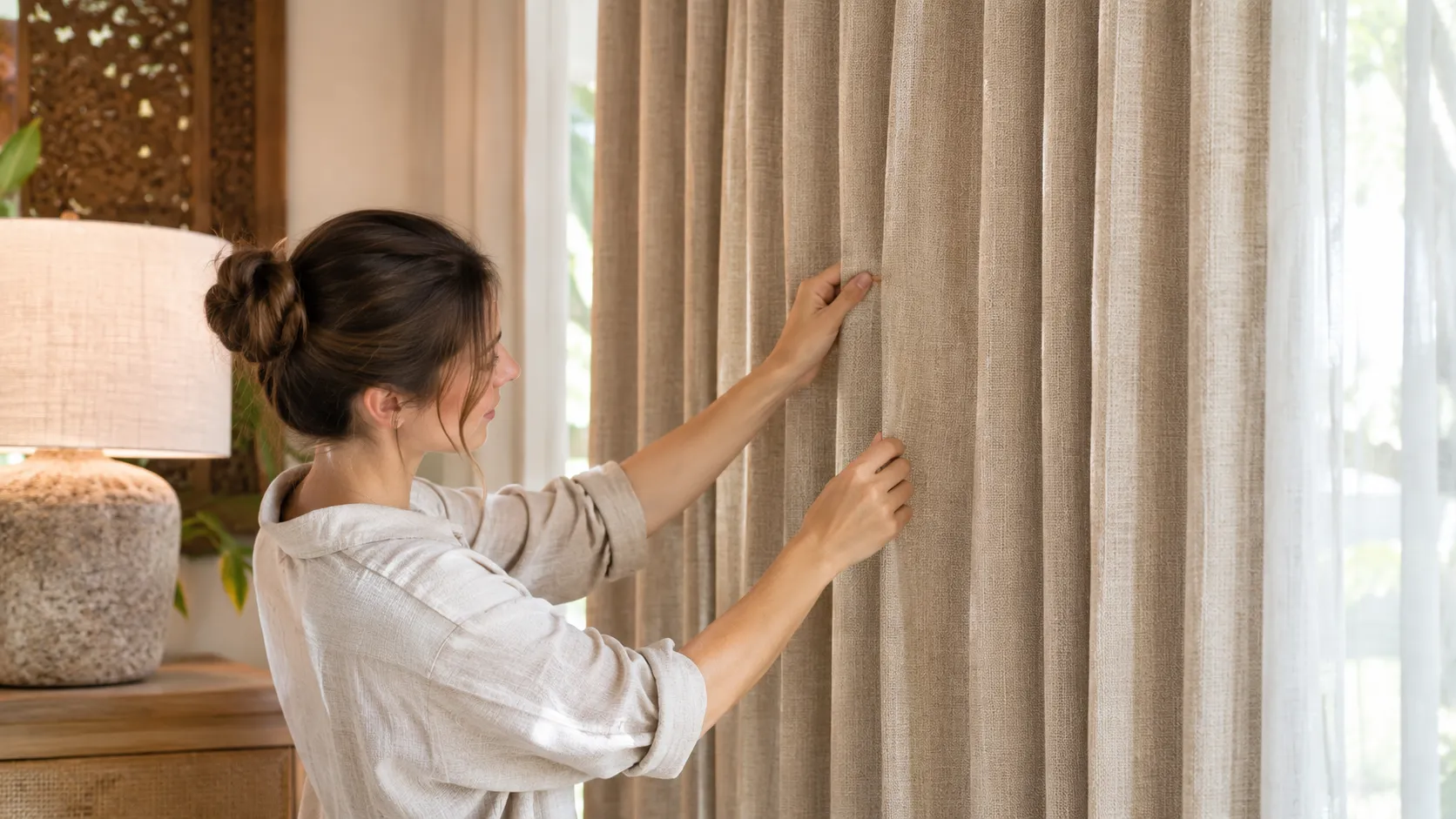
Heavier, densely constructed curtains may absorb more sound than very light sheers, but performance varies by material, thickness, construction and installation. A fabric described as blackout is designed primarily for light control; blackout performance does not automatically mean soundproofing performance.
Where acoustic performance is a priority, look for products with relevant tested acoustic data. Do not rely on fabric weight or marketing language as a substitute for measured performance.
3. Cover the Window Generously
For a curtain intended to absorb room reflections, broad coverage can be more useful than a narrow panel that leaves large areas exposed. Consider the full glazed opening and surrounding surfaces. A close-fitting installation may improve light control, but it does not necessarily create an airtight acoustic seal.
Make sure the curtain can still open safely and does not obstruct doors, ventilation or required access.
4. Choose a Suitable Track and Heading
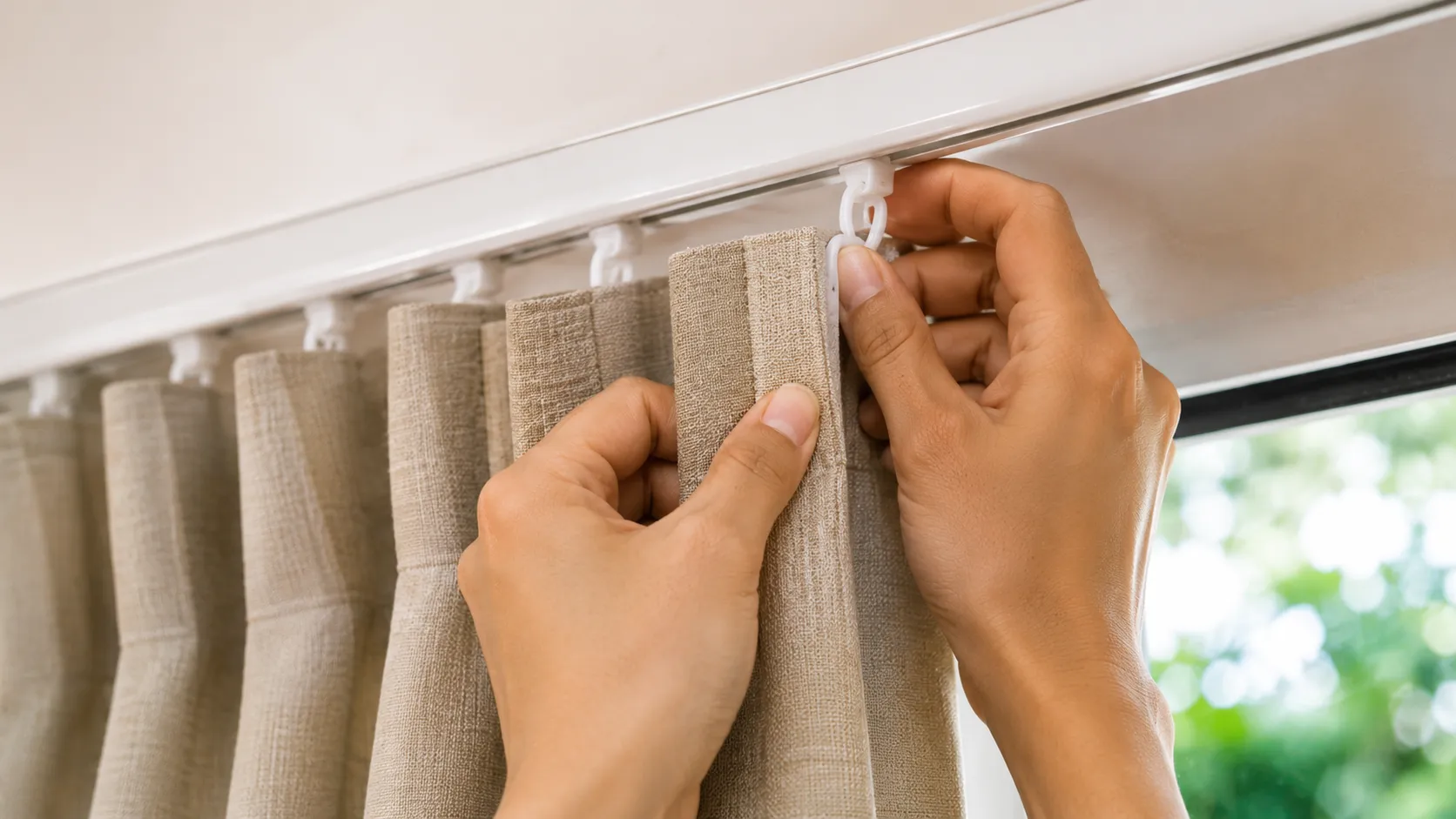
A sturdy track is important for heavier curtains. Check the recommended load, bracket spacing and fixing substrate. A ceiling-mounted track may allow a wide fabric coverage area, while side returns can reduce exposed gaps at the edges in some installations.
These details may improve coverage, but they do not guarantee sound isolation. The entire window assembly and installation quality remain important.
5. Combine Curtains with Other Measures
If noise from outside is significant, investigate window seals, frame gaps, glazing performance and other leakage paths. Depending on the property and budget, suitable improvements may include professional sealing, secondary glazing or upgrading the window assembly. A building-specific assessment is important before selecting a solution.
Inside the room, rugs, upholstered furniture and other suitable soft furnishings can help reduce reflected sound. Their effect depends on the room layout and the surfaces involved.
6. Consider Bedrooms and Hospitality Spaces
In bedrooms, curtains can provide privacy and light control while contributing to a softer acoustic environment. In villas, hotels and apartments, assess guest expectations, exterior noise, cleaning needs and the operation of doors or windows before choosing a system.
For properties in Bali, also consider humidity, ventilation, sunlight and the maintenance requirements of heavier fabrics and their hardware.
Common Soundproofing Mistakes
- Assuming blackout curtains automatically block outside noise.
- Expecting ordinary fabric to stop all traffic or construction sounds.
- Ignoring gaps around window frames and other leakage paths.
- Choosing a heavy curtain without checking track capacity.
- Confusing reduced room echo with reduced sound transmission.
- Buying an acoustic product without checking its tested performance claims.
What Should You Check Before Buying?
- Identify whether the problem is room echo or external noise.
- Inspect the glazing, window frame and visible gaps.
- Confirm fabric specifications and any tested acoustic data.
- Check curtain coverage, track capacity and installation requirements.
- Compare curtains with other measures if substantial noise reduction is needed.
Choose Curtains for Comfort, Not Unrealistic Promises
Curtains can be a useful part of a more comfortable room, especially when light control, privacy and interior sound absorption are also desired. They should not be treated as a replacement for proper acoustic building work when strong external noise is the problem.
Almeers Living can help customers in Bali compare curtain fabrics, linings and hardware for their window-treatment needs. For serious noise concerns, assess the window assembly and seek suitable acoustic advice before relying on curtains alone.