Indoor-Outdoor Living Window Solutions: What Designers Are Choosing Now
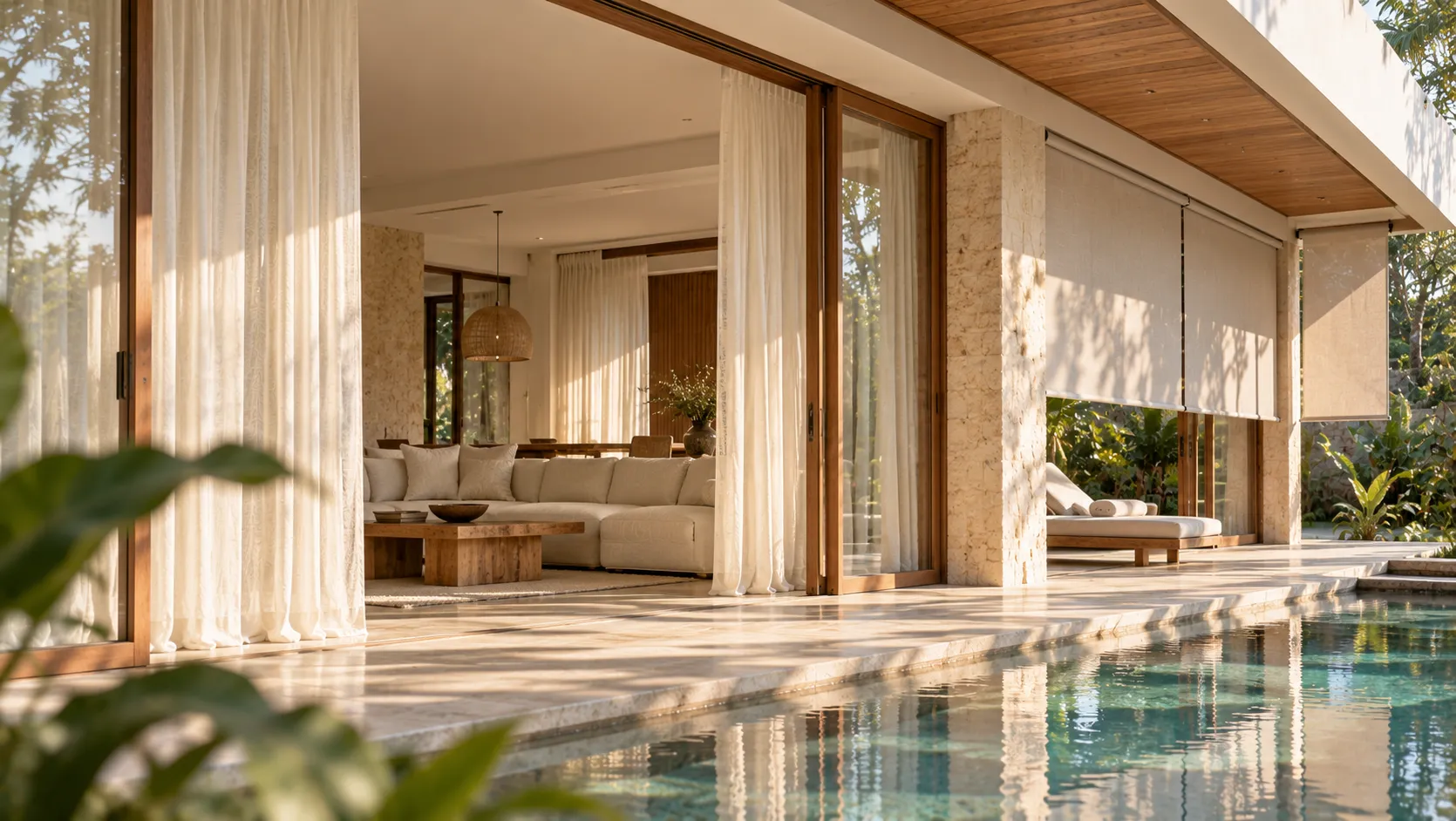
Indoor-outdoor living is one of the defining features of many contemporary tropical properties. Large sliding doors, folding doors and wide glazed openings can make a villa feel open and connected to its surroundings.
But the larger the opening, the more important the window-treatment specification becomes. The solution needs to manage sunlight, privacy, heat and daily movement without turning the opening into an obstacle.
Start With How the Opening Is Used
First determine whether the doors are opened frequently, occasionally or mainly kept closed. A curtain that is perfect for a fixed glass wall may be inconvenient on a high-traffic sliding door.
Curtains for Flexible Indoor Control
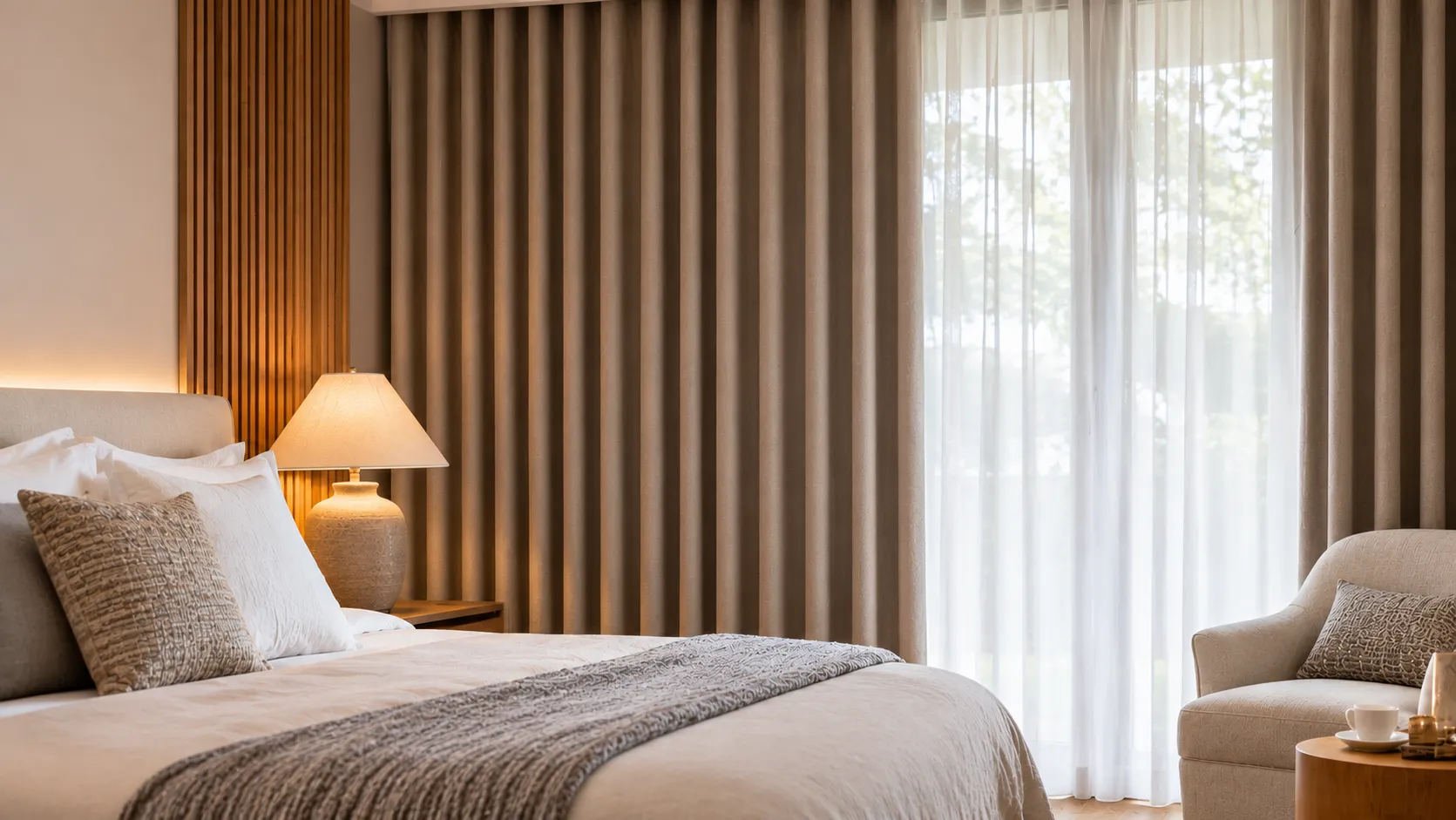
Full-height curtains are useful when the opening is primarily protected from weather and the treatment can remain indoors. Sheers can soften daylight while a second layer provides privacy and stronger light control.
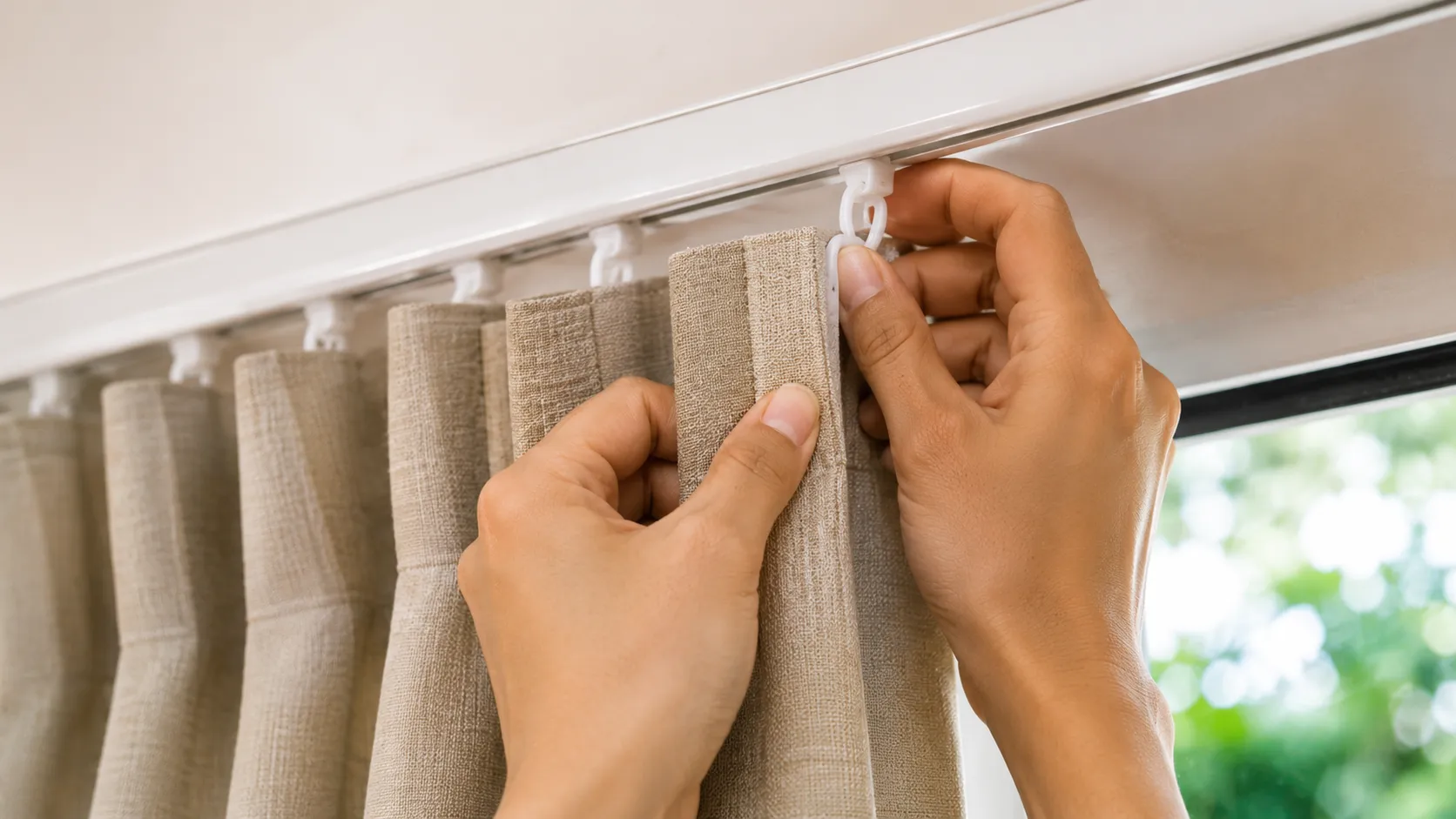
Track position and stack-back space should be confirmed so the curtain does not block the opening or interfere with circulation.
Roller Blinds for Precise Light Control
Roller blinds can provide precise solar and privacy control. They are useful where the opening needs a clean appearance and the fabric can be selected for the required degree of light filtering.
Outdoor Solutions Need Different Specifications
If the treatment is installed outside the building envelope, material and hardware must be selected for actual exposure. Wind, rain, UV and cleaning requirements can differ significantly from indoor curtains.
Do not assume an indoor fabric is suitable outdoors simply because it is visually attractive. Exposed areas need a system specifically specified for the environment.
Consider Wind and Air Movement
Indoor-outdoor villas often have strong cross-ventilation. Lightweight sheers can move considerably when doors are open. The design may need appropriate weighting, track positioning or an alternative treatment.
Privacy After Sunset
Daytime openness does not automatically provide nighttime privacy. When interior lighting is switched on, glass can become highly exposed. A second curtain or blind layer can solve this without forcing the room to remain dark during the day.
A Practical Selection Checklist
- Measure the opening and confirm how the doors move.
- Identify the direction and intensity of sunlight.
- Check whether the treatment is indoors or exposed to weather.
- Define daytime and nighttime privacy requirements.
- Allow sufficient stack-back space beside the opening.
- Choose the operating system based on width, weight and frequency of use.
Final Takeaway
The best indoor-outdoor window solution preserves the openness of the architecture while giving occupants control when conditions change. In tropical properties, specify the treatment around the opening's real use—not simply the most attractive fabric.