Memilih Gorden untuk Jendela Besar di Hotel: A Practical Specification Guide
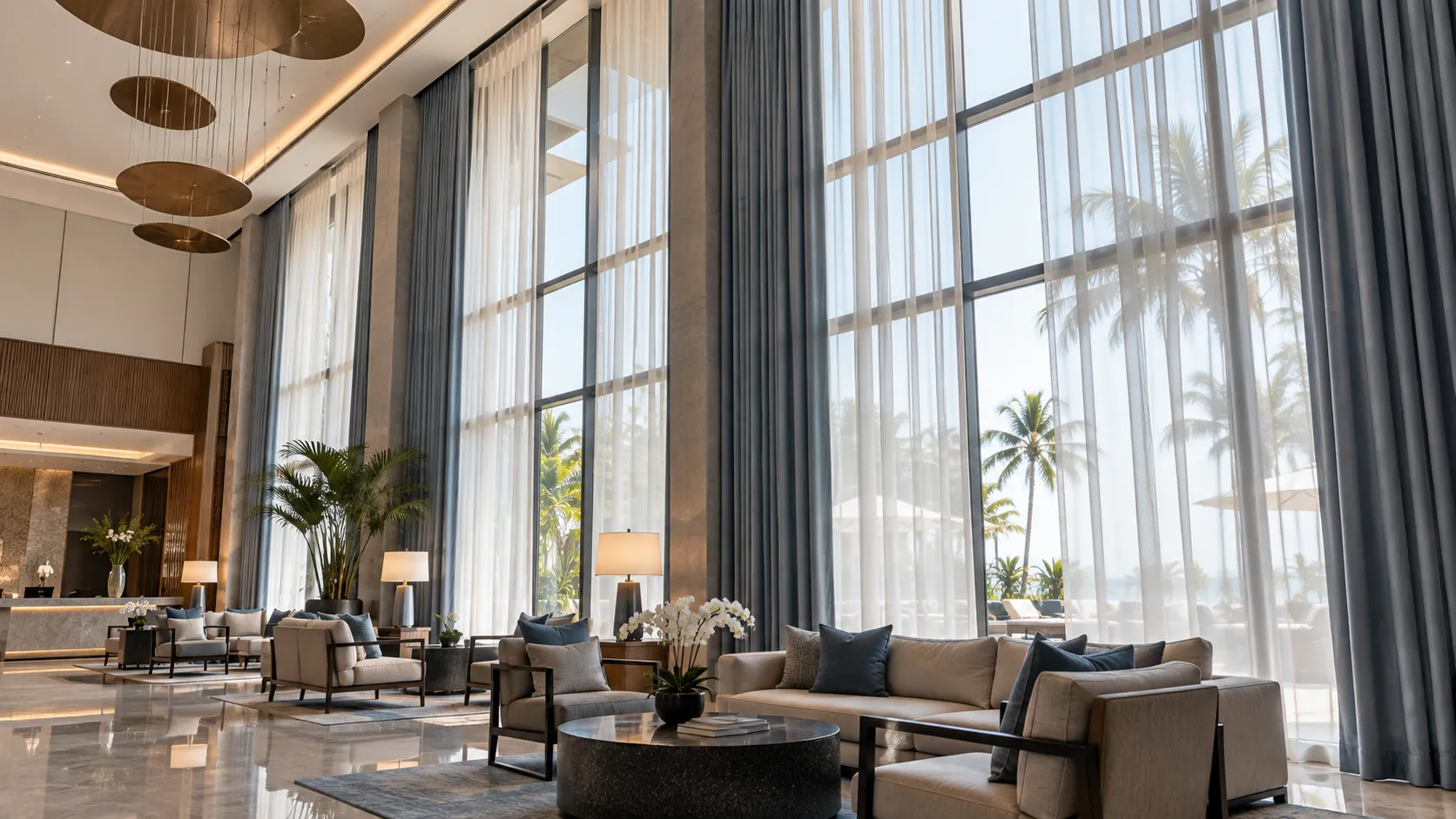
Large hotel windows create impressive spaces, but they also expose weaknesses in window-treatment specification. A curtain that works perfectly on a small bedroom window may become too heavy, difficult to operate or visually unbalanced when the opening is several metres wide.
The short answer: specify the complete window-treatment system—not just the fabric. Width, height, fullness, fabric weight, track capacity, stacking space, light-control requirements and operating method should be considered together.
Why Large Hotel Windows Are Different
Large openings magnify small specification mistakes. More width means more fabric. More height increases the finished load. Greater fullness increases consumption. A heavy curtain also places greater demands on the hardware and installation.
For this reason, “Which fabric is best?” is often the wrong starting question.
1. Start With the Finished Opening
Record the actual finished width and height, ceiling condition, recess depth where applicable, floor clearance, doors, handles and other obstacles. Confirm whether the dimensions are preliminary architectural measurements or final installation measurements.
2. Define the Performance Requirement
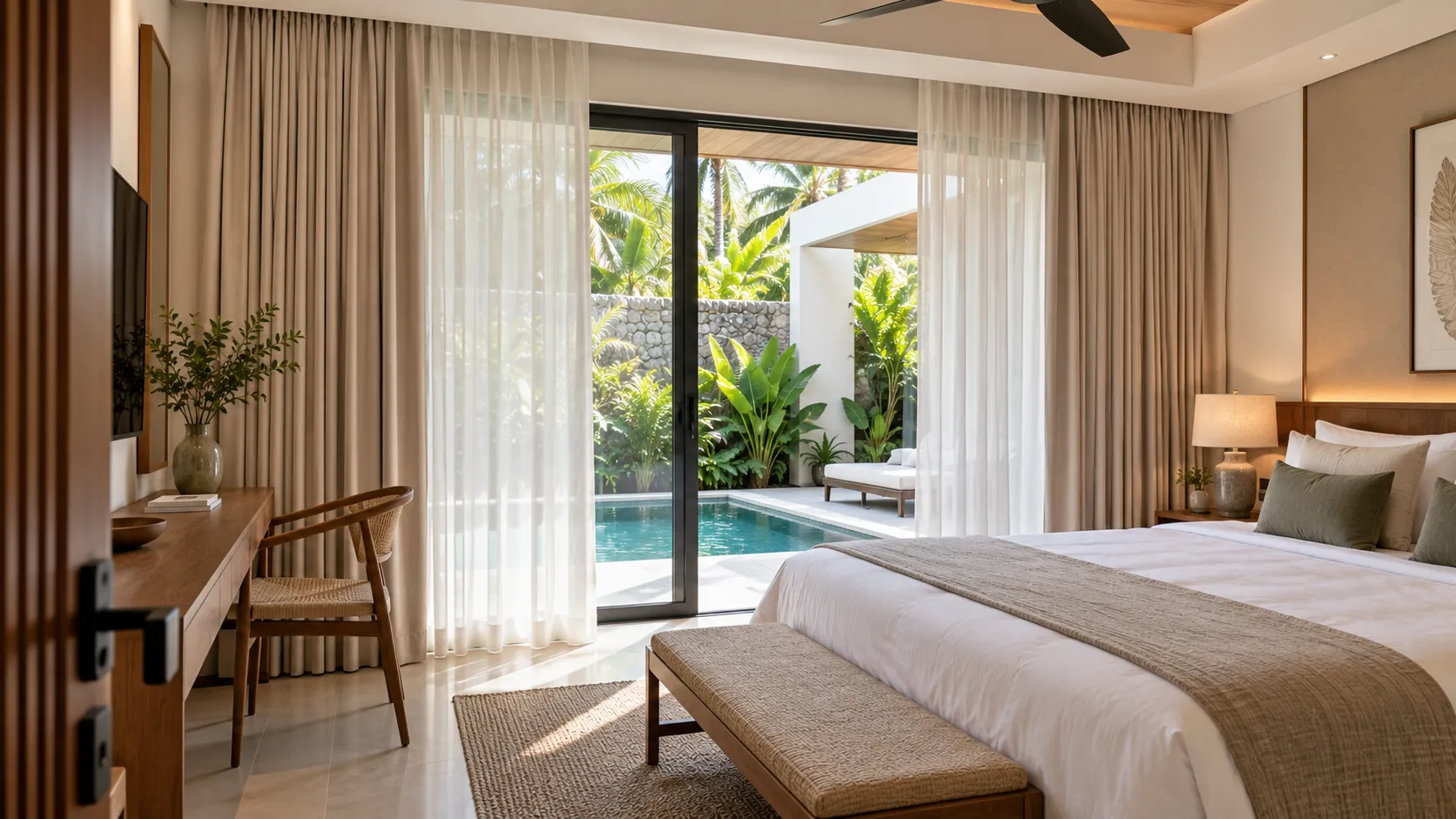
Decide whether the room needs sheer, blackout, dimout, layered treatment or another combination. Hotel bedrooms often require stronger light control than public areas, while restaurants and living spaces may prioritize daylight and atmosphere.
3. Understand Fullness
Fullness affects the visual character of the curtain, fabric consumption and finished weight. It should be considered together with fabric width, heading style, finished dimensions and available stacking space.
More fullness is not automatically better. The right amount depends on the desired appearance and the technical constraints of the opening.
4. Consider Curtain Weight
A large curtain can become heavy quickly. Fabric, lining, width, drop and fullness all contribute to the final load. Hardware and operating method should therefore be specified based on the finished system rather than the window size alone.
5. Select the Hardware Appropriately
For large hotel openings, track systems are often considered when smooth operation, ceiling mounting, concealed detailing or motorization are priorities. Decorative rods can work for selected design concepts, but structural support and finished load still need to be considered.
6. Plan Stacking Space
When curtains are open, the fabric has to occupy space. Check the stack position against doors, furniture, artwork, views and circulation paths.
A curtain can be technically functional but still poorly planned if the open stack blocks a doorway or hides an important architectural feature.
7. Manual or Motorized Operation?
Manual operation can be suitable for smaller hotel openings. Motorization becomes more compelling as width, height, weight, accessibility requirements and operating frequency increase.
For a large hotel project, the decision should be based on the actual operational requirement rather than simply choosing the more technologically advanced option.
8. Installation Is Part of the Specification
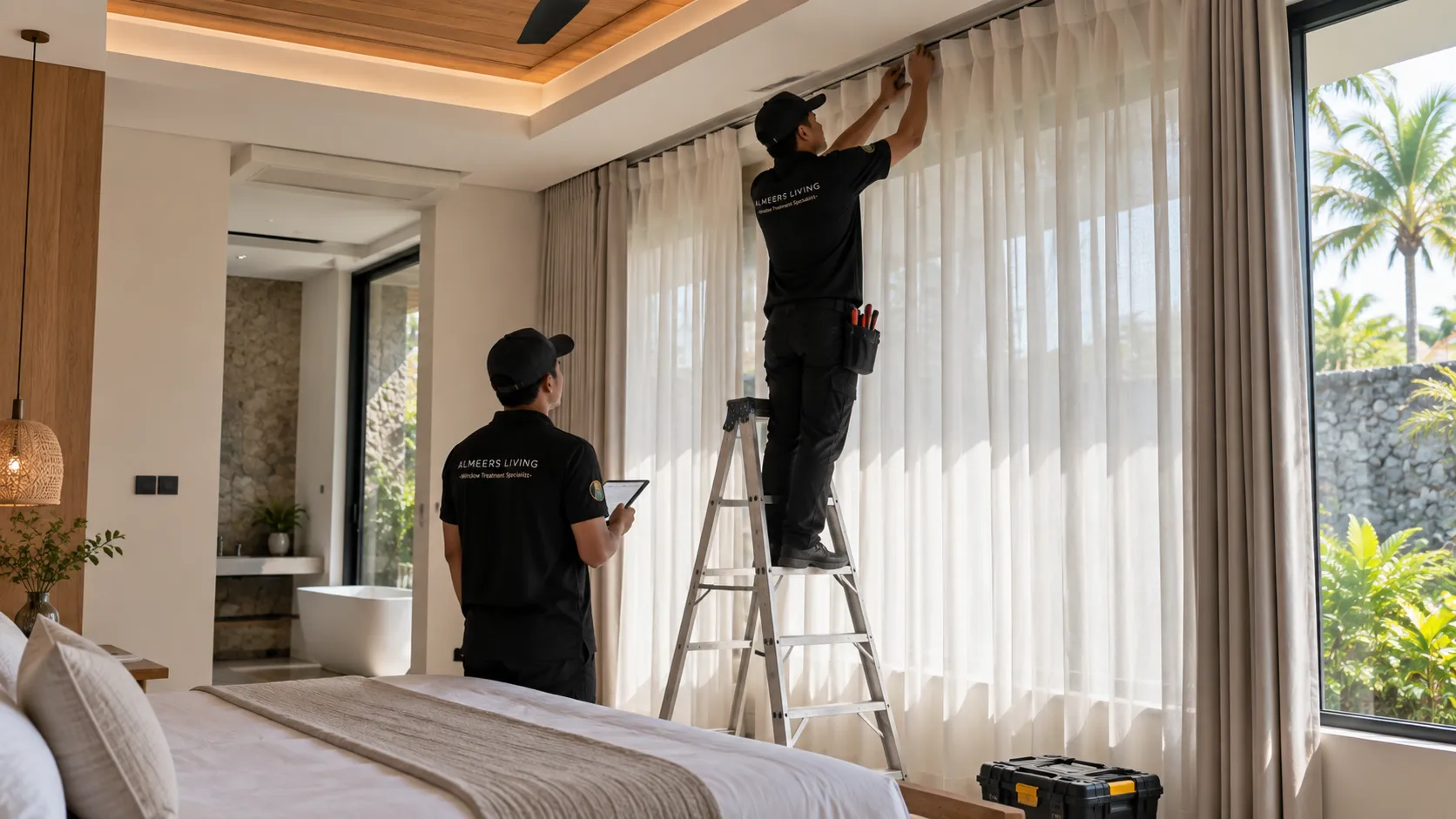
Large curtains may require stronger fixing, coordinated ceiling details, appropriate access equipment and careful alignment. Installation should be planned before final finishes are locked.
The most attractive fabric will not deliver a premium result if the track is poorly aligned or the mounting condition is not suitable for the finished load.
Hotel Large-Window Specification Checklist
| Specification | Confirm |
|---|---|
| Opening | Finished width, height and floor clearance. |
| Fabric | Composition, width, performance and appearance. |
| Fullness | Required visual effect and consumption. |
| Weight | Estimated finished curtain load. |
| Hardware | Track/rod type, length and mounting condition. |
| Stack | Opening position and available stack space. |
| Light control | Sheer, dimout, blackout or layered requirement. |
| Operation | Manual or motorized. |
| Maintenance | Access for future service and cleaning. |
A Better Project Question
Instead of asking “Which fabric is best?”, ask:
“What complete window-treatment system will deliver the required performance for this opening?”
That question connects fabric, hardware, operation and installation. It also makes supplier quotations easier to compare because the specification becomes clearer.
For Hotels in Bali
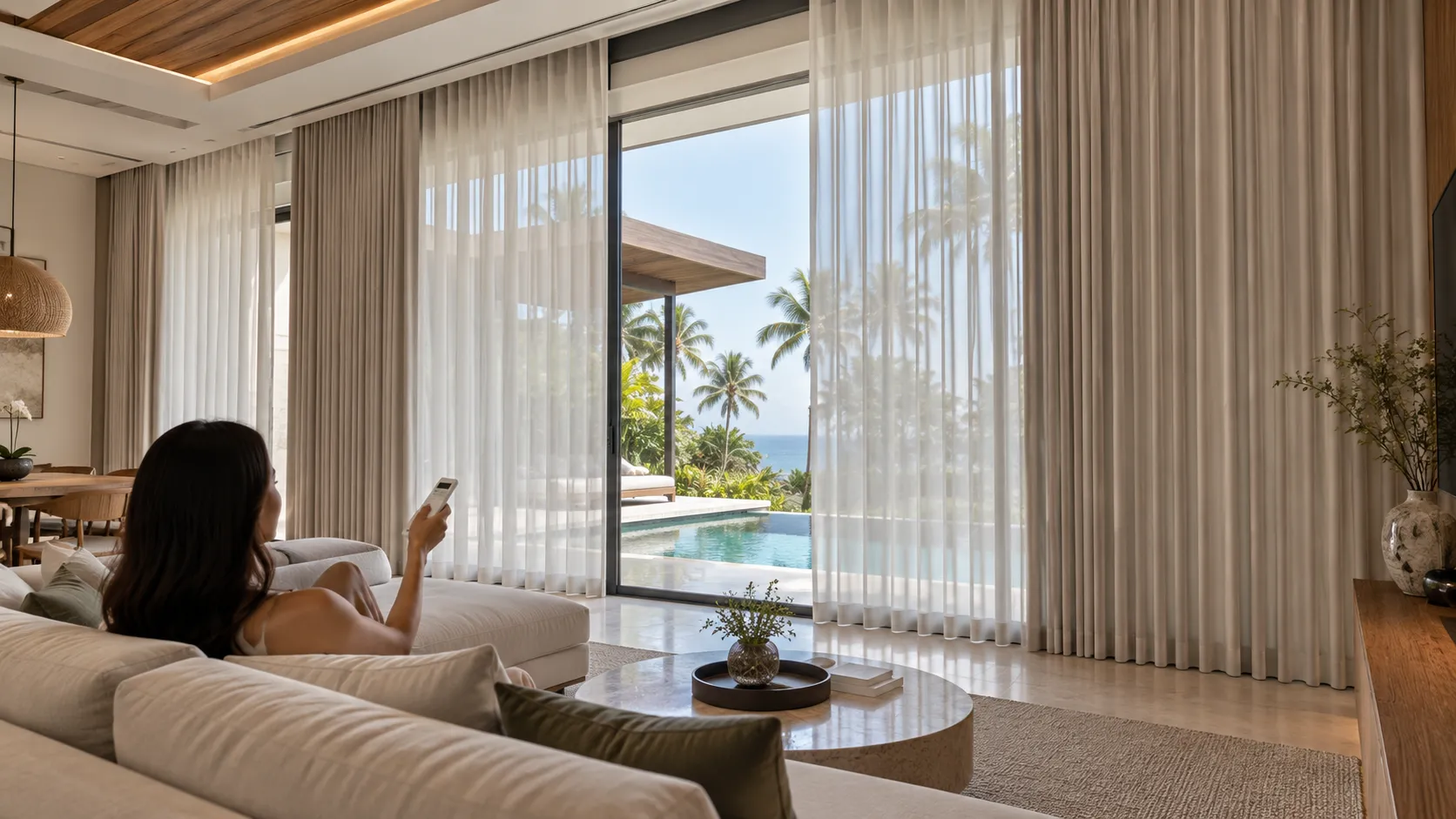
Large glazed areas are common in Bali hospitality projects, where views and natural light are important design elements. The window treatment therefore has to balance daylight, privacy, guest comfort, appearance and practical operation.
For high-use properties, the maintenance and replacement implications should be considered during specification rather than after the property opens.
Final Takeaway
Large hotel windows reward careful coordination. Fabric, fullness, weight, hardware, operation, stacking and installation should be designed as one system.
For hotel projects in Bali, an on-site assessment can help confirm the actual opening condition and translate the design intent into a practical window-treatment specification.