Modern Balinese Interior Design Ideas: A Practical Designer Guide
Modern Balinese interior design works best when it balances natural warmth with clean, functional planning. Timber, stone, woven textures and greenery can create a strong sense of place, while restrained colours and simple forms keep the interior from feeling crowded. Window treatments are important because they shape daylight, privacy, heat and the connection between indoor rooms and the landscape.
1. Balance Natural Materials with Simple Forms
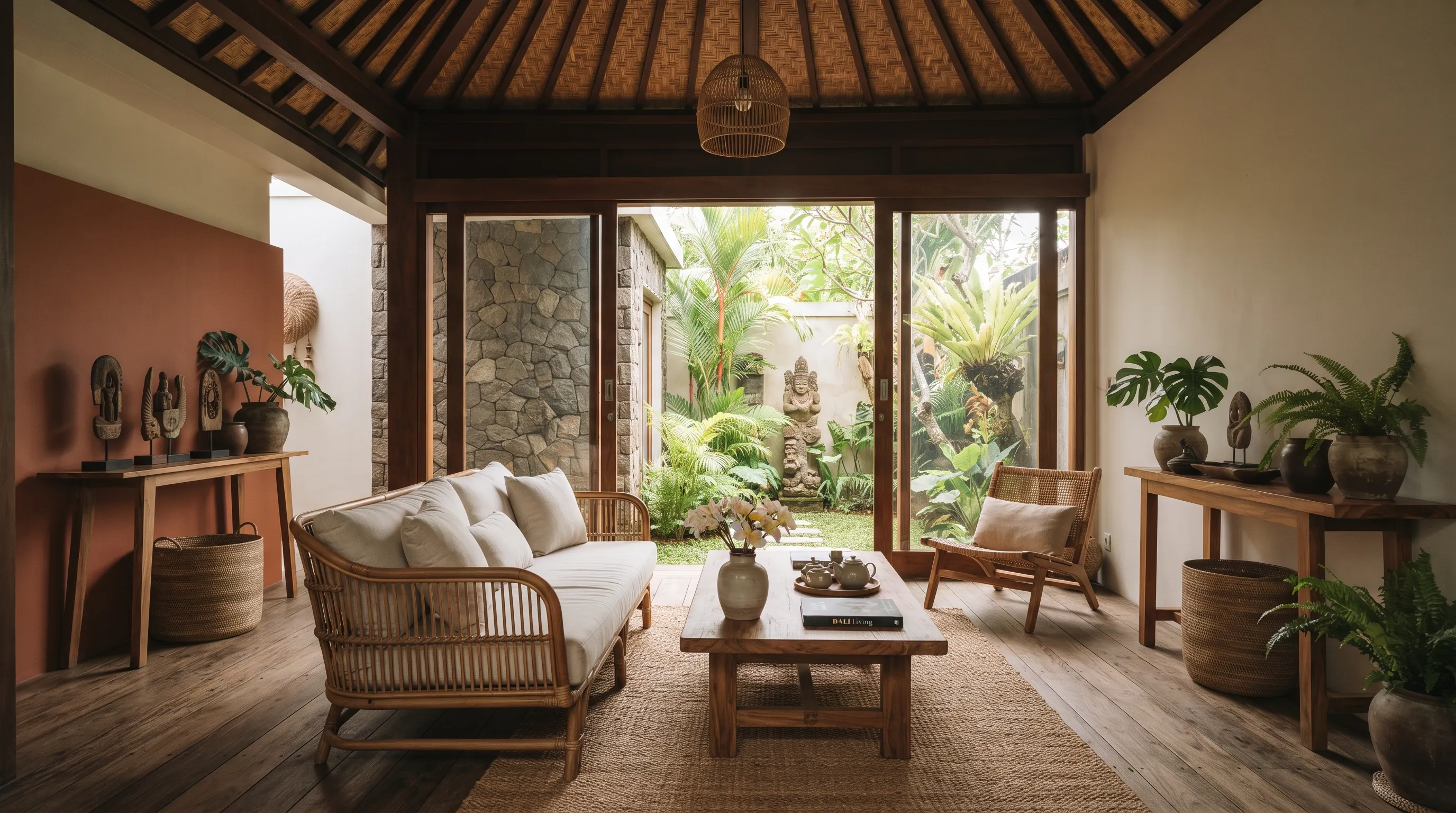
Use timber, stone, rattan and textured fabrics as the material foundation, then pair them with clean furniture silhouettes and uncluttered surfaces. A few tactile materials usually feel more intentional than many competing finishes. Repeat a material or colour in more than one place to create visual continuity.
2. Keep the Colour Palette Calm
Warm white, sand, oatmeal, taupe and natural timber provide a flexible base. Greenery and views can supply colour, while terracotta, olive or muted blue can be introduced as smaller accents. When choosing curtains, compare the fabric with the wall, floor and upholstery together rather than selecting it from a small digital image alone.
3. Design for Indoor-Outdoor Living
Large glazed doors and openings can make a room feel connected to a terrace or garden. The treatment should allow the opening to work in daily life. Check where curtains stack when open, whether the track interferes with door operation and how privacy changes after dark.
For wide openings, see our guide to choosing curtains for large windows.
4. Layer Texture Rather Than Adding More Decoration
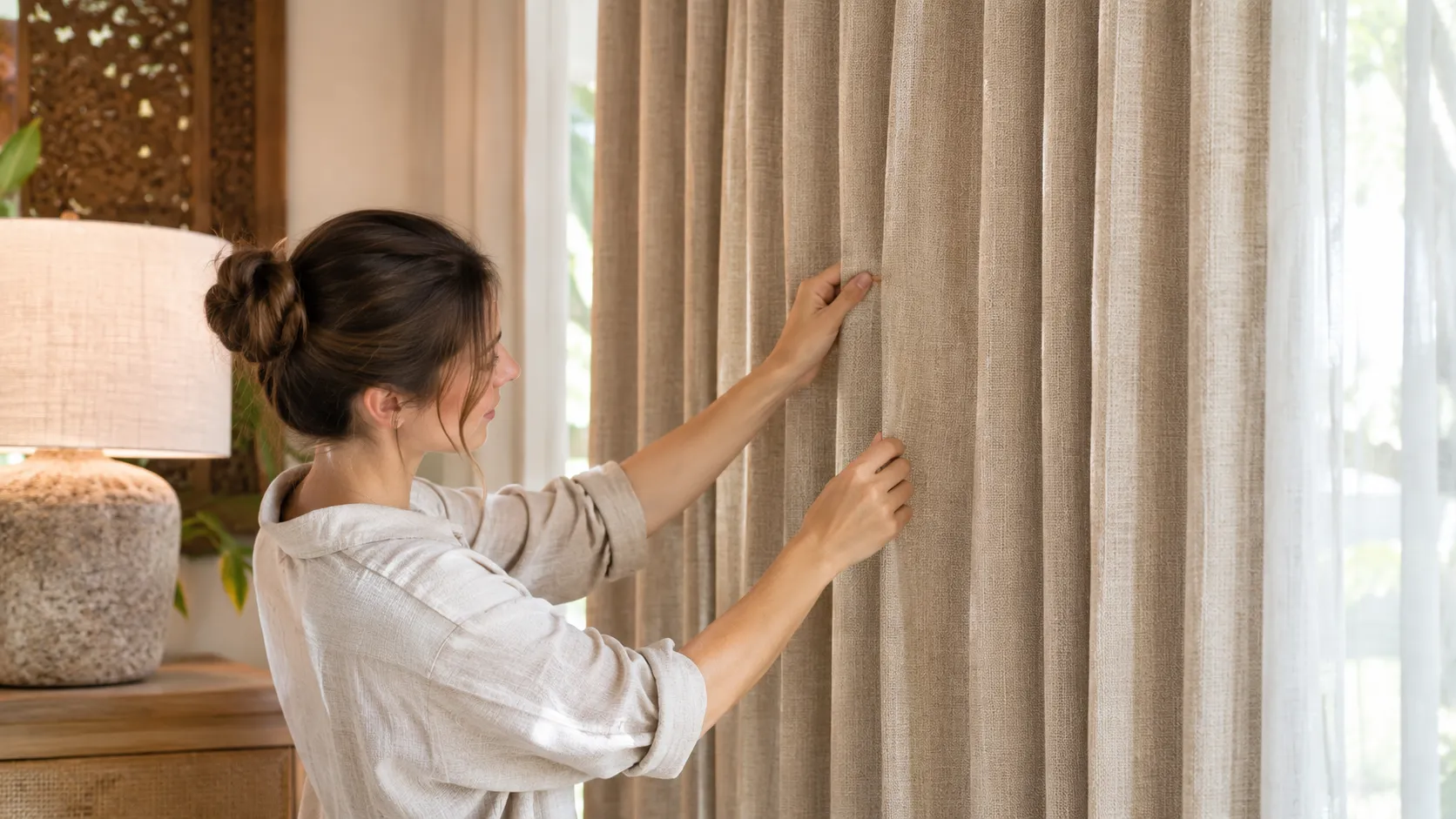
A textured linen-look curtain, woven blind or sheer layer can add depth without overwhelming a room. If the furniture and rugs already contain strong patterns, keep the window treatment quieter. If the room is very minimal, a subtle weave or carefully selected pattern can become a useful focal point.
5. Use Layers for Flexible Light and Privacy
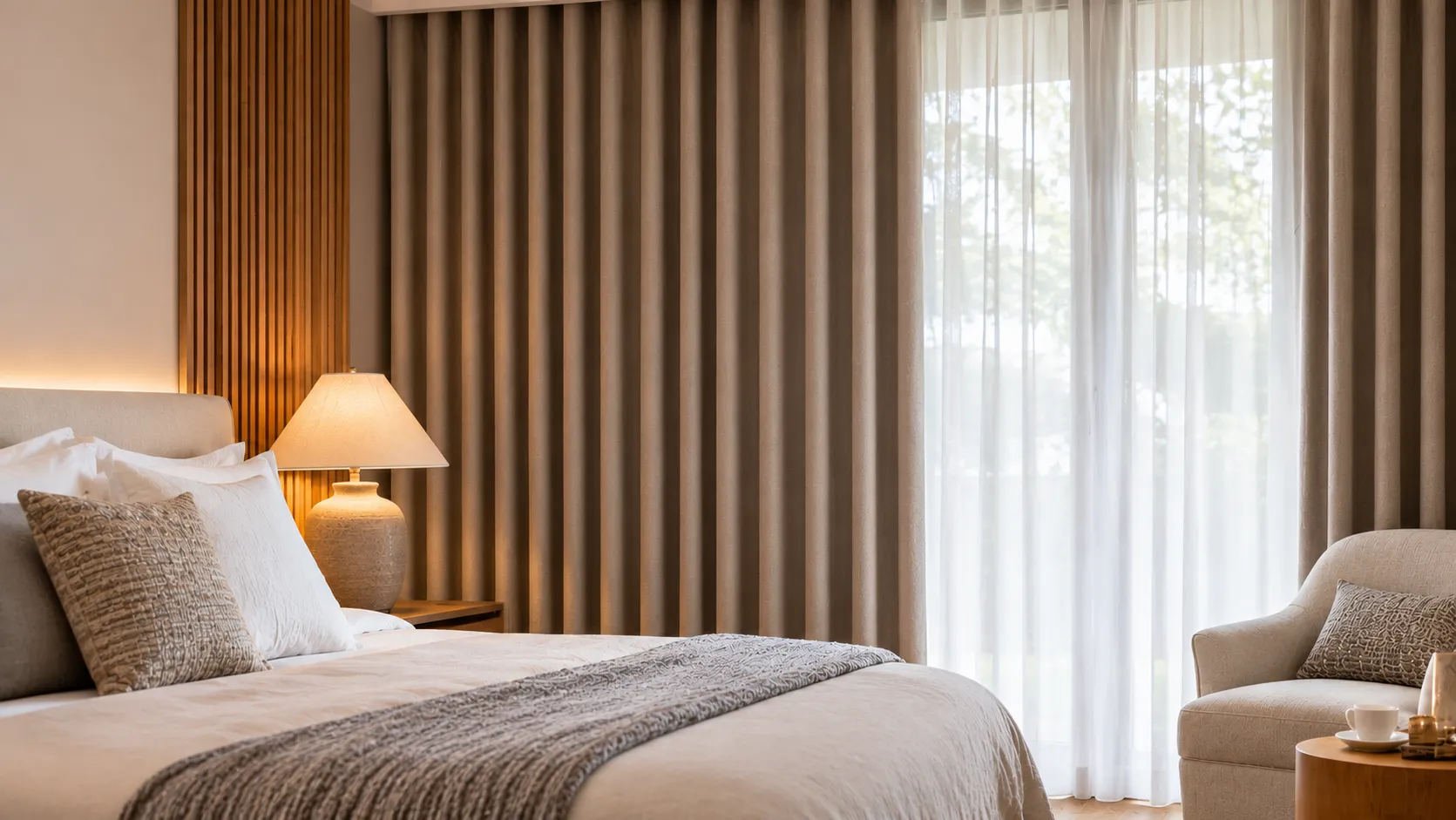
One treatment rarely solves every need. Sheer curtains soften daylight and reduce daytime exposure, while blackout or dimout curtains provide stronger privacy and light control. In living areas, a light-filtering blind may be more practical if the window is used frequently or the curtain stack would obstruct the opening.
Read our guide to layered window treatments and fabric comparison guide before deciding.
6. Choose for the Tropical Environment
Sun exposure, humidity, ventilation and cleaning access should influence the material choice. A beautiful fabric may not be suitable for a window that receives intense direct sun or is exposed to frequent moisture. Confirm care instructions and avoid assuming that natural fibres are automatically more durable or easier to maintain.
7. Pay Attention to Scale and Installation
For tall ceilings, a track mounted close to the ceiling can create a longer vertical line. Wider tracks may allow curtains to clear more of the glass when open. Check the wall construction, track fixing points, curtain weight and finished drop before confirming the order. Good measurements often make a greater visual difference than adding another decorative element.
8. Make the Design Consistent Across Rooms
Consistency does not require every room to use the same fabric. Instead, keep a shared palette and repeat selected hardware finishes or textures. Bedrooms may need stronger light control, while living spaces can prioritize filtered daylight and the view. Create a room schedule so each treatment meets its own functional requirements.
A Practical Designer Checklist
- Choose a restrained palette that complements the architecture.
- Combine a few natural textures with simple forms.
- Plan curtains around door use, views and stack-back space.
- Specify light control and privacy room by room.
- Confirm fabric care, sunlight exposure and hardware requirements.
For more planning help, start with our luxury tropical property window treatment guide. Almeers Living can help with fabric samples, custom measurements and window treatment specifications for Bali villas and other residential or hospitality projects.