Panduan Instalasi Gorden Motorized Profesional: The Complete Bali Guide for Smart Home Integration
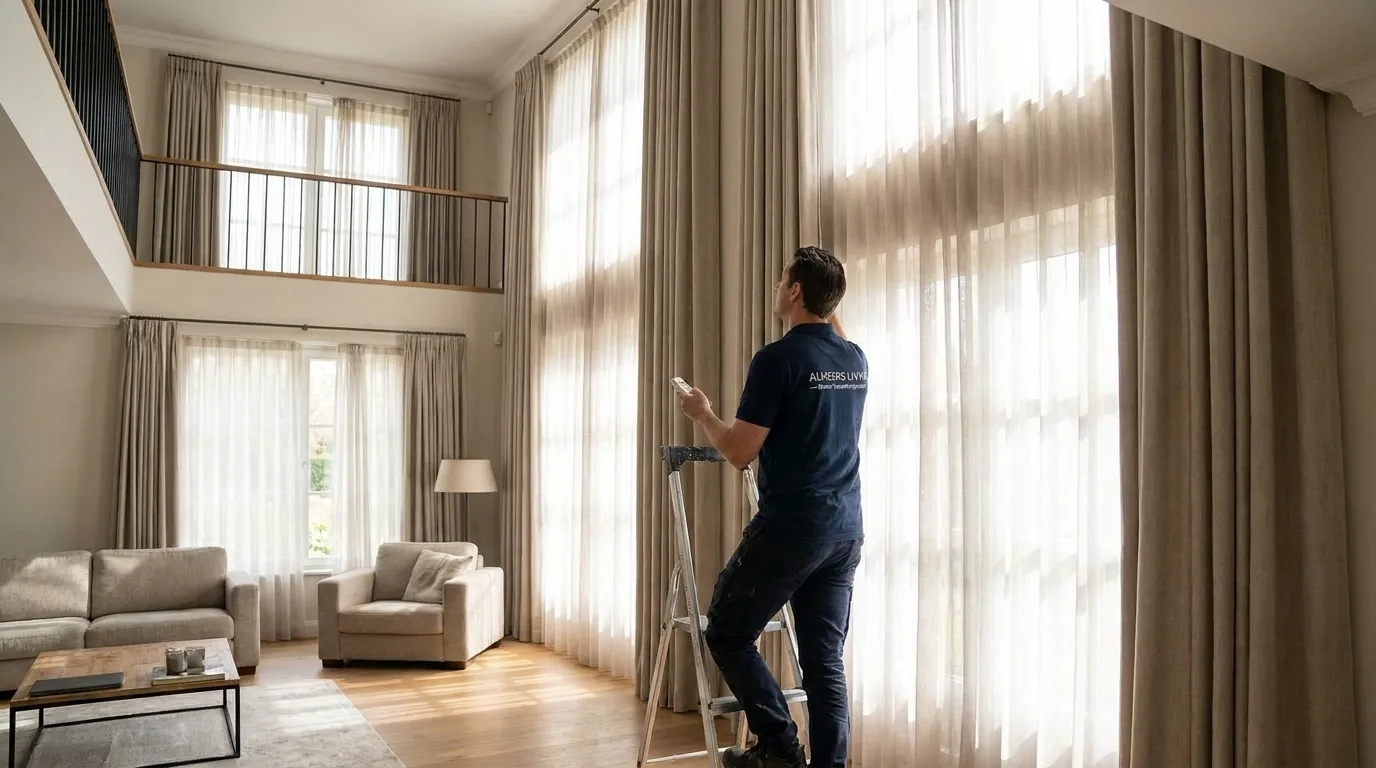
Designing modern luxury residential estates, smart rental villas, and five-star hospitality resorts across Bali—from the vibrant coastal hubs of Canggu, Seminyak, and Umalas to the tranquil forest sanctuaries of Ubud and dramatic clifftop retreats in Uluwatu—demands an uncompromising integration of architectural aesthetics and cutting-edge home automation technology. Modern tropical architecture relies heavily on expansive floor-to-ceiling glass sliding doors, double-height ceiling voids exceeding 6 meters, and open-plan living pavilions. Manually drawing heavy, multi-layered drapery across massive glass spans can be inconvenient for villa owners and guests. As a result, automated drapery systems have evolved from a luxury luxury add-on into an essential architectural component. Property developers, MEP engineers, and interior designers frequently search for definitive guidance on professional motorized curtain installation protocols (panduan instalasi gorden motorized profesional: the complete Bali guide) to achieve quiet mechanical operation, seamless smart home integration, and long-term tropical endurance.
Executing a flawless motorized window treatment installation involves far more than simply plugging an automated track into an electrical wall socket. It requires meticulous pre-construction electrical planning, selecting correct tubular motor torque ratings, calculating structural load capacities, engineering concealed ceiling pelmet pockets, choosing non-toxic anti-mold fabrics, and programming smart automated solar scenes. In this comprehensive editorial masterclass, we present the definitive engineering roadmap for installing professional motorized curtain systems in luxury tropical properties.
1. The Engineering Advantages of Smart Motorized Drapery Systems
Integrating automated drapery tracks into luxury residences and boutique hotels offers profound functional and architectural benefits beyond modern convenience:
- Effortless Operation across Massive Glass Spans: Heavy, high-ceiling draperies carrying thermal blackout linings or dense interlining felt can weigh between 25 kg to over 60 kg per span. Motorized tracks feature whisper-quiet DC actuators that move heavy fabric loads smoothly without user physical strain or fabric jerk stress.
- Optimized Energy Efficiency and Thermal Regulation: Integrating motorized tracks with solar radiation sensors or smart timer schedules allows curtains to close automatically during peak afternoon heat hours (11:00 AM – 3:00 PM). This reflects intense solar infrared radiation outward, lowering indoor room temperatures passively and reducing air conditioning power consumption.
- Extended Fabric Longevity and Maintenance Reduction: Manual pulling causes natural skin oil transfers, fabric stretching along side edges, and runner misalignment. Automated belt-driven tracks distribute physical tension evenly across the entire track length, preserving pristine fabric appearance and seam geometry.
- Cordless Child and Guest Safety: Motorized systems eliminate dangling cords and beaded control chains completely, removing strangulation risks for young children and providing full compliance with international hospitality safety regulations.
2. Pre-Installation Electrical Planning and Wiring Specifications
The single most frequent mistake made during villa construction is neglecting motorized drapery electrical infrastructure during early conduit rough-in phases. Retrofitting wiring after gypsum ceiling plastering or concrete finishing is complete leads to exposed wiring channels or costly drywall repairs. Electrical engineers and MEP contractors must enforce strict pre-wiring protocols:
- In-Ceiling AC Hardwiring (220V–240V Main Power Supply): For heavy drapery tracks spanning wide glass sliding doors, hardwired AC motors offer continuous, maintenance-free power. Electrical contractors must install a dedicated 220V power spur inside the concealed ceiling pelmet pocket, positioned within 30 cm of the motor mounting corner.
- DC Battery-Powered Actuators (For Retrofit Applications): In existing homes where ceiling wiring conduits are unavailable, specify heavy-duty rechargeable DC lithium battery motors. Modern low-consumption motors operate for 6 to 12 months on a single USB-C charge, offering a clean, cable-free solution without drywall demolition.
- Dry Contact & Low-Voltage Control Cables (RS485 / KNX): When integrating motorized tracks into centralized automation systems (such as Control4, Crestron, KNX, or Lutron), run a multi-core low-voltage signal cable (CAT6 or 4-core shielded control wire) alongside the main power supply line for direct bus communication.
3. Selecting Actuator Motors: Torque Ratings and Decibel Standards
Matching the correct electric motor actuator to the physical size and fabric weight of the curtain installation is essential for quiet performance and longevity:
- Torque Capacity (Nm Rating): Motor power is measured in Newton-meters (Nm). For standard residential window spans (up to 4 meters wide), a 1.2 Nm to 1.5 Nm motor provides ample pulling power for up to 40 kg of fabric. For high-ceiling hotel voids or wide multi-panel sliding doors exceeding 6 meters, specify industrial 2.0 Nm motors capable of pulling dynamic loads up to 80 kg.
- Whisper-Quiet Operation (< 35 dB Noise Threshold): Hospitality luxury requires complete acoustic silence. High-end motorized tracks feature helical gearing, soft-start/soft-stop deceleration profiles, and rubber-isolated mounting brackets that keep operating noise below 35 decibels—ensuring guests are not disturbed during early morning automated wake-up routines.
- Manual Override Mechanics (Touch-Motion Technology): Quality motorized tracks incorporate electronic clutch systems. If power outages occur, users can draw the drapes manually without damaging internal gear trains. Additionally, a gentle manual tug on the fabric panel triggers motor motion automatically in the desired direction.
4. Spatial Dimensions: Ceiling Recessed Pelmets and Dual-Track Spacing
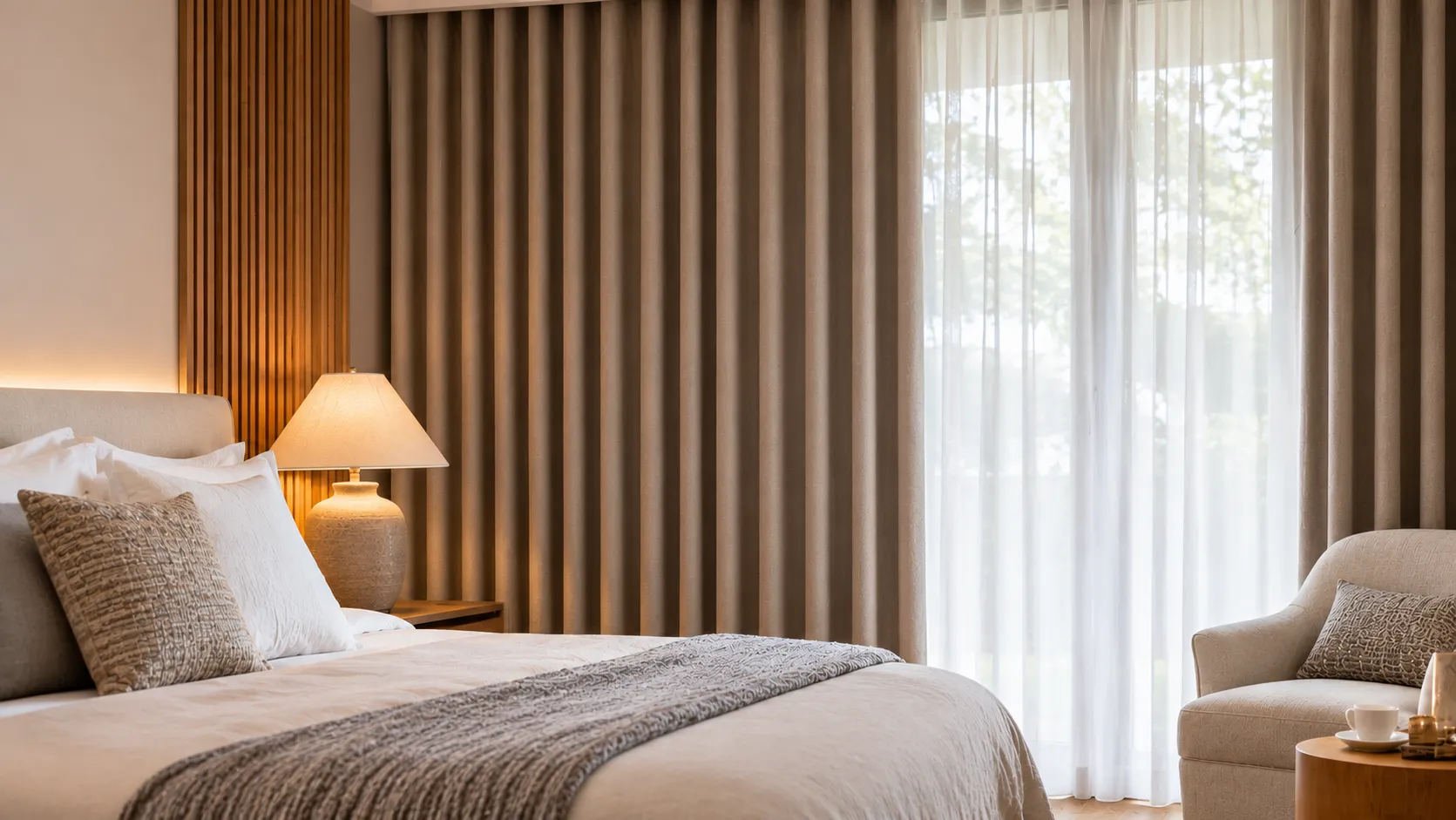
In modern minimalist, Japandi, and contemporary tropical villa architecture, exposed motor housings, power cables, and track channels look cluttered. Interior architects specify concealed ceiling recessed pelmet pockets where motorized hardware disappears completely from view:
- Dual-Track Pelmet Pocket Width (20 cm to 25 cm): Installing a dual motorized system—combining translucent sheer voiles with 100% thermal blackout drapes—demands an internal pelmet cavity width of at least **20 cm to 25 cm**. This provides sufficient parallel clearance so both motorized belt drives and S-fold wave pleats operate fluidly without rubbing against each other or gypsum side walls.
- Pelmet Pocket Depth (12 cm to 15 cm): The pelmet cavity drop depth must measure **12 cm to 15 cm** to conceal track channels, master belt gliders, motor drive heads, and cable connection boxes completely below eye level. Complete spatial tolerances can be cross-referenced on our valances and cornices measuring guide.
- Structural Anchorage Backing: Gypsum board ceilings cannot support the dynamic weight of motorized tracks and heavy drapes. Install a continuous 18 mm marine plywood backboard or heavy-duty galvanized steel framing studs directly above the pelmet cavity to anchor track ceiling brackets securely.
5. S-Fold Pleating Engineering and Floor Clearance Precision
Motorized drapery movement showcases fabric flow dramatically. Ensuring clean visual lines across wide sliding spans requires enforcing precise tailoring and drop measurement rules:
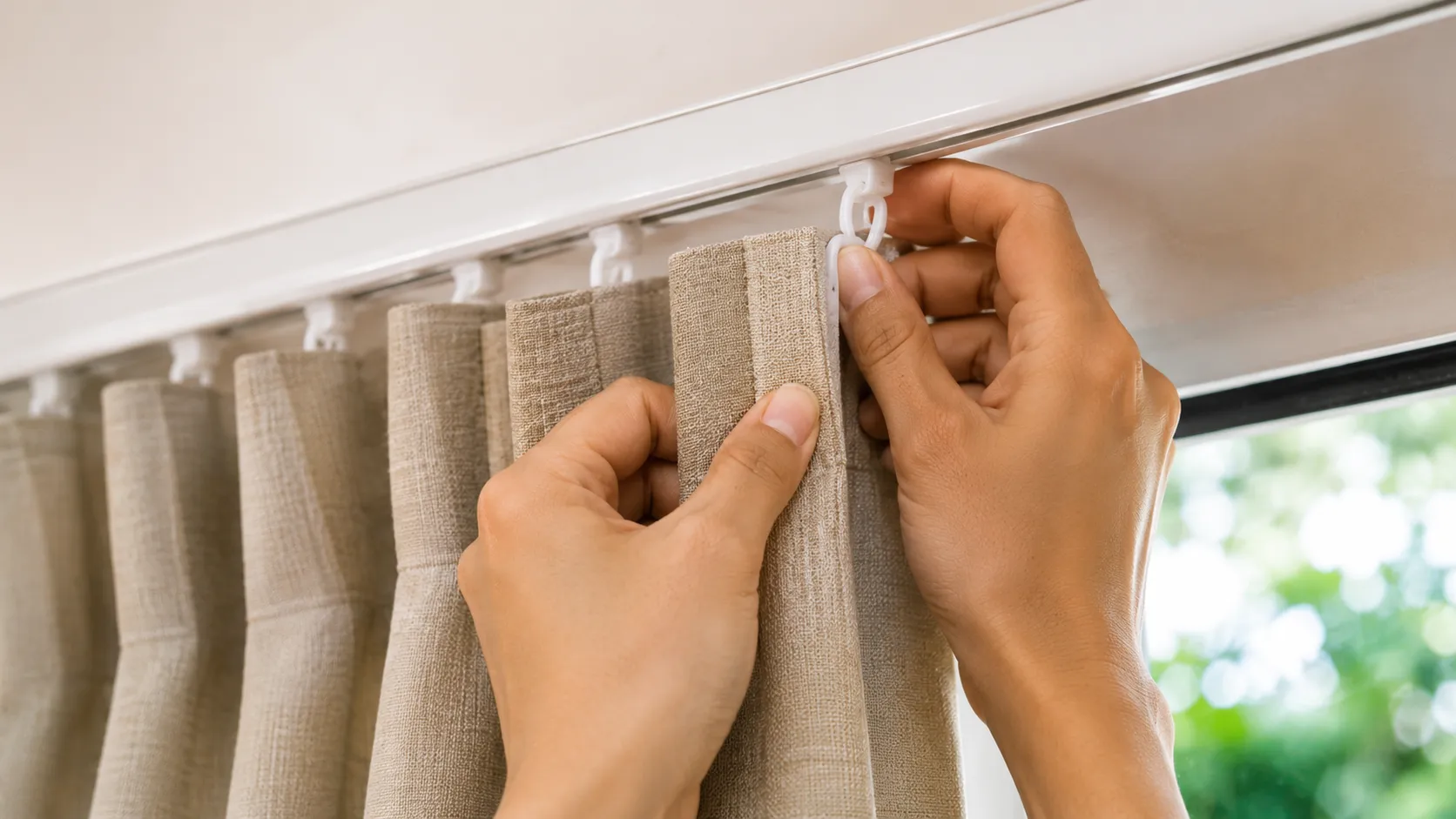
- S-Fold (Ripplefold) Wave Pleat Fullness (2.0x to 2.2x): Motorized tracks utilize specialized runner belts spaced at uniform intervals. Tailoring drapes with double the track width in flat fabric volume guarantees deep vertical S-waves that maintain symmetrical geometry during automated movement. Calculate exact fabric requirements and stack clearances using our digital stacking calculator.
- The 1 cm Floor Hover Clearance Rule: Always measure vertical drops from track runner eyelets down to finished floor surfaces at multiple points across the opening. Tailor motorized draperies to hover exactly **1 cm above finished floor level**. This prevents bottom hems from dragging across floor tracks or absorbing dampness during routine floor washing. Review drop measurement rules on our curtain measuring guide and dedicated shade measuring guide.
6. Tropical Climate Resilience: Non-Toxic Anti-Mold Protection
In humid coastal environments like Bali, high atmospheric humidity combined with continuous indoor air conditioning creates condensation micro-climates near cold window glass where fungal mold spores thrive. Untreated heavy drapes hanging inside enclosed ceiling pelmet pockets can trap dampness, leading to dark mildew spots, fabric rot, and unpleasant musty odors.
To preserve pristine fabric hygiene and indoor air quality, high-performance draperies supplied by Almeers Living incorporate advanced **Anti-Mold** (anti-jamur) technology. This specialized hydrophobic treatment repels moisture droplets and inhibits fungal spore germination, keeping your motorized draperies clean, vibrant, and allergen-free season after season.
7. Smart Home Ecosystem Integration and Automated Solar Scenes
The ultimate goal of professional motorized curtain installation is seamless synchronization with home automation platforms and mobile control interfaces:
- Wireless Protocols (Zigbee, Z-Wave, Wi-Fi, Matter): Modern motorized curtain drives communicate wirelessly with smart home hubs via open mesh protocols. Users can control curtains using handheld remotes, wall-mounted touch pads, or smartphone apps from anywhere in the world.
- Voice Control Platforms: Motorized tracks connect directly to Apple HomeKit, Google Assistant, Amazon Alexa, and Control4. Users can trigger scenes via simple voice commands (e.g., "Hey Siri, Good Morning" to open sheer drapes gradually at sunrise).
- Automated Environmental Scenes: Program automated solar schedules that adjust drapery positions based on sun angles and interior room usage. Schedule blackout panels to lower automatically at 11:00 AM in west-facing suites to lock out midday solar heat, keeping living rooms cool passively before residents return home.
8. Elevate Your Smart Home Architecture with Almeers Living
Installing professional motorized curtain systems requires a synthesis of pre-construction electrical planning, mechanical torque selection, structural pelmet coordination, and climate-resilient fabric tailoring. Partnering with an experienced local specialist guarantees flawless motor calibration, seamless smart home integration, and long-term operational durability. As a recognized premier window treatment specialist in Bali, Almeers Living offers complete turnkey execution—from complimentary electrical site surveys and custom fabric sampling to professional motorized installation and automation programming across the island.
Transform your residence, rental villa, or resort project into an automated, sun-regulated sanctuary today. Browse our full range of custom drapery fabrics, motorized track systems, and smart home solutions on our products page to schedule your personalized on-site consultation with Bali’s trusted window experts.