Solar Shades for Outdoor Living: What to Expect Next
Quick answer: Solar shades can help reduce glare and manage sunlight in outdoor living areas, but an indoor sunscreen roller blind is not automatically suitable for rain, wind or permanent outdoor exposure. Start by identifying the exposure level, required view-through, privacy needs and the manufacturer’s approved installation conditions.
Where Solar Shades Can Help
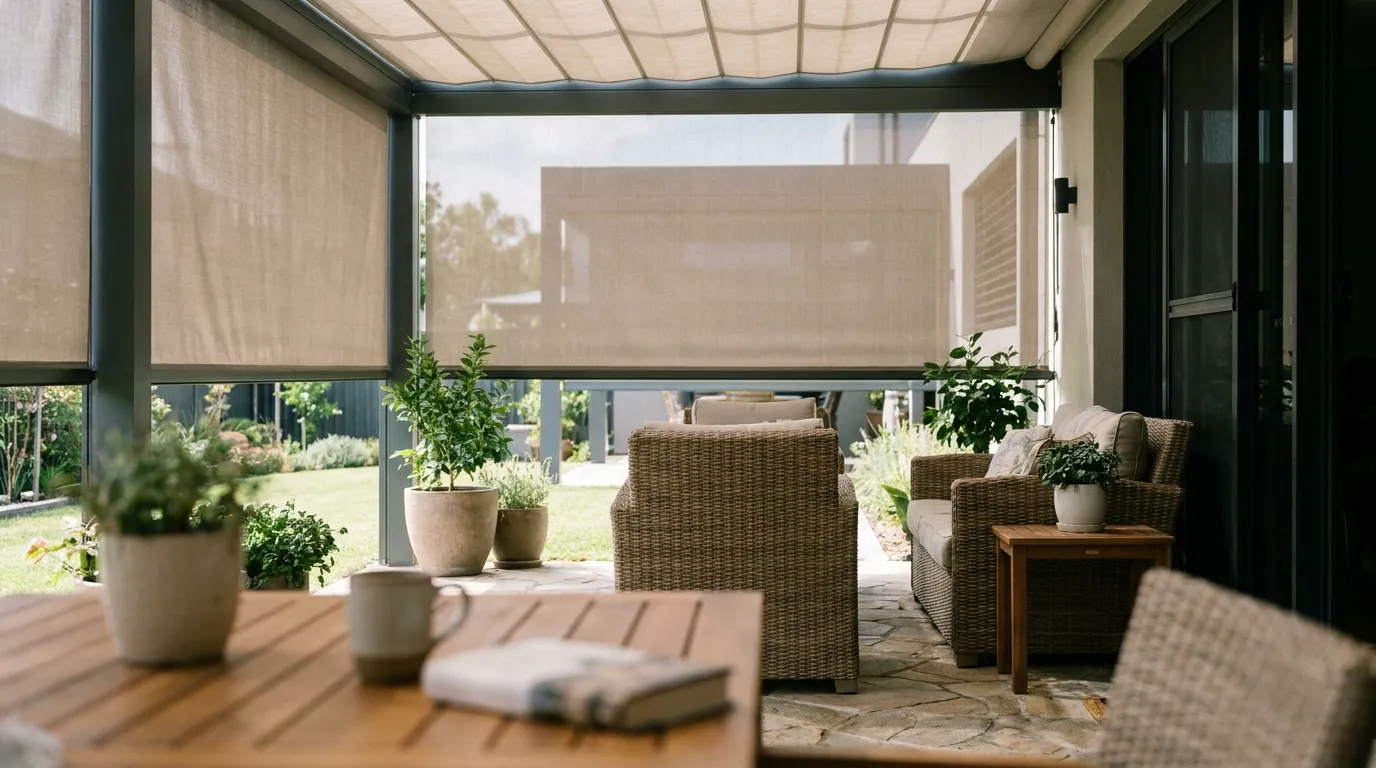
Solar shades are useful where direct sun makes a patio, veranda, balcony or glazed indoor-outdoor room uncomfortable. Depending on the fabric and specification, they can soften harsh light, reduce glare and preserve some outward visibility. They do not necessarily provide complete privacy after dark or stop all heat from entering a space.
Understand Openness and View-Through
Openness describes the size of the gaps in a screen fabric. A more open fabric usually preserves more view but allows more light through; a tighter weave may offer stronger glare control and daytime screening while reducing visibility. Actual performance also depends on colour, orientation, sun angle and glazing.
Do not choose by openness percentage alone. Ask for the fabric’s technical information and, where possible, test a sample in the intended location at the time of day when the sun is strongest.
Indoor, Semi-Outdoor or Fully Exposed?
- Indoor behind glass: Standard indoor sunscreen blinds may be suitable if the product is specified for that environment.
- Covered veranda: Check whether wind-driven rain, humidity and air movement are within the product’s permitted conditions.
- Open outdoor area: Specify a system designed for outdoor exposure, including suitable fabric, hardware, brackets and operating components.
Wind can place substantial loads on a shade and its fixings. Do not assume that a heavier fabric or stronger-looking bracket makes an indoor system safe outdoors. Follow the manufacturer’s limits and installation guidance.
Choose the Right Mounting and Hardware
Measure the opening and check the substrate before selecting brackets. Masonry, timber, aluminium and other surfaces require different fixing approaches. Ensure there is enough clearance for handles, sliding panels, drainage and everyday access. For wide openings, confirm tube size, support requirements and whether one large shade or several smaller units is more practical.
Privacy, Rain and Maintenance
Screen fabrics are not necessarily waterproof. Some allow air and water to pass through; others are designed for different levels of exposure. Clarify the intended function rather than relying on the word “solar.” Dust, salt air, moisture and organic debris can also affect a system over time, so confirm cleaning instructions and inspect the hardware periodically.
What to Consider for Bali Properties
For Bali villas, consider strong sun, humidity, seasonal rain, wind exposure and the way guests use the terrace. A covered lounge may need a different solution from an exposed poolside area. Preserve ventilation and drainage, and avoid a design that obstructs door operation or emergency access.
Pre-Order Checklist
- Exact location and exposure to sun, wind and rain.
- Required glare reduction and acceptable view-through.
- Daytime and nighttime privacy expectations.
- Approved fabric and hardware for the installation environment.
- Mounting substrate, fixing method and maximum dimensions.
- Cleaning, maintenance and warranty conditions.
For related indoor options, read our blackout vs. sunscreen roller blinds guide and roller blinds for large windows and sliding doors. If you are unsure which system fits your site, contact Almeers Living to discuss a consultation or site survey.