Tips to Match Curtains with Rugs: Expert Tips for Tropical Homes — Color Harmony Balancing, Texture Layering Techniques, and Pattern Integration Principles
Designing modern luxury residential estates, boutique hospitality retreats, and private rental villas across Bali—from the vibrant coastal enclaves of Canggu, Seminyak, and Umalas to the serene forest sanctuaries of Ubud and dramatic clifftop estates in Uluwatu—requires a masterclass in visual composition and spatial harmony. In high-end tropical architecture, open-plan living pavilions, master bedroom suites, and poolside lounges rely on soft furnishings to define distinct functional zones within vast, airy volumes. Among all interior textiles, window draperies and area rugs represent the two largest visual planes in any room: the vertical plane framing natural views and the horizontal plane anchoring spatial layouts. When harmonized effectively, curtains and rugs create a cohesive, grounding atmosphere that elevates interior architecture. However, coordinating these two major elements in tropical island environments introduces complex design challenges: balancing intense natural daylight with floor textures, managing high atmospheric humidity, avoiding visual pattern overload, and preserving material longevity. Property owners, interior architects, and hospitality developers frequently seek expert guidance on tips to match curtains with rugs: expert tips for tropical homes (mastering color harmony balancing, texture layering techniques, and pattern integration principles) to craft resort-grade sanctuaries that inspire and endure.
Executing an authentic, harmonized textile scheme in high-temperature, high-humidity tropical microclimates involves a sophisticated design synthesis: establishing dynamic color temperature relationships, pairing complementary tactile fibers, balancing bold motifs against neutral grounds, engineering concealed dual-track S-fold drapery systems, applying non-toxic anti-mold protection, and integrating smart automated solar scheduling. In this comprehensive editorial masterclass, we explore the core principles, material standards, and practical installation guidelines required to coordinate curtains and rugs flawlessly in your tropical home.
1. The Architectural Chemistry of Vertical and Horizontal Textiles
To match window curtains and floor rugs successfully, one must first understand how these elements interact within three-dimensional space. Unlike smaller decorative accents such as throw pillows or tabletop ceramics, curtains and rugs dictate the overarching mood and visual weight of a room:
- Establishing Spatial Enclosure: Curtains control the light quality, vertical height, and peripheral boundaries of a space, while rugs define the seating anchor, walking perimeters, and floor warmth. Harmonizing their colors and textures ties the vertical and horizontal axes of the room together seamlessly.
- Modulating Equatorial Light Scattering: In tropical homes featuring expansive floor-to-ceiling glass sliding doors, intense solar light bounces off smooth micro-cement or polished terrazzo floors. Dense area rugs absorb floor bounce glare, while sheer draperies diffuse direct zenith glare, creating a soft, double-filtered ambient illumination.
- Acoustic Reverberation Dampening: Large glass spans and hard flooring surfaces generate severe acoustic echo. Pairing textured woven rugs with multi-layered acoustic draperies traps sound waves from both horizontal and vertical directions, creating quiet, five-star indoor tranquility.
2. Principle 1: Color Harmony Balancing (Tone, Saturation, and Contrast)
Color coordination is the most immediate factor influencing visual harmony. Rather than matching curtains and rugs in identical flat colors—which makes interiors feel static and uninspired—architectural editors utilize sophisticated color balancing techniques:
- The 60-30-10 Palette Allocation Standard: Apply a classic color distribution across the room. Let neutral wall finishes and large rugs occupy 60% of the dominant background, use curtains and secondary upholstery for the 30% supporting color structure, and reserve 10% for vibrant accent accessories.
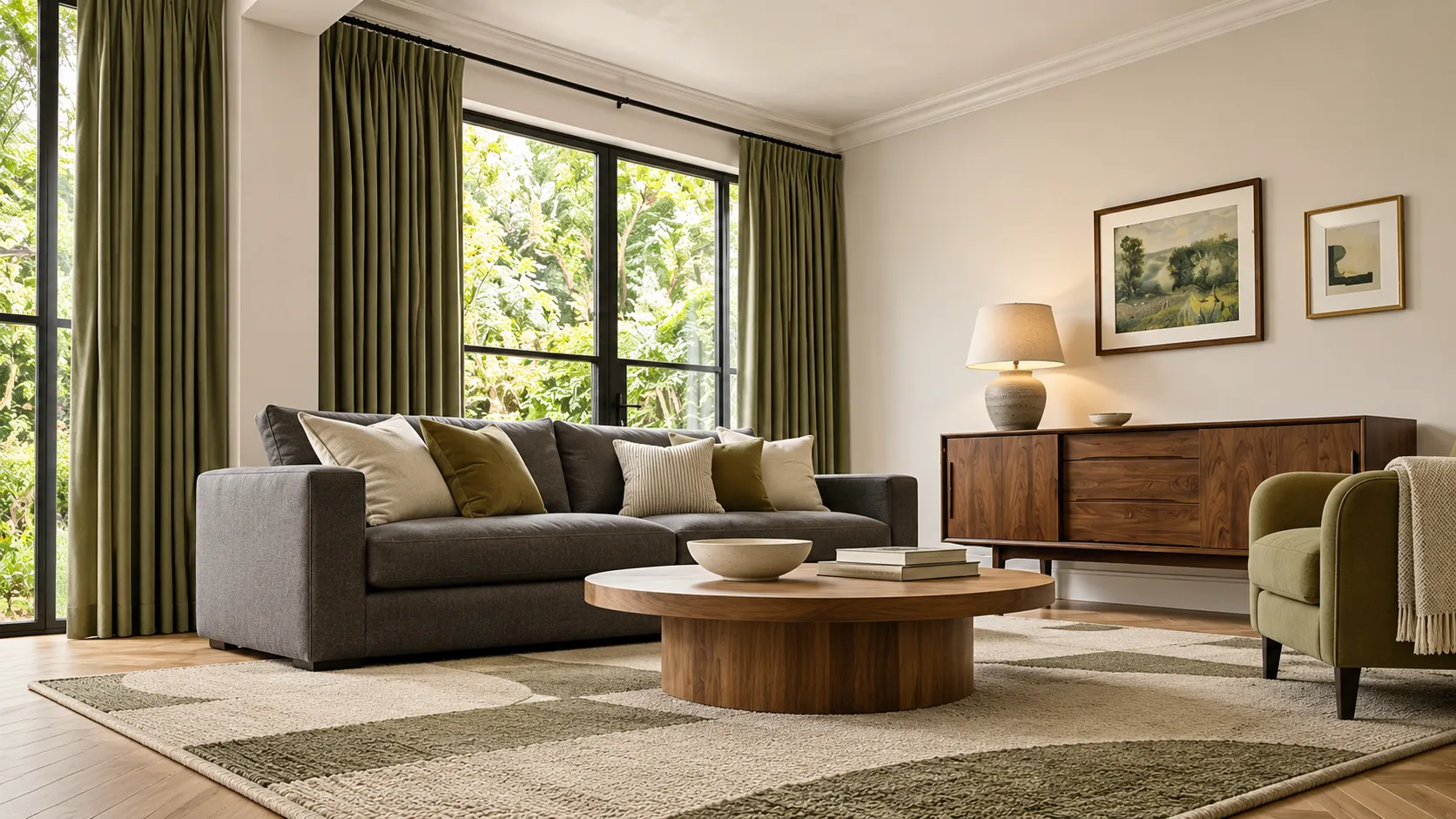
- Tonal Monochromatic Depth (Layering Earth Hues): Combine varying shades within the same color family. For example, pair a deep terracotta flat-weave sisal rug with warm oatmeal slubbed linen draperies, or match a sage green botanical wool rug with soft alabaster sheer voiles. This creates rich visual depth without visual clutter.
- Complementary Temperature Contrast: Balance cool floor tones (such as gray polished concrete or light sea-foam rugs) with warm curtain hues (such as warm sand, amber, or raw ochre) to maintain an inviting, thermally balanced indoor ambiance.
3. Principle 2: Texture Layering Techniques (Juxtaposing Weaves & Fibers)
Tactile contrast prevents neutral color palettes from feeling flat or sterile. Combining contrasting surface textures adds biophilic warmth and rich dimensional interest to tropical spaces:
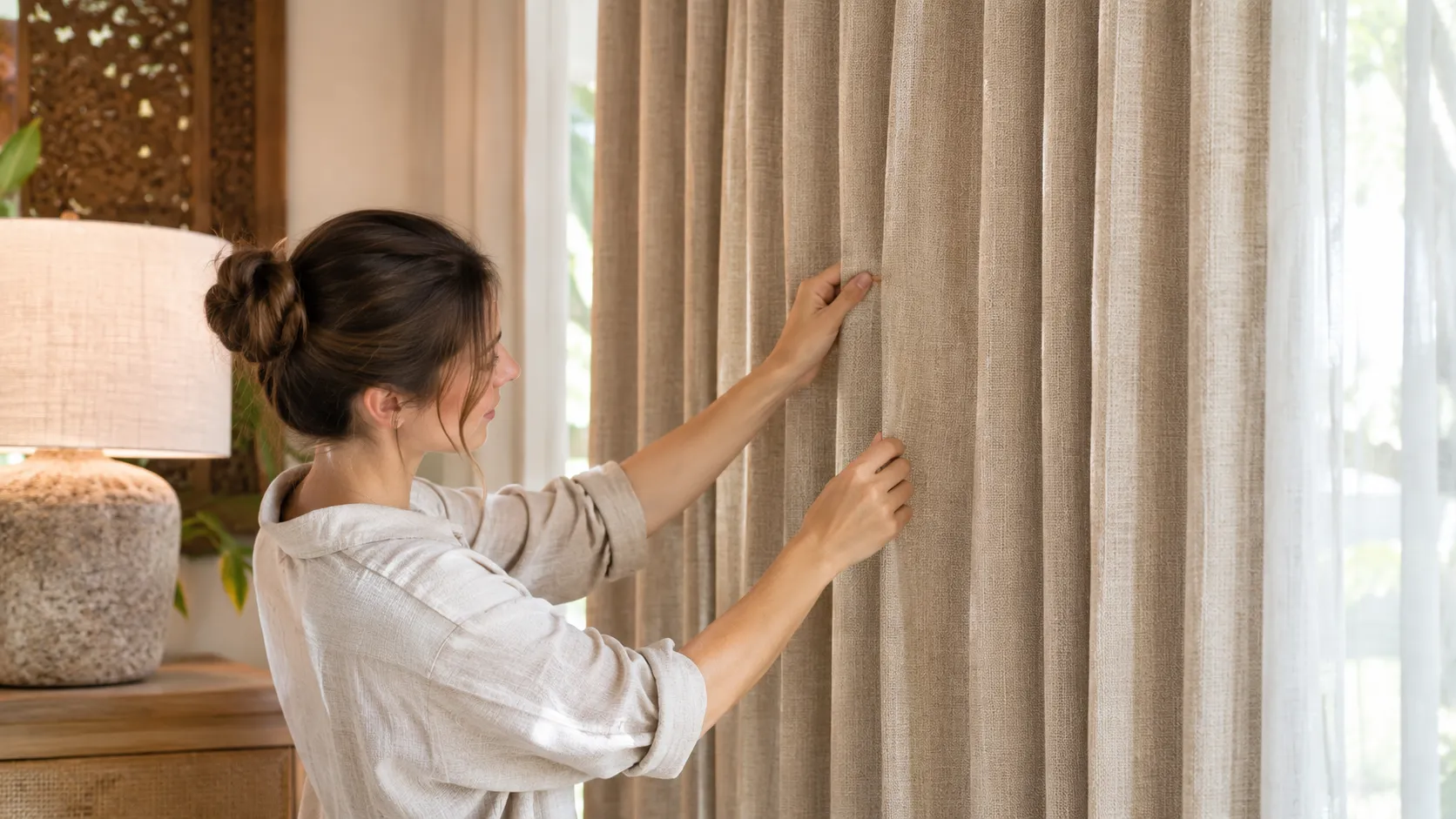
- Rough vs. Smooth Contrast: Pair heavy, coarse-textured floor coverings—such as natural jute, seagrass, or high-pile wool rugs—with smooth, fluid window drapes like slubbed poly-linen sheers or soft semi-opaque voiles. The contrast between raw floor fibers and graceful curtain waves highlights the beauty of both materials.
- Biophilic Fiber Harmony: In modern Tropical Bohemian (Boho Chic) and Japandi villa interiors, combine natural woven elements like rattan, teak, and jute floor mats with loose-weave linen-blend draperies. Explore versatile fabric swatches starting at Rp 60.000/m on our products page.
- Tactile Sound-Dampening Velvets: For media rooms and master suites, pair dense, low-pile velvet draperies with plush wool area rugs to maximize acoustic sound absorption and luxurious tactile warmth (starting at Rp 60.000/m to Rp 110.000/m).
4. Principle 3: Pattern Integration Principles (Dominance and Scale Control)
Integrating patterned textiles requires strict scale discipline. Combining competing, loud patterns on both curtains and rugs causes visual chaos. Follow these professional pattern scaling rules:
- The "One Hero Pattern" Rule: Choose either the rug or the curtains as the primary patterned feature. If the floor rug features a bold geometric, vintage Persian, or tribal motif, keep the window drapes solid or subtly textured. Conversely, if curtains feature bold botanical or architectural Jacquard weaves, select a neutral, solid, or textured flat-weave rug.
- Varying Motif Scale: If pairing patterns on both surfaces, ensure a dramatic contrast in pattern scale. Pair a large-scale broad geometric rug pattern with a subtle, small-scale pinstripe or micro-herringbone curtain weave to prevent visual competition.
- Unifying Anchor Colors: Ensure that at least one key accent color from your patterned rug is repeated within the solid thread weave or border trim of your window drapes.
5. Precision Tailoring Mechanics: Dual-Track S-Fold Waves and Pelmets
Executing a resort-grade drapery installation that complements fine floor rugs requires precise hardware mounting standards and custom tailoring metrics:
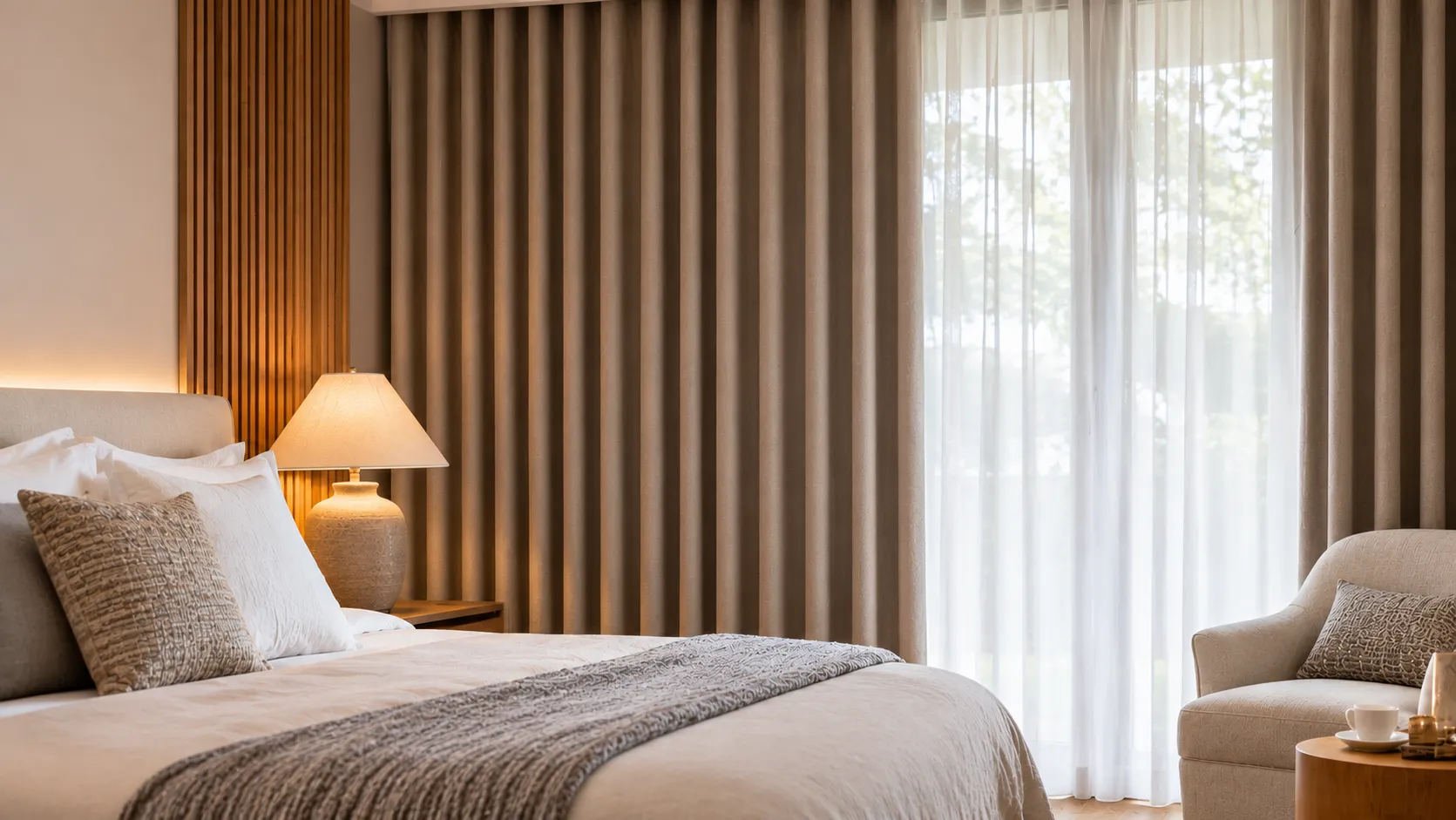
- Dual-Track Day-to-Night Functionality: Install a double-track system to balance light and privacy. Position lightweight slubbed linen sheers on the inner track to filter daytime solar glare while preserving outdoor views. Position dense multi-pass acrylic coated blackout drapes on the secondary track for complete room darkening, acoustic insulation, and thermal isolation at night.
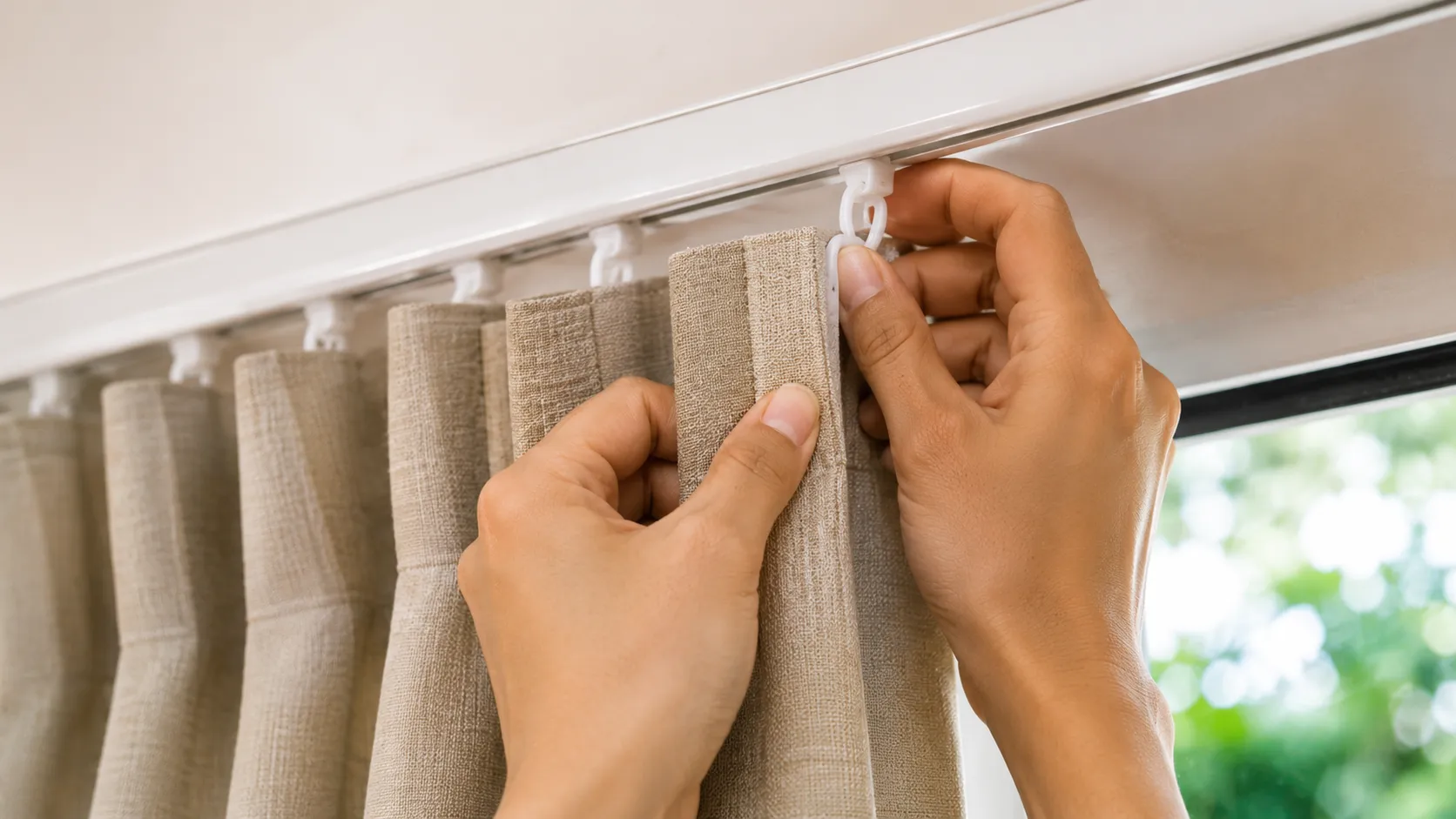
- S-Fold (Ripplefold) Wave Pleat Fullness (2.0x to 2.2x): Tailor curtain panels using double the track width in flat fabric volume. Continuous vertical S-waves highlight textile textures and stack back neatly without crowding side walls. Calculate exact fabric volume and stack-back allowances using our digital stacking calculator.
- Ceiling Recessed Pelmet Pockets: Mount tracks flush inside concealed ceiling pelmet cavities measuring **20 cm to 25 cm wide** and **10 cm to 15 cm deep**. Hiding hardware allows fabric cascades to emerge seamlessly out of the ceiling line. Spatial tolerances can be cross-referenced on our valances and cornices measuring guide.
- The 1 cm Floor Hover Clearance Rule: Measure vertical drop distances accurately from track runner eyelets down to finished floor or rug surfaces. Tailor bottom hems to hover precisely **1 cm above the rug or floor level**. This prevents curtain hems from dragging across rug edges, piling, or absorbing dampness. Review measurement rules on our curtain measuring guide and dedicated shade measuring guide.
6. Tropical Climate Resilience: Advanced Anti-Mold Protection
In humid tropical environments like Bali, high atmospheric moisture combined with continuous indoor air conditioning creates condensation microclimates near glass sliding doors. Untreated drapery fabrics and floor rugs absorb trapped moisture, fostering fungal mold spores, dark mildew spots, and musty odors that compromise indoor air hygiene.
To preserve pristine textile cleanliness and guest health, high-performance draperies supplied by Almeers Living feature advanced **Anti-Mold** (anti-jamur) technology. This specialized hydrophobic antimicrobial treatment repels water droplets and prevents fungal spore germination, keeping your curated window treatments clean, fresh, and allergen-free season after season.
7. Smart Motorization for Effortless Textile Management
Manually drawing heavy, wide-span multi-layer draperies across 5-meter to 8-meter glass sliding doors can cause users to tug fabric edges tightly, transferring skin oils and disturbing S-fold pleat alignment near rug borders. Upgrading drapery systems to a motorized track system powered by whisper-quiet DC actuators combines refined interior aesthetics with modern smart home convenience.
Motorized tracks glide drapes smoothly along the ceiling line without physical contact. Motorized systems integrate seamlessly with handheld remotes, wall keypads, smartphone apps, and smart home platforms like Apple HomeKit, Google Assistant, Amazon Alexa, and Control4. Program automated solar schedules to close blackout layers during peak afternoon heat hours (11:00 AM – 3:00 PM), maintaining cool indoor temperatures passively before residents return home.
8. Elevate Your Tropical Residence with Almeers Living
Matching curtains with rugs in tropical luxury homes requires an expert synthesis of color harmony, texture layering, pattern scale control, precision spatial tailoring, anti-mold protection, and climate-resilient hardware installation. Partnering with an experienced local specialist guarantees precise laser site surveys, custom fabric sampling, and long-term operational durability. As a recognized premier window treatment specialist in Bali, Almeers Living offers complete turnkey execution—from complimentary on-site laser surveys and custom fabric sampling to professional motorized installation across the island.
Transform your villa or residential estate into a beautifully coordinated, sun-regulated sanctuary today. Browse our full range of custom drapery fabrics, sheer voiles, and automated window solutions on our products page to schedule your personalized on-site consultation with Bali’s trusted window experts.