Tren Gorden Gaya Transisi untuk Hunian Modern: A Practical Designer Guide
What Is Transitional Curtain Style?
Transitional design combines traditional elements with contemporary simplicity. In window treatments, this often means clean silhouettes, considered proportions, restrained patterns, and fabrics that feel refined without appearing overly formal. The result can suit modern homes, renovated properties, and Bali villas that combine natural materials with contemporary architecture.
Transitional style is not a fixed set of rules. The objective is to create a balanced interior where curtains complement the architecture, furnishings, and everyday requirements.
1. Begin with the Architecture
Observe the window shape, ceiling height, wall finish, flooring, and furniture. A room with strong architectural lines may benefit from simple curtain panels with a subtle texture. A more traditional room can accommodate structured pleats or a slightly richer fabric while retaining a contemporary feel.
For full-height windows, measure from the intended track or rod position to the required finished hem. Do not estimate curtain length from the visible glass alone. Ceiling details, pelmets, recessed tracks, and floor conditions can change the final measurement.
2. Use a Balanced Colour Palette
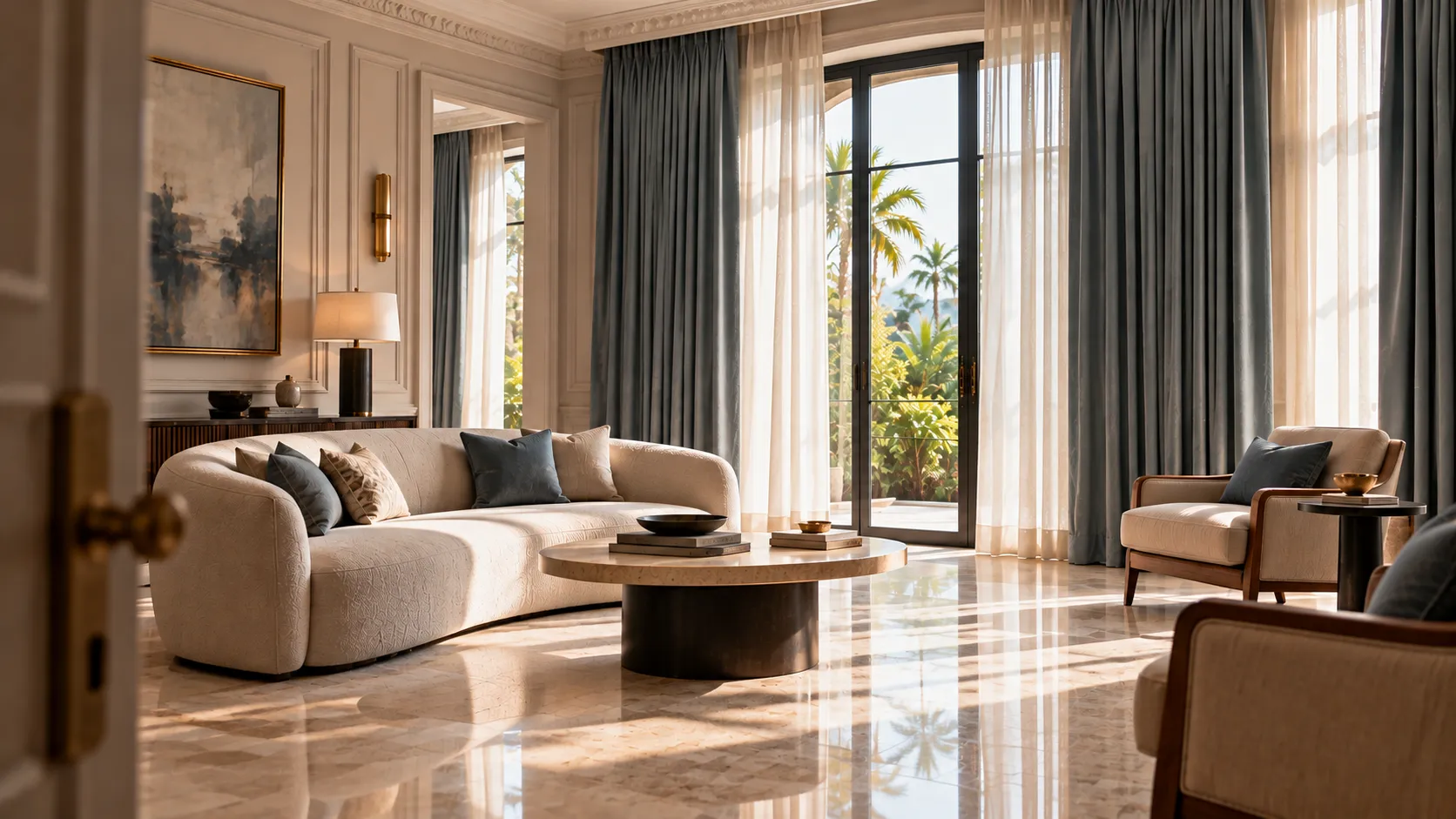
Warm white, soft beige, taupe, greige, and muted earthy tones are versatile starting points. They can complement timber, stone, and neutral upholstery commonly used in tropical interiors. Deeper colours can also work when the room needs contrast or a defined focal point.
Request physical samples and view them beside the wall, flooring, and furniture. Daylight, warm artificial lighting, and the direction of the window can all affect perceived colour.
3. Choose Texture Instead of Excessive Decoration
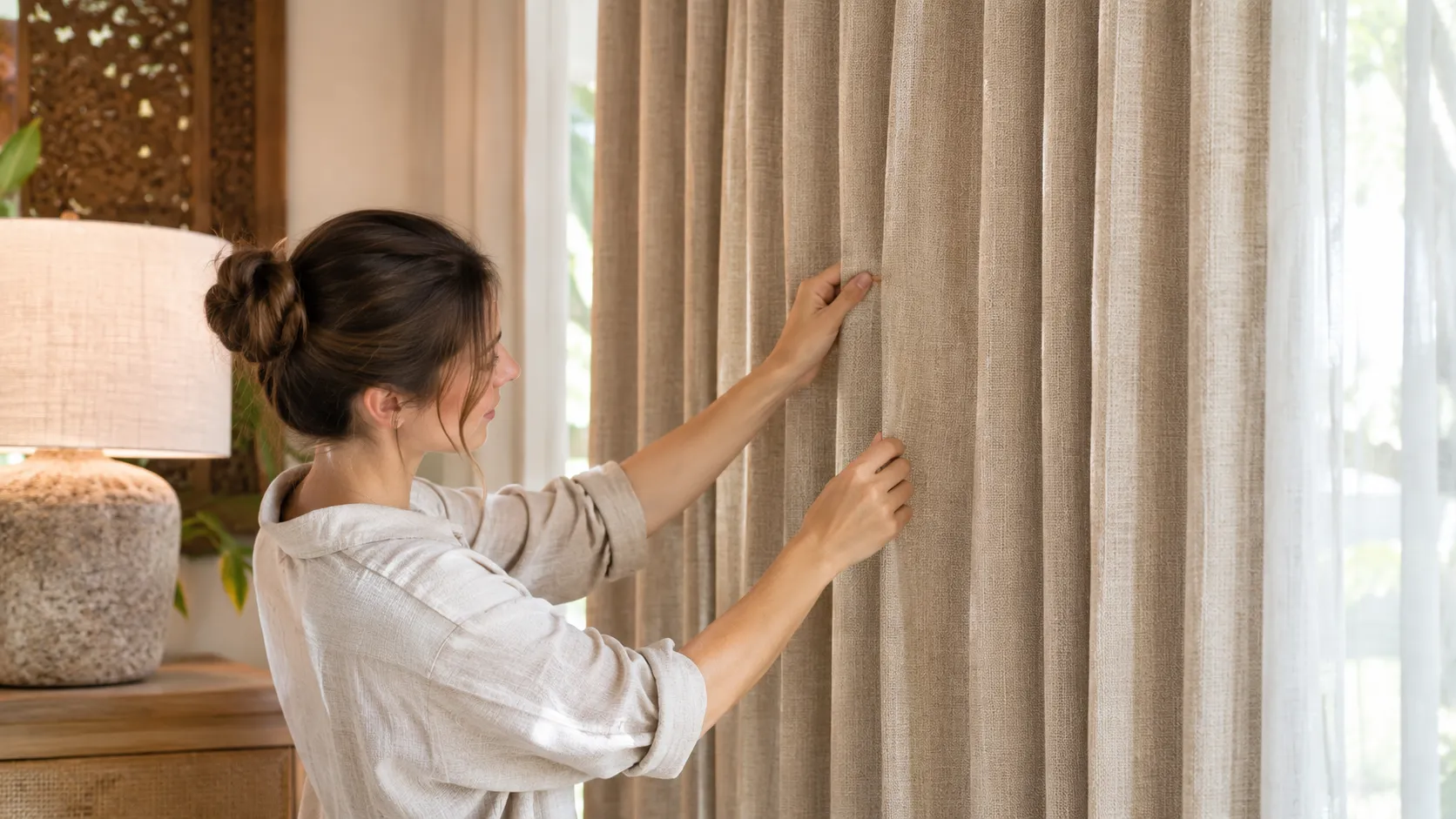
A subtle woven texture can add depth without introducing a busy pattern. Linen-look fabrics, fine weaves, and understated surfaces may bridge traditional and modern furniture styles. Confirm the actual fabric composition, opacity, and care instructions rather than relying on the appearance of a sample photograph.
4. Select the Right Curtain Heading
- Pinch pleat: A more structured appearance that can support formal or transitional rooms.
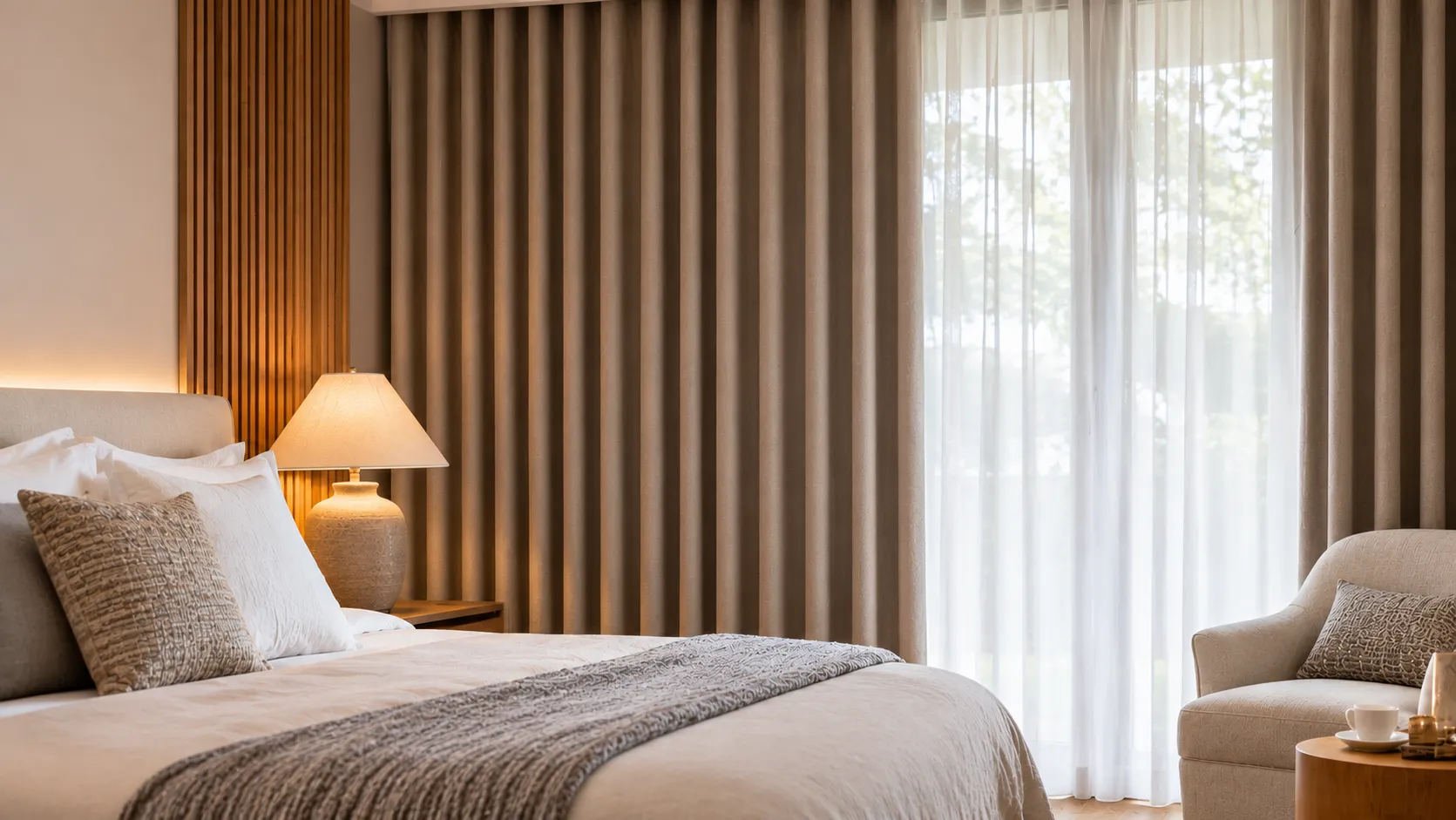
- S-fold or wave: A continuous, regular wave that can feel contemporary when paired with a compatible track.
- Simple gathered heading: A softer option for relaxed rooms, depending on the fabric and construction.
Each heading requires a suitable track or rod and an appropriate fabric fullness. Confirm compatibility before purchasing hardware or arranging installation.
5. Layer for Flexible Function
Layering can combine a sheer curtain with a heavier decorative or blackout layer. The sheer supports daytime privacy and filtered light in suitable conditions, while the second layer can provide more privacy and stronger light reduction when closed.
Consider how the curtains will stack when open. On sliding doors, ensure the panels do not obstruct access, handles, or the usable opening. The track position and available wall space can be just as important as the fabric choice.
6. Match the Specification to the Room
Bedrooms may require stronger light control, while living areas may prioritise daylight and views. Guest rooms and rental villas may need materials that suit the planned cleaning schedule and frequency of use. A single fabric specification is not automatically ideal for every room in the same property.
Common Mistakes to Avoid
- Mixing unrelated styles without a consistent colour or material connection.
- Choosing fabric from an online image without checking a sample.
- Ignoring the space required for the curtains to stack when open.
- Ordering before confirming the track type and installation method.
- Assuming all sheer or blackout fabrics provide the same privacy and light performance.
Frequently Asked Questions
Is transitional style suitable for a small room?
Yes. A restrained palette and simple curtain lines can help a small room feel visually calm. Proper mounting and suitable proportions matter more than decorative complexity.
Can transitional curtains use bold colours?
Yes. A deeper colour can become a deliberate focal point when the remaining palette is coordinated. Test the fabric in the room before committing.
Should every room use the same curtains?
Not necessarily. A consistent colour family or hardware finish can connect the property while allowing each room to meet its own light, privacy, and maintenance needs.
Plan a Cohesive Window Treatment
Transitional curtain styling works best when aesthetics and function are considered together. Almeers Living can help you compare custom fabrics, curtain headings, tracks, and lining options for your home or Bali villa. Request a consultation or site survey to discuss your windows and design goals.