Tropical Curtain Materials in Bali: Anti-Mold, UV and Moisture Considerations
The most suitable curtain material for a tropical property is not simply the thickest or most expensive fabric. In Bali, material selection should consider moisture, ventilation, direct sunlight, UV exposure, room use, cleaning access and how the fabric will be installed.
What Should You Evaluate?
| Factor | Why it matters |
|---|---|
| Moisture exposure | Rooms with higher humidity need appropriate material and ventilation planning. |
| Ventilation | Air movement affects how quickly fabrics dry after humid conditions. |
| Sunlight | Direct exposure can affect colour and fabric condition over time. |
| UV exposure | Strong sun can increase the need for suitable lining or protective layers. |
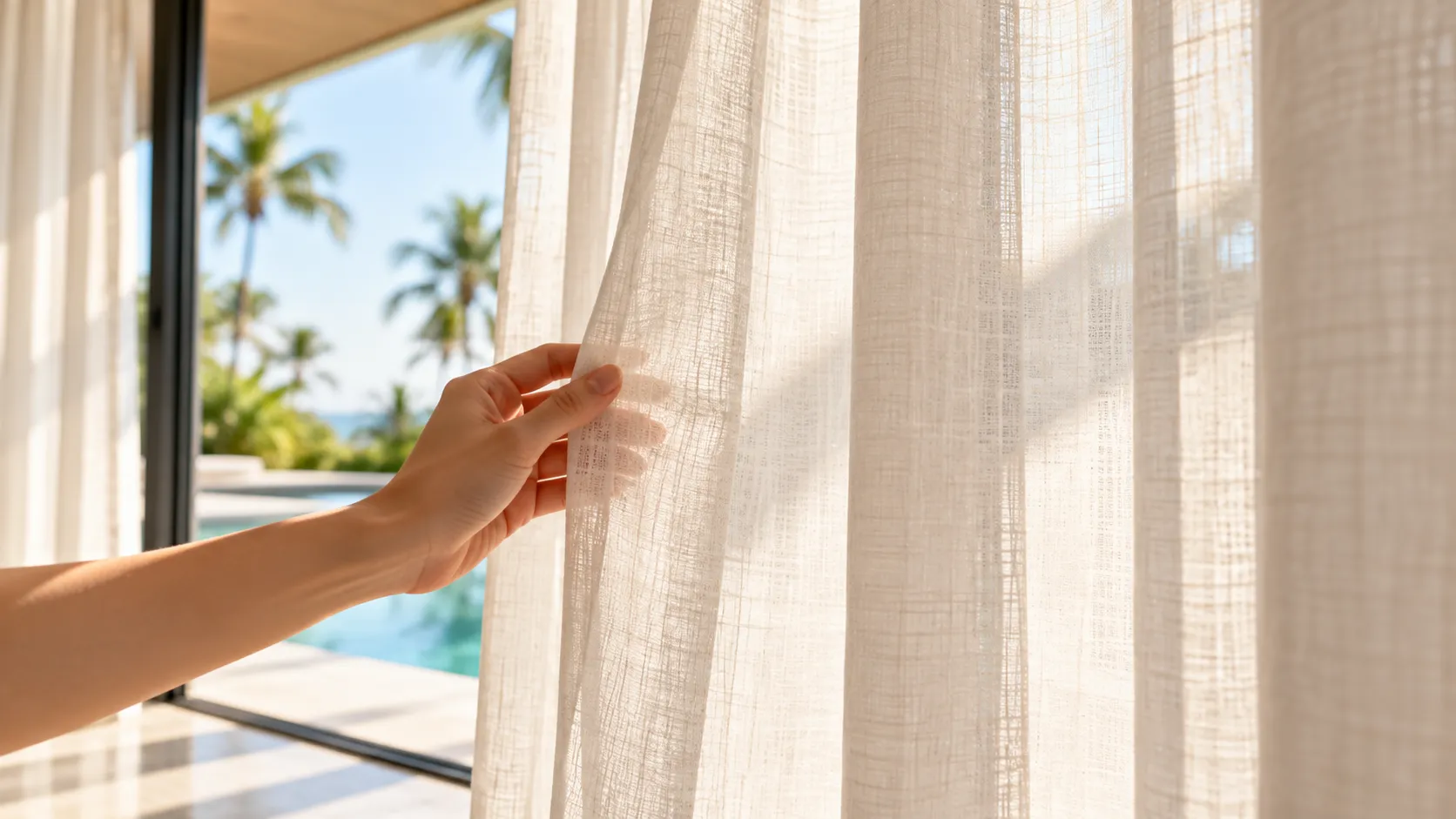
| Weave and construction | Different constructions affect opacity, drape and maintenance. |
| Cleaning access | Frequent-use properties need a realistic maintenance plan. |
Natural Fabrics: What to Consider
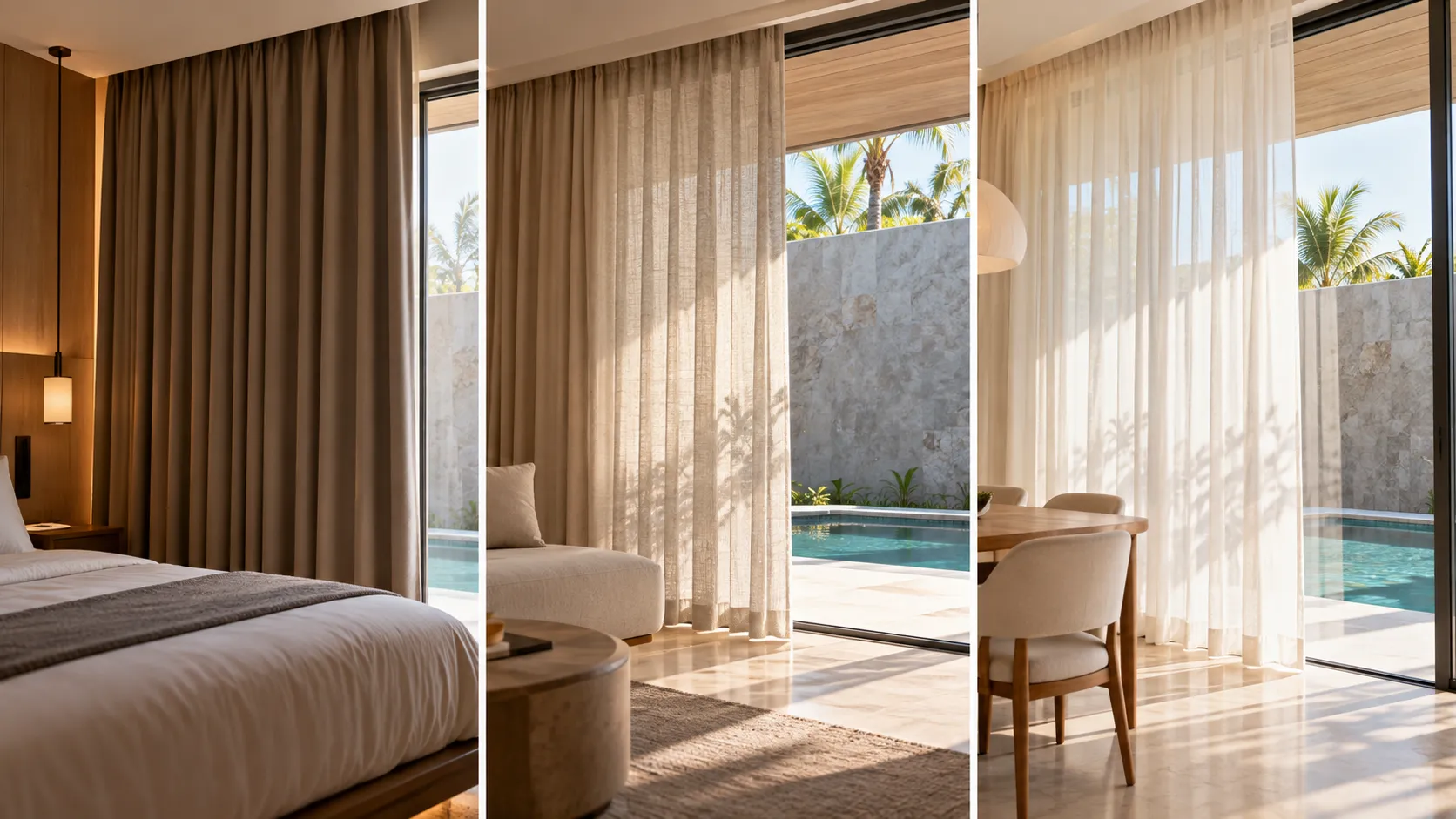
Linen and linen-blend fabrics are popular for their texture and relaxed appearance. Their suitability depends on actual construction, room condition and maintenance requirements rather than the word “linen” alone.
Natural fibres can respond to humidity and moisture differently from synthetic or blended fabrics. Before specifying them for a tropical property, consider ventilation, cleaning access and direct sunlight.
Linen Look and Synthetic Options
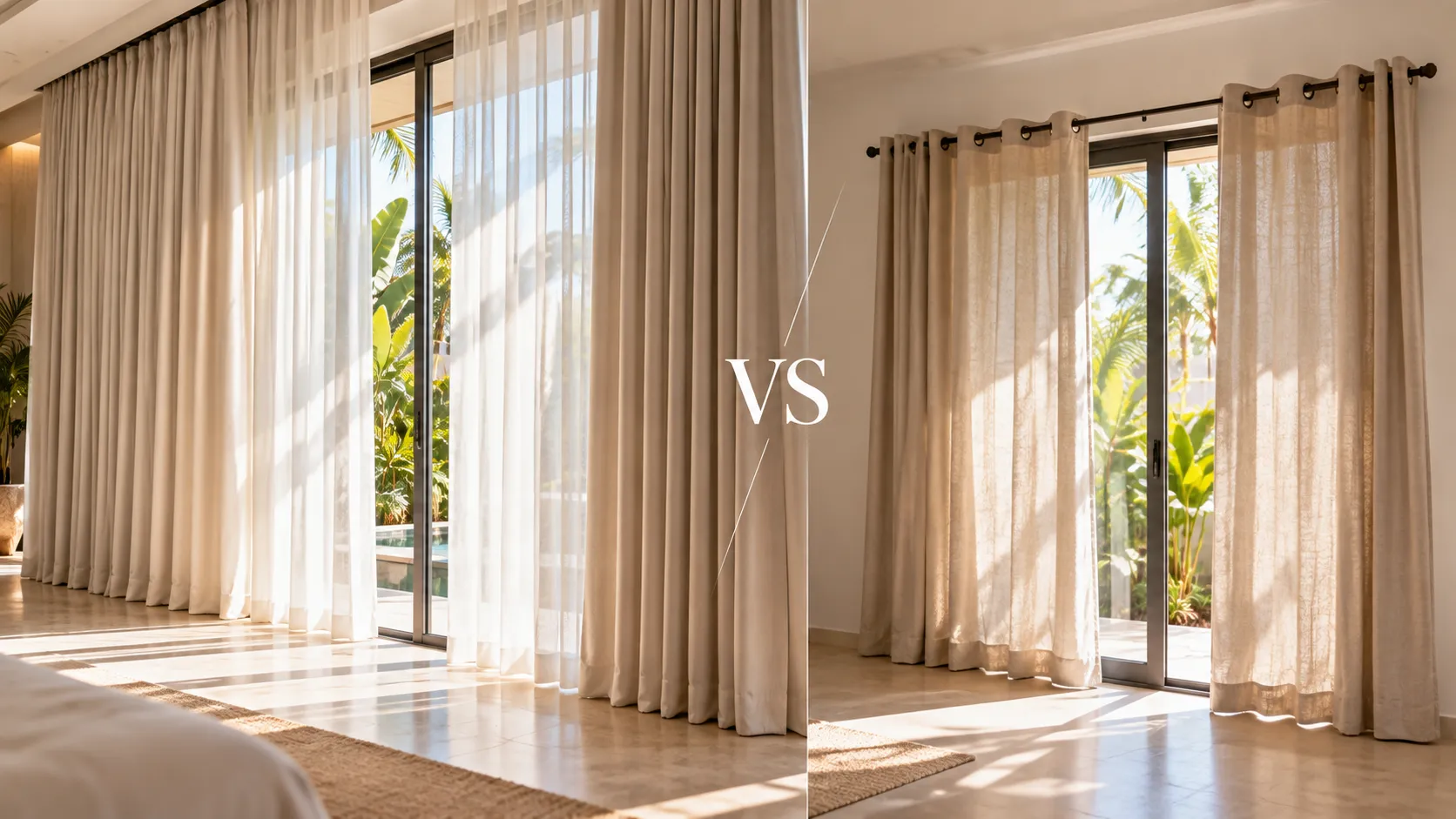
Linen-look polyester and other synthetic constructions can provide a natural visual direction while offering different maintenance characteristics. They can be useful where repeated cleaning, consistent appearance or practical upkeep is important.
The useful comparison is not simply natural versus synthetic. Compare actual fabric construction, intended room, performance requirement and maintenance routine.
Anti-Mold Considerations
A curtain material alone cannot guarantee that a room will remain free from mould. Moisture management is a property-level issue involving ventilation, condensation, cleaning, wall conditions and the distance between fabric and damp surfaces.
For humid rooms, do not specify a fabric without considering how the curtain will dry and how it will be cleaned. A material chosen for manageable maintenance can be more practical than one selected only for appearance.
Sunlight and UV Exposure
Strong direct sunlight can make a major difference to the long-term condition of fabrics. Window orientation matters: a west-facing opening can experience a very different afternoon load from a shaded opening.
Where sunlight is intense, consider the complete treatment. A sheer can soften daylight, while a dimout or blackout layer can provide stronger control when required. Lining can also change the performance of the face fabric.
Material by Room
| Room | Starting material direction | Priority |
|---|---|---|
| Bedroom | Linen, linen-look or lined decorative fabric | Comfort, privacy and light control |
| Living room | Sheer, linen or textured fabric | Daylight and atmosphere |
| Bathroom | Moisture-appropriate blind or treatment | Ventilation and maintenance |
| Rental villa | Durable, manageable fabric | Cleaning and repeated use |
| Large west-facing glazing | Suitable lining or layered treatment | Sun and glare control |
Installation Can Change Material Performance
Even a suitable fabric can perform poorly if installation ignores the window condition. Check finished drop, distance from walls, airflow around the fabric, stack-back and access for cleaning.
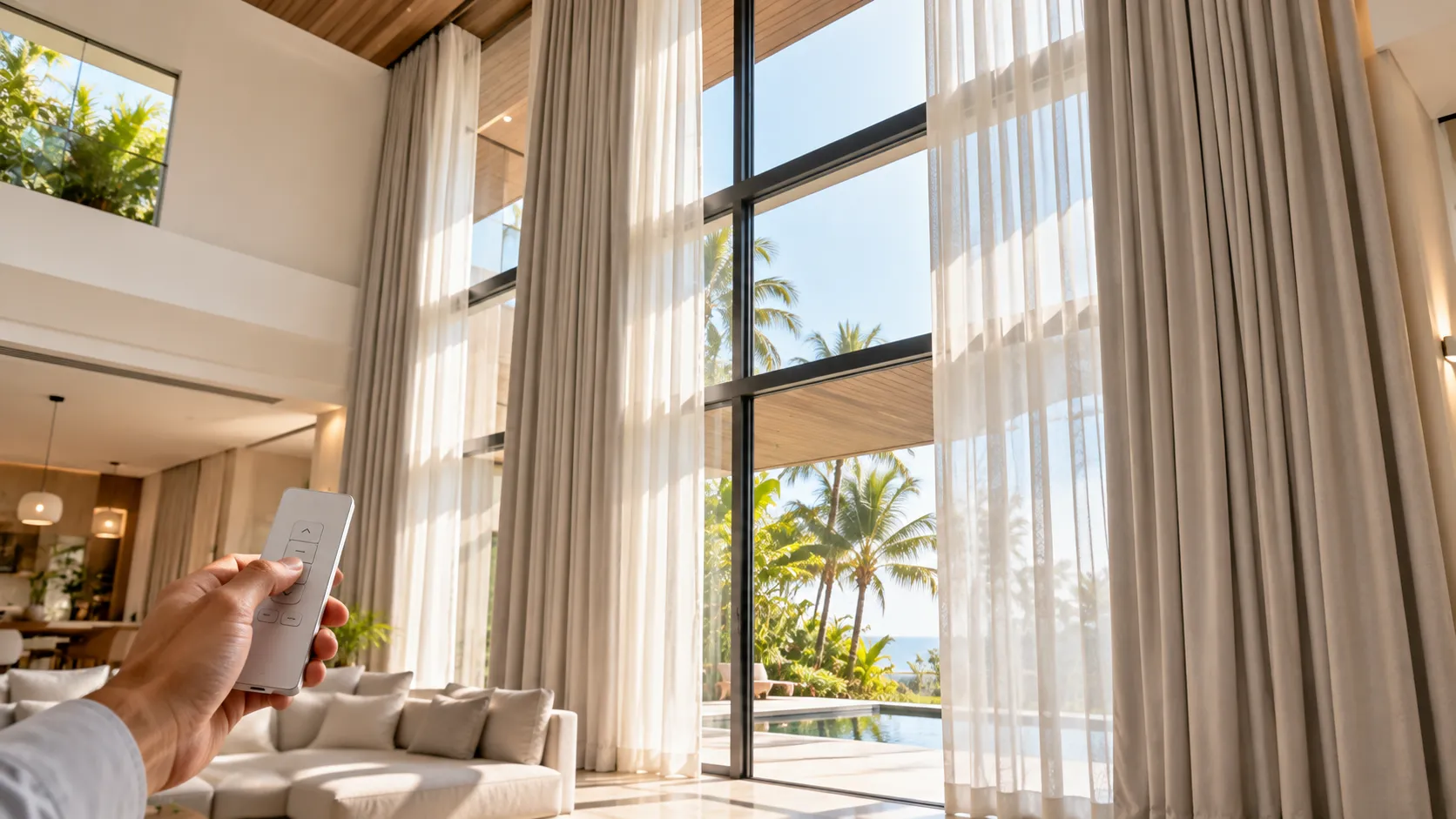
Large curtains should also be specified with appropriate fullness and hardware so the fabric can hang and operate correctly rather than being forced into an unsuitable system.
Material Selection Checklist for Bali
- Identify humidity and ventilation conditions.
- Check direct and indirect sunlight exposure.
- Consider UV exposure and lining.
- Match fabric construction to desired drape and opacity.
- Choose a realistic cleaning routine.
- Check distance between fabric and potentially damp surfaces.
- Confirm hardware and installation conditions.
- Request physical samples before final selection.
Our linen curtains guide explains fabric selection in more detail, while our fabric guide for blackout, sheer and dimout can help with light-control decisions.
Final Takeaway
For tropical properties, material selection works best when appearance, moisture, sunlight, ventilation and maintenance are evaluated together. There is no single fabric that is automatically correct for every room.