Types of Blinds: Venetian, Roman, Vertical – An Expert Architectural Guide
When designing or renovating a luxury property in prime locations across Bali—such as Canggu, Seminyak, Ubud, Sanur, and Umalas—selecting the right window treatments is essential to defining the architectural character of your space. Beyond aesthetics, blinds play a vital role in light modulation, thermal regulation, and privacy control in tropical environments.
At Almeers Living, we specialize in custom premium window treatments engineered for high-end residential and commercial interiors. Here is an expert breakdown of the three primary types of blinds—Venetian, Roman, and Vertical—and how to select the best fit for your property.
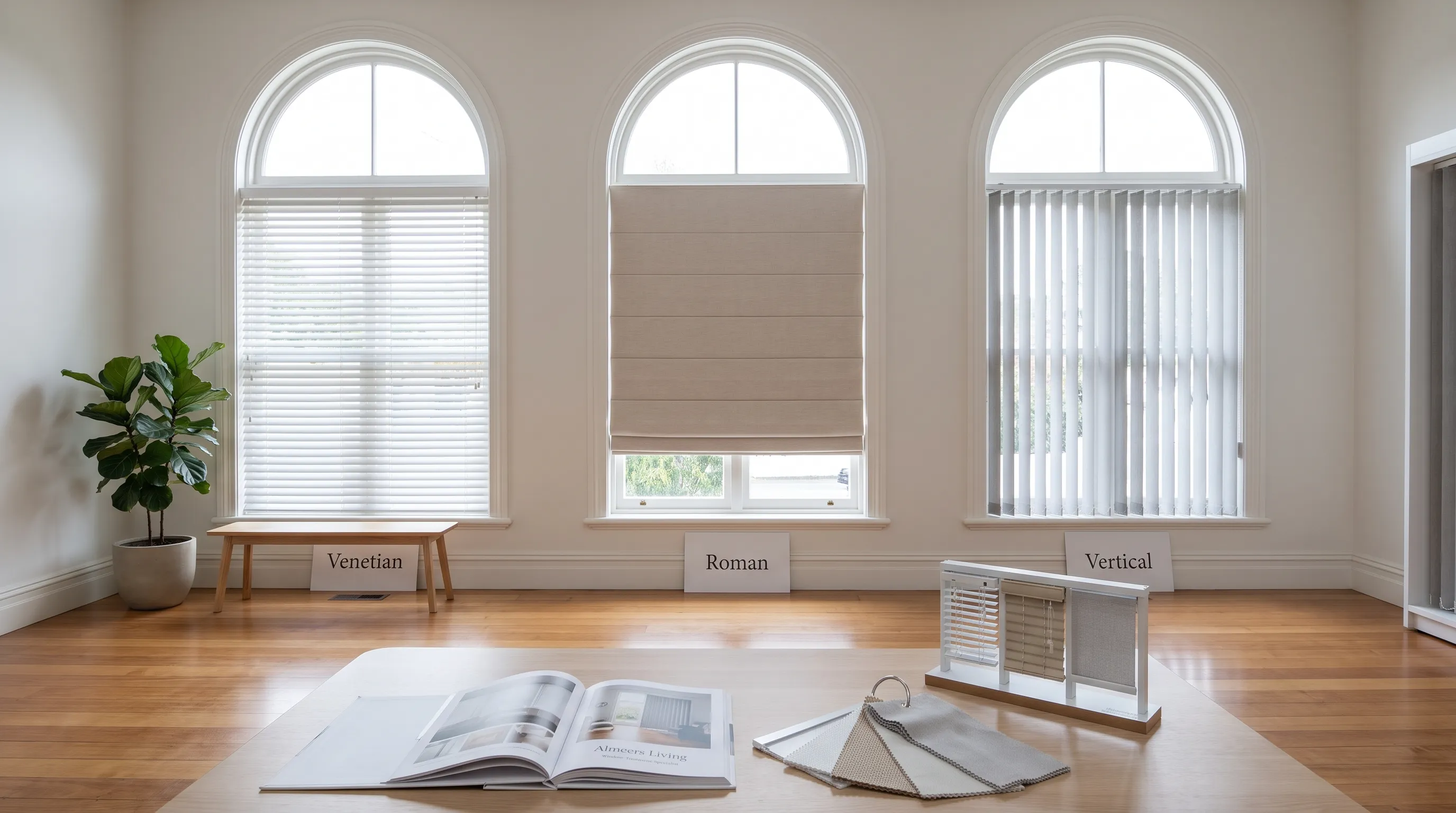
1. Venetian Blinds: Precise Light Control and Timeless Texture
Venetian blinds consist of horizontal slats suspended by cord systems or tapes that tilt up to 180 degrees. This construction grants granular control over light diffusion and direction without compromising privacy.
- Wooden Venetian Blinds: Crafted from natural timber or faux-wood composites, these blinds introduce rich organic warmth into tropical and biophilic interior spaces.
- Aluminum Venetian Blinds: Featuring slim profiles, these are ideal for ultra-minimalist, industrial, or high-moisture interior zones.
- Best Suited For: Home offices, dining rooms, and living spaces where directional sunlight control is required throughout the day.
2. Roman Shades: The Architectural Softness of Fabric
Roman shades combine the tailored operation of a blind with the luxurious aesthetic of soft drapery. When raised, the fabric gathers into clean, horizontal pleats; when lowered, it forms a flat, continuous fabric panel across the window opening.
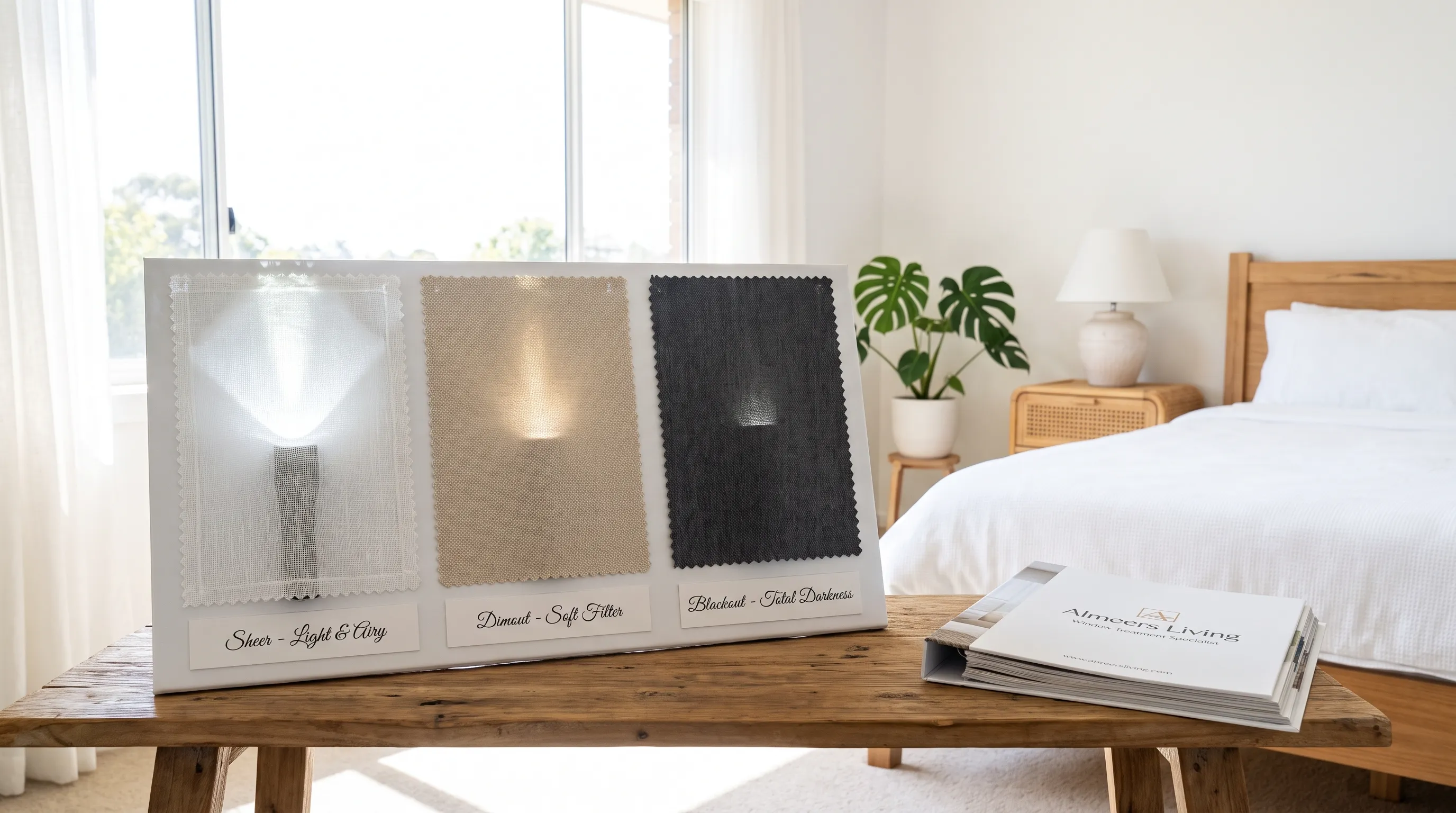
- Fabric Flexibility: Roman shades can be customized using a wide range of materials—from sheer, light-diffusing textiles to heavy Dimout 80% or Premium Blackout 100% backings.
- Climate Resilience: In humid tropical environments, equipping Roman shades with specialized Anti-Mold (anti-jamur) technology ensures the fabric remains pristine and free from moisture degradation over time.
- Best Suited For: Master bedrooms, private suites, and formal lounges that require atmospheric warmth and superior light closure.
3. Vertical Blinds: Seamless Shading for Expansive Glazing
Vertical blinds feature vertical fabric slats attached to an overhead track system that traverse horizontally across the window opening. They tilt to adjust light angles or draw entirely to one side for unobstructed views.
- Large-Scale Architecture: Modern villa architecture frequently incorporates floor-to-ceiling glass facades and sliding glass doors. Vertical blinds are structurally suited for wide architectural spans.
- Low Dust Accumulation: Because the slats hang vertically, they naturally resist dust buildup compared to horizontal blinds, making them low-maintenance solutions for high-traffic environments.
- Best Suited For: Expansive patio access doors, floor-to-ceiling glazing, and open-plan living areas facing outdoor gardens or pool decks.
4. Enhancing Your Choice with Motorization
Regardless of the blind style you select, modern luxury standards favor intelligent automation. Upgrading your window coverings to Motorized Smart Blinds allows you to operate your blinds effortlessly via remote control, smartphone application, or integrated smart home ecosystems like Amazon Alexa.
Experience Hassle-Free Custom Solutions with Almeers Living
Choosing and installing the perfect window treatments should be an effortless experience. Almeers Living offers an end-to-end service for B2B and B2C clients, providing free expert consultations, precise site surveys, and professional installation across Bali.
Explore more architectural design guides on BLOG ALMEERSLIVING, or click the "Chat on WhatsApp" button on our website today to schedule your complimentary site survey with our specialists!