Types of Blinds: Venetian, Roman, Vertical: The Expert Checklist
Short answer: Venetian blinds suit precise directional light control, Roman shades bring fabric softness and architectural texture, while Vertical blinds are useful across wide or floor-to-ceiling glazing. The right choice depends on the opening, room function, privacy requirement, and visual character.
1. Compare the Three Main Types
| Type | Light Control | Best For | Visual Character | Key Consideration |
|---|---|---|---|---|
| Venetian | Precise through slat adjustment | Offices, kitchens, living areas | Clean and structured | Slat material and width |
| Roman | Depends on fabric and lining | Bedrooms, lounges, suites | Soft and tailored | Fabric weight and fold construction |
| Vertical | Good for wide glazing | Sliding doors and large openings | Architectural and vertical | Track span and stacking |
2. Venetian Blinds: Precise Light Direction
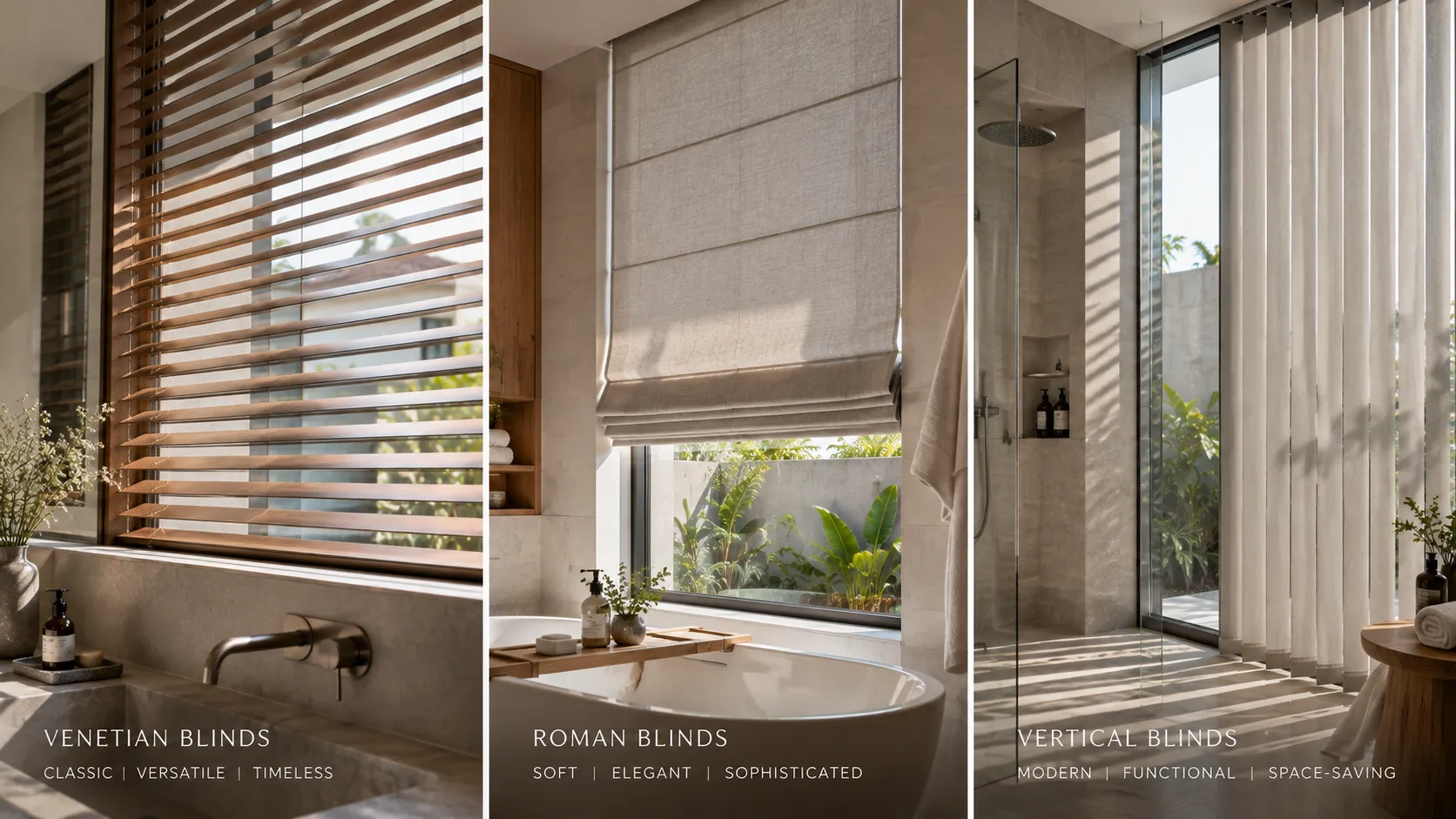
Venetian blinds use horizontal slats that tilt to adjust the direction and amount of light. They are useful when occupants need fine control throughout the day without adding a large fabric layer.
- Wooden Venetian: adds natural warmth and works well with timber, stone, and biophilic interiors.
- Faux wood: offers a similar visual direction where moisture resistance or consistent dimensions are important.
- Aluminium Venetian: provides a slimmer, more technical appearance for contemporary interiors.
3. Roman Shades: Soft Architectural Texture
Roman shades use fabric that folds into horizontal sections when raised and forms a tailored panel when lowered. Fabric, lining, and finished stack height strongly influence the result.
- Choose fabric according to daylight and privacy needs.
- Confirm the finished stack height so the raised shade does not obstruct the view.
- Check window depth before deciding on inside mounting.
- Consider blackout or dimout lining where stronger light control is required.
4. Vertical Blinds: Designed for Wide Openings
Vertical blinds use vertical slats attached to a top track. Their geometry can suit wide glazing, especially where a clear passage to a terrace, garden, or pool is required.
5. Which Type Fits Which Room?
| Room / Opening | Starting Option | Why |
|---|---|---|
| Home office | Venetian | Precise daylight and screen control |
| Master bedroom | Roman with suitable lining | Soft appearance with stronger light control |
| Wide sliding door | Vertical or layered solution | Wide-span operation and access |
| Dining area | Venetian or Roman | Balances appearance and daylight control |
6. Tropical Climate Considerations
In Bali, humidity, dust, direct sunlight, and frequent indoor-outdoor movement can affect material choice and maintenance. Hardware, material treatment, mounting conditions, and cleaning access should therefore be considered alongside appearance.
7. Practical Checklist Before Ordering
- Measure the finished opening accurately.
- Confirm inside-mount depth or outside-mount clearance.
- Check where the blind will stack when fully open.
- Specify the required privacy and light-control level.
- Confirm material suitability for the room environment.
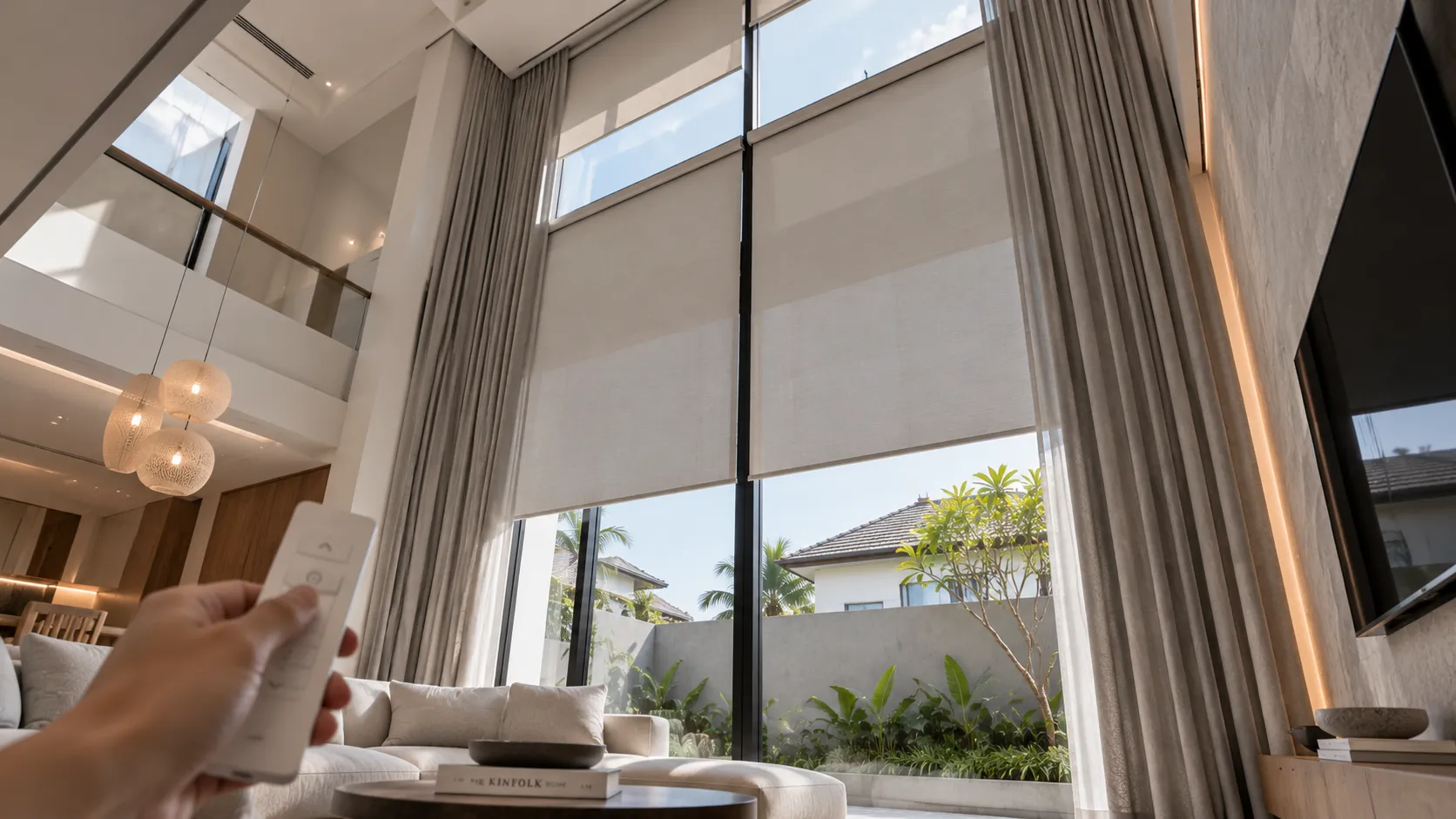
- Consider motorization for high or frequently operated windows.
Almeers Living can help match blind type, material, mounting method, and operation to the architecture and climate of your Bali property.