Types of Blinds: A Complete Guide to Venetian, Roman, Vertical, and Wooden Styles
Selecting the right window treatments for your premium property in Bali goes far beyond basic aesthetics[cite: 1]. Whether you are outfitting a contemporary luxury villa in Canggu or a serene retreat in Ubud, the type of blinds you choose will dramatically impact the natural light, privacy, and overall thermal comfort of your space[cite: 1].
At Almeers Living, we offer a comprehensive range of custom window treatments designed for high-end properties[cite: 1]. To help you make an informed decision for your interior design project, our experts have compiled this guide to the four most popular types of blinds: Venetian, Roman, Vertical, and Wooden[cite: 1].
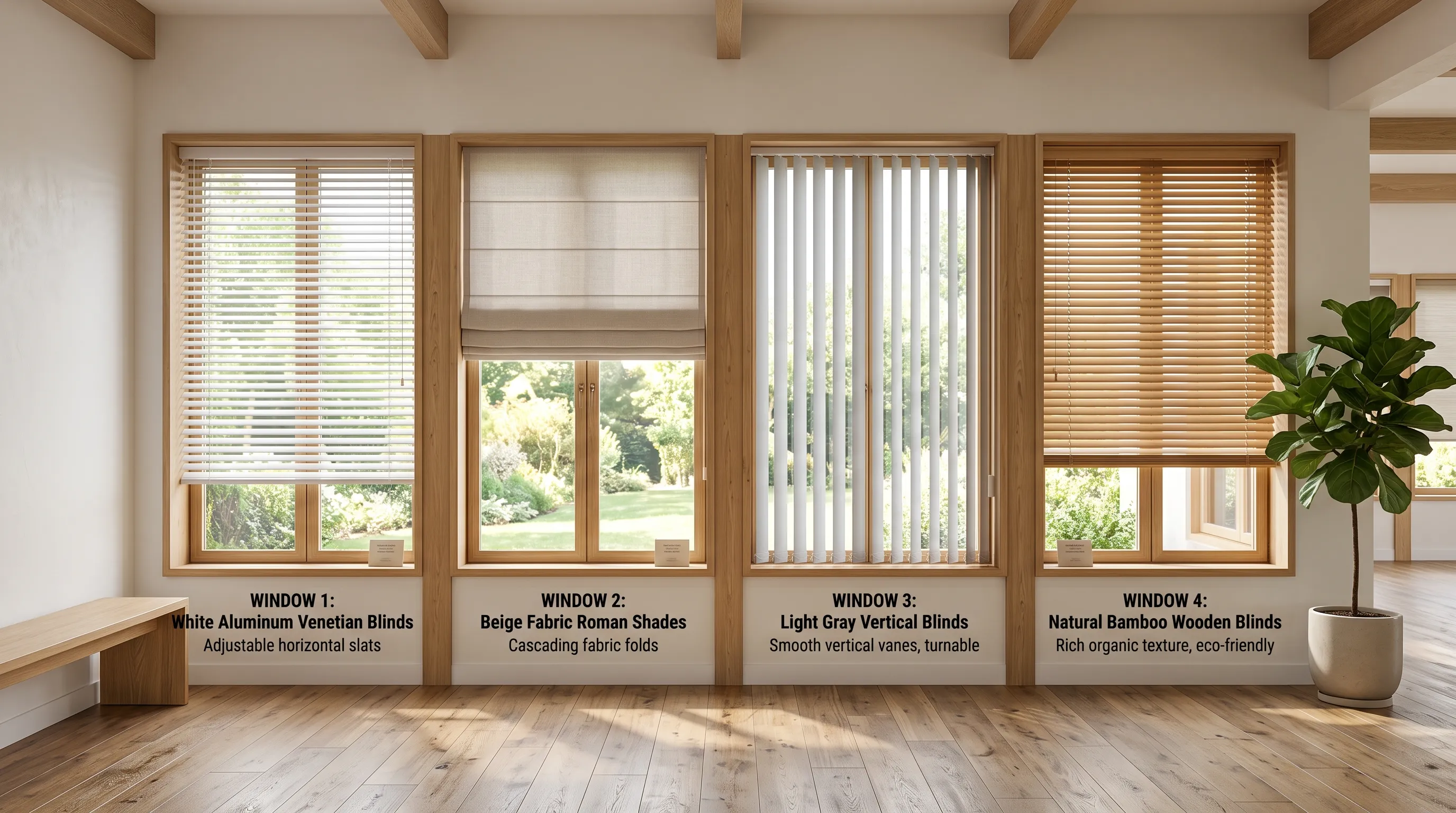
1. Venetian Blinds: The Classic Choice for Light Control
Venetian blinds feature horizontal slats suspended by cords or tapes. They are incredibly versatile and remain a staple in modern interior design.
- Key Benefits: The primary advantage of Venetian blinds is precise light control. By simply tilting the slats, you can direct sunlight away from furniture while still allowing natural illumination into the room.
- Best For: Home offices, bathrooms, and kitchens where adjusting the angle of light and maintaining daytime privacy is essential.
2. Roman Shades: Soft Elegance and Texture
Roman shades are made from continuous pieces of fabric that fold up neatly into horizontal pleats when raised, and lay completely flat when lowered.
- Key Benefits: They bridge the gap between the sleek functionality of blinds and the soft, luxurious aesthetic of traditional curtains. When made with Premium Blackout 100% or Dimout 80% fabrics, they offer excellent thermal insulation and light blocking[cite: 1].
- Best For: Master bedrooms, elegant living rooms, and boutique hotel suites that require a touch of softness and sophisticated texture.
3. Vertical Blinds: The Solution for Expansive Glass
As the name suggests, these blinds consist of vertical lengths of fabric or rigid materials that hang from a top track and slide horizontally.
- Key Benefits: Tropical modern architecture often features large, floor-to-ceiling glass sliding doors. Vertical blinds are the most practical solution for these expansive windows, offering effortless operation and the ability to draw them completely out of the way to enjoy panoramic views.
- Best For: Sliding glass doors, very wide windows, and commercial spaces where durability and easy access to the outdoors are prioritized.
4. Wooden Blinds: Organic Warmth and Tropical Charm
Wooden blinds operate similarly to Venetian blinds but are crafted from natural wood. They bring an undeniable earthy element into any space.
- Key Benefits: They perfectly complement Balinese interior aesthetics and Biophilic design trends by introducing natural textures[cite: 1]. Wood acts as a natural insulator, helping to keep interiors cool against the scorching tropical sun[cite: 1].
- Best For: Living areas, dining rooms, and properties that heavily feature natural stone, teak wood, and organic design elements.
Customizing Your Space with Almeers Living
Choosing the right style is only the first step. In Bali's demanding climate, functionality and material durability are paramount[cite: 1]. We highly recommend upgrading your chosen style with Motorized Smart Blinds technology for effortless control, and utilizing Anti-Mold materials to withstand high tropical humidity[cite: 1].
Ready to elevate your windows? Contact the experts at Almeers Living today for a free consultation and let us help you curate the perfect blinds for your luxury property[cite: 1].