Jenis Tenunan Kain Gorden dan Teksturnya: A Smarter Way to Choose Drapery Fabrics for Tropical Interiors
Designing modern luxury residential estates, boutique hotel suites, and high-end rental villas across Bali—from the vibrant coastal corridors of Canggu, Seminyak, and Umalas to the tranquil forest sanctuaries of Ubud and dramatic clifftop estates in Uluwatu—demands a sophisticated understanding of textile structural mechanics. In high-end tropical architecture where expansive floor-to-ceiling glass sliding doors connect indoor living lounges with lush courtyard gardens and infinity pools, window draperies are much more than simple light blockers. They are massive, tactile architectural canvases that define acoustic atmosphere, modulate natural daylight scattering, and introduce visual warmth. Property developers, interior architects, and homeowners frequently seek professional guidance on curtain weave types and textures (jenis tenunan kain gorden dan teksturnya: a smarter way to choose) to elevate interior spaces with intention and long-term climate endurance.
Selecting the ideal drapery fabric in high-intensity tropical environments involves far more than picking surface colors. It requires an in-depth analysis of weave construction physics (such as plain, basket, twill, Jacquard, velvet, and slubbed weaves), understanding how yarn densities affect light scattering, matching tactile surfaces with biophilic materials like teaks and polished terrazzo, and ensuring rigorous anti-mold protection. In this comprehensive editorial masterclass, we explore the science of textile weaving, tactile surface dynamics, and technical tailoring standards to help you choose the perfect window fabrics for your architectural project.
1. The Textile Science Behind Weave Construction and Tactile Texture
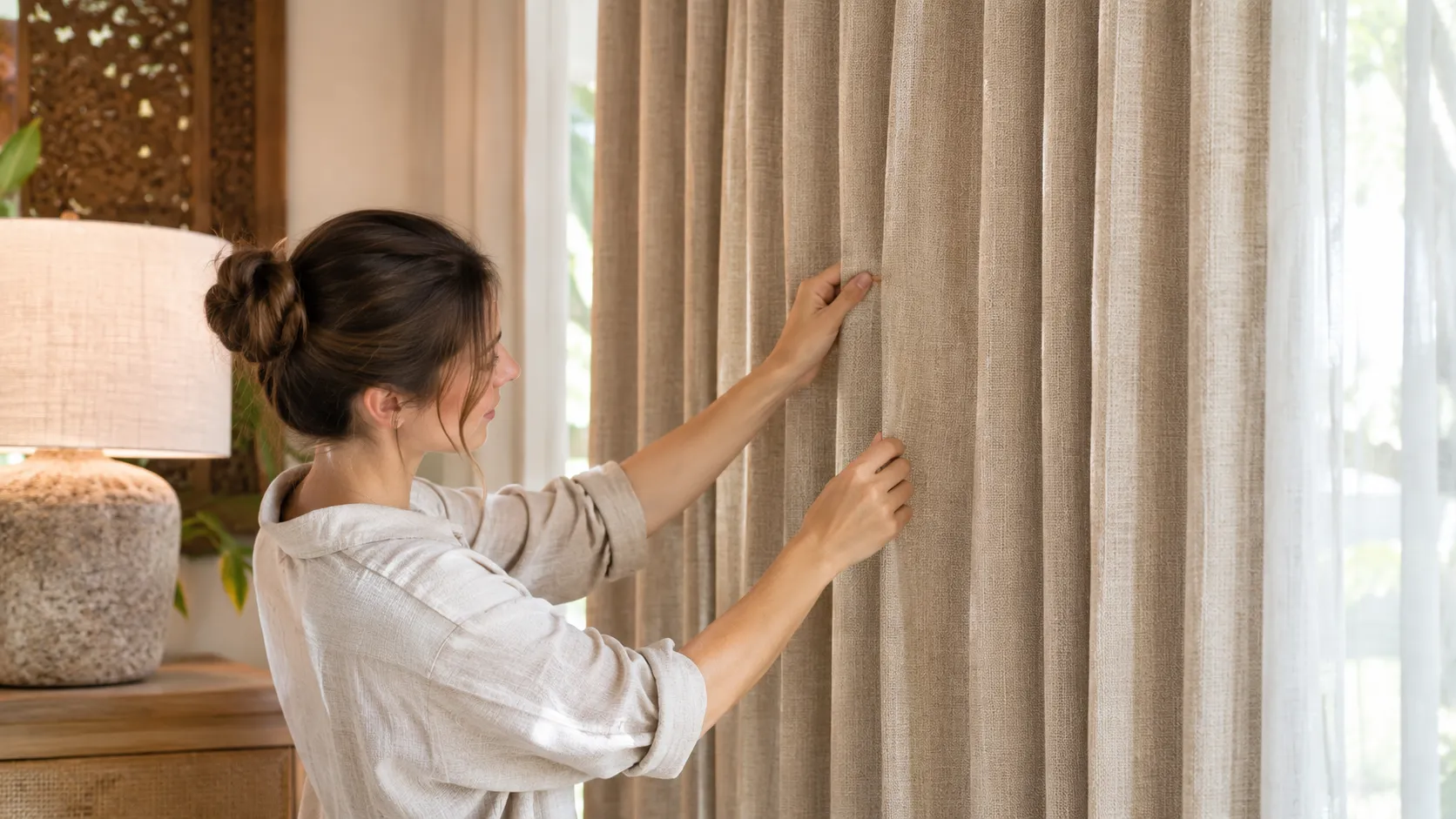
The tactile surface, drape fluidity, and optical performance of any curtain fabric are governed by its fundamental weave architecture—how warp threads (longitudinal yarns) and weft threads (transverse yarns) interlace on the loom:
- Structural Stability and Tensile Strength: High-ceiling drapery panels hanging 4 to 7 meters tall experience continuous gravitational pull. Tightly interlaced weaves prevent fabric elongation, warping, or seam distortion over time.
- Optical Light Diffusion and Refraction: The physical texture of a weave alters how equatorial sunlight reflects off or passes through yarn fibers. Smooth satin weaves reflect light in sharp directional beams, whereas slubbed or basket weaves scatter light multi-directionally, creating a soft, ambient indoor glow.
- Acoustic Reverberation Dampening: Textured, multi-dimensional weaves (such as boucle, velvet, or heavy slub linens) trap sound waves within their porous surface pockets, dampening acoustic echo off large glass window panes.
2. Deconstructing Common Drapery Weave Types
Selecting the right fabric begins with recognizing how different weave structures perform in real-world interior applications:
- 1. Plain Weave (Voiles and Linen Sheers): The simplest and most timeless crisscross pattern (one thread over, one thread under). Plain weave textiles create lightweight, breathable sheer voiles that diffuse harsh solar glare while preserving outward views of tropical gardens (explore sheer fabric options starting at Rp 60.000/m on our products page).
- 2. Slubbed Weave (Organic Linen-Look Textures): Crafted using yarns with intentional variations in diameter (slubs), creating uneven, organic horizontal lines across the fabric surface. Slubbed weaves bring biophilic, relaxed tactile luxury to Japandi and modern tropical villa interiors.
- 3. Basket Weave (Panama Weave): Multiple warp and weft threads are interlaced in a crisscross grid, producing a pronounced checkerboard-like surface texture. Basket weaves offer structural weight, high air permeability, and casual coastal sophistication.
- 4. Jacquard & Brocade Weaves (Intricate Architectural Patterns): Woven on specialized Jacquard looms that raise individual warp threads independently, allowing complex geometric, botanical, or abstract patterns to be integrated directly into the fabric structure rather than printed on top.
- 5. Velvet & Cut Pile Weaves (Opulent Depth & Thermal Mass): Woven with a dense vertical pile of upright loops cut uniformly to create a soft, plush hand-feel. Velvet offers rich color depth, excellent sound dampening, and high light isolation for master bedrooms and media lounges (starting at Rp 60.000/m to Rp 110.000/m).
3. A Smarter Way to Choose: Matching Weave Types to Room Functions
A smart textile specification strategy aligns fabric weave performance directly with the specific environmental and functional demands of each living space:
- Living Pavilions & Open-Plan Lounges: Specify slubbed linen-blend sheers or light-filtering basket weaves. These open structures soften intense equatorial sun glare into a calm ambient glow while allowing cool ocean breezes to pass through when sliding glass doors are drawn back.
- Master Bedroom Suites & Guest Sanctuaries: Combine textured face fabrics (such as Jacquard or slubbed linen) with multi-pass acrylic coated blackout backings or dense thermal interlinings. This dual setup guarantees 100% room darkening for rest while maintaining rich visual surface texture.
- Formal Dining Rooms & Home Theaters: Heavy velvet or dense Jacquard weaves absorb room echo, enhance acoustic warmth, and provide substantial thermal insulation against afternoon heat gain.
4. Precision Measurement and S-Fold Wave Pleating Engineering
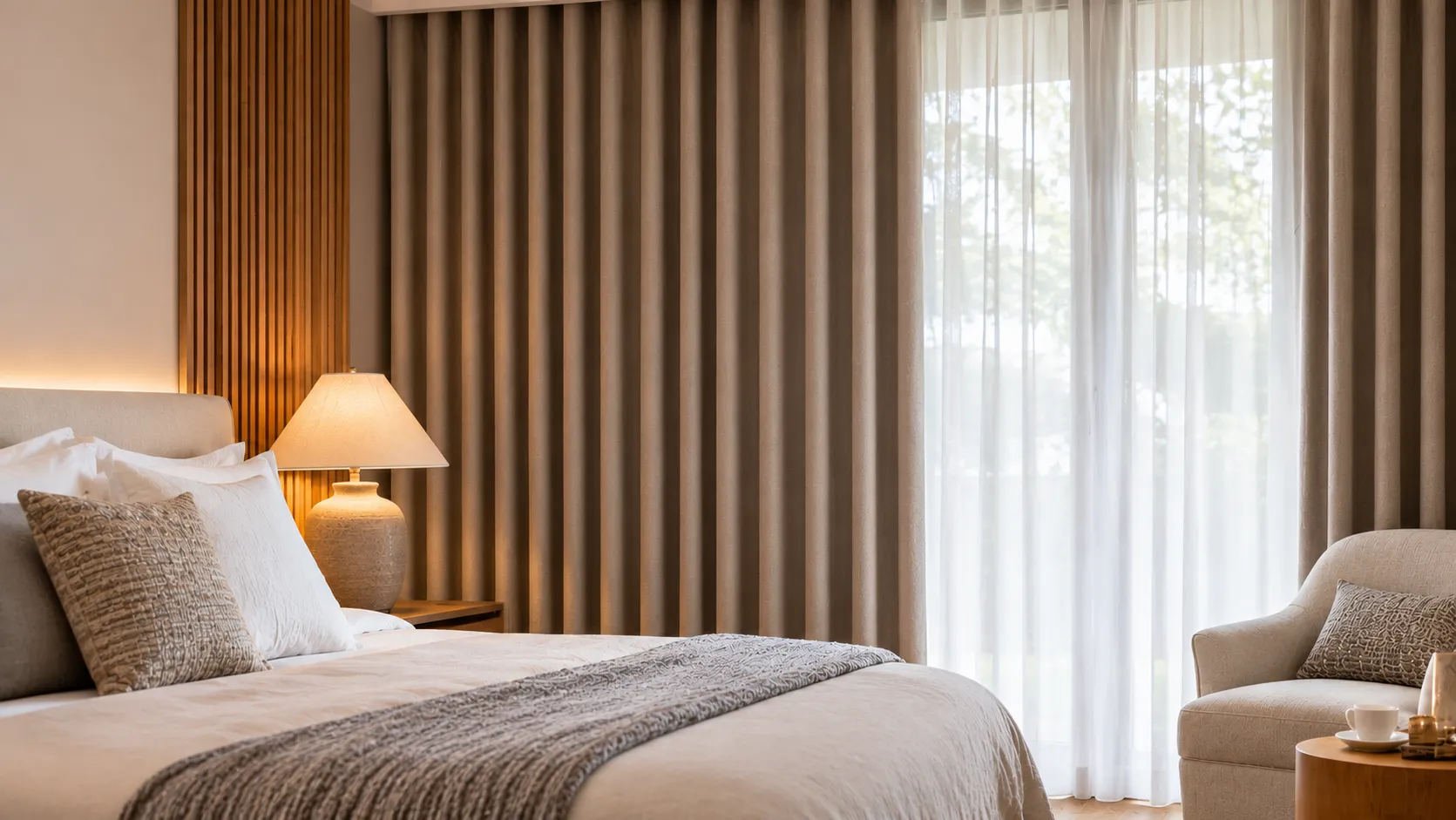
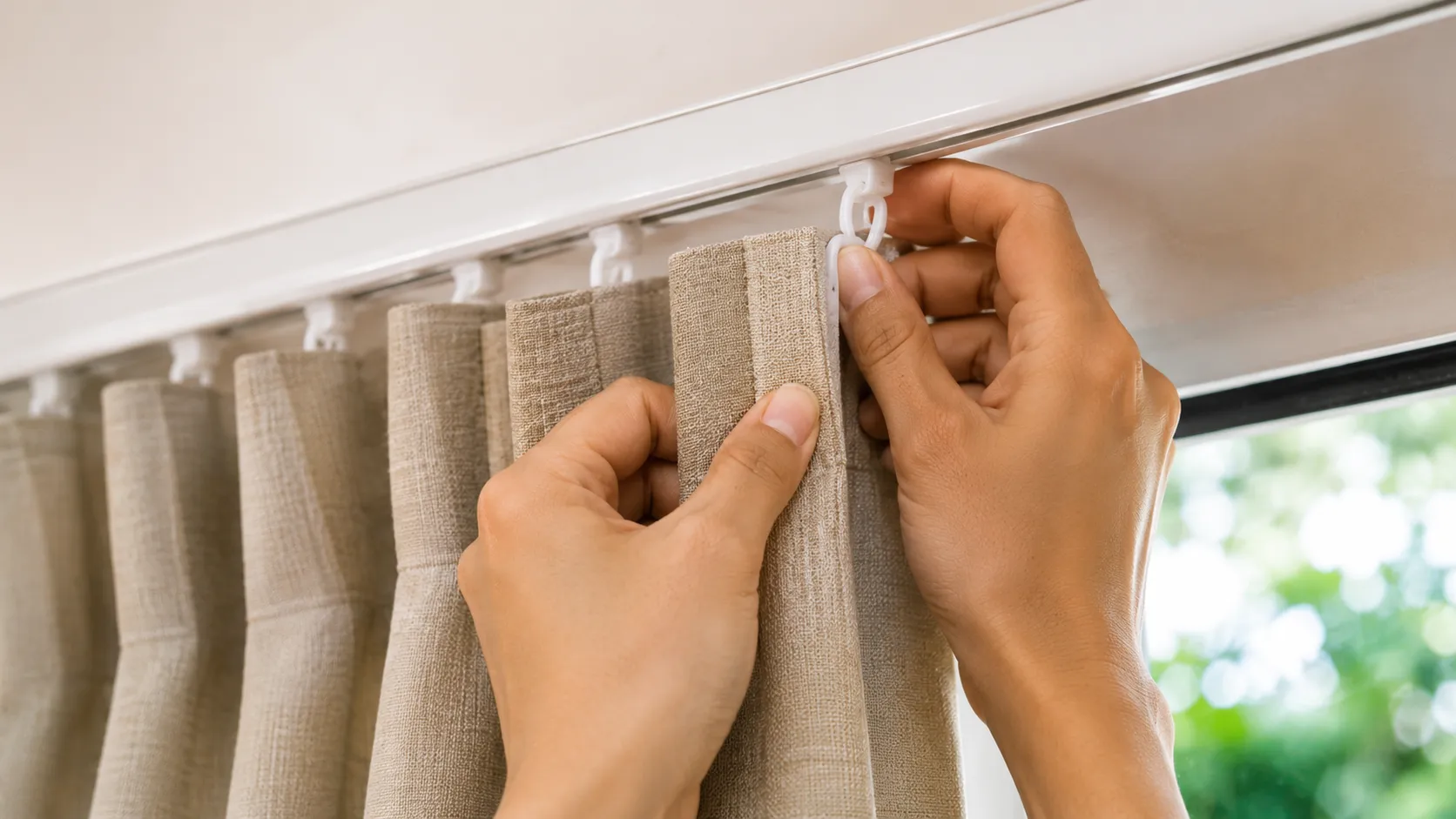
The visual impact of any fabric weave relies heavily on how draperies hang across wide window spans. Flat, skimpy curtains fail to display weave depth effectively, whereas tailored **S-Fold (Ripplefold) wave pleats** create alternating light and shadow pockets that showcase tactile richness:
- 2.0x to 2.2x Fullness Multiplier: Tailor curtains using double the track width in flat fabric volume. Deep, uniform vertical S-waves amplify texture depth and maintain visual symmetry across wide sliding door spans. Calculate exact fabric requirements and stack clearances using our digital stacking calculator.
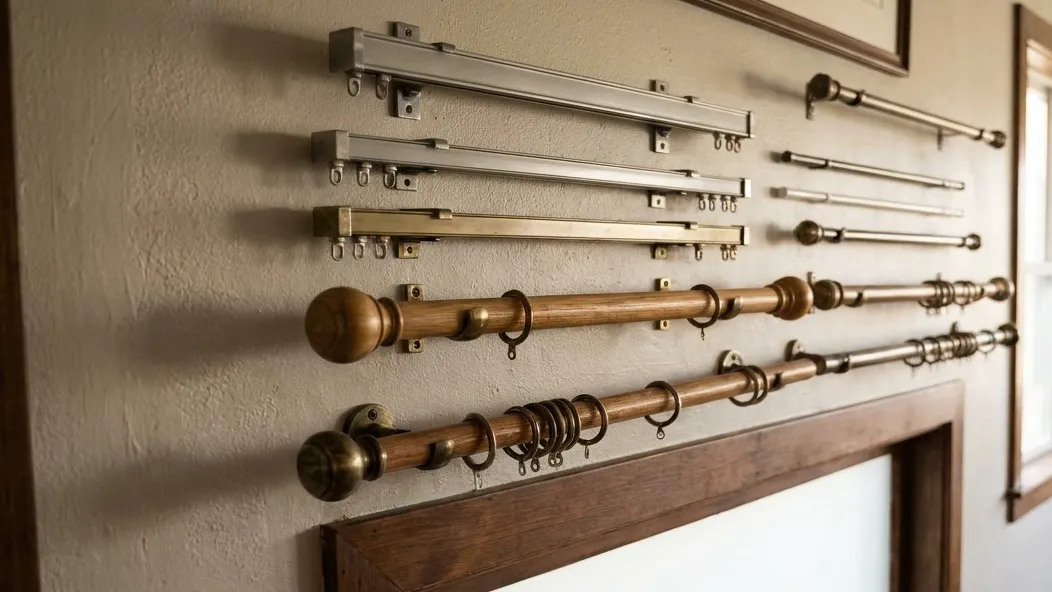
- Ceiling Recess Pelmet Integration: Mount tracks inside hidden ceiling recessed pockets measuring **20 cm to 25 cm wide** and **10 cm deep**. Hiding track hardware allows textured fabric cascades to emerge seamlessly from the ceiling line. Spatial tolerances can be cross-referenced on our valances and cornices measuring guide.
- Floor Clearance Precision: Measure vertical drops accurately so drapes hover exactly **1 cm above the floor**. Review drop measurement rules on our curtain measuring guide and dedicated shade measuring guide.
5. Tropical Climate Resilience: Non-Toxic Anti-Mold Protection
In humid tropical environments like Bali, high atmospheric humidity combined with indoor air conditioning condensation creates a moist microclimate near window glass where fungal mold spores thrive. Textured, porous weaves (such as thick linens or plush velvets) can trap atmospheric moisture if untreated, leading to dark mildew spots and unhygienic odors.
To preserve pristine fabric hygiene and long-term textile beauty, high-performance draperies supplied by Almeers Living incorporate advanced **Anti-Mold** (anti-jamur) technology. This specialized hydrophobic treatment repels moisture droplets and prevents fungal spore germination, keeping your curated fabric weaves clean, fresh, and allergen-free season after season.
6. Smart Motorization for Textured Drapery Systems
Elevate modern luxury living with motorized drapery automation. Motorized curtain tracks powered by whisper-quiet DC actuators eliminate manual pulling, protecting delicate woven threads from skin oil transfers and fabric tension stress. Motorized systems integrate seamlessly with handheld remotes, wall keypads, smartphone apps, or voice commands via Apple HomeKit, Google Assistant, Amazon Alexa, and Control4. Program automated solar schedules to draw blackout panels during peak afternoon sun hours, protecting fine interior finishes while maintaining cool indoor temperatures passively.
7. Elevate Your Textile Architecture with Almeers Living
Selecting the ideal curtain weave and texture requires balancing textile structural mechanics, optical daylight scattering, room function, and climate endurance. Partnering with an experienced local specialist guarantees precise fabric selection, master tailoring, and long-term operational durability. As a recognized premier window treatment specialist in Bali, Almeers Living offers end-to-end turnkey execution—from complimentary laser site surveys and custom fabric sampling to professional motorized installation across the island.
Transform your residence or villa project into a tactile, sun-regulated sanctuary today. Browse our full range of custom drapery fabrics, sheer voiles, and automated window systems on our products page to schedule your personalized on-site consultation with Bali’s trusted window experts.