Understanding Fabric Types for Curtains: A Smarter Way to Choose
Short answer: Curtain fabric should be selected by performance first and appearance second. Weight, weave, opacity, lining, colour, and room orientation all affect how a curtain behaves. In tropical properties, humidity and maintenance also matter.
1. Fabric Types at a Glance
| Fabric / Construction | Light Behaviour | Typical Strength | Common Application |
|---|---|---|---|
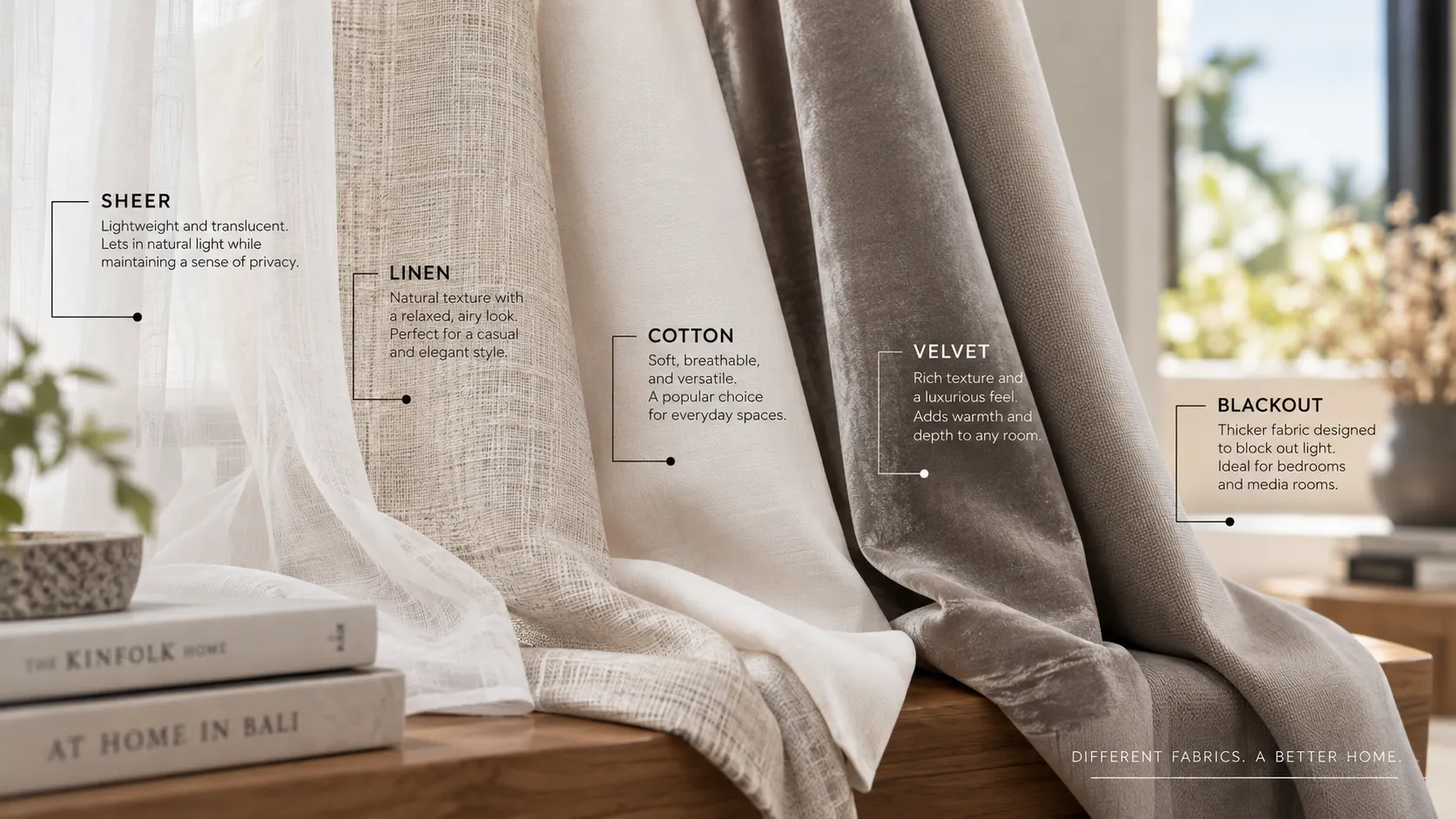
| Linen | Soft diffusion | Natural texture and relaxed drape | Living rooms, villas, layered systems |
| Cotton blend | Moderate filtration | Versatile and structured appearance | Bedrooms, living rooms, contemporary interiors |
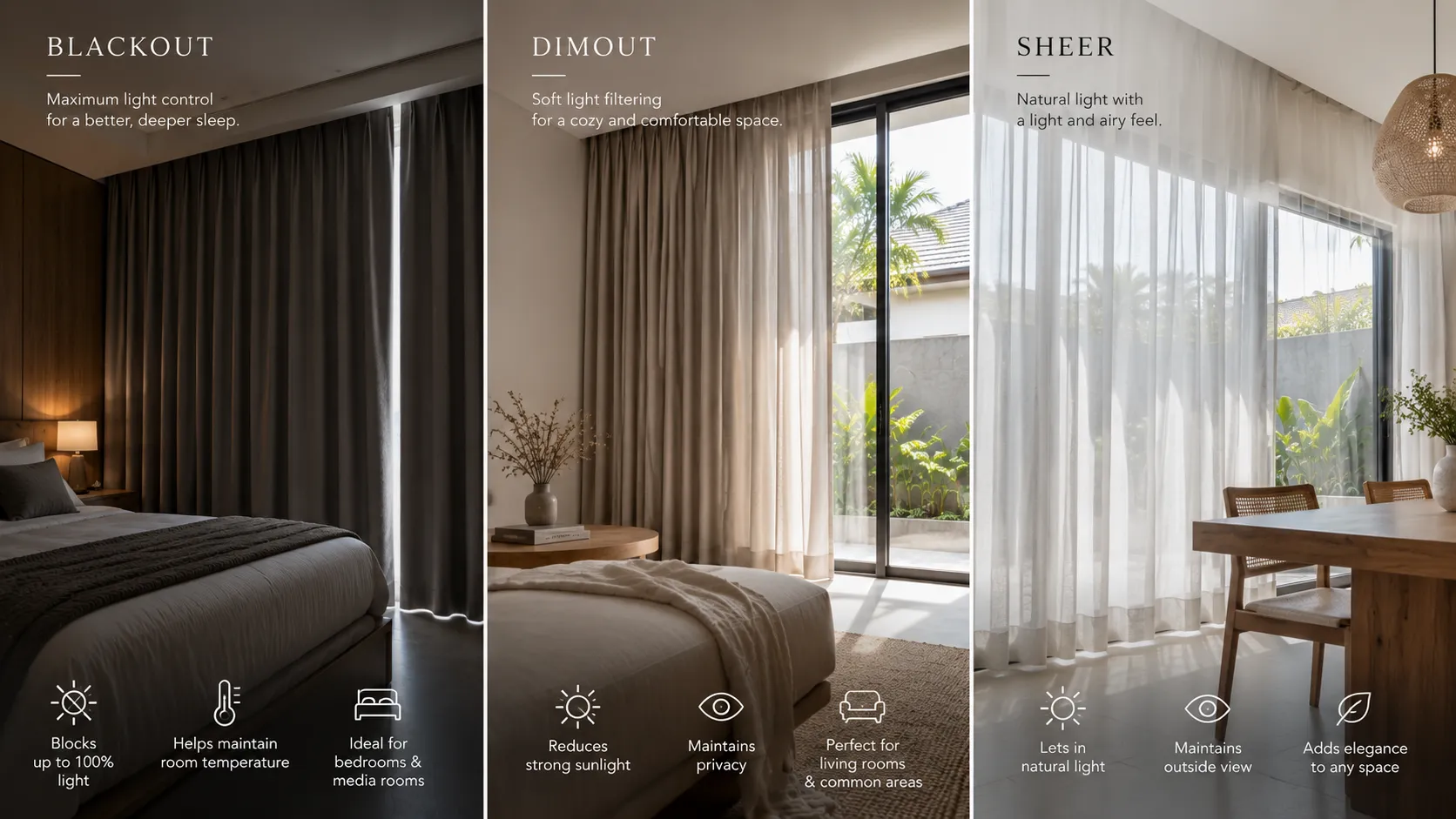
| Blackout | Strong light blocking | Darkness and privacy | Bedrooms, media rooms |
| Dimout | Reduces glare while retaining ambient light | Balanced comfort | Lounges, dining areas, offices |
| Sheer / Voile | High daylight diffusion | Airy appearance and softened glare | Large glazing, inner layer of layered curtains |
2. Natural Fabrics: Linen and Cotton Blends
Linen is valued for its visible weave, relaxed appearance, and soft daylight diffusion. Cotton blends can provide a cleaner and more structured drape. Neither should be selected by fibre name alone: weight, construction, finish, and lining can change the final result significantly.
3. Blackout and Dimout Fabrics
- Blackout: intended for stronger room darkening and privacy, especially in bedrooms and media spaces.
- Dimout: reduces glare and bright sunlight while maintaining a softer ambient atmosphere.
Actual room darkening also depends on installation. Side gaps, top gaps, track position, and the way the curtain overlaps the opening can affect the result.
4. Sheer and Voile
Sheer fabrics are useful when the goal is to preserve daylight while softening glare and adding a light architectural layer. For night privacy, however, sheer fabric should not be treated as a complete substitute for an opaque layer.
5. What Changes Fabric Performance?
| Factor | Why It Matters |
|---|---|
| Fabric weight | Affects drape, fullness, movement, and perceived quality |
| Weave | Influences texture, filtration, and durability |
| Opacity | Controls daylight and privacy |
| Lining | Can improve darkness, insulation, structure, and protection |
| Colour | Changes perceived brightness and solar response |
| Installation | Determines coverage, gaps, stacking, and final appearance |
6. Tropical Climate and Maintenance
For Bali properties, the specification should account for humidity, ventilation, sunlight exposure, cleaning access, and how frequently curtains will be handled. Material selection should be matched to the actual room rather than applying one fabric to every window.
7. A Practical Selection Sequence
- Define the room function.
- Determine the required light level and privacy.
- Check window orientation and sunlight exposure.
- Choose fabric weight, weave, and opacity.
- Decide whether lining or layering is required.
- Confirm hardware, fullness, stacking, and installation conditions.
Almeers Living can help compare fabric samples, lining options, and window-treatment configurations for residential and hospitality properties across Bali.