Understanding Fabric Weave and Texture: A Smarter Way to Choose
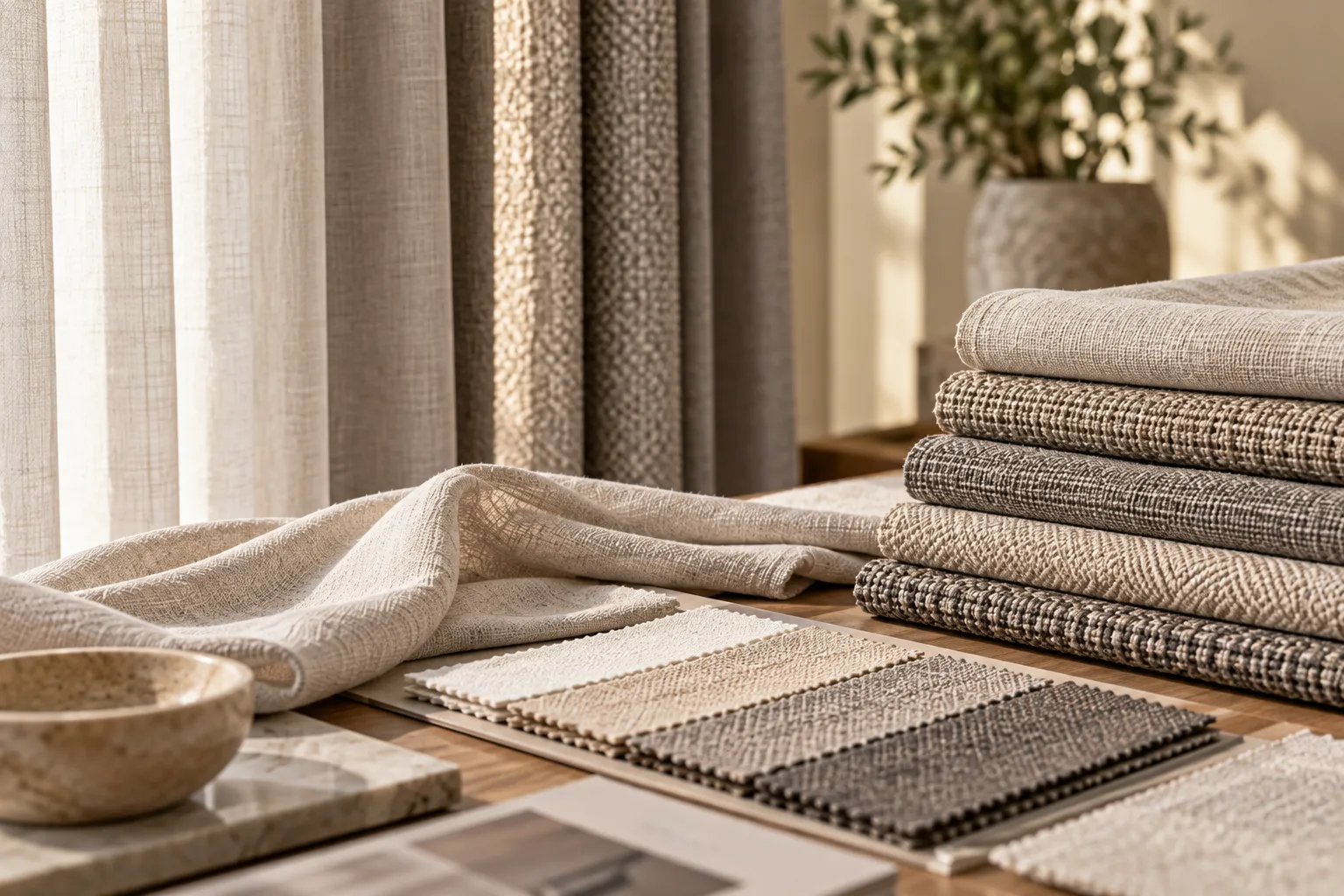
Two curtain fabrics can have a similar colour and still look completely different once they are hanging. The difference often comes from weave, density, texture, yarn character and drape.
Why Weave Matters
Weave describes how yarns are arranged to form the fabric. It influences surface character, flexibility, opacity, drape and how light interacts with the material.
| Fabric characteristic | What you may notice |
|---|---|
| Fine, even weave | Cleaner and more uniform visual texture |
| Open or loose weave | More visible texture and potentially more light transmission |
| Slub or irregular yarn character | Natural variation and tactile appearance |
| Dense construction | More substantial hand feel and potentially greater opacity |
| Soft drape | Gentler folds and relaxed appearance |
Texture Changes With Light
A fabric that looks smooth under showroom lighting can reveal more texture in strong side light. This matters for large curtains where the surface occupies a major visual area.
Weave Is Not Blackout Performance
A textured or heavy-looking fabric is not automatically blackout. If strong room darkening is required, assess the actual fabric and lining specification rather than judging from appearance alone.
Weave Affects Drape
Some fabrics create soft flowing folds while others hold a structured shape. Fullness, heading and lining can change the final result, so a sample should be viewed with the intended construction in mind.
Texture Can Be More Useful Than Pattern
For calm luxury interiors, subtle texture can add depth without introducing a strong visual motif. Linen and linen-look fabrics are often chosen for this reason in villas and contemporary hospitality spaces.
Inspect Larger Samples
A small swatch can hide repeat, slub variation and how the surface behaves when folded. For large openings, a larger sample or onsite viewing can give a more realistic impression.
Fabric Evaluation Checklist
- View fabric in natural and artificial light.
- Check weave and surface variation.
- Assess hand feel and drape.
- Confirm opacity or lining requirements.
- Check fabric width against required drop.
- Review care and maintenance.
- Consider sunlight and humidity exposure.
- Compare a larger sample for large openings.
The safest fabric choice is made by evaluating appearance and performance together, rather than selecting from a colour card alone.