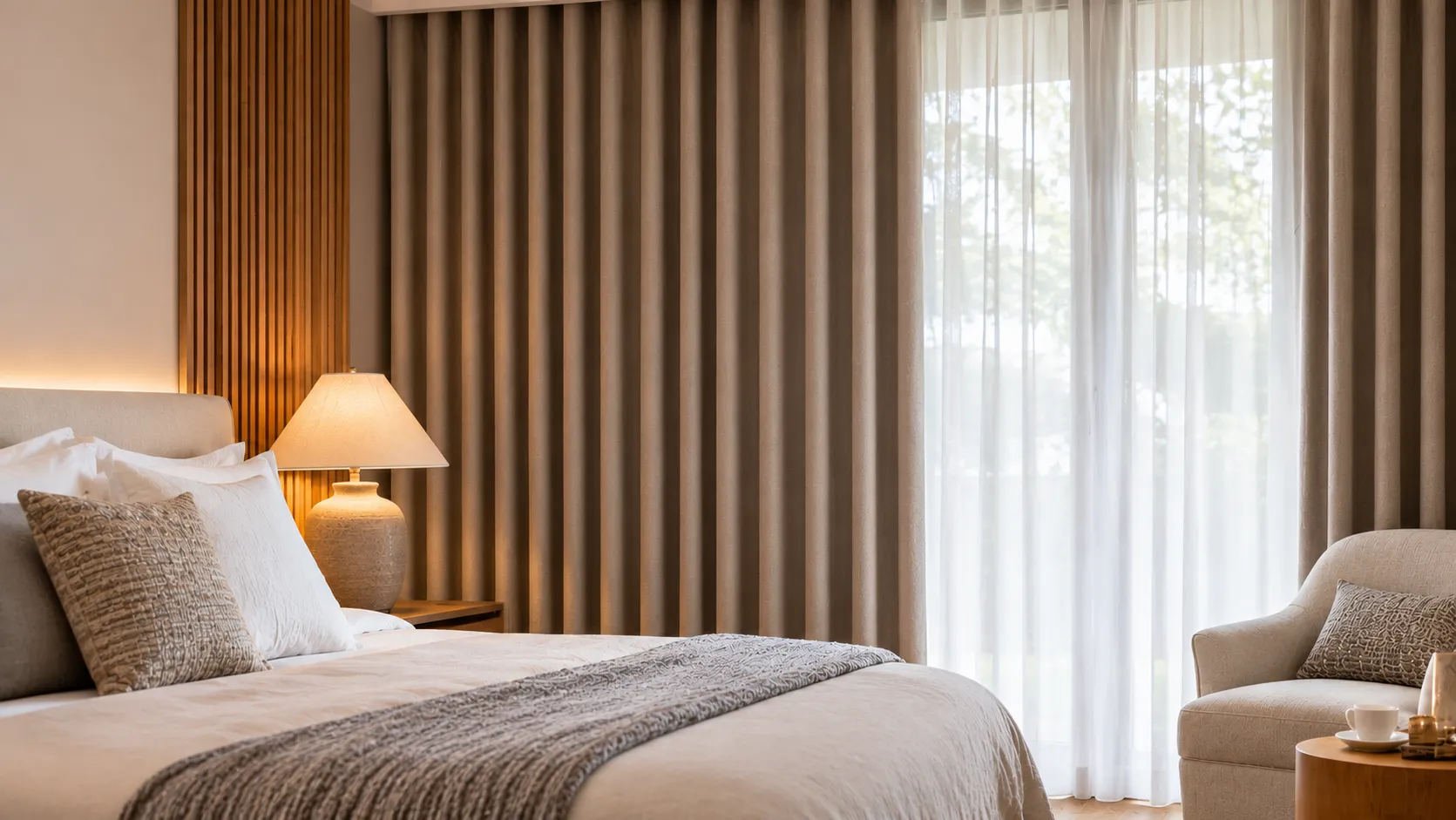
Venetian vs Roman Blinds: Architectural Structure, Space Efficiency, and Fold Mechanism Comparison
Two Different Philosophies
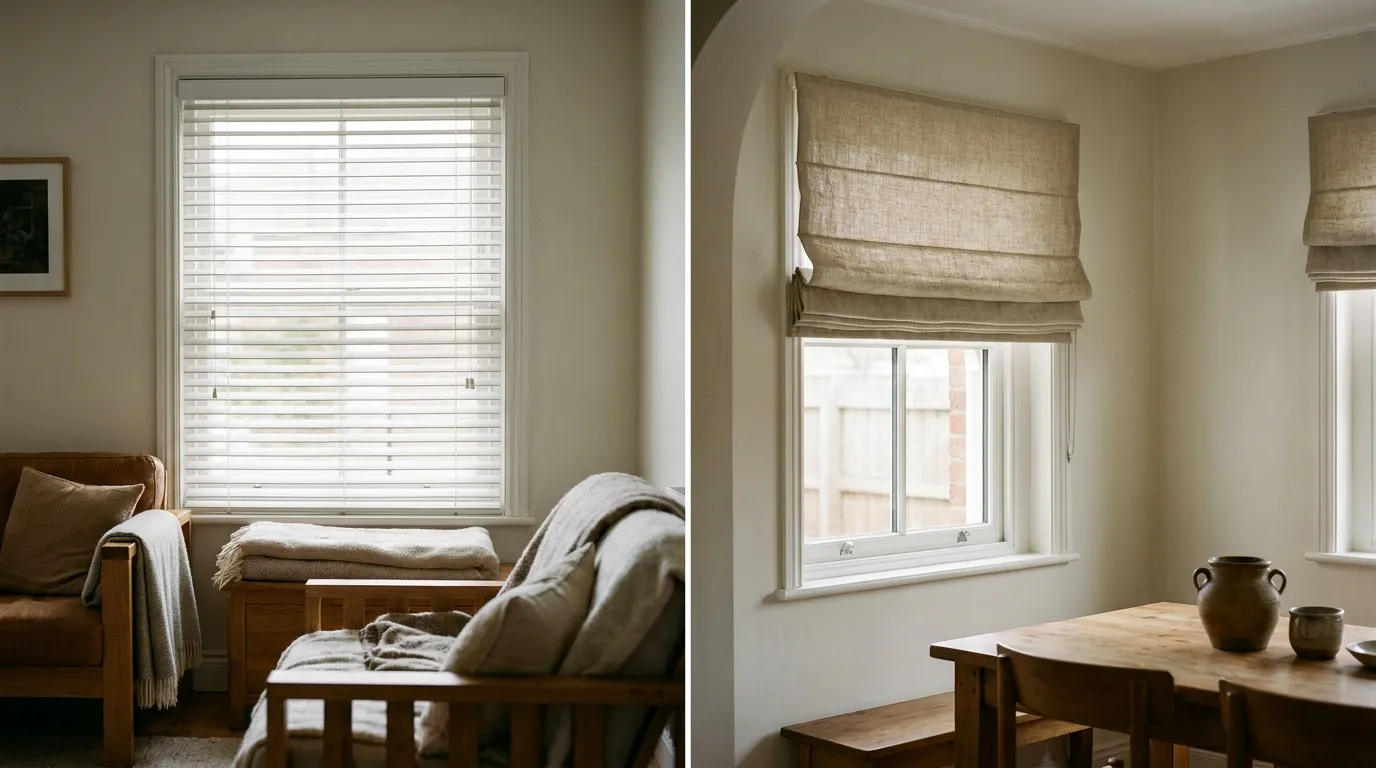
Venetian and Roman blinds are often compared because both cover windows with a folding system. Their philosophies differ, however: Venetian relies on rigid horizontal slats, while Roman uses fabric folded vertically. Understanding these differences helps choose the right system for a room's architecture.
Architectural Structure
Venetian blinds provide sharp, structured horizontal lines. They suit modern interiors, offices, and rooms with geometric elements. Roman blinds introduce soft vertical lines through fabric folds, aligning better with warm, classic, and transitional interiors.
Space Efficiency
- Venetian: highly compact; slats stack tightly when raised. Ideal for windows with limited space.
- Roman: requires stack space above the window; the taller the window, the more space needed when folded.
Fold Mechanisms
Venetian uses a tilt mechanism to adjust slat angles, enabling precise light control without raising the blind. Roman uses cords or motors to draw fabric upwards, forming tiered horizontal folds. Venetian offers finer light control; Roman offers softer visuals.
Functional Comparison
- Light control: Venetian is more precise; Roman is softer.
- Privacy: both perform well, depending on material density.
- Maintenance: Venetian requires regular dusting between slats; Roman surfaces are easier to clean.
- Aesthetics: Venetian is crisp and modern; Roman is warm and tactile.
Room Suitability
Venetian is ideal for kitchens, offices, and bathrooms (with moisture-resistant materials). Roman suits bedrooms, living rooms, and areas seeking a textile touch.
Conclusion
No system is universally superior. The decision depends on architecture, light control needs, and aesthetic preference. Almeers Living can help compare both systems based on your window conditions.