Acoustic Dampening with Luxury Drapery: Soundproofing Strategies for Modern Bali Homes
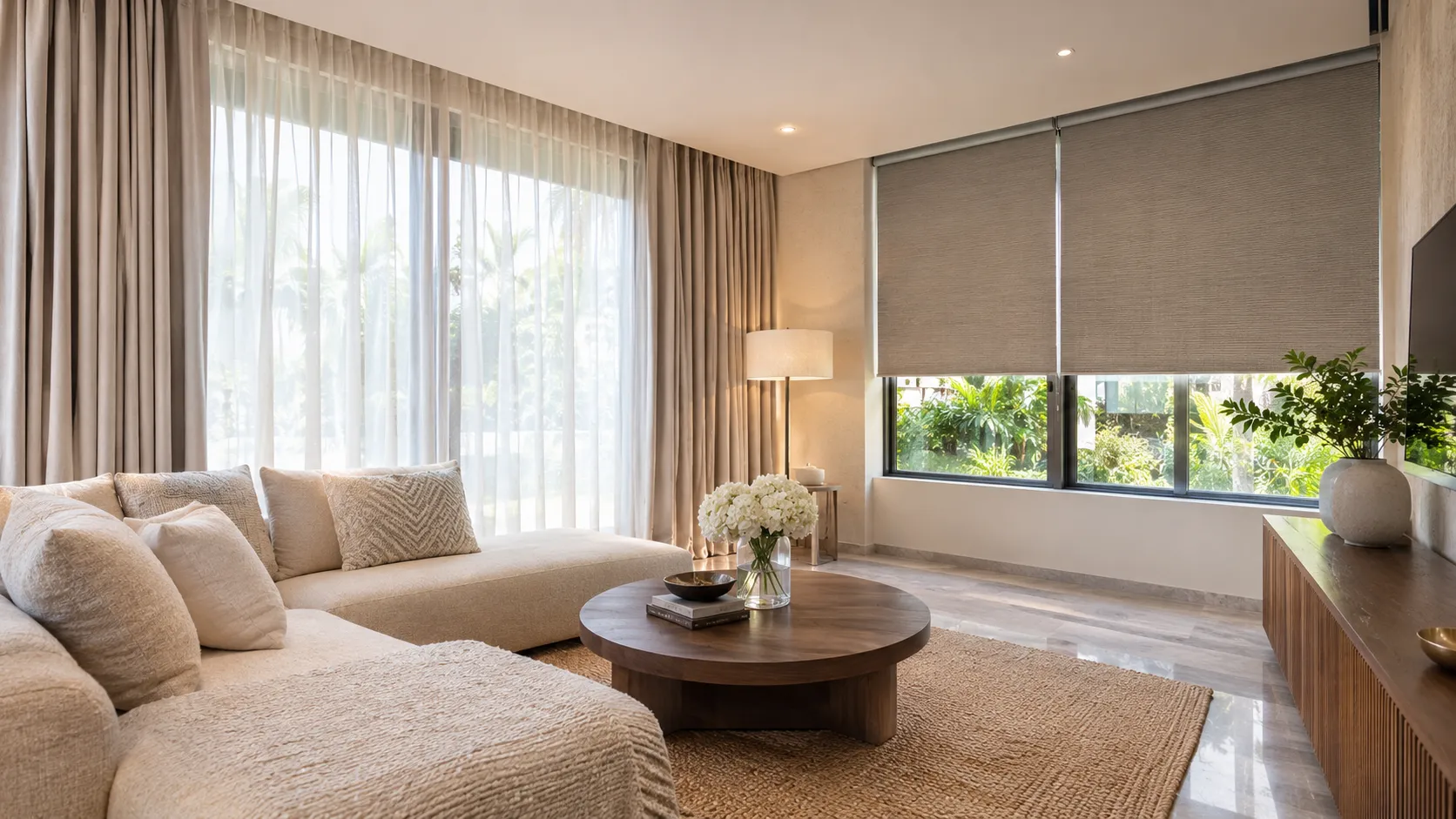
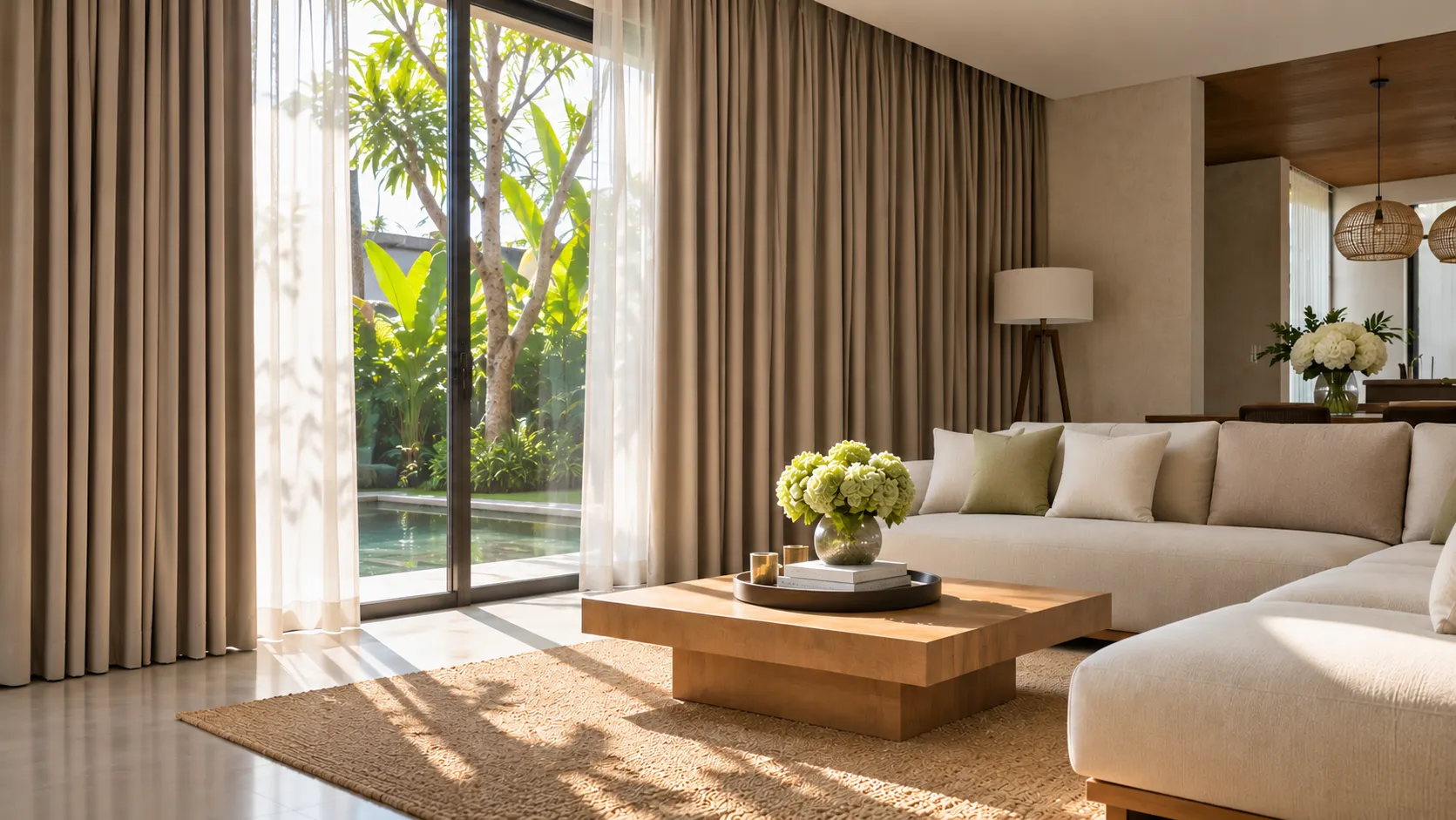
Modern tropical architecture embraces hard, durable building materials—polished micro-cement floors, exposed concrete columns, stone feature walls, and expansive glass sliding doors. While visually striking, these hard surfaces reflect sound waves, creating echoey acoustic environments that amplify street noise, pool splashing, and indoor reverberation.
Strategic interior textile placement offers an elegant architectural solution. High-density luxury drapery acts as an effective acoustic sound absorber, turning echoing living spaces into quiet, peaceful sanctuaries.
1. The Science of Sound Absorption in Textiles
Sound waves travel through the air until they strike a solid surface. Hard glass and concrete reflect sound back into the room, whereas porous textile fibers trap sound energy within microscopic interstitial spaces, converting acoustic waves into minor thermal energy.
2. Multi-Layer Drapery and Thermal Interlining
To maximize acoustic performance, interior designers specify multi-layer window treatments:
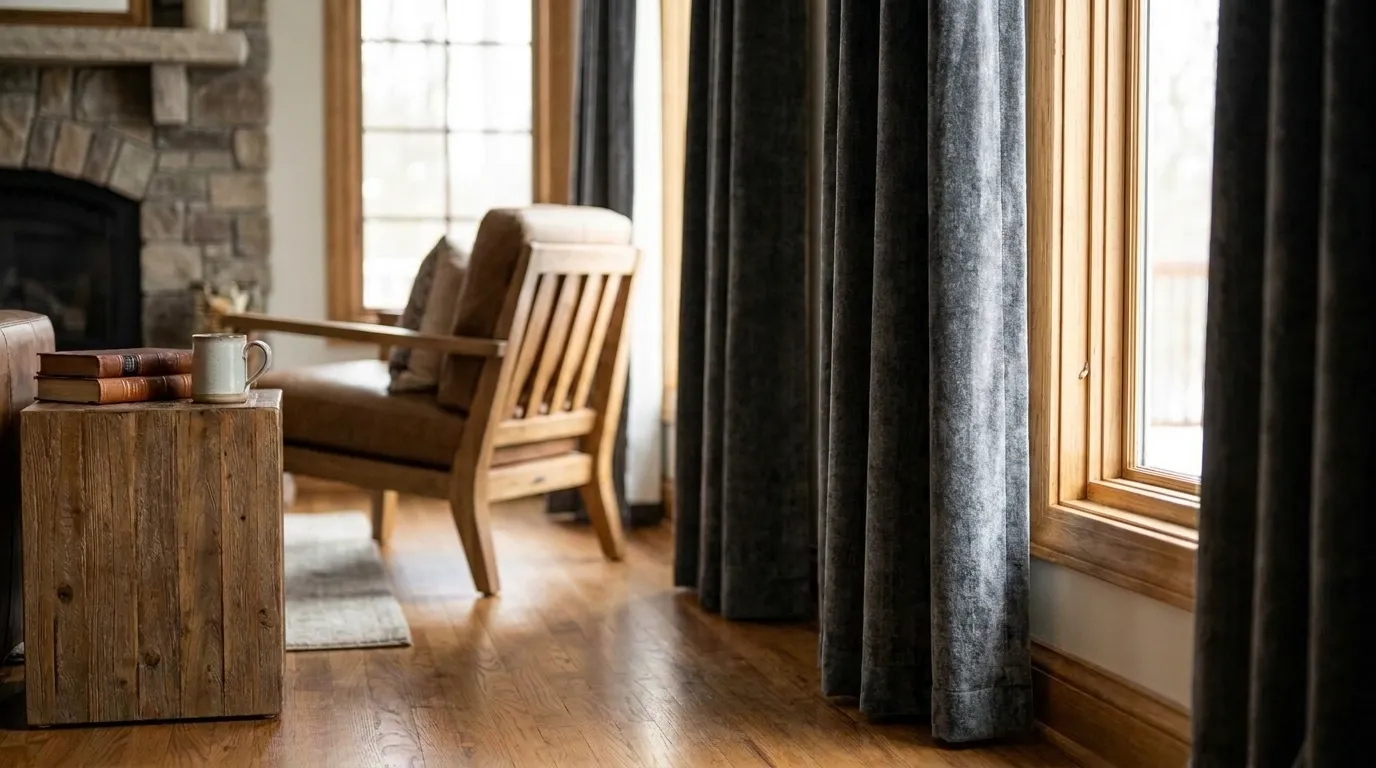
- Thermal Interlining: Inserting a brushed flannel interlining layer between the face fabric and lining adds plush volumetric weight that dampens mid-to-high frequency noise.
- High Fullness Ratios (2.2x): Rich S-fold ripplefold pleating creates deep fabric folds that catch and scatter sound waves from multiple angles.
3. Creating Peaceful Master Bedrooms and Home Offices
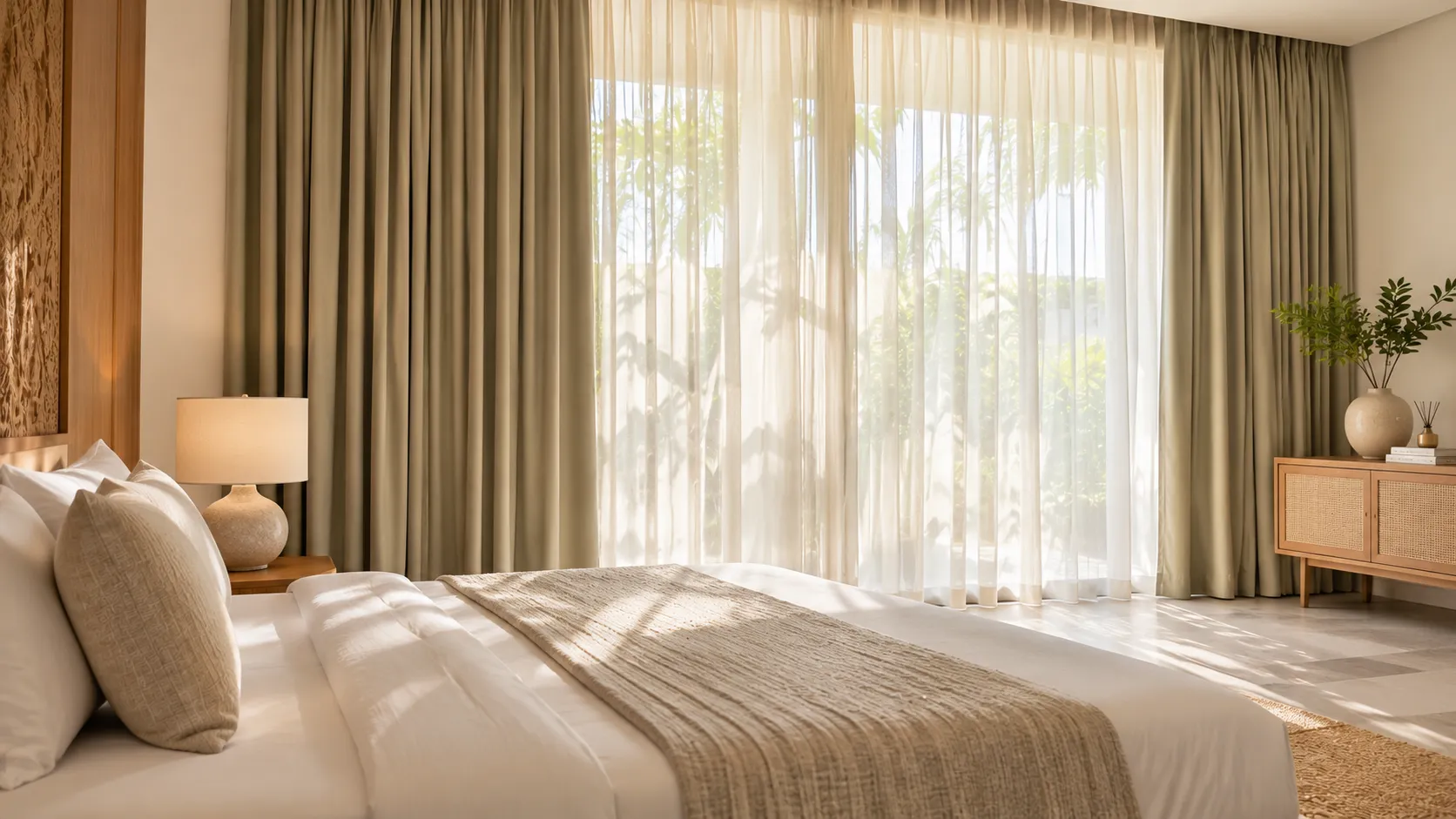
Installing acoustic-grade blackout curtains in master bedrooms and home offices ensures uninterrupted rest and focused remote productivity by isolating interior spaces from exterior tropical downpours and neighborhood activity.
4. Acoustic Expertise by Almeers Living
Optimizing room acoustics requires tailored fabric selection and professional fitting. Almeers Living, a premier window treatment specialist in Bali, provides acoustic drapery solutions engineered for high-end residences, recording rooms, and luxury hotel suites.