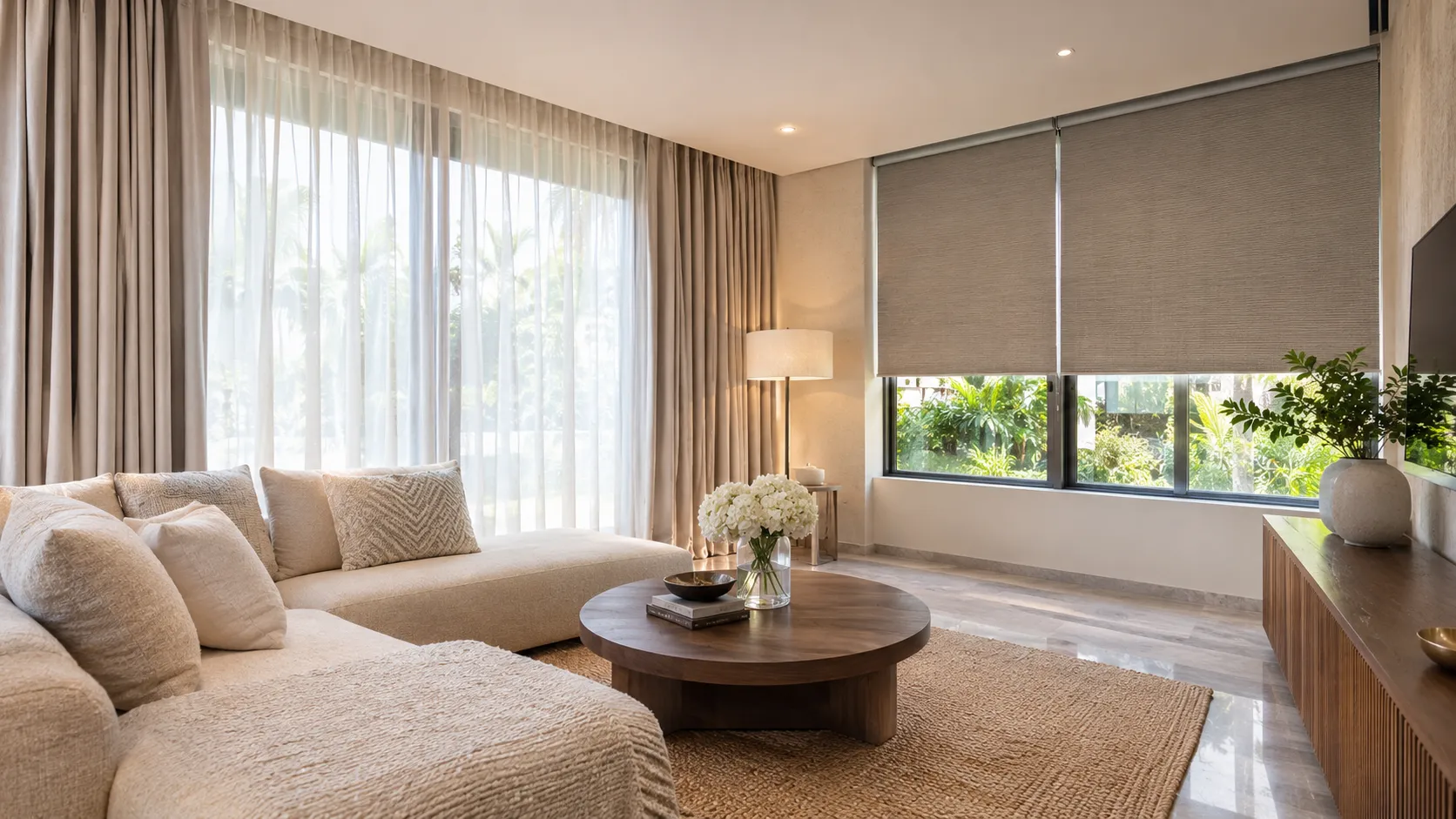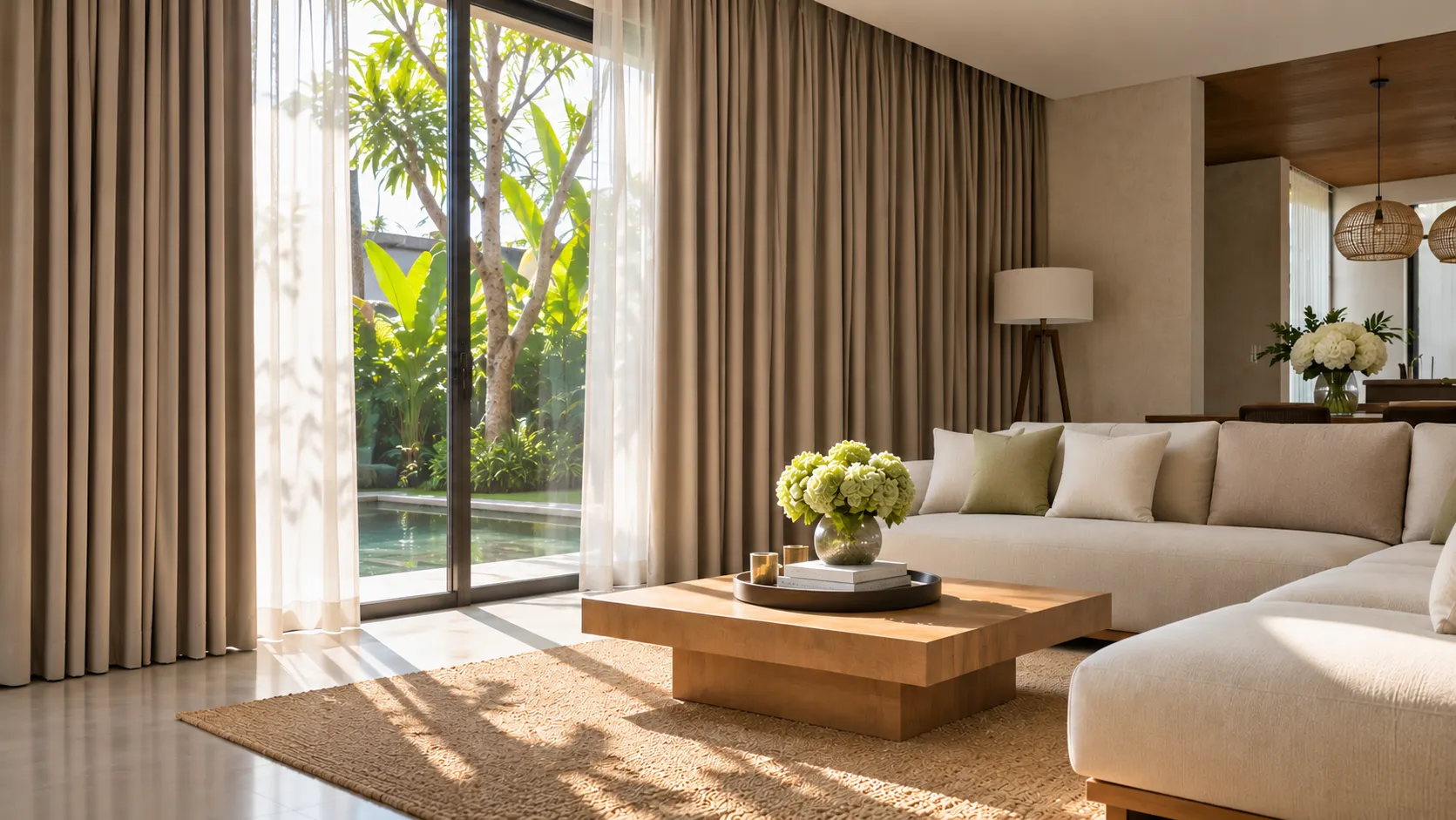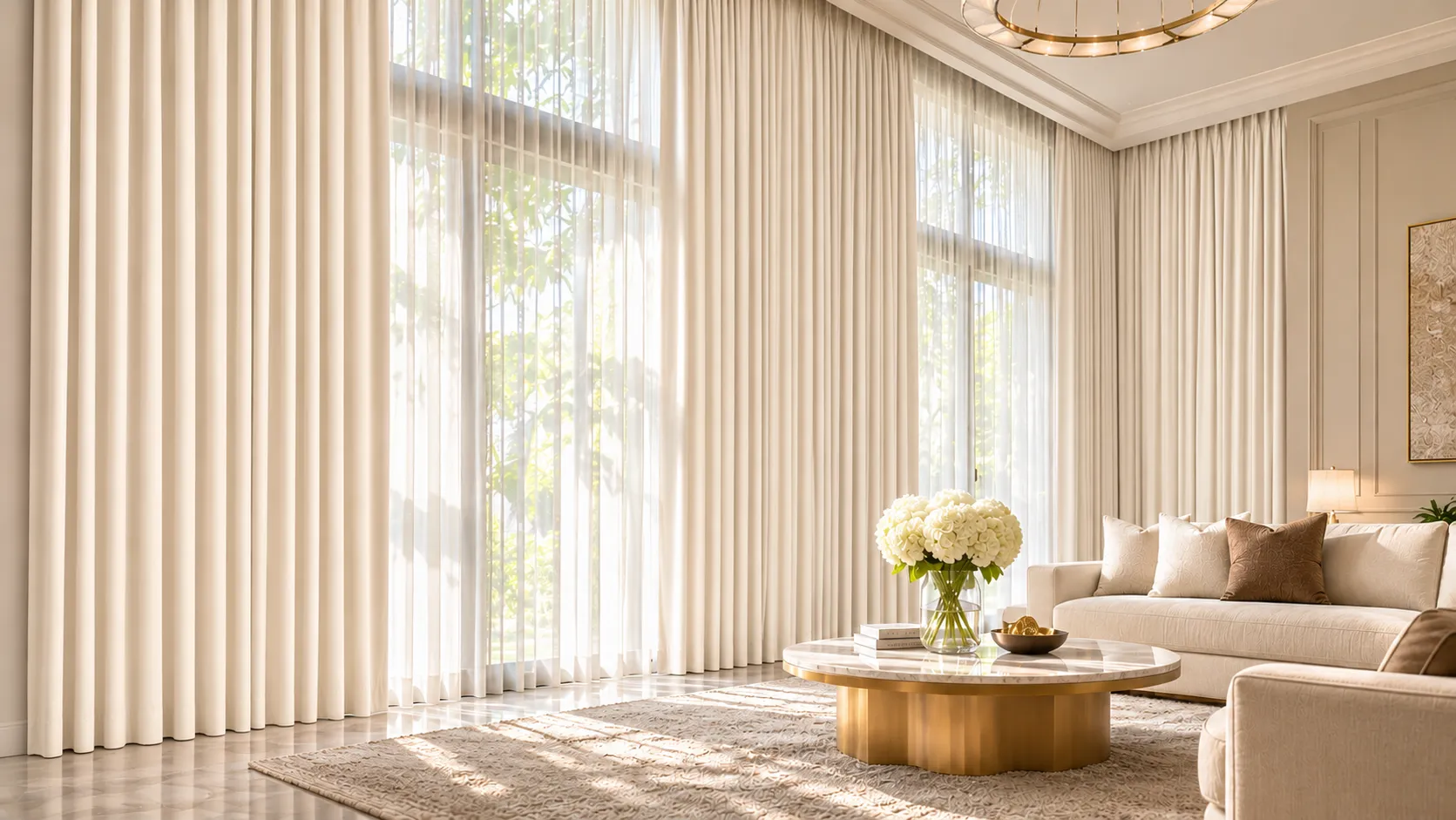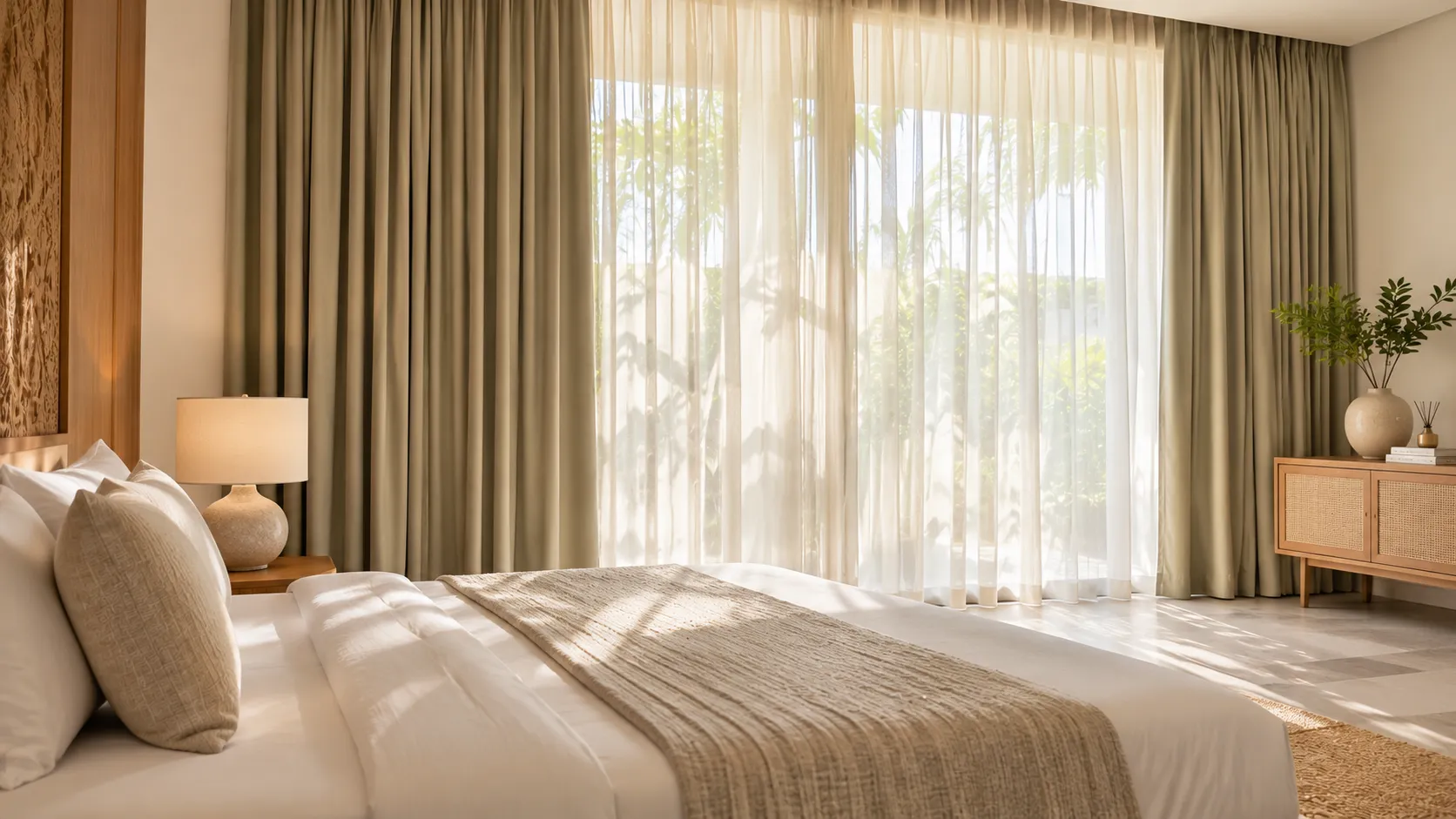
Wellness design is not defined by a single material, colour or decorative trend. It is an approach to interiors that considers how a space feels and functions throughout the day. Daylight, ventilation, temperature, privacy, sound and visual balance all influence the experience of a room. Curtains are relevant because they sit at the boundary between indoor and outdoor environments and can be adjusted as conditions change.
For Bali villas, hotels, apartments and private residences, window treatments should be selected according to the building, orientation, window type and daily use. A light sheer may soften strong daylight without making a room feel closed, while a heavier drape can provide privacy and help reduce some reflected sound. Neither solution should be treated as a substitute for good ventilation, appropriate glazing, insulation or building acoustics. Instead, curtains form one part of a considered wellness strategy.
1. What Wellness Design Means for Window Treatments
Wellness-focused interiors aim to make everyday activities feel more comfortable. In a bedroom, this may mean controlling early morning light and improving privacy. In a living room, it may mean keeping the space bright while reducing glare on screens. In a hospitality setting, it can mean giving guests flexible control over daylight, views and privacy.
Curtains contribute through adjustability. Unlike a fixed finish, a curtain can be opened, partly drawn or fully closed as the sun moves, the weather changes or the room's function shifts. This flexibility is particularly useful in tropical properties, where daylight can be intense and indoor-outdoor connections are often central to the design.
A useful starting point is to identify the comfort issue before selecting the fabric. Is the room too bright in the afternoon? Does it need privacy at night? Is the window frequently opened for ventilation? Does the room feel echoing because of hard surfaces? Each concern may require a different treatment or a combination of solutions.
2. Supporting Natural Airflow Circulation
In Bali, natural ventilation can be an important part of the way a home or villa is used. Cross-ventilation depends on the placement and operation of openings, the direction of prevailing breezes, internal layouts and the surrounding environment. Curtains should be planned so they do not unnecessarily obstruct the openings that occupants rely on for fresh air.
Choose a practical opening arrangement
Where windows or doors are regularly opened, consider how the curtain will sit when drawn aside. A suitable track position and adequate stacking space can help keep more of the opening clear. For wide sliding doors, a split-draw arrangement may allow panels to move to both sides. For smaller windows, a single panel may be sufficient if it can be moved away from the opening.
Use lightweight fabrics where appropriate
Sheer and lightweight curtain fabrics can provide a degree of daytime screening while allowing air to pass through the fabric more readily than dense, lined drapery. The actual airflow will still depend on fabric construction, fullness, the distance between the curtain and the opening, and the available ventilation path. A sheer curtain is not a ventilation system and should not be expected to create airflow where the building has no suitable air inlet or outlet.
Keep operation simple
- Make sure panels can be moved without catching on handles, furniture or door hardware.
- Allow enough clearance so fabric does not become trapped in sliding door tracks.
- Consider tiebacks or holdbacks where keeping the opening clear is a daily priority.
- For frequently used large openings, select a track and heading style that are easy to operate.
3. Creating Soft, Comfortable Daylight
Daylight helps interiors feel connected to the outdoors, but direct sunlight can create glare, strong contrasts and unwanted heat. Wellness-oriented window styling aims for a useful balance: retain a pleasant level of natural light while making the room comfortable for reading, resting, working or relaxing.
Sheer curtains for filtered light
Sheer curtains soften the appearance of incoming daylight and can reduce visual harshness without fully blocking the view. They are often suitable for living rooms, dining spaces and bedrooms where daytime brightness is welcome but direct visibility from outside needs to be softened. The level of light transmission varies by weave, colour, density and the amount of fabric used.
Layering for flexible control
A double-layer arrangement combines a sheer curtain with a dimout or blackout layer. During the day, the sheer can remain closed to diffuse light. When stronger light control or privacy is needed, the heavier layer can be drawn across the window. This is a practical option for bedrooms, media rooms and villas with changing daylight conditions.
Consider orientation and exposure
East-facing rooms may receive strong morning sun, while west-facing rooms can experience intense late-afternoon exposure. North- and south-facing conditions vary with the building's location, shading and season. Before choosing opacity, observe the room at different times of day and consider external shading, glazing and nearby buildings.
For additional planning, see the Curtain Measuring Guide and explore the Curtain Stacking Calculator to understand how much space the fabric may occupy when open.
4. Curtains and Acoustic Stress Reduction
Sound comfort can influence whether a room feels restful or tiring. Large glass surfaces, tiled floors, concrete walls and minimal furnishings may contribute to noticeable reflections and reverberation. Curtains introduce a soft, porous surface that can absorb some sound energy, particularly at certain frequencies, and may help make a room feel less echoing.
The acoustic contribution depends on the textile, thickness, lining, pleat fullness, coverage area, installation distance from the wall and the room itself. Heavier, fuller curtains generally provide more sound absorption than a thin, flat sheer, but curtains are not soundproofing products. They will not reliably block traffic, construction noise or loud neighbours in the way a properly designed acoustic window or wall assembly may.
Where acoustic benefits may be useful
- Bedrooms: Full-height drapery can soften a room with extensive glazing and hard finishes.
- Living rooms: Broad curtain coverage may help reduce a sharp, echoing quality in open-plan spaces.
- Home offices: Curtains can contribute to a more comfortable sound environment alongside rugs, upholstered furniture and other absorptive finishes.
- Hospitality suites: Layered soft furnishings can support a quieter-feeling guest room, although external noise control requires a broader building solution.
For stronger acoustic planning, combine window treatments with rugs, upholstered seating, fabric wall panels where suitable, and attention to gaps around doors and windows. If noise intrusion is significant, consult an acoustic professional to identify the source and the appropriate construction-level remedy.
5. Choosing Fabrics for Bali Conditions
Fabric selection in Bali should consider humidity, sunlight, maintenance, use frequency and the property's design character. A textile that looks beautiful in a sample may behave differently when installed across a large window or exposed to strong afternoon sun. Ask about care instructions, colourfastness information and suitability for the intended application.
| Fabric or treatment | Potential wellness-design role | Points to consider |
|---|---|---|
| Sheer fabric | Softens daylight and provides a light visual layer | Offers limited privacy at night when interior lights are on; airflow varies by weave and fullness. |
| Linen or linen-look fabric | Creates a relaxed, natural texture and a visually gentle finish | Actual linen and linen-look polyester are different materials; check composition, care and sunlight exposure. |
| Dimout fabric | Reduces incoming light and improves daytime privacy | Light reduction varies by construction and colour; edge gaps may remain. |
| Blackout fabric or lining | Supports stronger room-darkening for sleep or media use | Not necessarily total darkness; light can enter around the sides, top and bottom unless the installation is designed to limit gaps. |
| Heavier lined drapery | Provides a fuller appearance and may improve sound absorption | Requires suitable hardware, adequate support and a realistic cleaning plan. |
In humid environments, regular airing and appropriate cleaning help keep textiles in good condition. Avoid trapping damp fabric against walls or leaving curtains bunched while wet. Where a property is close to the coast, consider hardware and track materials suitable for the local environment and follow the supplier's maintenance recommendations.
6. Room-by-Room Curtain Planning
Bedrooms and guest suites
Prioritise privacy and control over morning light. A sheer paired with a dimout or blackout layer gives occupants more choice. If the room is intended for sleeping during daylight hours, assess the whole window perimeter because fabric opacity alone does not prevent light entering through installation gaps.
Living and dining areas
Choose a treatment that preserves the room's connection to the outdoors. Sheers can soften daylight while maintaining a bright atmosphere. If the room receives intense sun, consider a second layer or suitable external shading rather than relying on a sheer to solve every heat and glare issue.
Bathrooms and wellness spaces
Privacy is essential, but high humidity and direct water exposure require careful material selection. In wet zones, a curtain may not be the most practical solution. Where fabric is used near a bathroom window, ensure it can dry properly and is not in constant contact with water.
Home offices and reading corners
Manage screen glare and reflections by observing the window at the times the room is used most. A light-filtering layer may be sufficient, while a second layer offers flexibility for video calls or focused work. Combine curtains with soft furnishings to improve the overall sensory balance of the room.
Villa lounges and open-plan spaces
Large openings often need carefully planned tracks, panel widths and stacking space. The goal is to maintain clear access to outdoor areas while ensuring the curtains can close smoothly when privacy or shade is needed. Motorised operation may be worth considering for tall, wide or frequently used installations.
7. Common Planning Mistakes to Avoid
- Choosing fabric before understanding the room: Start with light, privacy, ventilation and acoustic needs, then compare suitable materials.
- Blocking frequently used openings: Check how panels stack and whether doors and windows can still operate comfortably.
- Expecting sheers to provide night privacy: When the room is brighter than the outdoors, silhouettes and visibility may remain. Add a privacy layer where needed.
- Assuming blackout means complete darkness: Installation gaps can allow light around the fabric. Specify the desired level of darkness and plan the track or pelmet accordingly.
- Using curtains as a substitute for acoustic construction: Curtains may soften room reflections but cannot solve every external noise problem.
- Ignoring cleaning and humidity: Select fabrics and hardware with a maintenance routine that suits the property and its occupancy.
- Underestimating stack space: A full curtain needs room to gather when open. Confirm the available wall space before finalising the design.
8. A Practical Selection Checklist
Before ordering curtains for a wellness-focused property in Bali, review the following points with your designer, supplier or installer:
- Record the room's main purpose and the times it is most frequently used.
- Observe direct sunlight, glare and privacy conditions at different times of day.
- Identify which windows or doors must remain easy to open for natural ventilation.
- Decide whether the room needs a sheer, dimout, blackout or layered arrangement.
- Check fabric composition, texture, care requirements and suitability for the exposure.
- Assess whether acoustic comfort is a secondary benefit or a major project requirement.
- Measure the window, ceiling height, track position and available stacking space accurately.
- Confirm hardware, operation, installation access and maintenance expectations.
For window measurements and planning, use Almeers Living's Curtain Measuring Guide. For blinds and shade projects, refer to the Shade Measuring Guide. You can also browse available options on the Almeers Living product page.
9. Frequently Asked Questions
Can curtains improve wellness in a Bali villa?
They can support a more comfortable interior by helping manage daylight, privacy and the softness of room acoustics. Their effectiveness depends on fabric, installation, room conditions and how occupants use the space. They are one element of a wider wellness design approach.
Which curtains are best for natural airflow?
Lightweight sheers are often a practical choice when a soft visual layer is desired while windows or doors are open. However, airflow is determined primarily by the building's openings and ventilation path. Keep curtain panels clear of frequently used openings and choose an arrangement that is easy to draw aside.
Do sheer curtains reduce sunlight?
Sheers diffuse and soften incoming daylight, but the amount of glare and heat reduction varies by fabric construction, colour, density and window exposure. For stronger light control, consider layering with dimout or blackout curtains or using suitable external shading.
Can curtains reduce noise in a bedroom?
Fuller and heavier curtains can absorb some sound within a room and may reduce the perception of echo. They do not provide reliable soundproofing against outdoor noise. Significant noise issues may require improvements to glazing, seals, walls or other building elements.
Are linen curtains suitable for Bali's climate?
They may be suitable when the fabric, lining, location and maintenance routine are appropriate. Natural linen and linen-look alternatives have different properties. Review care guidance and consider sunlight and humidity exposure before selecting a fabric.
Should I choose one curtain layer or two?
A single sheer may suit a bright living area where daytime softness is the main goal. A double layer is more flexible for bedrooms and spaces that need both daytime filtering and stronger privacy or light control. The best choice depends on the room's use and budget.
Conclusion: Designing for Everyday Comfort
Wellness design is often found in practical decisions that make a room easier to live in. In Bali, thoughtfully selected curtains can soften strong daylight, preserve flexibility around natural ventilation, provide privacy and contribute to a less echoing interior. The most successful solution is not necessarily the heaviest or most expensive fabric; it is the treatment that responds to the room's actual conditions.
Start with the experience you want to create, assess the window and the building, and then select a fabric, track and heading that work together. For villas, hotels and homes across Bali, Almeers Living can help explore curtain and blind options suited to the property's style and functional requirements.