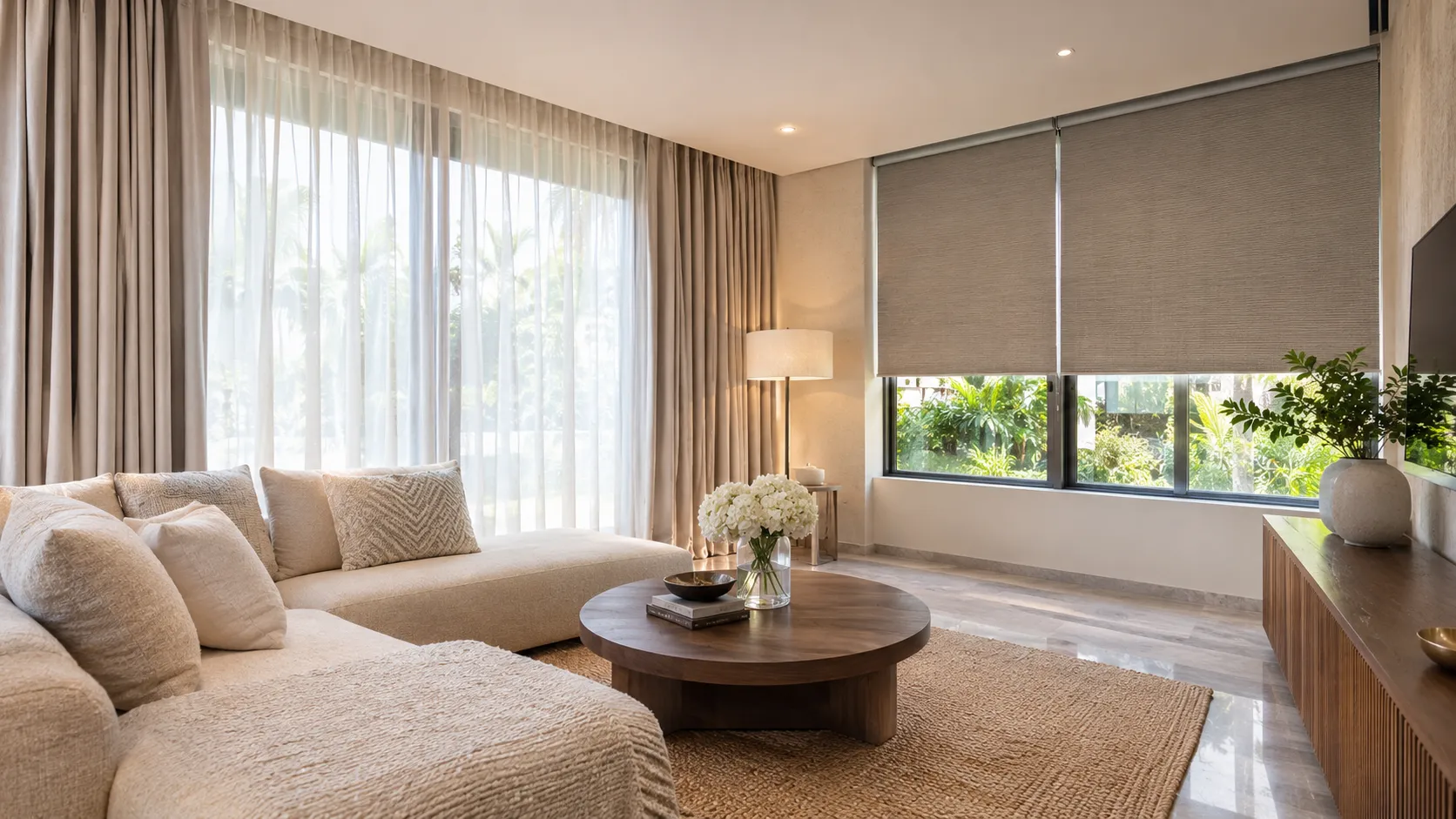
Windows connect interiors with natural light and outdoor views, yet they can also be a significant route for heat transfer. Sunlight passing through glass can warm floors, furniture and other interior surfaces. Heat can also move through the window assembly by conduction, while air leakage around poorly sealed frames can affect indoor comfort. Curtains cannot correct every weakness in a building envelope, but a carefully selected and correctly installed window treatment can help manage some of these effects.
This guide explains three practical ideas: using curtains as an additional thermal barrier, reducing solar heat gain through sensible daylight control, and supporting more efficient HVAC cooling. It also explains where curtains have limitations, how to choose suitable fabrics and linings, and what property owners should consider before investing in new window treatments.
1. How Curtains Contribute to Energy-Conscious Design
Energy-conscious interiors begin with the building's overall design: orientation, glazing, shading, insulation, ventilation, air sealing and the efficiency of cooling equipment. Window treatments are one layer within that system. Their value comes from giving occupants a practical way to respond to changing sun exposure and indoor comfort needs.
During periods of strong sunlight, closing an appropriate curtain can reduce the amount of direct solar radiation entering the occupied space. Depending on its construction and fit, a curtain may also add resistance to heat flow between the room and the window. When conditions change, opening the curtain can restore daylight and views.
The actual result depends on many factors, including window orientation, glass type, external shading, fabric colour and openness, lining, coverage, installation gaps and how consistently the treatment is used. A curtain should therefore be considered a supporting measure rather than a guaranteed energy-saving device.
2. Thermal Barrier Insulation at the Window
Glass generally offers less resistance to heat transfer than an insulated wall. In warm conditions, solar energy can enter through glazing, while heat may also move through the window assembly. A curtain creates an additional layer of material and can form a still-air space between the fabric and the glass. This arrangement may reduce some heat exchange, although the amount varies considerably with the window and curtain system.
Why the air space matters
When a curtain is installed with suitable clearance from the window, the space between the fabric and glass can act as a buffer. The effectiveness of this arrangement depends on how well the curtain covers the opening and whether air can freely circulate around its edges. Large gaps at the sides, top or bottom can reduce the benefit because warm air can move around the fabric.
Consider lined curtains
A lining adds another layer to the curtain construction. Depending on its material and design, it can improve light control, protect the face fabric and contribute to the thermal performance of the overall window treatment. Some products are specifically designed and tested for thermal performance; ordinary lining should not automatically be described as a certified insulating product.
Think about full window coverage
For a more continuous barrier, consider the width and drop of the curtain, track placement and how the panels meet when closed. A ceiling-mounted track, suitable returns and an appropriate pelmet or top treatment may help limit gaps in some installations. The best detail depends on the architecture and whether the priority is heat management, appearance, access or all three.
3. Reducing Solar Heat Gain
Solar heat gain is the increase in indoor heat caused by sunlight entering through windows and other glazed areas. It can be especially noticeable where large windows face strong afternoon sun or where there is little external shading. Managing sunlight before it heats interior surfaces is often more effective than waiting until a room becomes uncomfortable.
Use curtains according to the sun's direction
Observe each room at different times of day. East-facing glazing may receive direct morning sun, while west-facing windows can experience strong late-afternoon exposure. The effect also depends on nearby buildings, trees, balconies, roof overhangs and the angle of the sun throughout the year.
For exposed windows, drawing the curtain before direct sunlight reaches the room may help limit solar heat entering the space. This is a simple habit that can be incorporated into a property's daily operating routine, especially in villas and hotels with predictable occupancy and housekeeping schedules.
Choose the right level of opacity
Sheer curtains soften daylight and preserve a bright atmosphere, but they generally provide less solar control than denser or specially engineered shading fabrics. Dimout and blackout curtains reduce visible light more substantially. Their ability to reduce heat gain, however, is not determined by opacity alone. Fabric colour, reflective properties, construction, lining and the position of the treatment relative to the glass all matter.
Combine interior and exterior shading
External shading devices such as overhangs, awnings, shutters, screens and appropriately placed vegetation can intercept sunlight before it passes through the glass. Interior curtains can then provide additional control, privacy and decorative softness. Where solar exposure is severe, a layered approach is often more effective than relying on curtains alone.
4. Supporting HVAC Cooling Efficiency
Air-conditioning systems remove heat from indoor spaces to maintain a selected temperature. If sunlight continuously warms a room, the cooling system may need to work harder to maintain the desired conditions. By limiting some solar heat gain, curtains may help reduce part of the cooling load during sunny periods.
This does not mean that installing blackout curtains will automatically produce a specific percentage of electricity savings. Actual energy use depends on the building's insulation, glazing, air leakage, room size, occupancy, thermostat settings, equipment efficiency, maintenance and local weather. Savings should be measured rather than assumed.
Coordinate window treatments with thermostat settings
Use curtains to reduce direct sun when a room is exposed, while setting the air-conditioning system to a comfortable and reasonable temperature. Avoid cooling unoccupied rooms unnecessarily where the property's operating requirements allow it. In hospitality properties, align curtain operation with guest comfort and room-management procedures.
Reduce avoidable heat build-up
- Close suitable curtains during periods of intense direct sunlight.
- Keep windows and exterior doors closed while air-conditioning is operating, unless the system is designed for outdoor air intake.
- Maintain air-conditioning filters and equipment according to manufacturer guidance.
- Use ceiling fans where appropriate to improve perceived comfort without relying only on lower thermostat settings.
- Open curtains when daylight and outdoor conditions are favourable, while considering glare and privacy.
For larger properties, an energy audit or review by an HVAC professional can help identify whether solar gain, poor insulation, air leakage, equipment sizing or operating schedules are the main contributors to cooling costs.
5. Choosing Fabrics, Linings and Curtain Styles
There is no single curtain fabric that is best for every energy-conscious project. Selection should balance heat and light management with appearance, privacy, maintenance, durability and budget. Ask suppliers for product specifications where measurable thermal or solar-control performance is important.
| Window treatment | Potential role | Important considerations |
|---|---|---|
| Sheer curtains | Diffuse daylight and reduce visual harshness while keeping rooms bright | Usually offer limited solar heat control compared with specialised shading; performance varies by weave and density. |
| Dimout curtains | Reduce incoming visible light and provide greater privacy | Heat-control performance depends on fabric construction, colour, lining and installation. |
| Blackout curtains | Provide strong room-darkening and cover the window with a denser layer | Blackout describes light blocking, not automatically thermal insulation or a guaranteed energy rating. |
| Thermal or insulated curtains | Designed with materials or construction intended to reduce heat transfer | Check product test data, installation requirements and whether the stated performance applies to the complete window system. |
| Reflective or solar-control shades | Can reduce solar transmission when specified for the relevant glazing and exposure | Review visible light, glare, view-through, colour appearance and manufacturer performance data. |
| Layered curtains | Combine a sheer layer with a denser privacy or room-darkening layer | Offer flexibility but need adequate track space and correct operation. |
Fabric colour and surface
Colour alone is not a reliable guide to a curtain's energy performance. A light-coloured face fabric may reflect more visible light than a dark one, but the full result depends on the textile, backing, lining and how the product is installed. If solar performance is a key requirement, look for tested product data rather than relying on colour descriptions.
Natural textures and practical care
Linen and linen-look fabrics are popular in Bali properties because of their relaxed texture and understated appearance. They can be suitable for decorative and functional applications when selected for the room's exposure and maintenance needs. Natural linen and synthetic linen-look fabrics are different materials, so confirm fibre composition and care instructions before choosing.
6. Energy-Conscious Curtain Planning for Bali Properties
Bali's tropical conditions make solar exposure, humidity, outdoor living and frequent air-conditioning use important considerations in many residential and hospitality projects. However, conditions differ between coastal villas, shaded garden properties, urban apartments and elevated locations. A solution should be based on the specific building rather than a general assumption about the climate.
Villas with large glass doors
Large sliding doors can create generous views and indoor-outdoor flow, but they may also expose interiors to substantial direct sunlight. Consider the direction of the glazing, external roof coverage and how the curtain panels will stack when open. A double-layer arrangement can provide daytime filtering and stronger shade when required.
Hotels and guest rooms
Guest comfort depends on intuitive operation. Curtains should be easy to open and close, provide the expected privacy and support the room's lighting needs. Where energy management is part of the property's operating strategy, staff procedures or approved room-control systems may help ensure treatments are used consistently without compromising guest experience.
Apartments and modern homes
For compact rooms, consider whether a roller blind, Roman shade or curtain is the most practical choice. The best option depends on window dimensions, furniture layout, desired appearance, access and maintenance. A well-fitted treatment that occupants use regularly may be more useful than a complex system that is difficult to operate.
Coastal and humid environments
In coastal areas, select tracks, brackets and other hardware with the property's environmental conditions in mind. Follow product guidance for cleaning and maintenance, and allow fabrics to dry properly after cleaning or exposure to moisture. Good maintenance supports the useful life of the installation and helps protect the overall investment.
7. Installation Details That Influence Performance
Even a suitable fabric may deliver disappointing results if the installation does not match the window. Accurate measurements and careful placement influence coverage, ease of operation and the appearance of the finished treatment.
- Track position: Confirm whether the track should be ceiling-mounted or wall-mounted and whether the chosen position provides suitable coverage.
- Side returns: Where practical, returns can help the curtain sit closer to the wall and reduce side gaps.
- Top coverage: A pelmet, valance or carefully positioned track may reduce the visible gap at the top, depending on the design.
- Panel overlap: Ensure centre-opening panels overlap sufficiently when closed to avoid an unwanted gap.
- Fullness: Select an appropriate fabric fullness for the heading style and textile. Excessive fullness can affect stacking space and operation.
- Hardware: Use tracks, brackets and supports appropriate for the curtain's weight, width and operating frequency.
Before production, measure the window and consider the desired finished drop, track location and available stacking area. Almeers Living's Curtain Measuring Guide explains key measurement considerations. The Curtain Stacking Calculator can also help visualise how much space panels may occupy when open.
8. Common Mistakes and Unrealistic Expectations
- Assuming every blackout curtain is thermal: Blackout performance relates to light blocking. Thermal performance requires separate product evidence.
- Ignoring external shading: Interior curtains are only one part of solar control. Roof overhangs, screens and other exterior measures may be important.
- Choosing by colour alone: Fabric colour does not provide enough information to predict the complete system's heat performance.
- Leaving large installation gaps: Poor coverage can reduce the usefulness of the curtain as a barrier.
- Expecting guaranteed electricity savings: Energy outcomes depend on the property, weather, equipment and occupant behaviour. Avoid relying on generic percentage claims.
- Over-darkening every room: Blocking daylight throughout the day may increase reliance on artificial lighting. Use curtains selectively according to exposure and activity.
- Forgetting maintenance: Dust, wear, damaged tracks and difficult operation can discourage regular use and shorten the service life of the installation.
9. A Practical Property-Owner Checklist
Use this checklist when planning curtains for a home, villa, hotel or commercial property:
- Identify the windows that receive the strongest direct sunlight.
- Record the times of day when each room becomes warm or uncomfortable.
- Review the glazing, external shading and possible sources of air leakage.
- Decide whether the main priority is glare control, privacy, room-darkening or thermal performance.
- Compare fabric and lining specifications instead of relying on product names alone.
- Ask for tested performance information if a measurable solar or thermal rating is required.
- Plan track position, panel overlap, side returns and stacking space.
- Consider how the curtains will be operated by residents, guests or property staff.
- Review cleaning, hardware maintenance and replacement requirements.
- Track cooling energy use before and after changes, while accounting for weather and occupancy differences.
For blind and shade projects, refer to the Shade Measuring Guide. Explore curtain and blind options on the Almeers Living product page, or browse more practical articles in the Window Treatment Journal.
10. Frequently Asked Questions
Can curtains really help reduce cooling costs?
They may help by reducing some solar heat gain and heat transfer through windows, which can lower part of the cooling demand under suitable conditions. The result depends on the building, glazing, exposure, curtain construction, installation and occupant behaviour. Actual savings should be measured rather than assumed.
Are blackout curtains the same as thermal curtains?
No. Blackout refers to the ability to block visible light, while thermal performance relates to reducing heat transfer or solar heat gain. Some products may offer both features, but the terms are not interchangeable. Check the manufacturer's specifications.
Which curtains are best for hot west-facing windows in Bali?
West-facing windows often receive strong afternoon sun. Depending on the glazing and external shading, a lined curtain, suitable dimout or blackout treatment, or a tested solar-control shade may help manage the exposure. Assess the window at the hottest time of day before selecting a product.
Do sheer curtains reduce heat?
Sheers can diffuse daylight and reduce visual glare, but they generally provide less heat control than denser or purpose-designed solar-control products. Their performance depends on weave, colour, density and installation.
Should curtains be closed during the day?
Close suitable curtains when direct sunlight is heating the room, especially on exposed windows. In shaded areas or when daylight is useful and comfortable, opening them may reduce the need for artificial lighting. A room-by-room approach is more practical than keeping every curtain closed all day.
Can curtains replace air-conditioning or insulation?
No. Curtains can support a broader energy strategy, but they do not replace correctly designed ventilation, insulation, efficient cooling equipment, good glazing or air sealing. For significant comfort or energy problems, assess the building as a whole.
How can I know whether new curtains are saving energy?
Compare electricity use over suitable periods before and after installation, while accounting for weather, occupancy, thermostat settings and equipment use. For a more reliable assessment, seek advice from an energy auditor or qualified building-services professional.
Conclusion: A Smarter Window Treatment Strategy
Curtains can offer benefits beyond decoration. When selected and installed with the window's exposure in mind, they may help limit solar heat gain, add a layer at the glass and support more comfortable air-conditioned spaces. These benefits are most useful when window treatments are planned as part of a wider approach that includes external shading, suitable glazing, ventilation, insulation and efficient HVAC equipment.
For Bali homes, villas and hotels, the right solution should balance energy-conscious performance with natural light, privacy, interior style and ease of maintenance. Almeers Living helps property owners explore custom curtains and blinds that respond to each space's practical and design requirements.