1. Why Texture Matters in Window Design
Texture describes the visible and tactile surface of a material. A smooth fabric reflects light differently from a loosely woven linen-look textile, a softly brushed surface, or a fabric with pronounced slubs. These differences can influence how a window treatment looks throughout the day and how it relates to nearby finishes such as timber, stone, plaster, upholstery, and flooring.
In modern interiors, where furniture shapes and colour palettes are often restrained, texture can provide visual interest without making the room feel busy. A neutral curtain with a subtle weave may add more character than a plain fabric in a strong colour. The effect is especially useful in minimalist, contemporary, coastal, and warm modern interiors.
- Add visual depth: woven irregularities and layered surfaces create gentle variation across a large window.
- Soften hard finishes: fabric can balance glass, concrete, stone, metal, and polished surfaces.
- Support a calm palette: tone-on-tone textures add interest without introducing multiple competing colours.
- Influence the atmosphere: sheer, open weaves can feel light and relaxed, while denser fabrics may create a more substantial appearance.
Texture should support the architecture rather than compete with it. Consider the scale of the window and the room before choosing a fabric with a strong weave or pronounced surface detail.
2. Explore Tactile Curtain Fabrics
Different fabric constructions create different visual effects and practical characteristics. The fabric name alone does not tell the whole story: fibre composition, yarn thickness, weave, weight, lining, and finishing all influence the final drape and appearance.
Linen and linen-look fabrics
Linen is valued for its natural-looking texture and relaxed character. Its yarn variations can create subtle irregularities that work well in understated interiors. Linen-look fabrics offer a similar visual direction, but their fibre composition and performance vary by product. Check the composition label and sample rather than assuming that every linen-look fabric contains natural linen.
Slub and textured weaves
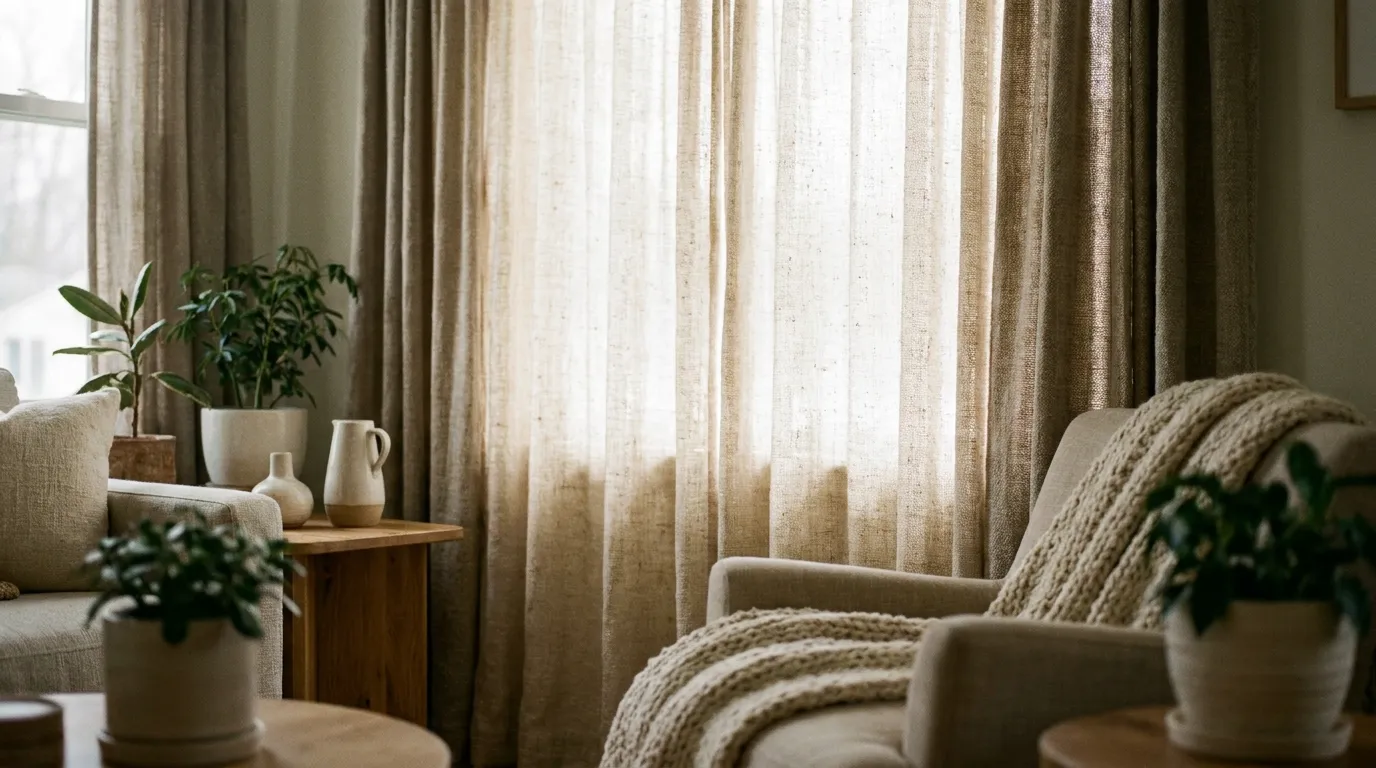
Slub yarns have intentional variations in thickness, creating small raised areas and an irregular woven appearance. This adds tactile interest while keeping the overall colour relatively quiet. Slub textures can work particularly well in warm neutral palettes, where the surface detail becomes the main decorative feature.
Sheer and open-weave fabrics
Sheers with a visible weave can diffuse daylight while adding a soft surface to the window. Depending on the openness and yarn construction, some sheers have a more natural, linen-like appearance than very smooth voile fabrics. Their privacy performance varies, and most sheer curtains do not provide reliable night-time privacy when interior lights are on.
Velvet and softly brushed fabrics
Velvet and brushed textiles create a richer, more substantial surface. They can introduce contrast against smooth walls and simple furniture. Because these fabrics may have a stronger visual presence and different care requirements, use them selectively and assess how their pile or surface changes under directional light.
Woven natural-look materials
Woven textures inspired by bamboo, grasses, and other natural materials can bring an organic quality to blinds and shades. The appearance, light filtering, privacy, and durability depend on the actual material and construction. Confirm the product’s suitability for the intended room and exposure before specifying it.
3. The Character of Woven Slub Linen
Woven slub linen is a useful reference point for adding texture without introducing a strong print. Its defining feature is the uneven thickness of some yarns, which produces small variations across the fabric surface. The result can feel relaxed, tactile, and visually layered while remaining suitable for a restrained colour scheme.
In a modern property, a slub weave can add detail to full-height curtains without distracting from the room’s architecture. It pairs naturally with timber, stone, limewash-style finishes, matte metals, and simple upholstery. Warm white, oatmeal, flax, taupe, and soft grey are common directions for a subtle, tonal look.
What to assess before choosing
- Scale of the weave: fine slubs create a quieter appearance, while larger irregularities make the texture more prominent.
- Fabric weight: a heavier fabric may create fuller folds, while a lighter fabric may hang with a softer, more relaxed movement.
- Opacity: surface texture does not determine whether a fabric is sheer, dimout, or blackout. Check light transmission separately.
- Colour variation: irregular yarns can create subtle tonal differences. Review a large sample if possible.
- Care instructions: confirm the recommended cleaning method and whether the fabric is suitable for the room’s use.
Ask to see the fabric hanging or draped, not only as a small flat swatch. The weave, folds, and colour depth can look different when the material is viewed vertically across a larger area.
4. Layer Fabrics for Depth and Flexibility
Layering is one of the most practical ways to add texture while improving the function of a window treatment. A double-layer curtain system often combines a lighter sheer with a denser decorative or light-controlling curtain. Each layer has a different role, and the combination can create depth without requiring a complicated colour scheme.
Sheer with textured drapery
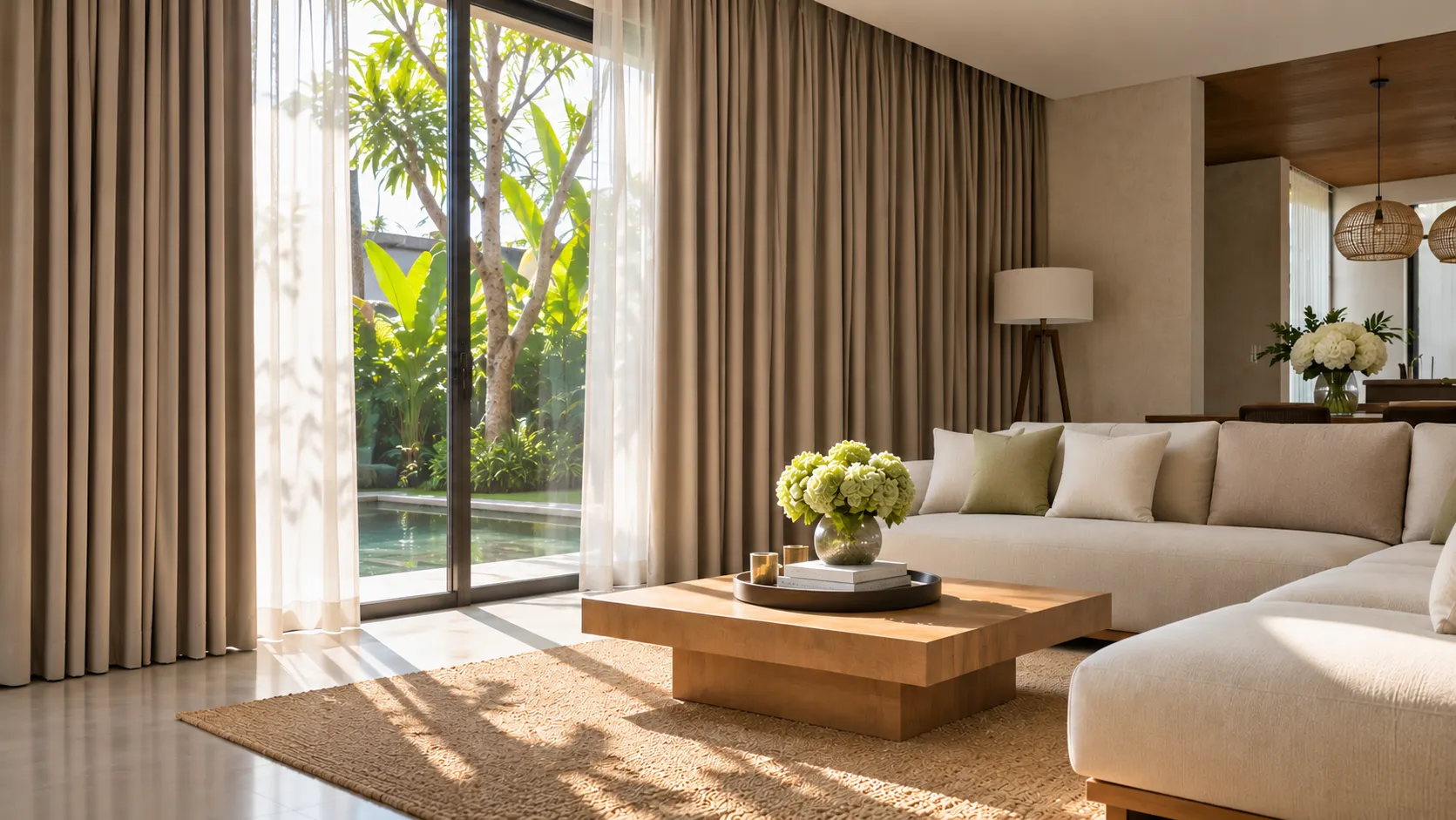
A sheer layer softens daylight and creates a gentle visual screen. A second curtain in a slub, linen-look, or other tactile fabric adds substance and can provide more privacy when closed. This pairing works well in living rooms, bedrooms, and villa spaces where daylight and privacy needs change throughout the day.
Dimout with sheer
For rooms that need more control over brightness, a dimout curtain can be paired with a sheer. The sheer provides a softer daytime appearance, while the dimout layer reduces incoming light when required. The degree of light reduction depends on the specific fabric and the coverage around the window.
Blackout with sheer
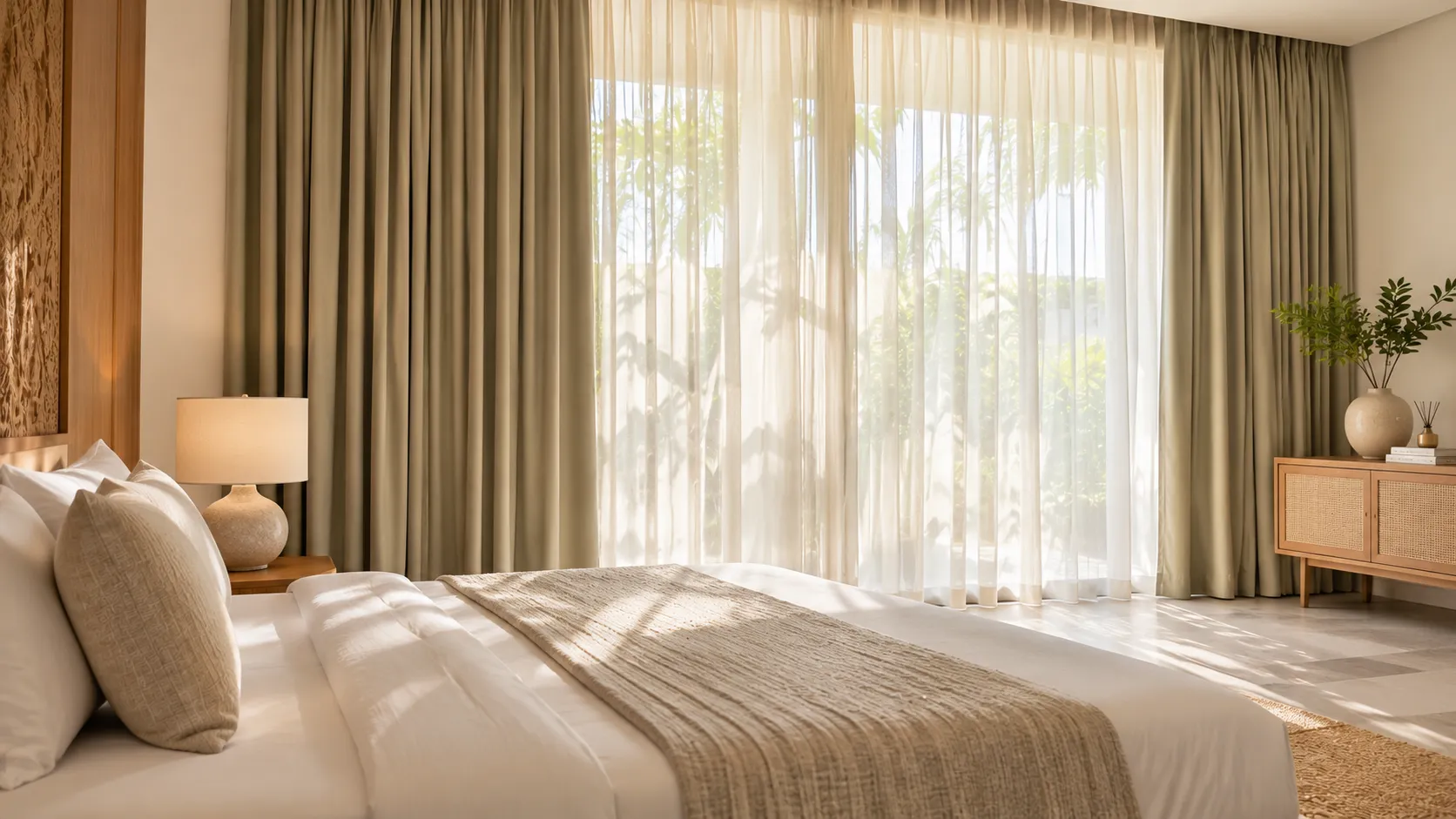
In bedrooms or media rooms, a blackout curtain can be paired with a sheer to provide both daytime softness and stronger darkness when the heavier layer is closed. Blackout fabric is designed to block light through the fabric itself, but light can still enter through gaps around the sides, top, or bottom if the installation does not provide adequate coverage.
Keep the layers visually coordinated
For a calm modern look, coordinate the layers through tone, weave, or finish. For example, a warm-white sheer can sit behind an oatmeal textured curtain, or a soft-grey sheer can complement a deeper stone-coloured drape. The fabrics do not need to match exactly; they should relate to the room’s wider palette.
5. Use Colour to Enhance Texture
Colour and texture work together. A strong colour can make a fabric surface feel more prominent, while a neutral tone can allow the weave itself to become the main feature. Tone-on-tone styling is particularly effective when the aim is to add depth without making the window the dominant visual element.
- Warm white and ivory: create a light, soft appearance and work with warm timber and natural stone.
- Oatmeal and flax: highlight natural-looking weaves and support relaxed contemporary interiors.
- Beige and taupe: add warmth and definition while remaining relatively understated.
- Greige and soft grey: suit cooler palettes, concrete finishes, and modern architectural spaces.
- Deeper earthy tones: can create contrast and visual weight when used with restraint.
Compare fabric samples with the actual wall paint, flooring, upholstery, and other finishes. Daylight, warm artificial lighting, and the direction of the window can change how a neutral fabric appears. A physical sample is more reliable than choosing from a digital image alone.
6. Understand How Texture Interacts with Light
Light reveals the surface of a fabric. Directional sunlight can emphasise raised yarns, slubs, folds, and irregularities, while softer indirect light may make the same fabric appear more even. This means a curtain’s visual character can change between morning, afternoon, and evening.
Open-weave and sheer fabrics allow more daylight to pass through, creating a lighter effect. Denser fabrics generally appear more substantial and may reduce the amount of light entering the room. However, texture and opacity are separate properties: a textured fabric is not necessarily light-filtering, dimout, or blackout.
When reviewing samples, observe them near the window and under the lighting conditions in which the room is normally used. If glare, privacy, or darkness is important, request information about the fabric’s light-control properties rather than relying on appearance alone.
7. Bring Texture into Blinds and Shades
Texture is not limited to curtains. Blinds and shades can introduce woven detail while maintaining a neat profile. They may be useful where the window needs a more compact treatment, where furniture sits close to the glazing, or where a simple architectural appearance is preferred.
Roman shades
Roman shades use fabric panels that fold as the shade is raised. A textured linen-look or woven fabric can create soft horizontal layers when the shade is partially or fully raised. Consider the fabric’s weight and construction because these affect how the folds form.
Woven and natural-look shades
Woven shades can bring an organic surface to a room and complement timber, rattan, stone, and neutral furnishings. Their light filtering and privacy characteristics vary with the weave and any backing or lining. Review a sample in the intended position before making a final selection.
Roller blinds with textured finishes
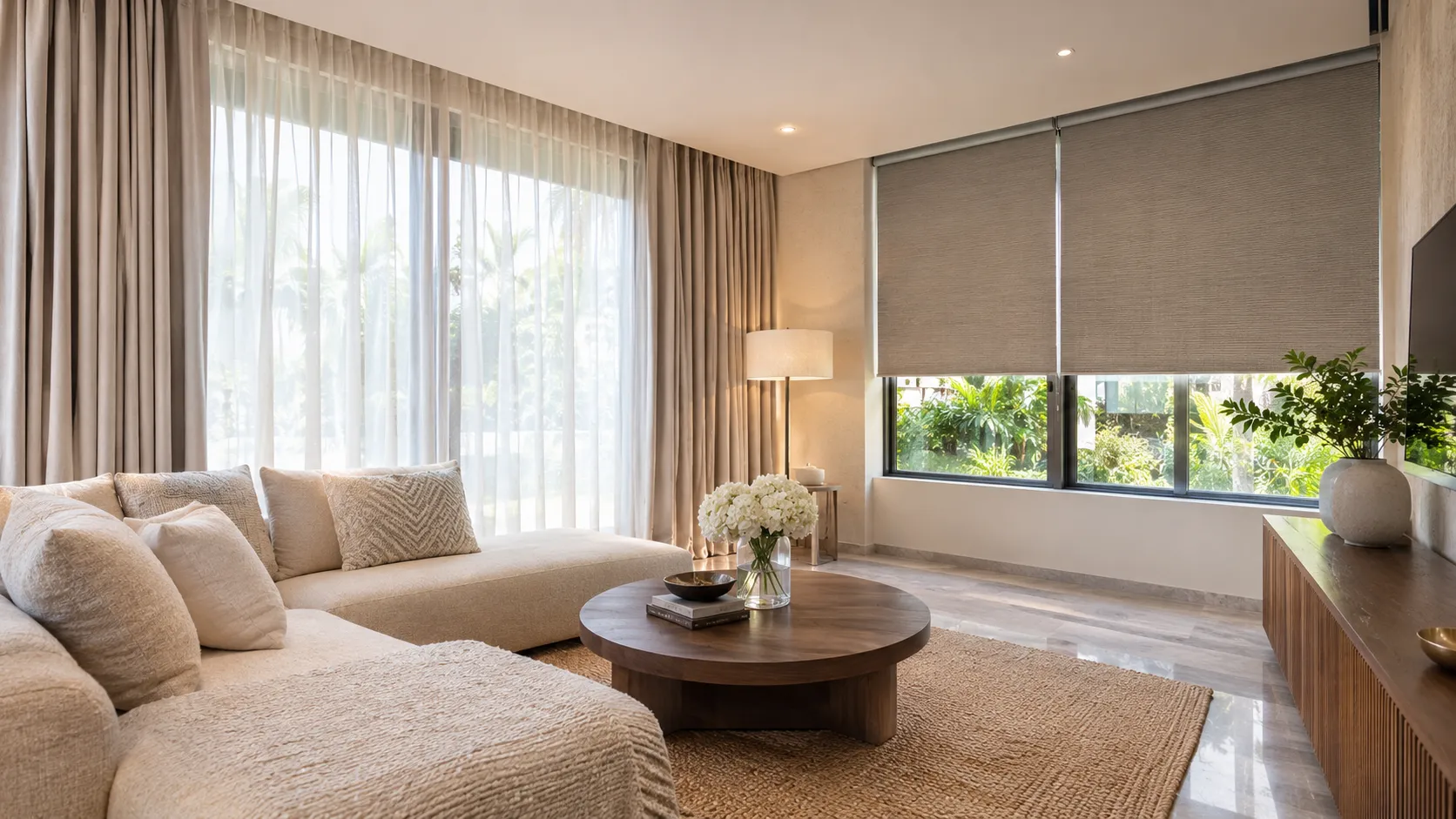
Some roller blind fabrics have subtle woven or linen-inspired surfaces. They can provide a clean, compact appearance while adding more visual interest than a completely smooth finish. Choose the opacity according to the room’s needs and confirm the product’s specifications.
Explore the Shade Measuring Guide before preparing dimensions for blinds and shades.
8. Texture Ideas for Different Spaces
Living rooms
Use a textured full-height curtain to soften large glazing and connect the window with upholstery, rugs, and timber details. A sheer behind a heavier curtain offers flexibility, particularly in living areas that are used throughout the day and evening. Keep the texture scale in proportion to the window so the fabric does not overwhelm the room.
Bedrooms
Layer a soft sheer with a denser curtain selected for the required level of light control. A subtle slub or linen-look surface can add warmth without creating a busy focal point. If darkness is important, assess blackout fabric and installation coverage separately.
Dining areas
A restrained textured fabric can soften a dining space while allowing furniture and lighting to remain the focus. Choose a practical fabric and finish that suit the room’s use and cleaning routine.
Home offices
Consider light-filtering textures that reduce the harshness of daylight without making the workspace feel closed in. If screen glare is an issue, assess the window orientation and opacity options before selecting the final treatment.
Bali villas and hospitality properties
Natural-looking textures can complement timber, stone, woven furniture, and indoor-outdoor design. Use different levels of opacity according to each room’s function, and consider maintenance, sunlight exposure, ventilation, and guest use when selecting materials.
9. Practical Considerations for Bali Properties
In Bali, window treatments may be exposed to strong sunlight, warm temperatures, and periods of high humidity. The right fabric choice should reflect the specific property and room rather than relying on a general assumption that one material is suitable for every tropical setting.
Consider sunlight exposure
Direct sunlight can affect some fabrics and dyes over time. For windows with prolonged sun exposure, ask about the fabric’s recommended application, care, and any available lining options. A lining may change the appearance and performance of a curtain, but it does not make every face fabric immune to fading.
Plan for ventilation and cleaning
Allow rooms to ventilate and follow the fabric manufacturer’s cleaning guidance. Avoid keeping damp curtains tightly gathered for extended periods. In hospitality properties, consider how often curtains will be cleaned and whether the selected fabric is appropriate for the operational routine.
Measure for the intended installation
Texture and fullness influence how much space a curtain occupies when open. Confirm track width, finished drop, heading style, and stack-back before production. For wide windows, sliding doors, recessed tracks, or double-layer systems, a site measurement can help identify installation constraints.
Use the Curtain Measuring Guide and the Curtain Stacking Calculator as planning references. For a more complex property, professional measurement is recommended before the fabric is cut.
10. Common Styling Mistakes to Avoid
- Combining too many competing textures: balance one prominent weave with simpler surrounding surfaces.
- Choosing from a small screen image: inspect a physical sample in the room’s lighting.
- Confusing texture with opacity: check whether the fabric is sheer, light-filtering, dimout, or blackout separately.
- Ignoring fabric weight: a fabric that looks attractive as a swatch may hang differently when made into full-height curtains.
- Overlooking the curtain stack: plan where the fabric will sit when open, especially around sliding doors and large windows.
- Using a strong texture everywhere: repeating a prominent weave throughout every room can make the overall scheme feel monotonous.
- Forgetting maintenance: confirm cleaning instructions and suitability for the room’s exposure and use.
11. Frequently Asked Questions
What is the best curtain fabric for adding texture to a modern interior?
Linen and linen-look fabrics, slub weaves, textured sheers, and selected softly brushed materials can all add surface interest. The best option depends on the desired appearance, drape, light control, maintenance, and room conditions.
What is slub linen?
Slub linen describes a linen fabric or linen-style weave with intentional variations in yarn thickness. These variations create small irregularities across the surface and give the material a tactile, textured appearance. Check the fibre composition because not every slub or linen-look fabric is made entirely from linen.
How can I add texture without making a room look busy?
Use a restrained colour palette and let the weave provide the visual interest. Pair one noticeable texture with smoother finishes, and avoid combining too many strong patterns in the same space.
Can sheer curtains add texture?
Yes. Sheers can have visible woven structures, slub yarns, or subtle surface details. They soften daylight while adding a light layer at the window, although their privacy performance is limited at night when the room is illuminated.
Are textured curtains suitable for Bali villas?
They can be, provided the selected fabric is appropriate for the room’s sunlight exposure, ventilation, humidity, cleaning routine, and intended use. Review the material specifications and care instructions before ordering.
Does a textured curtain provide better light control?
Not necessarily. Texture describes the surface, while light control depends mainly on the fabric construction, openness, colour, lining, and installation coverage. Confirm opacity separately.
Should curtains and blinds use the same texture?
They do not need to match exactly. They should complement each other in colour, material character, and visual weight. A textured curtain can work alongside a simpler roller blind, for example, if both relate to the room’s palette.
How do I know how much fabric is needed?
The required amount depends on the track width, desired fullness, heading style, fabric width, pattern or weave considerations, and finished drop. Accurate site measurements and a production calculation help establish the quantity before ordering.
Bring More Depth to Your Windows
Adding texture to a window does not require bold colours or elaborate decoration. A carefully selected slub weave, a softly textured sheer, or a coordinated double-layer curtain can bring warmth and visual depth to a modern property while supporting its practical needs.
Start with the room’s architecture, natural light, and material palette. Then compare fabric samples, confirm opacity and care requirements, and plan the track, fullness, and finished length. The result should feel connected to the interior and work comfortably in everyday use.
Almeers Living — Window Treatment Specialist in Bali helps homeowners, villa owners, and hospitality teams explore custom curtains and blinds for their spaces. Browse our curtain and blinds collection or visit our design journal for more window-treatment inspiration.