The Aesthetics of Roman Blinds: A Designer’s Guide
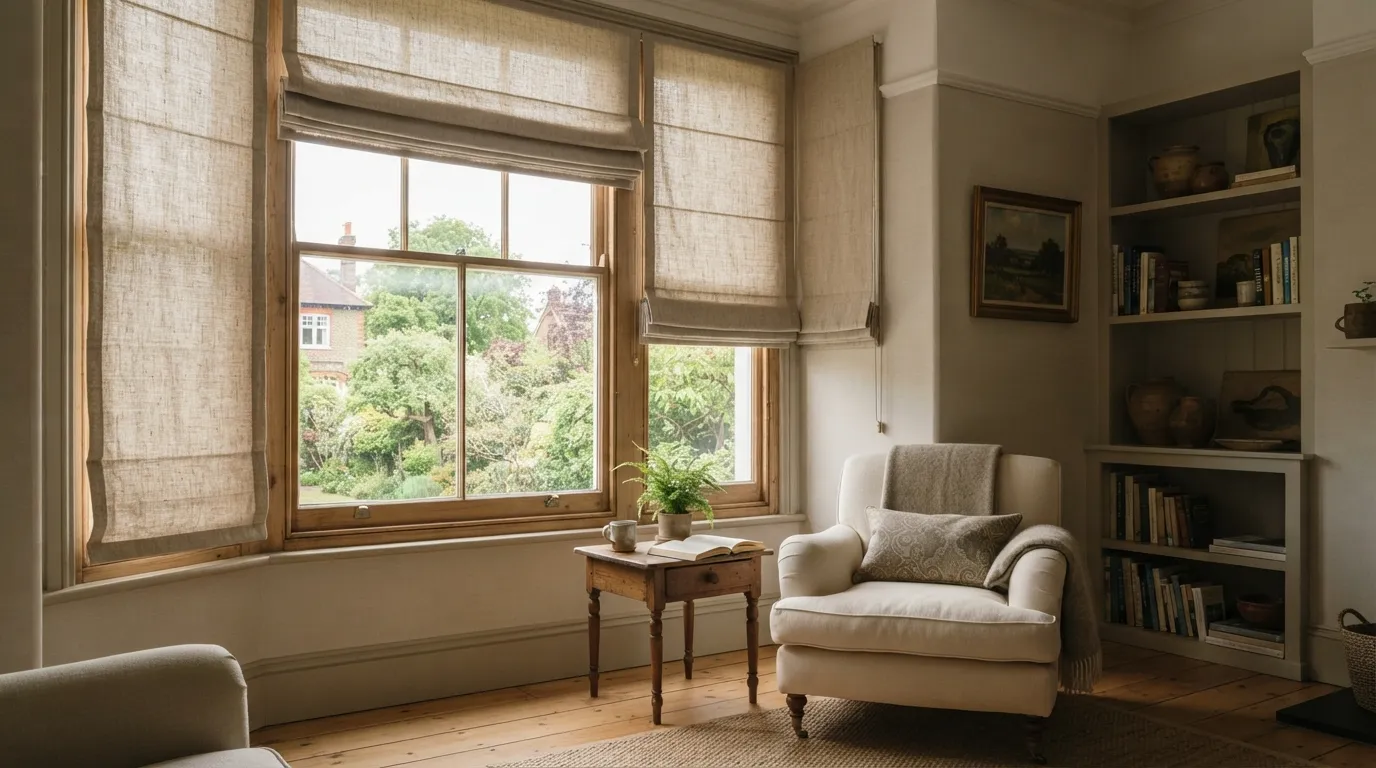
Roman blinds offer a distinctive balance between the softness of fabric and the orderly appearance of a fitted window covering. Unlike curtains, which gather into vertical folds, Roman blinds rise into a series of horizontal fabric folds when opened. When lowered, they create a relatively flat textile surface that can bring colour, texture and visual calm to a room.
This combination makes Roman blinds a considered choice for bedrooms, living areas, studies and selected hospitality interiors. Their tailored appearance can complement contemporary, minimalist, transitional and classic spaces, provided the fabric, fold construction and mounting details are planned together.
For Bali villas and other tropical properties, Roman blinds also need to be assessed for sunlight exposure, humidity, cleaning access and the practical demands of everyday use. This guide explains the design mechanics behind Roman blinds and the decisions that help achieve a clean, architectural finish.
1. Why Roman Blinds Appeal to Designers
Roman blinds provide a fabric-led alternative to slatted blinds and full-length curtains. Their surface can introduce a textile pattern or tactile finish without extending fabric across the entire wall. This makes them useful where a designer wants softness around a window but prefers a compact, defined silhouette.
When raised, the blind forms a visible stack of horizontal folds. When lowered, it presents a more continuous fabric face. This change in appearance gives designers an opportunity to coordinate the window treatment with upholstery, bedding, wall finishes and other soft furnishings.
Where Roman blinds work particularly well
- Bedrooms: A tailored fabric finish with lining options for additional light control.
- Living rooms: A clean outline where full-height drapery is not preferred.
- Studies and home offices: Daylight and glare management with a restrained appearance.
- Dining areas: A compact profile where long curtains may interfere with furniture or circulation.
- Boutique hospitality interiors: A coordinated look when the fabric and mechanism are specified for regular use.
Roman blinds are not the best answer for every opening. Very wide windows, frequently used sliding doors and openings that require completely unobstructed access may be better served by another system or a combination of blinds and curtains. The architecture and daily use should guide the decision.
2. Understanding Structured Fabric Fold Mechanics
The defining feature of a Roman blind is the way its fabric gathers into horizontal folds as it is raised. The fold pattern is created by the construction of the blind, including the placement of support rods or battens, rear lift tapes or cords, rings, operating mechanism and headrail. These elements work together to guide the fabric as it moves.
How the folding action works
In a typical system, vertical lift lines are attached to the back of the fabric at designated positions. As the operating mechanism raises the blind, the lift lines draw the lower section upward. The fabric folds at planned horizontal points, creating a stack beneath the headrail. When the blind is lowered, the fabric unfolds and returns towards its full drop.
The spacing and construction of the fold points influence the finished appearance. Consistent spacing can create a regular, structured look, while the fabric’s weight and flexibility affect how neatly the folds form. A thick, stiff textile behaves differently from a lightweight woven fabric, so the construction should be matched to the material.
Key construction components
- Headrail: The upper assembly supporting the blind and operating mechanism.
- Lift mechanism: The system used to raise and lower the blind.
- Lift tapes or cords: Rear components guiding the fabric into folds; their safety provisions must be checked.
- Rings or guides: Components that guide lift lines along the back of the blind.
- Support rods or battens: Horizontal elements used in some constructions to define fold positions.
- Bottom bar: A weighted or structured lower component helping the blind hang evenly.
Because Roman blinds commonly use lift cords or tapes within their construction, child safety must be addressed during product selection and installation. Choose a compliant operating design with appropriate safety features for the market and application. Where children may use the room, consider suitable cordless or motorized alternatives and follow the manufacturer’s safety instructions. Do not modify or remove safety components.
Design note: The quality of a Roman blind is visible in the consistency of its folds, but reliable operation depends on the hidden construction as well. Ask the supplier to explain the mechanism and its maintenance requirements.
3. Common Roman Blind Styles
Roman blind styles are generally distinguished by how the fabric behaves when lowered and how it stacks when raised. Naming conventions can vary between manufacturers, so review a physical sample or product drawing before approving the specification.
| Style | Visual character | Design considerations |
|---|---|---|
| Flat Roman blind | Relatively smooth fabric face when lowered, with defined folds when raised. | Works well with plain fabrics, subtle textures and patterns that benefit from a flatter presentation. |
| Classic or soft-fold Roman blind | Soft horizontal folds remain visible across the face when lowered. | Creates a relaxed, textile-rich appearance; fabric weight affects fold definition. |
| Relaxed Roman blind | The lower edge forms a gentle curve or soft dip. | Often suits casual interiors but requires careful fabric selection and workmanship. |
| Hobbled or looped Roman blind | Fabric forms cascading folds that remain visible when lowered. | Provides a fuller decorative look and uses more fabric than a flatter construction. |
For clean-line interiors, flat Roman blinds are often a natural starting point because the lowered surface appears restrained. Soft-fold and hobbled styles can be appropriate where a more decorative textile expression is desired. The final choice should relate to the room’s architecture and the amount of visual detail already present.
4. Choosing the Right Fabric and Lining
Fabric selection has a direct effect on the appearance and operation of a Roman blind. The textile must be flexible enough to fold neatly, stable enough to maintain its shape and suitable for the light and moisture conditions of the room. A fabric that looks excellent as a curtain may not automatically produce the same result as a Roman blind.
Fabric characteristics to review
- Weight: Heavy fabrics create substantial folds and require a mechanism rated for the finished blind. Very light fabrics may need suitable support or lining.
- Flexibility: The material should fold without excessive stiffness or bulky creasing.
- Stability: Consider stretching, shrinkage or distortion, particularly in wide or tall blinds.
- Pattern repeat: Large motifs and directional patterns need careful placement for a balanced result.
- Colour and light exposure: Strong sunlight can affect some dyes and finishes over time.
- Care requirements: Confirm whether the fabric can be cleaned in place or needs specialist handling.
Natural textures and contemporary finishes
Linen-look weaves, cotton blends and textured polyester fabrics can all be considered, depending on the desired appearance and product construction. Natural fibres can bring an organic character to a room, while blended and synthetic textiles may offer different levels of stability and maintenance convenience. No fibre type is automatically ideal for every application; review the exact composition and supplier guidance.
Understanding lining options
A lining can change the way a Roman blind hangs and performs. Standard lining may add body and help protect the face fabric from some direct light exposure. Dimout lining can reduce incoming light, while blackout lining is designed to block light through the lined fabric construction. The actual room-darkening result also depends on light gaps around the blind.
For bedrooms, consider whether a Roman blind alone can provide the required darkness or whether it should be paired with curtains or another treatment. For living spaces, a lighter lining or unlined construction may preserve a brighter atmosphere. Check the additional weight created by the lining against the capacity of the operating system.
5. Inside-Recess and Face-Fix Installation
Roman blinds can commonly be installed inside a window recess or face-fixed outside the opening. Each approach creates a different architectural effect and affects light gaps, window access and the space available for the blind when raised.
Inside-recess fitting
An inside-recess installation places the headrail within the window opening. It creates a neat, integrated appearance and keeps the blind close to the window frame. This option works best when the recess is sufficiently deep, reasonably square and free from obstructions such as handles or locks.
Measure the recess width and height at multiple points because window openings are not always perfectly square. Confirm the manufacturer’s deductions and fitting allowances rather than applying a generic deduction. Also check that the raised fabric stack will not obstruct the window or interfere with handles.
Face-fix or outside-recess fitting
A face-fix installation places the blind above or outside the recess, usually on the wall or another suitable mounting surface. It can make a window appear larger and may reduce light gaps around the sides when the blind is specified with sufficient overlap. It is also useful when the recess is too shallow or contains obstructions.
Before choosing this option, confirm the wall substrate, fixing method, available mounting height and clearance from nearby furniture or trim. The blind should cover the intended opening without interfering with window operation or doors.
| Fitting method | Advantages | Points to check |
|---|---|---|
| Inside recess | Integrated appearance; preserves surrounding wall area. | Recess depth, squareness, handles, headrail clearance and side light gaps. |
| Face fix | Flexible placement; can cover the recess and create a larger visual opening. | Wall fixing strength, overlap, mounting height and projection from the wall. |
6. Architectural Fitting, Proportion and Alignment
A Roman blind is a compact window treatment, so small differences in proportion can be noticeable. The width should relate to the window and surrounding wall, while the lowered length should provide the intended coverage without looking undersized. The raised stack also needs to be considered because it remains visible above the glass when the blind is open.
Consider the raised stack
When a Roman blind is raised, its folded fabric occupies space at the top of the window. The stack height depends on the blind’s finished drop, fold spacing, construction and fabric thickness. Confirm the expected stack with the supplier before finalizing the mounting position, especially when the window has a limited clear area or a view that should remain unobstructed.
Keep multiple blinds visually consistent
In rooms with several windows, align the headrails and finished lower edges where the architecture allows. If windows have different heights, a coordinated top line can create a consistent visual rhythm, but the practical coverage of each opening must remain correct. Discuss any variation with the designer or installer before production.
Pattern placement and fold alignment
Patterned fabrics need additional planning. A large motif may be interrupted by horizontal folds, and the visible pattern can change as the blind is raised. Ask for a fabric layout or sample demonstration if pattern continuity is important. For plain or subtly textured fabrics, consistency of fold depth and side alignment becomes the main visual priority.
7. Light Control and Privacy Planning
Roman blinds can provide different levels of light control depending on the fabric, lining and fit. A sheer or open-weave fabric may soften daylight while preserving some view, whereas a denser fabric or lined construction can provide greater privacy and light reduction. The correct specification depends on the room’s use and the window’s exposure.
Remember that a Roman blind is usually fitted within or over the window opening rather than spanning an entire wall. Light can enter around the sides, top and bottom, particularly with inside-recess fitting. If strong room darkening is required, consider the blind’s dimensions and whether a secondary curtain or another treatment is needed.
Privacy during the day and at night
Some fabrics provide useful daytime screening but become more transparent when interior lights are switched on after dark. Test samples in realistic lighting conditions before selecting a fabric for bedrooms or bathrooms. Where privacy is essential, specify an appropriate opacity and confirm the expected performance with the supplier.
8. Roman Blinds for Bali Villas and Hotels
Roman blinds can suit Bali interiors where a tailored fabric treatment is preferred over full-length curtains. They can complement natural timber, stone, textured walls and restrained tropical palettes. However, the local environment should influence fabric, lining, hardware and maintenance decisions.
Sun exposure and fabric longevity
Assess the direction and duration of direct sunlight at each window. Strong sun can affect some fabrics and colours over time. A suitable lining may help protect the face fabric from some direct exposure, but performance varies by textile and construction. For highly exposed windows, ask for product-specific guidance and consider external shading as part of the wider design.
Humidity and ventilation
Humidity can affect textiles and some natural materials. Choose fabrics that are appropriate for the room and can be maintained under the property’s ventilation conditions. Avoid leaving damp blinds folded for extended periods, and allow materials to dry fully after approved cleaning.
Coastal hardware and components
For villas close to the sea, review the material and finish of headrails, brackets, screws and other exposed components. Corrosion resistance depends on the exact material, coating, installation environment and maintenance. Ask the supplier for suitable product information rather than assuming all metal hardware performs equally in coastal conditions.
Hospitality use and operating frequency
In hotels and rental villas, blinds may be raised and lowered by different guests every day. Choose a mechanism designed for the expected use, provide simple operating instructions and ensure maintenance teams know how to identify unusual resistance or damage. If the blind is difficult to operate, it may be a sign that the mechanism, fabric weight or installation needs attention.
9. Measurement and Specification Checklist
Accurate measurement is essential for Roman blinds because the headrail, fabric width, fold arrangement and fitting allowances all affect the final result. The exact measurement method varies by product and mounting style, so follow the selected manufacturer’s instructions and confirm the final dimensions before production.
Information to record
- Window or recess width measured at the required points.
- Window or recess height measured at the required points.
- Whether the blind will be inside-recess or face-fixed.
- Available recess depth and any protruding handles or locks.
- Required finished coverage and desired side overlap.
- Expected raised stack height and its effect on daylight or the view.
- Fabric reference, composition, pattern repeat and direction.
- Lining type and intended light-control result.
- Operating mechanism and applicable child-safety requirements.
- Mounting substrate and appropriate fixing method.
For a project with several openings, record each blind separately and label the room and window location clearly. This reduces the risk of mixing up dimensions or fabric selections during production. For more guidance, see the shade measuring guide and explore the Almeers Living product collection.
10. Care and Maintenance
Roman blinds have moving parts and folded fabric, so maintenance should address both the textile and the operating system. The correct cleaning method depends on the fabric, lining and construction. Always follow the manufacturer’s care instructions and do not assume that a complete blind can be washed or steamed without disassembly.
- Remove surface dust gently using a suitable soft brush or vacuum attachment.
- Address stains only with a cleaning method approved for the fabric.
- Do not force the blind if it becomes difficult to raise or lower.
- Check the headrail, brackets, lift components and operating controls periodically.
- Keep the fabric dry and allow it to air after approved cleaning.
- Have damaged lift components or safety devices repaired by a qualified service provider.
- In coastal locations, inspect exposed hardware for corrosion or finish deterioration.
For hospitality properties, maintain a record of the fabric code, lining, mechanism and installation details. This makes it easier to source compatible parts and replacement fabric if a blind needs repair.
11. Frequently Asked Questions
What makes Roman blinds different from roller blinds?
Roman blinds use fabric that folds horizontally as the blind is raised, creating a soft, layered stack. Roller blinds wrap the fabric around a tube and generally form a flatter roll at the top. Roman blinds tend to provide a more textile-led appearance, while roller blinds often have a simpler, flatter profile.
Are Roman blinds suitable for modern minimalist interiors?
Yes. A flat Roman blind in a plain or subtly textured fabric can complement clean architectural lines. Careful alignment, a discreet headrail and a restrained colour palette help maintain a minimal appearance.
Do Roman blinds provide blackout?
They can be made with blackout fabric or lining, but light may still enter around the edges depending on the fitting and dimensions. If near-total darkness is required, discuss side, top and bottom light gaps and consider whether a secondary treatment is necessary.
Are Roman blinds suitable for humid climates such as Bali?
They can be suitable when the fabric, lining and hardware are selected for the room’s conditions and maintained correctly. Ventilation, sunlight exposure and cleaning requirements should be considered before choosing the material.
Can Roman blinds be motorized?
Some Roman blind systems are available with motorized operation. Confirm that the motor and mechanism are designed for the blind’s dimensions and finished weight, and check power access, controls, maintenance and child-safety provisions.
Are Roman blinds safe for homes with children?
Safety depends on the operating design and installation. Some Roman blinds use lift cords or tapes, so select a product with appropriate safety features for the intended market and application. Consider cordless or motorized alternatives where suitable, and follow all manufacturer instructions and applicable regulations.
Should Roman blinds be fitted inside or outside the recess?
Inside-recess fitting creates an integrated appearance when the recess has sufficient depth and is free from obstructions. Face-fix fitting can be useful when the recess is shallow or when greater coverage is desired. The choice depends on the window, room layout and desired finish.
How much space do Roman blinds need when raised?
The folded stack height depends on the blind’s drop, fold spacing, fabric thickness and construction. Ask the supplier for the expected stack dimension before installation so that it does not obstruct the window or an important view.
Conclusion: A Tailored Window Treatment with Architectural Clarity
The appeal of Roman blinds lies in their ability to combine the warmth of fabric with a structured, compact form. Their horizontal folds create a distinctive visual detail, while the lowered blind offers a relatively clean fabric surface that can complement a wide range of interior styles.
Achieving a refined result requires more than choosing a beautiful textile. Fold construction, lining, operating mechanism, mounting method, proportions and installation accuracy all contribute to the finished appearance. For Bali villas and hotels, fabric suitability, humidity, sunlight, coastal exposure and maintenance should also be part of the specification.
Almeers Living supports custom window-treatment projects in Bali with product selection, measurement and installation planning. Explore the Almeers Living collection or contact the team to discuss Roman blinds and other tailored solutions for your property.