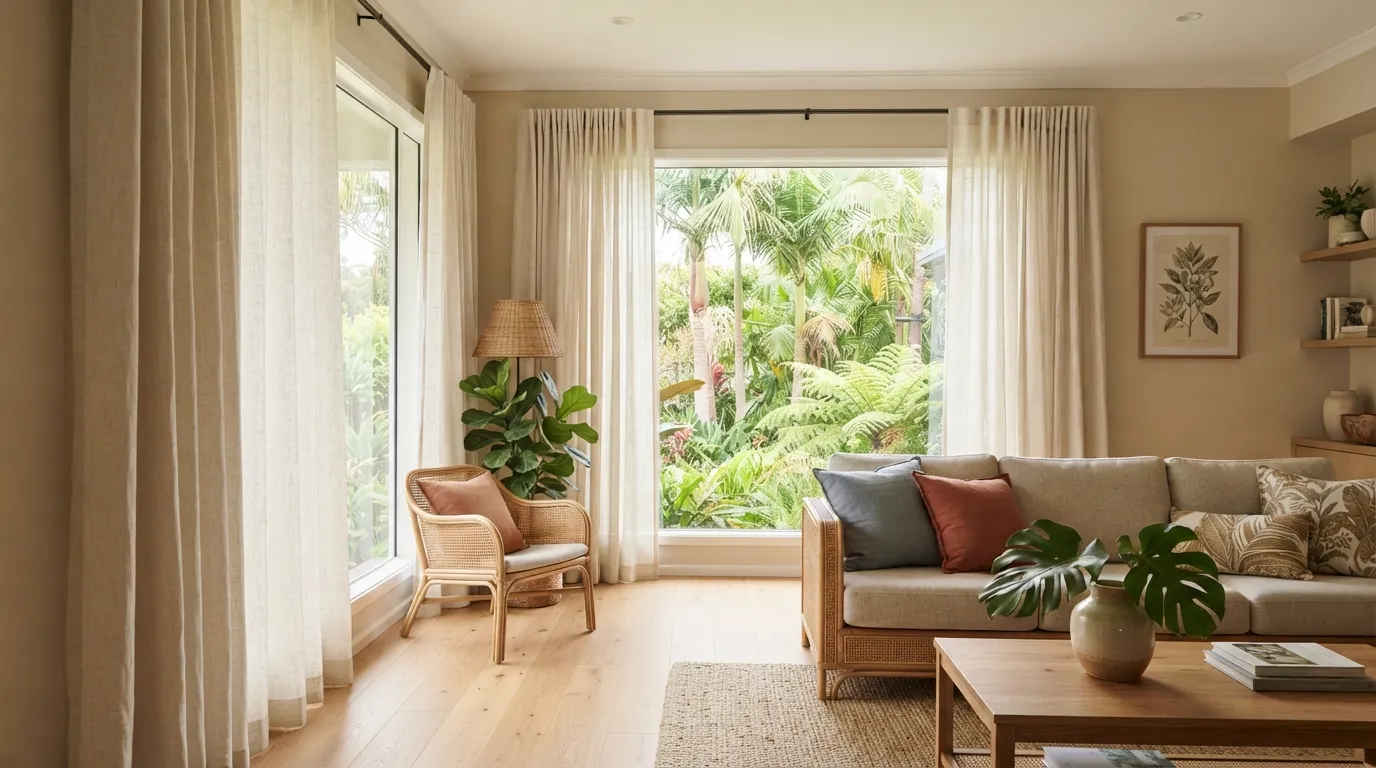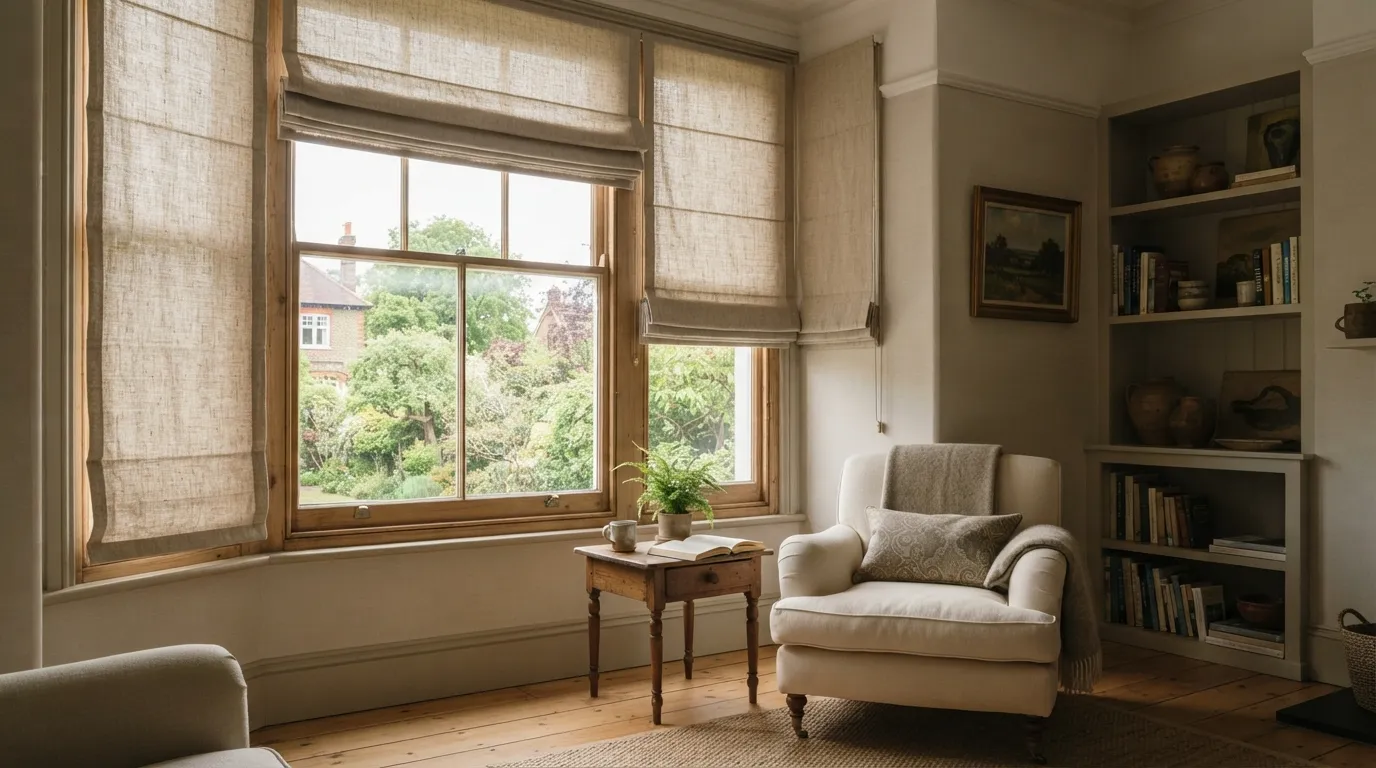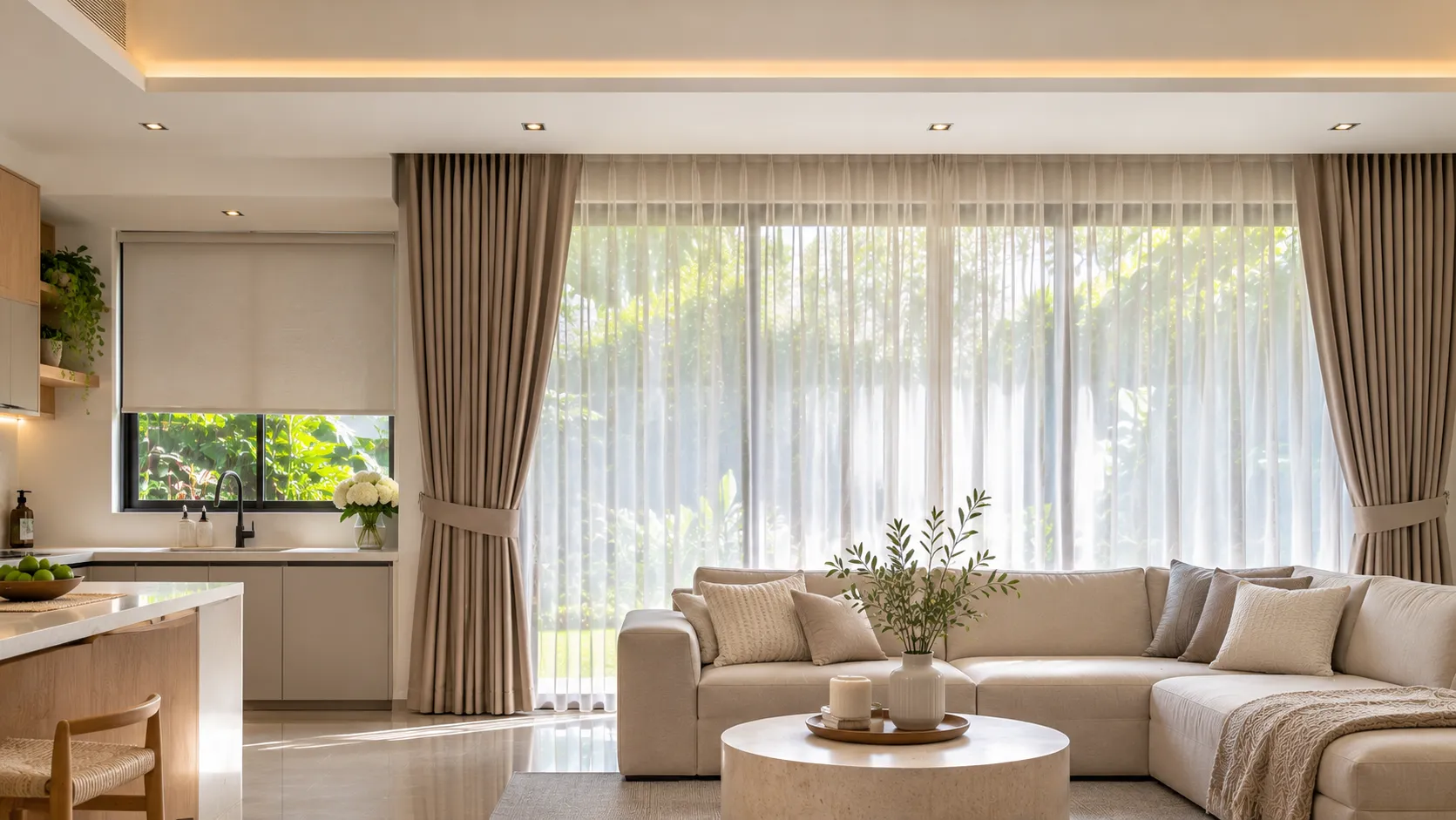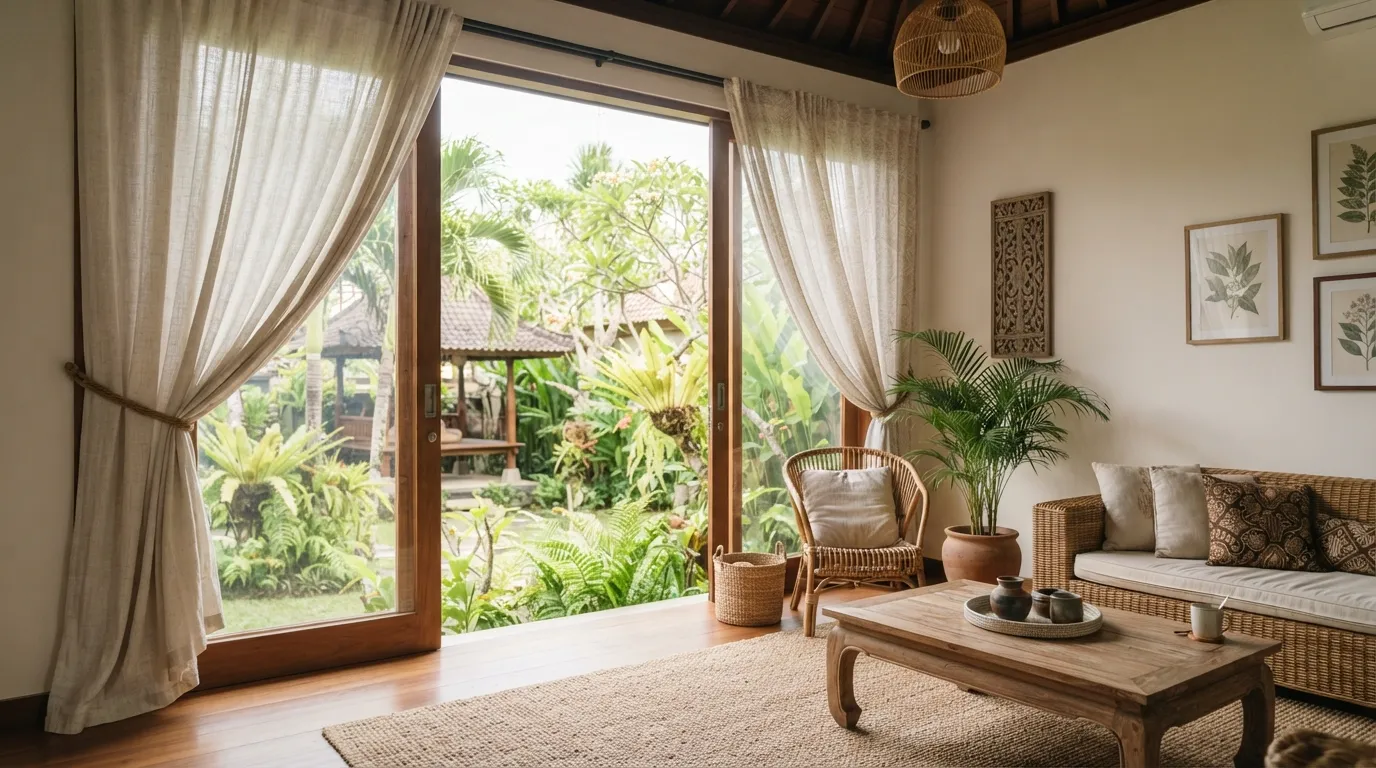
Window treatments are shaped by more than appearance. Across the world, curtains and blinds respond to local architecture, daylight, privacy expectations, climate, materials and the way people use their homes. A layered apartment in Paris, a minimalist Japanese residence, a Mediterranean villa and a tropical resort may all approach the same window differently. Each offers useful design lessons, but not every material or construction detail can be transferred directly to Bali.
For Bali villas, hotels, apartments and private residences, the most successful approach is to take inspiration from international interiors and adapt it to local conditions. Strong sunlight, warm temperatures, humidity, seasonal rain, open-air layouts and indoor-outdoor living all influence how a window covering performs. A beautiful fabric that works well in a cool, dry climate may need a different lining, heading, installation detail or maintenance routine in a tropical property.
This guide explores window treatment ideas from different design traditions and explains how to translate their most useful features into practical solutions for Bali. It covers fabric selection, light control, privacy, hardware, layering, motorisation, maintenance and room-by-room planning. The aim is not to copy a style exactly, but to create a considered result that suits the building, the climate and the people using the space.
1. What Global Window Treatment Design Can Teach Us
International design references are valuable because they show how window treatments can support a wider interior concept. In some homes, curtains soften strong architectural lines. In others, blinds provide precise daylight control or preserve a clean visual connection with the outdoors. Hospitality interiors often combine several layers so guests can choose between filtered daylight, privacy and room darkening.
When borrowing an idea from another country, separate its visual character from the technical conditions that made it successful there. A pale linen-look curtain, for example, may create the relaxed atmosphere associated with a coastal European interior. In Bali, the same appearance can be achieved with a fabric selected for its actual composition, care requirements and suitability for the room's exposure to sunlight and moisture.
- Study the purpose: identify whether the original treatment is intended for privacy, glare reduction, room darkening, decoration or several functions.
- Read the architecture: consider window proportions, ceiling height, frame depth, wall finishes and the relationship between indoor and outdoor areas.
- Adapt the specification: choose fabric, lining, hardware and operating methods according to the property's real conditions.
- Keep the design coherent: use a consistent palette and repeat selected materials without making every room identical.
2. Scandinavian Simplicity and Natural Light
Scandinavian interiors are often associated with restrained colours, natural materials, practical layouts and an emphasis on daylight. Window treatments in this style tend to feel light and uncomplicated. Soft white, warm ivory, pale grey and muted beige can help a room feel open, while simple curtain headings and discreet tracks keep attention on the architecture.
For a Bali property, this approach can work particularly well in bedrooms, living spaces and apartments where a calm, uncluttered atmosphere is desired. Sheer curtains can diffuse daylight while maintaining a visual connection with the garden or balcony. Where stronger privacy or darkness is needed, a second layer can be added behind the sheer.
How to adapt it in Bali: choose a sheer with a suitable weave and practical care instructions rather than selecting by colour alone. In rooms exposed to intense afternoon sun, assess whether the fabric needs additional protection or whether a second layer is required. A neutral palette can remain visually soft while the construction is tailored to the local environment.
3. Japanese-Inspired Minimalism and Privacy
Japanese-inspired interiors often use simplicity, proportion, natural textures and carefully controlled transitions between private and shared spaces. The window treatment may be understated, with clean lines and a clear relationship to the window frame. Panel-style coverings, restrained Roman shades and plain curtains can all support this aesthetic when their proportions are carefully considered.
In Bali, this design direction can complement contemporary villas and compact apartments. A Roman blind can provide a neat appearance when raised, while a simple curtain can soften a large opening. For wide glazing, consider whether separate panels or multiple operating sections will make daily use easier.
How to adapt it in Bali: avoid treating minimalism as a reason to ignore function. Check the direction of sunlight, sightlines from neighbouring properties and the amount of ventilation required. If a window is frequently opened, select an operating system that does not obstruct access or become difficult to manage.
4. Mediterranean Softness and Relaxed Texture
Mediterranean interiors often feature sun-washed colours, textured plaster, stone, timber and relaxed fabric styling. Curtains may be generous in proportion, with soft folds and natural-looking surfaces. Warm white, sand, oatmeal and earthy neutrals can create a welcoming atmosphere without relying on strong patterns.
This visual language is easy to adapt to Bali's villa architecture, especially where natural stone, timber details, textured walls and garden views are part of the design. Linen and linen-look fabrics can contribute to the relaxed character. However, the term "linen look" describes an appearance, not necessarily the fibre content. Always confirm the actual composition and care requirements before specifying a fabric.
How to adapt it in Bali: consider the room's humidity, ventilation and exposure. Natural fibres may require more attentive care in some environments. A suitable blend or a well-made textured alternative may provide a similar visual effect with maintenance characteristics better aligned with the property's use.
5. Hotel and Resort-Inspired Layering
Well-planned hotel rooms give occupants control over light and privacy. A common approach is to combine a decorative or light-filtering layer with a heavier curtain that provides greater privacy and room darkening. The layers can be operated independently, allowing guests to adjust the room throughout the day.
This is particularly useful in Bali villas and holiday rentals, where bedrooms may have large glazed doors, garden-facing windows or strong early-morning sunlight. A sheer layer can soften daylight during the day, while a blackout curtain can help create a darker sleeping environment when correctly specified and installed.
For a polished hospitality look, consider ceiling-to-floor proportions, consistent curtain lengths, concealed or visually discreet tracks and a heading style that suits the interior. Wave or S-fold headings create regular, flowing folds; pinch pleats offer a more tailored appearance; and simpler headings may suit relaxed spaces. The best option depends on the fabric, track system, available stack space and desired visual effect.
How to adapt it in Bali: specify each layer according to its job. A sheer is not a substitute for a privacy or blackout layer, and a blackout fabric does not automatically guarantee complete darkness. Light can enter around the sides, top and bottom of a treatment, so the installation design matters as much as the fabric specification.
6. Adapting International Ideas to Bali's Tropical Climate
Bali's tropical conditions make material selection and installation details especially important. The effect of heat, humidity, sunlight, rain exposure and coastal air varies by property. A bedroom with air conditioning and closed windows has different conditions from an open-plan living area beside a garden or a coastal villa exposed to sea air.
Sunlight and fading
Strong sunlight can contribute to fading and gradual fabric deterioration. Consider the direction and duration of exposure, the presence of external shading and the type of glazing. A lining or a more suitable fabric construction may help protect the interior, but no curtain should be described as completely preventing fading under all conditions.
Humidity and ventilation
Moisture can affect fabrics, linings and hardware, particularly where air circulation is limited. Keep window treatments clear of persistent damp surfaces, allow rooms to ventilate when appropriate and follow the fabric supplier's cleaning and care instructions. If a property has recurring condensation or moisture problems, address the underlying building or ventilation issue rather than relying on curtains to solve it.
Coastal conditions and hardware
Properties close to the sea may experience salt-laden air that can accelerate corrosion on unsuitable metal components. Discuss the location with the installer and select tracks, brackets, fasteners and operating components appropriate to the exposure. Material grade and maintenance requirements should be confirmed with the supplier rather than assumed from appearance.
Indoor-outdoor living
Large sliding doors and open-plan spaces need treatments that stack neatly and do not interfere with access. Measure the full opening, consider where the curtains will sit when open, and check that the stack does not cover handles, switches, furniture or important views. For frequently used doors, the operating method should be simple and durable.
7. How to Assess Fabrics and Materials
Fabric selection should balance appearance, performance, maintenance and budget. A sample viewed in a showroom may look different when installed beside a large window, under warm artificial lighting or in direct sunlight. Whenever possible, compare samples in the actual room and review them at different times of day.
| Material or fabric type | Visual character | What to assess for Bali |
|---|---|---|
| Linen and linen blends | Natural texture and relaxed drape | Fibre composition, shrinkage guidance, care instructions and suitability for the room's moisture conditions |
| Sheer and voile fabrics | Soft daylight and a light appearance | Privacy level, weave density, sunlight exposure and cleaning requirements |
| Blackout fabrics or lined curtains | More substantial appearance and stronger light control | Actual blackout specification, edge gaps, lining construction and installation coverage |
| Dimout fabrics | Softened daylight with a range of decorative textures | Supplier's light-reduction information and whether the room needs stronger darkness |
| Woven natural-look materials | Organic texture and visual warmth | Fibre content, colour stability, cleaning method and exposure limitations |
| Blind fabrics | Structured, compact window coverage | Operating mechanism, UV exposure, cleaning access and suitability for the window shape |
Ask for clear information about fabric width, repeat pattern, composition, lining options, care instructions and availability. If the same fabric will be used across several rooms, confirm that enough material from a consistent dye lot can be reserved before production begins.
8. Choosing Treatments for Each Room
Bedrooms
Prioritise privacy and the preferred level of darkness. A combination of sheer curtains and blackout curtains can provide flexible control. Check the full perimeter of the window and consider how much light may enter around the edges. For guest bedrooms, simple and intuitive operation is especially important.
Living rooms
Start with the view, daylight and furniture arrangement. Sheers can soften the atmosphere without making the room feel closed. If the living room receives intense sun or requires evening privacy, add a second layer or consider a suitable blind. Make sure the open curtain stack does not dominate the glazing.
Bathrooms and moisture-prone spaces
Use caution when specifying fabric close to showers, baths or areas with regular condensation. Check the manufacturer's suitability and cleaning guidance. In some locations, a blind or another moisture-appropriate solution may be more practical than a full-length fabric curtain.
Dining areas and kitchens
Consider cooking residue, cleaning frequency and the distance between the fabric and work surfaces. Simple designs that are easy to operate and maintain may be preferable to elaborate treatments in high-use areas.
Villa living areas and large glazed openings
For wide sliding doors, assess track length, panel quantity, stack direction and access routes. Motorised operation may be worth considering for very wide, tall or hard-to-reach treatments, especially where daily use is frequent. Ensure that power, control and installation requirements are planned before the finishing stage.
9. Tracks, Blinds and Operating Systems
The operating system affects both appearance and everyday use. Curtain tracks can be visible, discreet or concealed depending on the ceiling and installation design. A single track supports one layer; a double track allows two layers, such as a sheer and a blackout curtain. The correct arrangement depends on the available space, curtain fullness, fabric weight and how the panels need to stack.
Roller blinds can provide a compact, clean-lined solution for selected windows. Roman shades create soft horizontal folds when raised. Venetian blinds offer adjustable slats for directional light control, while wooden blinds add a distinct material character. Each option has different cleaning, operating and maintenance considerations.
Motorised curtains and blinds can improve convenience in large rooms or properties with multiple high windows. Before choosing motorisation, confirm power access, control preferences, compatibility, maintenance arrangements and what happens during a power interruption. A motorised system should be specified as part of the project rather than treated as an afterthought.
10. Common Mistakes When Adapting Global Ideas
- Copying the photograph without checking the conditions: the original room may have different glazing, ceiling height, sunlight and ventilation.
- Choosing by colour alone: texture, composition, opacity, lining and care requirements all influence the final result.
- Assuming blackout means total darkness: gaps around the treatment can still allow light into the room.
- Ignoring stack space: curtains may cover part of the glass or obstruct doors when opened if the stack has not been planned.
- Using unsuitable hardware near the coast: confirm corrosion suitability for the property's actual exposure.
- Leaving measurements until the end: ceiling details, pelmets, power points and furniture can affect the installation.
- Overdesigning every room: a cohesive property can still use different treatments according to each room's function.
11. A Practical Planning Checklist for a Bali Property
- Record each window's width, height, shape and installation surface.
- Note the direction of sunlight and whether the window is exposed to rain or coastal air.
- Define the main requirement: decoration, filtered daylight, privacy, glare reduction or room darkening.
- Choose a design direction that complements the architecture and interior materials.
- Compare fabric samples in the property and confirm composition and care guidance.
- Select the heading, track or blind mechanism and confirm the available installation space.
- Plan curtain stack direction, access to doors and windows, and any motorisation requirements.
- Review the final measurements, fabric quantities, production details and installation scope before approval.
Accurate measurements are essential for a balanced result. For more preparation, see the curtain measuring guide, shade measuring guide and valances and cornices measuring guide. The curtain stacking calculator can also help with early planning for how much space curtains may occupy when open.
12. Frequently Asked Questions
Which international curtain style works best for Bali villas?
There is no single style that suits every villa. Scandinavian-inspired sheers, Mediterranean textures, Japanese-influenced minimalism and hotel-style layered curtains can all work when adapted to the room's architecture, sunlight, privacy needs and maintenance conditions.
Are linen curtains suitable for Bali's tropical climate?
They can be suitable in selected rooms, but the decision should be based on the actual fibre composition, fabric construction, ventilation, sunlight exposure and care instructions. Linen blends or linen-look alternatives may be worth comparing where maintenance is a concern.
Should I use sheer and blackout curtains together?
This combination is useful when a room needs both daytime light filtering and stronger darkness or privacy at night. Separate tracks allow each layer to be operated independently. The final level of darkness also depends on how well the curtain covers the window perimeter.
Are motorised curtains practical for Bali villas?
They can be practical for wide openings, high windows and frequently used treatments. Check power access, system compatibility, controls, maintenance and manual operation arrangements before installation.
What hardware should I consider for a coastal property?
Ask the supplier or installer to recommend tracks, brackets and fixings suitable for the property's exposure to salt-laden air. Confirm the material specification and maintenance requirements instead of relying only on a finish description.
How do I make window treatments look consistent throughout a villa?
Use a shared colour palette, repeat selected textures or hardware finishes and maintain consistent installation quality. Then adjust the treatment type in each room according to its function, window size and exposure.
Can I choose curtains while visiting Bali from overseas?
International clients can discuss their project, review available fabric options and coordinate measurements and installation for a Bali property. The practical schedule depends on the project scope, fabric availability and the client's travel dates.
Conclusion: Global Inspiration, Designed for Bali
The best window treatment ideas from around the world are not simply copied; they are interpreted. Scandinavian simplicity can bring a calm, light-filled feeling, Japanese-inspired restraint can support clean architecture, Mediterranean textures can add warmth, and hotel-style layering can improve guest comfort. Each idea becomes more successful when its materials and construction are selected for the actual conditions of the property.
For Bali villas, hotels and residences, consider sunlight, humidity, ventilation, coastal exposure, privacy and daily operation from the beginning. A well-planned combination of fabric, lining, track or blind system can create a cohesive interior while meeting practical needs. Explore the Almeers Living product range or browse more advice in the Almeers Living blog to continue planning your window treatments.
Almeers Living provides custom window treatment solutions in Bali, including curtains and blinds planned around each property's measurements, design direction and functional requirements. Final recommendations should always be confirmed against the room conditions, product specifications and installation details.