Architectural Drapery Recessed Pockets: Seamless Ceiling Integration for Modern Bali Estates
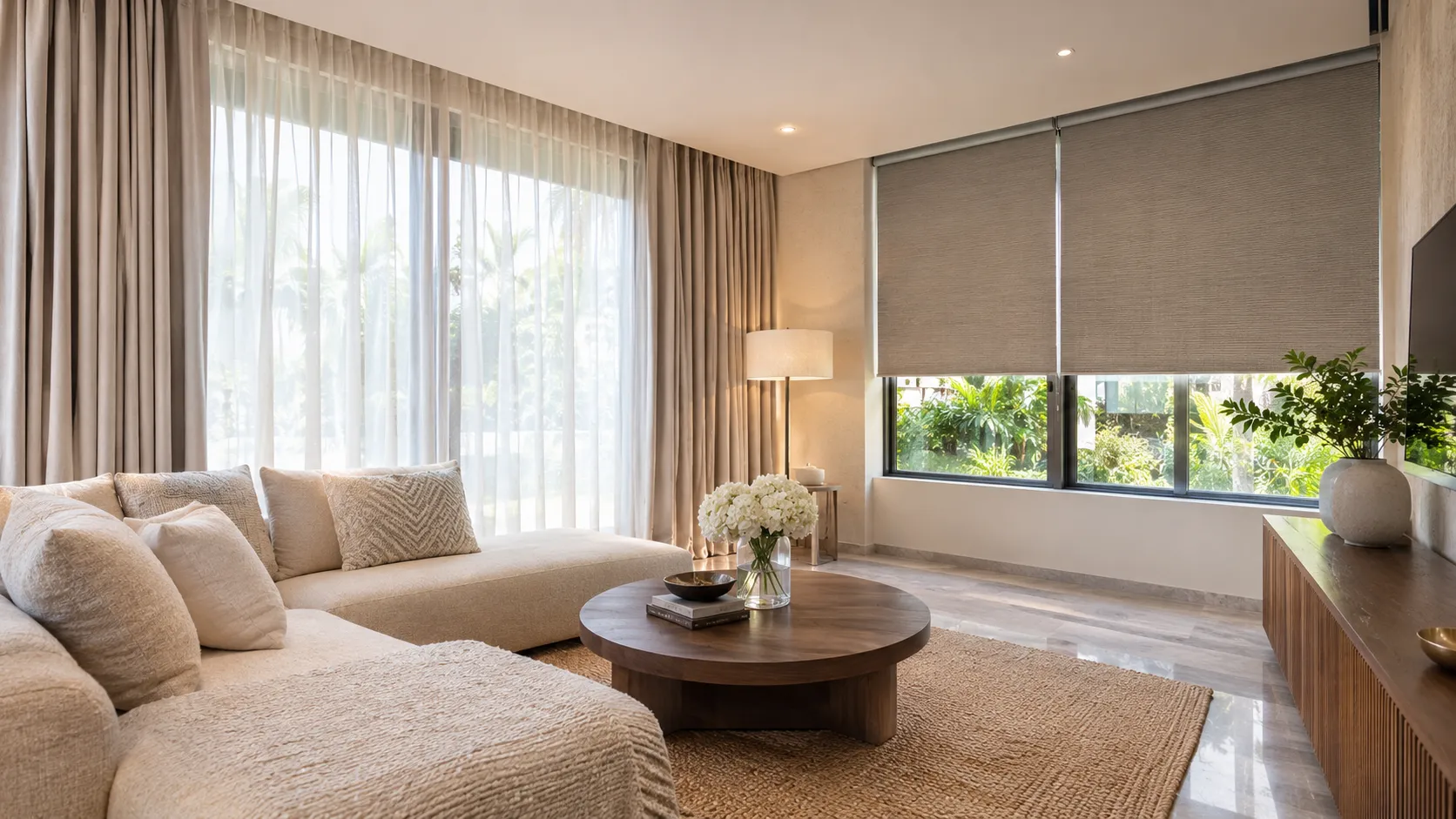
Modern luxury architecture across Canggu, Seminyak, and Uluwatu favors clean, uninterrupted geometric lines. Exposed curtain rods, visible mounting brackets, and surface-mounted tracks can disrupt minimalist design discipline, drawing the eye away from expansive glass facades and panoramic views. To achieve a truly polished, resort-style aesthetic, high-end interior architects specify Architectural Drapery Recessed Pockets (ceiling pelmets).
Here is an expert architectural guide to implementing flush ceiling recesses for custom curtain installations.
1. The Mechanics of Ceiling Recessed Pockets
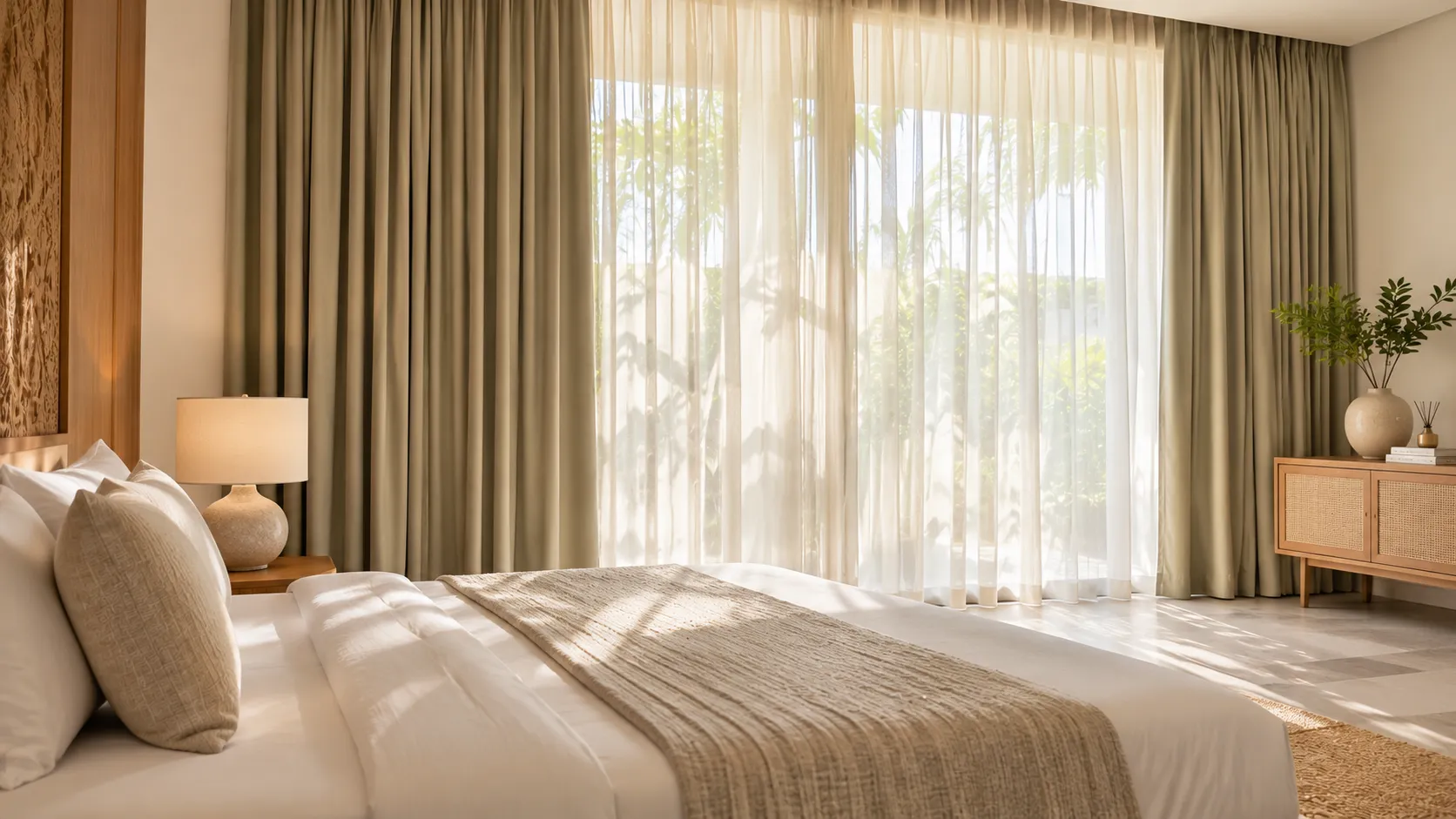
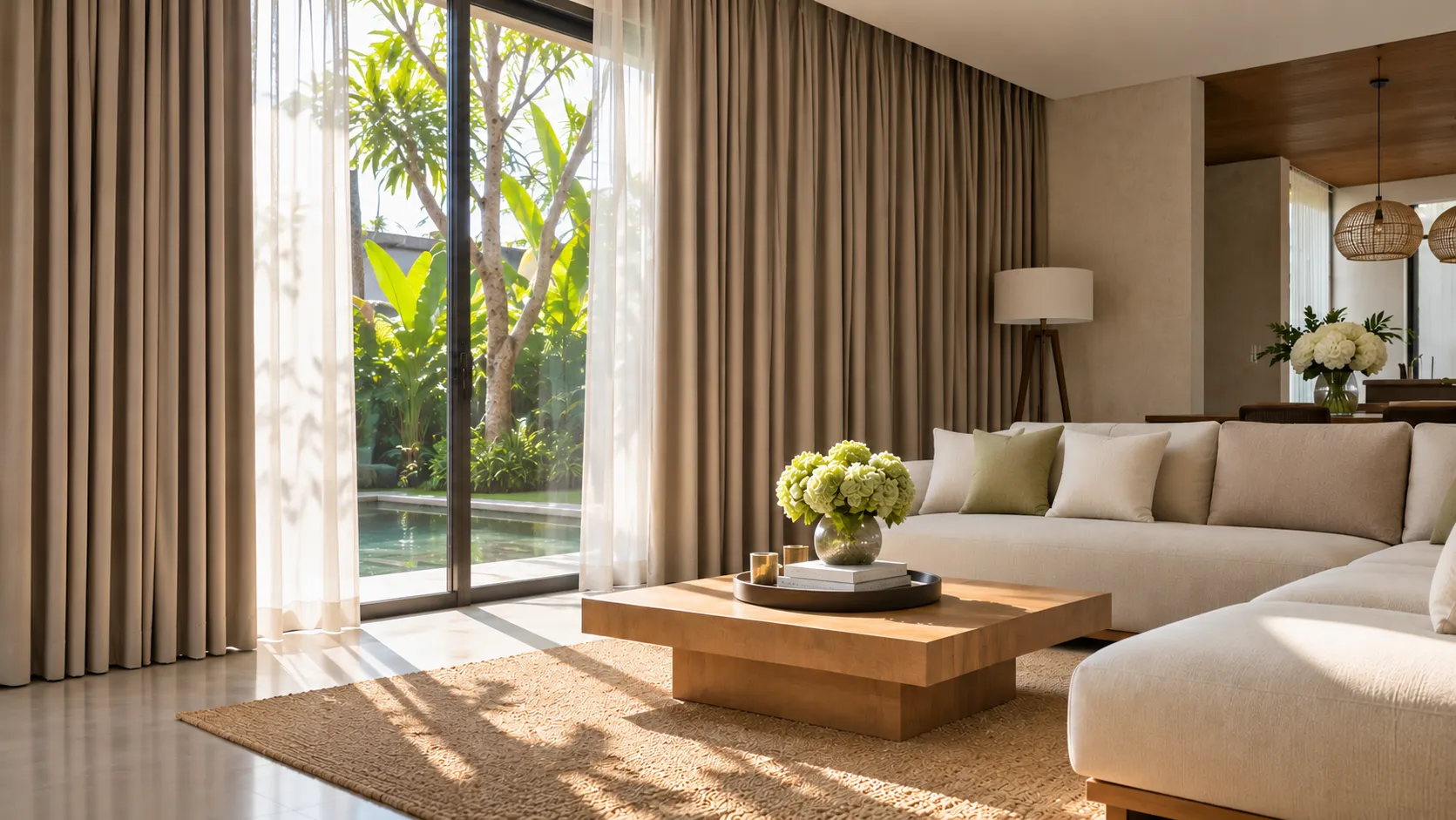
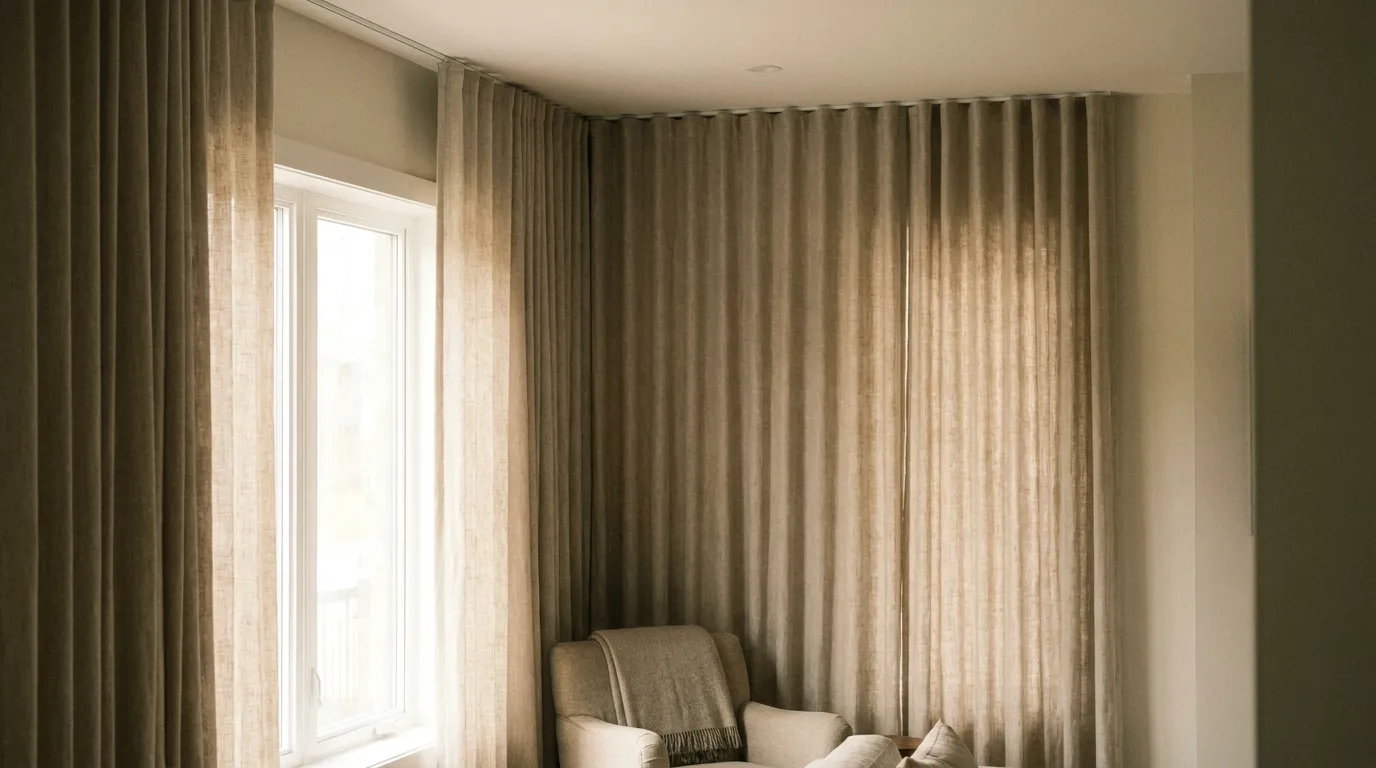
A recessed pocket is a pre-constructed channel built into the concrete or gypsum ceiling slab during the structural framing phase. Heavy-duty aluminum tracks are mounted directly inside this concealed cavity, allowing floor-to-ceiling drapes to cascade downward as if emerging directly from the architecture itself.
2. Maximizing Vertical Scale and Room Proportions
By eliminating visible hardware between the top of the window frame and the ceiling line, recessed pockets maximize vertical scale. Drapes hung from the true structural ceiling draw the eye upward, making double-height living rooms and master suites feel grander and more spacious.
3. Accommodating Motorized Tracks and Lighting Coves
Concealed ceiling pockets provide ample internal width (typically 20 cm to 30 cm) to house dual motorized curtain tracks, smart wiring, and even integrated LED ambient light strips. This creates a stunning nighttime lighting effect that washes down the fabric folds.
4. Professional Engineering by Almeers Living
Designing and outfitting recessed ceiling pockets requires precise dimensional coordination between builders and drapery specialists. Almeers Living, your trusted window treatment specialist in Bali, collaborates closely with architects and developers to deliver flawless recessed track installations for ultra-luxury properties.