1. Understanding the Bohemian Curtain Style
Bohemian, often shortened to boho, is an expressive interior style that combines relaxed forms, natural materials, artisan-inspired details and objects with a sense of history. It can be minimal and contemporary or richly layered and eclectic. Curtains should support the chosen interpretation instead of competing with it. A simple linen-look panel may be enough in a calm, modern boho bedroom, while a more decorative living room may welcome woven textures, a soft border or subtle fringe.
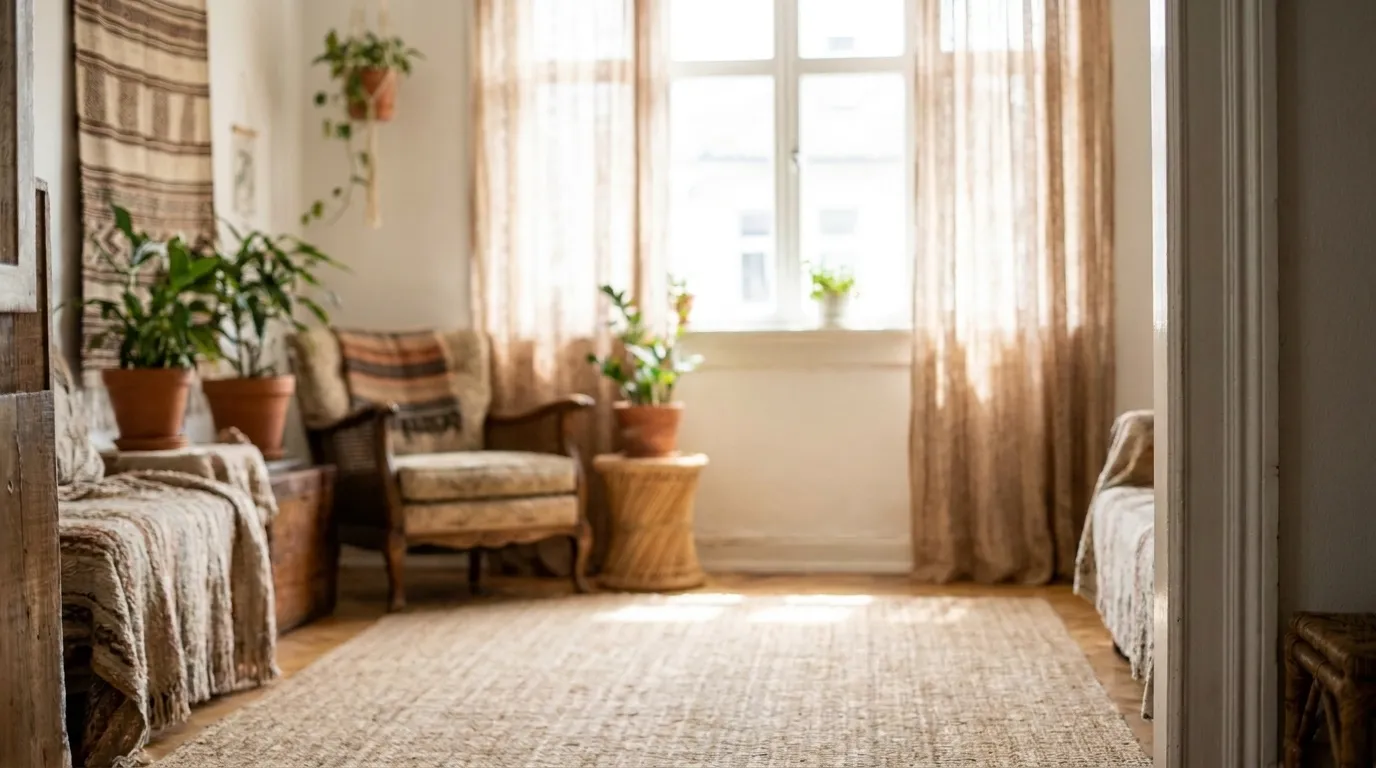
The defining quality is visual ease. Fabrics tend to look tactile rather than glossy, colours are often drawn from nature, and the window treatment feels integrated with timber, rattan, stone, ceramics, plants and woven rugs. This does not mean every element must be rustic or handmade. A clean-lined track and carefully tailored curtain can provide useful structure while the fabric brings warmth.
Start with the room, not the trend
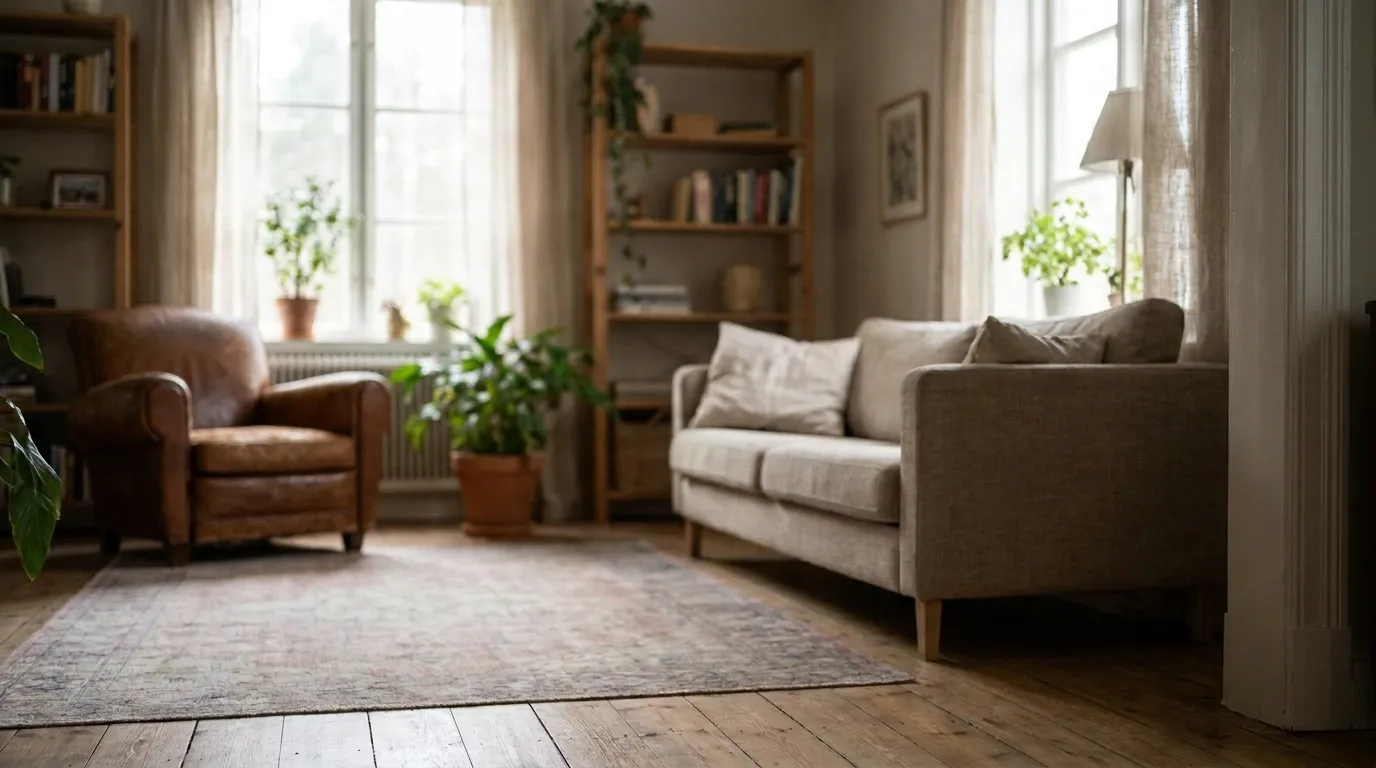
Look at the fixed finishes and the amount of visual detail already present. If the room has patterned cushions, carved furniture and a statement rug, choose quieter curtains with a visible weave. If the room is mostly neutral, curtains can introduce a stronger texture or a carefully selected decorative edge. Repeating one or two colours from existing furnishings usually creates a more cohesive result than introducing several new shades.
2. Choosing Organic and Textured Fabrics
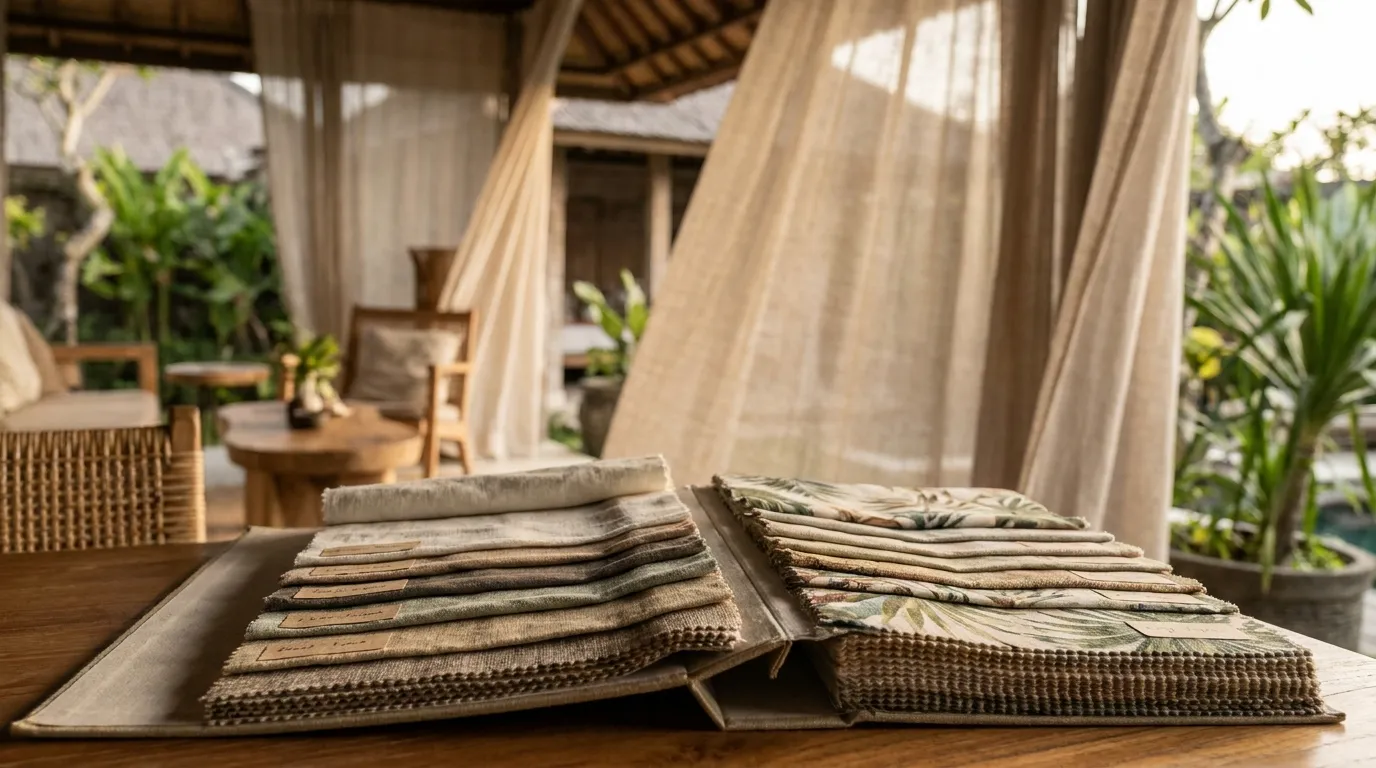
Texture is central to bohemian interiors because it adds depth without relying entirely on strong colour or pattern. Linen and linen-look textiles are popular choices for their relaxed appearance, visible weave and soft drape. Cotton, cotton blends and selected woven fabrics can also work well. The right option depends on the desired appearance, the level of light control, the care routine and the conditions around the window.
Natural linen and linen-look alternatives
Natural linen is made from flax fibres and is valued for its distinctive slubs, breathable character and understated texture. It can crease naturally and may require more attentive care depending on its construction and finish. Linen-look polyester or blended fabrics can offer a similar visual effect with different handling and maintenance characteristics. They should be described accurately: a linen-look fabric is not necessarily made from linen.
When selecting fabric, request a physical sample and view it in the actual room. Check the weave from close range, hold it against daylight, and observe how its colour changes in morning and afternoon light. A fabric that looks warm beige under showroom lighting may appear cooler or more yellow in a sunlit villa.
Other useful textile directions
- Textured cotton: offers a relaxed, familiar surface and can suit casual bedrooms or living areas.
- Slub and basket-weave fabrics: create visible texture and work well when the colour palette is restrained.
- Sheer woven fabrics: soften daylight while keeping a connection to the outdoors, although privacy is limited after dark when the room is illuminated.
- Heavier decorative fabrics: can provide a fuller drape and more coverage, but should be assessed for weight, track capacity and cleaning requirements.
3. Building an Earthy Colour Palette
Bohemian colour palettes often draw from landscapes and natural materials: sand, clay, warm white, oatmeal, terracotta, olive, muted brown and soft charcoal. These colours pair naturally with timber, rattan, stone and handmade ceramics. For a Bali villa, they can also create a visual connection between indoor spaces and tropical gardens.
Begin with the dominant room colour and decide whether the curtains should blend in or provide contrast. Warm ivory and oatmeal can keep a room light and calm. Taupe and mushroom tones add depth without feeling stark. Terracotta or muted rust can introduce warmth, while olive and sage can echo garden foliage. Darker earthy shades may create a cosy atmosphere but can make a small room feel visually heavier.
Coordinate undertones
Not all neutrals work together automatically. Cream may have a yellow undertone, grey-beige may lean cool, and natural-looking fabrics can vary from pinkish beige to golden sand. Compare samples beside flooring, wall paint, upholstery and timber finishes. Evaluate them in daylight and under the room's evening lighting before confirming the order.
4. Using Fringe, Tassels and Handcrafted Accents
Fringe, tassels, tiebacks and decorative borders can reinforce the collected, artisanal quality of a bohemian room. Their best use is intentional and restrained. A narrow fringe along the leading edge, a small decorative border at the hem or a woven tieback may be enough to make a curtain feel distinctive.
Consider the practical implications before adding trim. Decorative edges can collect dust, catch on nearby furniture or require more careful cleaning. Long fringe may be unsuitable in high-traffic areas, homes with curious pets or rooms where curtains are opened and closed frequently. Confirm whether the trim is washable, colourfast and compatible with the main fabric's care instructions.
Where decorative details work best
- Bedroom: a subtle trim or fabric tieback can add softness without making the window feel busy.
- Living room: a border or fringe can complement cushions and rugs when the colours are coordinated.
- Villa lounge: handcrafted-looking details can reinforce a relaxed hospitality atmosphere, provided they are durable and easy to maintain.
Avoid using several competing trims on one window. If the fabric already has a strong weave or pattern, keep the finishing simple. If the curtain is plain, one carefully chosen accent can provide the detail the room needs.
5. Layering Curtains for Tropical Living
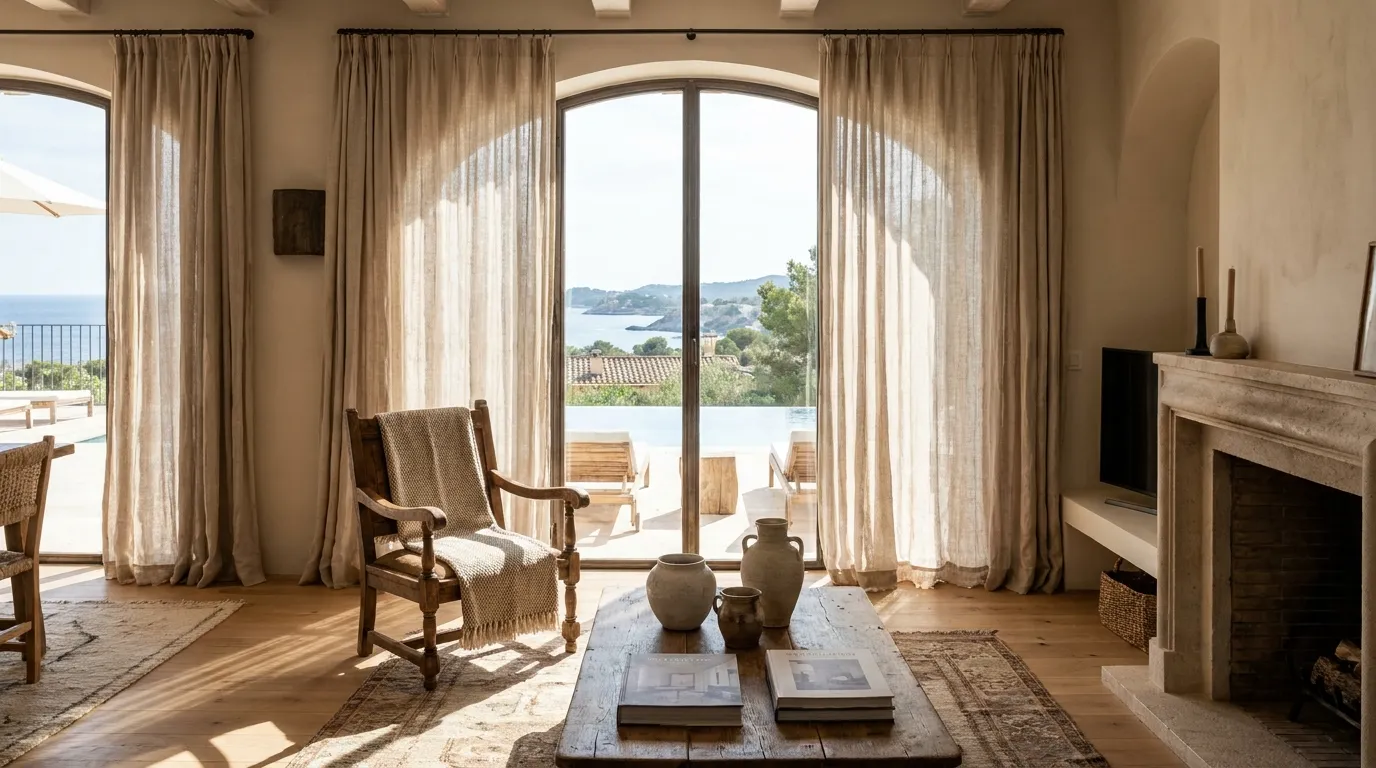
Layering is particularly useful in tropical homes because daylight, views and privacy requirements change throughout the day. A common arrangement combines a lightweight sheer curtain with a more opaque decorative or blackout curtain. The sheer layer diffuses daylight and softens the view, while the outer layer can be drawn when greater privacy or darkness is needed.
For a bohemian look, choose layers that complement one another in tone and texture. A warm-white sheer paired with an oatmeal or natural-beige curtain creates a gentle, tonal effect. A textured outer curtain can sit over a plain sheer, allowing the room to feel layered without becoming visually crowded. Where the interior is already rich in pattern, keep both layers relatively quiet.
Practical layering configurations
| Configuration | Visual effect | Useful when |
|---|---|---|
| Sheer + decorative curtain | Soft daylight with a relaxed layered appearance | Living rooms and bedrooms where flexible light control is desired |
| Sheer + blackout curtain | Light, airy daytime layer with a more opaque night or sleep layer | Bedrooms, nurseries and media rooms |
| Single textured curtain | Simple, tactile and uncluttered | Rooms where privacy and light requirements are straightforward |
Layered curtains generally need a suitable double-track or double-rail arrangement. Check the available ceiling or wall space, the projection of the window frame, the position of furniture and whether the curtains can move freely without rubbing against each other. A well-planned track system helps the layers operate smoothly and keeps the finished look neat.
6. Balancing Daylight, Privacy and Comfort
Beautiful curtains should also work for the people using the room. Sheer fabrics filter and diffuse daylight, but they do not provide reliable privacy at night when interior lights are on. Dimout fabrics reduce incoming light to varying degrees, while blackout fabrics are designed for stronger light blocking. The actual result depends on the fabric construction, lining, installation and light entering around the edges.
For bedrooms, consider whether the occupants need a darker sleeping environment. For living rooms, a sheer layer may be enough during the day if the property is not overlooked. For villas close to neighbouring buildings or public paths, review sightlines from outside as well as from inside. If heat and glare are concerns, assess the direction of the sun and consider external shading as part of the overall solution; curtains alone are not a substitute for appropriate building shading or cooling.
Bohemian styling does not require sacrificing function. A blackout layer can be paired with a natural-looking face fabric, and a practical lining can be concealed behind a decorative curtain. Ask for the full fabric and lining specification rather than judging opacity from a small front-facing sample alone.
7. Heading Styles, Fullness and Proportions
The curtain heading affects the way fabric falls and the overall character of the window. Wave or S-fold headings create regular, flowing curves and suit contemporary bohemian interiors. Pinch pleats create a more tailored and structured appearance. Eyelet headings have a casual look but require a compatible pole and may not suit every track system.
Fullness describes how much fabric is used in relation to the track or pole width. More fullness generally creates deeper folds and a richer appearance, while less fullness produces a flatter look. The appropriate ratio depends on the fabric's thickness, the heading style, the track system and the desired finish. There is no single ratio that is ideal for every textile and window.
For a balanced result, confirm the finished track width, the number of panels, the heading type and the fabric's recommended fullness before production. Also decide whether the curtains should sit just above the floor, lightly touch it or create a deliberate fabric break. In tropical homes, a clean floor clearance can make cleaning easier, while a floor-length drop can create a more tailored and luxurious appearance.
Useful measuring references
Accurate measurements are essential for custom curtains, especially across wide glazing, corner windows and ceiling-mounted tracks. Review the Almeers Living Curtain Measuring Guide before measuring. If you are planning blinds alongside curtains, see the Shade Measuring Guide. For decorative top treatments, refer to the Valances and Cornices Measuring Guide.
8. Choosing Curtains Room by Room
Living room
The living room is often the best place to express the bohemian character of a home. Consider textured neutral curtains, a soft sheer layer and a restrained decorative accent. Check how much direct sun reaches the seating area and whether the curtains need to protect furnishings from glare. If the room opens to a garden or pool, make sure the fabric and track arrangement allow easy access to doors.
Bedroom
Prioritise privacy and sleep comfort. A sheer layer can maintain a light daytime atmosphere, while a dimout or blackout layer can provide greater darkness when closed. Choose a fabric that feels calm rather than overly decorative, especially if bedding and rugs already contain patterns. Ensure the curtain can be operated without disturbing bedside furniture.
Dining area
Choose a finish that is practical around food and frequent use. Very long fringe or delicate trims may be difficult to keep clean near dining tables. A simple textured fabric in a mid-tone earthy colour can provide warmth while remaining relatively easy to maintain.
Villa and hospitality spaces
For rental villas and boutique hotels, balance the desired design with repeat-use durability. Consider how guests will operate the curtains, how often the fabric will be cleaned and whether replacement fabric can be sourced later. Decorative details should be robust enough for regular handling. Where blackout performance is important, specify it clearly and check the installed result, including side gaps and the meeting point between panels.
9. Fabric Care in Bali's Tropical Climate
Bali's tropical conditions make fabric selection and maintenance especially important. Humidity, ventilation, direct sunlight, dust and proximity to the coast can all influence how window treatments age. No fabric is completely maintenance-free, and performance varies by fibre, weave, finish, lining and the conditions of the property.
- Ventilate the room: allow indoor air to circulate and address persistent condensation or dampness rather than relying on curtains to solve moisture problems.
- Keep fabric clear of wet surfaces: avoid allowing hems to rest against damp floors or remain pressed against wet window frames.
- Follow care labels: natural fibres, blends and decorative trims may have different cleaning requirements. Do not assume every curtain can be machine washed.
- Manage direct sunlight: use suitable lining or shading where strong sun exposure may cause fading over time.
- Clean tracks and hardware: remove dust and check moving parts periodically so curtains can open and close smoothly.
- Inspect coastal installations: choose appropriate hardware and maintain it, as salt-laden air can accelerate corrosion on unsuitable metal components.
For holiday properties, create a simple maintenance schedule for housekeeping teams. Include gentle dust removal, checks for dampness, prompt attention to spills and periodic inspection of tracks, hooks and brackets. Always test a cleaning method on an inconspicuous area or follow the supplier's instructions.
10. Measuring and Ordering Custom Curtains
Custom curtains are useful when windows have unusual dimensions, high ceilings, wide openings or specific layering requirements. They allow the fabric, heading, drop and track arrangement to be planned around the actual room. Ready-made curtains can be suitable for standard openings, but may require compromises in width, length or finish.
Before requesting a quotation, prepare the following information:
- Window or track dimensions: record the intended track width and the finished curtain drop, following a consistent measuring method.
- Installation position: specify ceiling-mounted or wall-mounted tracks and note any beams, pelmets or obstructions.
- Layer requirements: confirm whether you need a sheer, decorative curtain, dimout or blackout layer.
- Fabric preference: identify the desired colour and texture, then review physical samples in the room.
- Heading and operation: choose wave, pinch pleat or another compatible heading, and decide whether manual or motorised operation is appropriate.
- Finishing details: confirm lining, hem style, tiebacks, fringe and any decorative borders.
- Site conditions: discuss access, ceiling height, installation timing and any special requirements for the property.
For a wide opening or a layered installation, the Almeers Living Stacking Calculator can help estimate how much space the open curtains may occupy. Treat the result as a planning reference and confirm the final arrangement with the installer, because fabric thickness, fullness and track configuration affect the actual stack.
Explore the available curtains and blinds from Almeers Living for options suitable for villas, homes and hospitality interiors in Bali. A site measurement and fabric consultation can help match the design to the window and the way the room is used.
11. Frequently Asked Questions
What curtains work best for a bohemian home?
Textured linen or linen-look curtains, soft cotton weaves and natural-toned sheers are popular choices. The best option depends on the room's light, privacy, climate and maintenance needs. A restrained decorative trim can add character without overwhelming the space.
Are linen curtains suitable for Bali?
Linen can create a breathable, relaxed appearance, but suitability depends on the fabric construction, room ventilation, sunlight exposure and care routine. Natural linen may crease and can need more attentive maintenance than some blends. Review a sample and its care instructions before ordering.
Which colours suit bohemian curtains?
Warm white, oatmeal, sand, taupe, terracotta, muted olive and earthy brown are versatile choices. Coordinate undertones with the room's flooring, timber, upholstery and wall colours, and check samples in the actual lighting.
Can I combine sheer and blackout curtains in a bohemian interior?
Yes. A sheer layer can soften daylight while a blackout layer provides stronger light reduction when closed. Choose complementary colours and textures, and use a suitable double-track system. Blackout fabric does not automatically eliminate every light gap around the window.
Should bohemian curtains have fringe or tassels?
Fringe and tassels are optional decorative details. Use them where they support the room's design and will not interfere with cleaning or daily operation. A small, well-placed accent is often more effective than several competing trims.
How full should bohemian curtains be?
Fullness depends on fabric weight, heading style, track width and the desired fold. A fuller curtain creates a richer drape, while a flatter curtain uses less fabric and has a cleaner appearance. Confirm the recommended ratio with the curtain maker before production.
How do I keep curtains fresh in a humid tropical home?
Maintain good ventilation, keep fabric away from damp surfaces, remove dust regularly and follow the fabric's care instructions. Investigate persistent moisture or mould at its source instead of treating the curtain as the solution.
Are custom curtains worth considering for Bali villas?
Custom curtains can be valuable for tall ceilings, wide glazing, layered installations and windows that do not match standard ready-made sizes. They also allow fabric, lining, heading and track details to be selected for the property. The value depends on the project's dimensions, requirements and budget.
Conclusion: Create a Relaxed, Layered Window with Purpose
Choosing curtains for a bohemian home is about balancing natural-looking texture, earthy colour, handcrafted detail and everyday performance. Start with the room's architecture and light conditions, select a fabric that suits the climate and maintenance routine, and use fringe or decorative accents selectively. For tropical properties, thoughtful layering can provide flexibility between daylight, privacy and darkness without losing the relaxed character of the interior.
For a cohesive result, confirm measurements, fullness, heading style and track requirements before production. Almeers Living helps homeowners, villa operators and hospitality projects in Bali explore custom curtains and blinds that connect practical window needs with considered interior design.