1. Understanding UV Radiation and Indoor Exposure
Ultraviolet radiation is part of the sunlight spectrum. UVA can pass through ordinary window glass more readily than UVB, although the amount transmitted depends on the type of glass, coatings and glazing system. UV exposure is one contributor to fading and material degradation indoors. Visible light and heat can also contribute, so fading should not be attributed to UV alone.
Interior exposure varies throughout the day and across a property. A west-facing room may receive intense afternoon sun, while a room shaded by trees or neighbouring buildings may receive less direct sunlight. Large glazed doors, skylights and windows without external shading can expose furnishings to extended periods of bright light. Understanding these conditions is the first step in choosing an appropriate curtain solution.
What can be affected by sunlight?
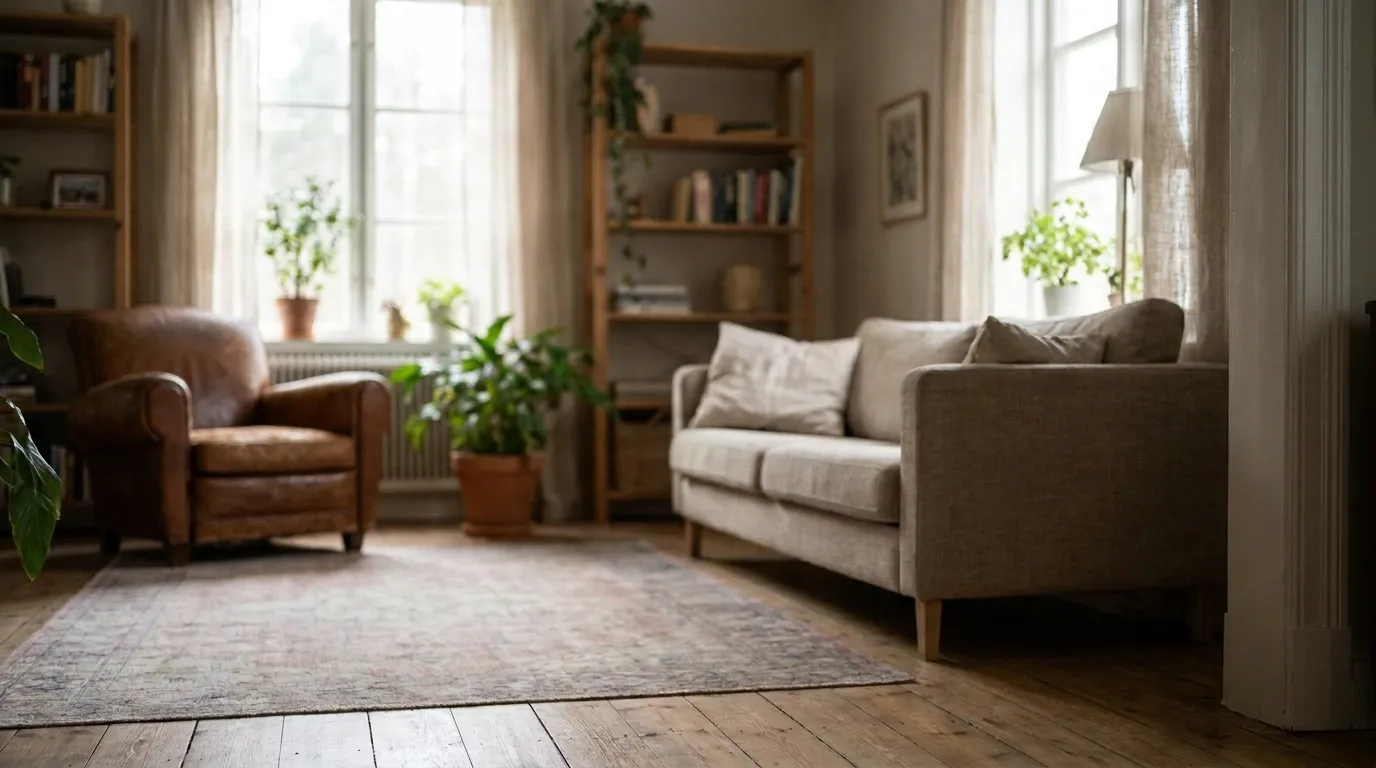
- Upholstery and rugs: colours and fibres may change with prolonged light exposure.
- Timber and veneers: finishes and natural tones can alter over time.
- Artwork and photographs: pigments, paper and printed surfaces may be light-sensitive.
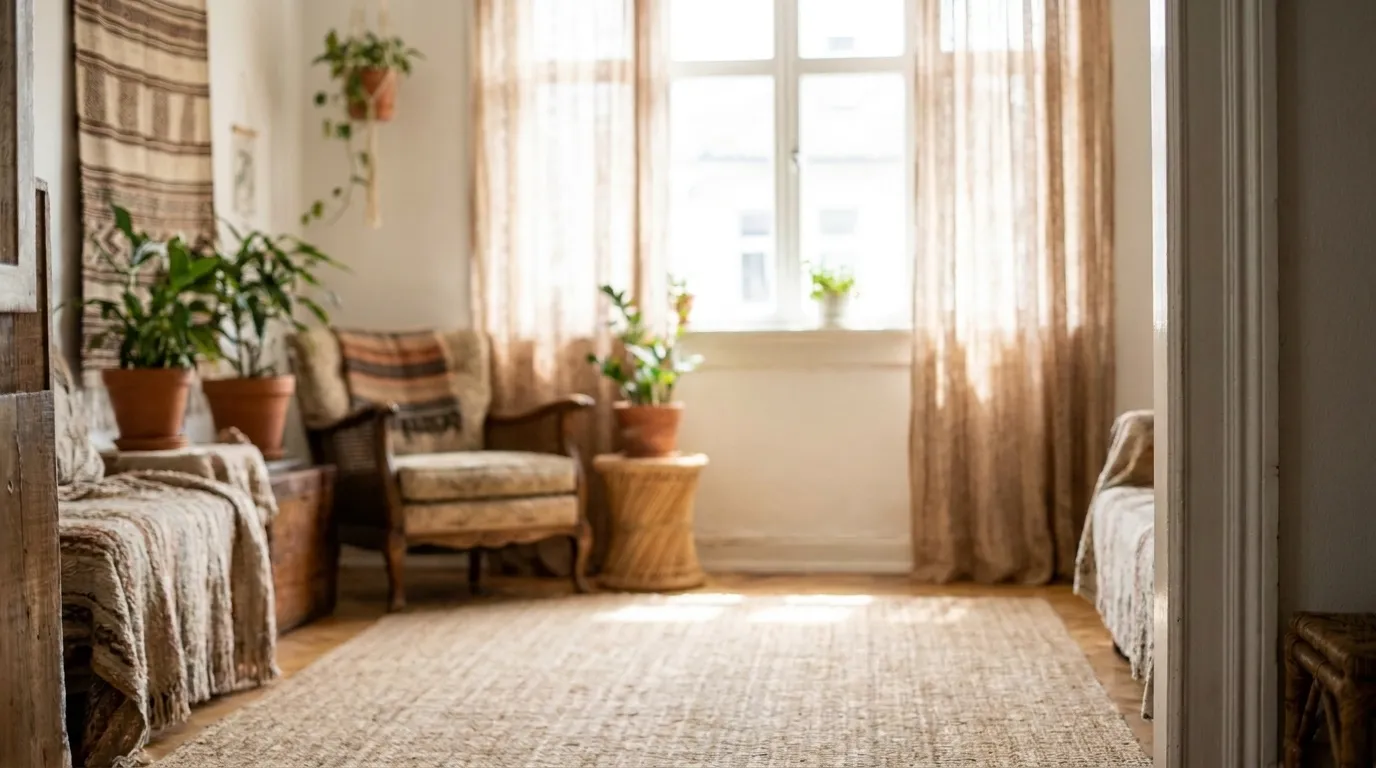
- Decorative textiles: cushions, bedding and rugs may fade unevenly where sunlight reaches only part of the surface.
- Indoor finishes: some paints, coatings and decorative materials may change with ongoing exposure.
The rate and extent of fading depend on the material, dye or pigment, glazing, light intensity and duration of exposure. Curtains can reduce exposure when closed, but they cannot guarantee that furnishings will never fade.
2. How Curtains Help Protect Interiors
Curtains create an additional barrier between the window and the interior. When closed, a suitable curtain can intercept or absorb part of the incoming sunlight before it reaches furniture and decorative surfaces. The amount of protection varies by fabric and construction. A dense, opaque textile generally blocks more light than a lightweight sheer, but opacity alone is not a complete measure of UV performance.
Some curtain fabrics and linings are specifically tested or marketed for UV reduction. If a supplier provides a UV-transmission or blocking rating, ask what test method was used and whether the result applies to the fabric alone or to a complete installed system. Without reliable test data, avoid assuming a precise UV-blocking percentage based only on appearance, colour or thickness.
Benefits of a considered curtain specification
- Reduces direct sunlight reaching selected interior surfaces when the curtains are drawn.
- Helps manage glare and creates more comfortable conditions for reading, working or relaxing.
- Can provide a degree of solar shading and reduce some solar heat entering through the window.
- Offers privacy and light control, depending on fabric opacity and the time of day.
- Provides an opportunity to coordinate practical protection with the room's interior design.
3. Fabric Construction, Opacity and Colour
The way a curtain is woven, knitted, coated or layered affects how much light passes through it. A sheer fabric is designed to transmit and diffuse daylight, so it usually offers less protection from direct sunlight than a dense curtain. A dimout fabric reduces incoming light to varying degrees. A blackout fabric is designed to block most light through the textile itself, although light can still enter around the edges and between panels after installation.
What to consider when comparing fabrics
- Weave density: tighter constructions generally allow less light through than open, loosely woven structures.
- Opacity: assess the actual fabric against daylight rather than relying only on a product name.
- Fibre and finish: fibre type, dye, coating and finishing processes can influence durability and light behaviour.
- Colour: darker fabrics often reduce visible light transmission more effectively than comparable lighter fabrics, but colour alone does not establish UV performance.
- Backing or lining: an additional layer may improve light control and provide another barrier between the window and the room.
For a natural interior, textured linen-look curtains can be combined with a suitable lining to retain a soft decorative appearance while improving light management. Natural linen, linen blends and synthetic linen-look textiles are not interchangeable; check the actual fibre composition and care instructions before selecting.
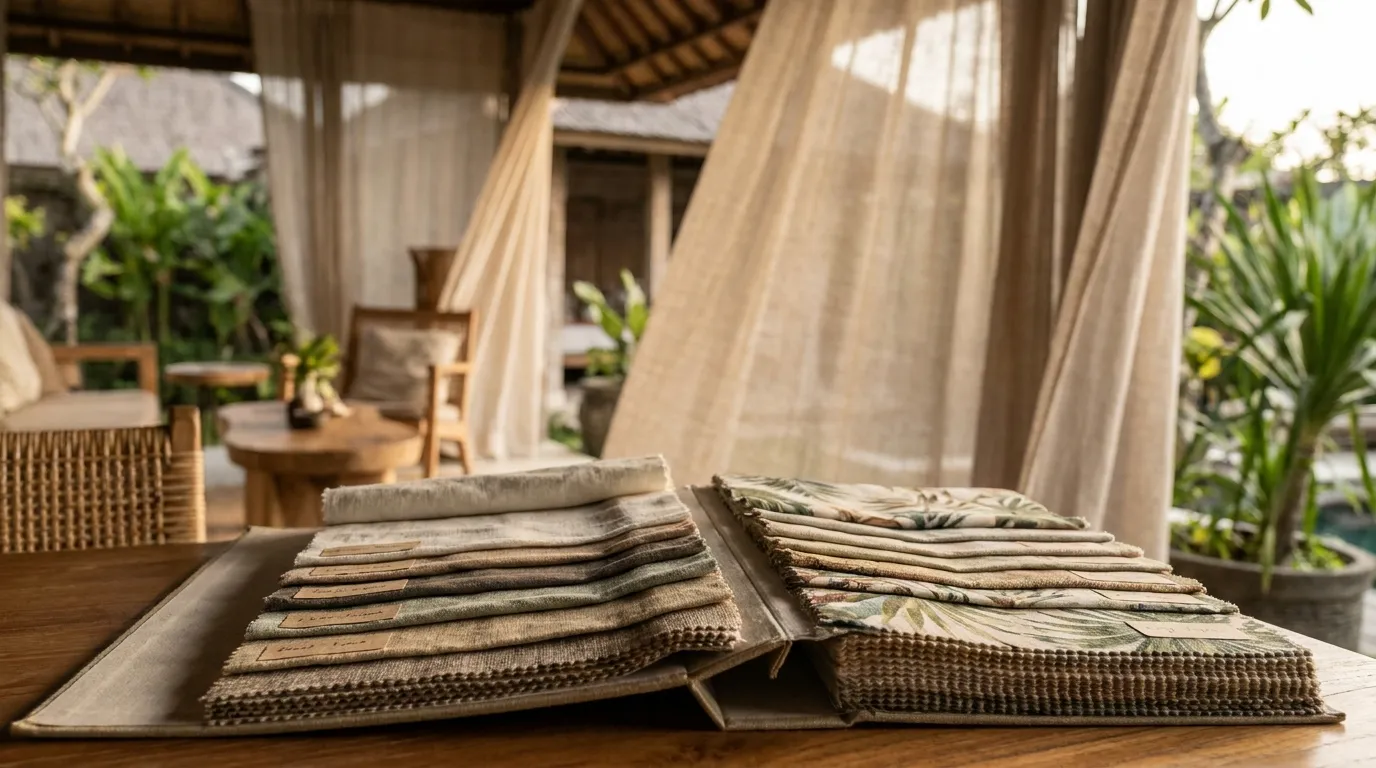
Always review a fabric sample in the room. Hold it against the window during bright daylight, inspect the front and back, and compare how much light passes through. A sample test is useful for visual assessment, but it is not a substitute for certified UV-transmission data.
4. Choosing the Right Curtain Lining
A lining is a separate textile layer attached to the back of a decorative curtain. It can change the curtain's appearance, drape, opacity and protection characteristics. The right lining depends on whether the priority is reducing light, improving privacy, protecting the face fabric or creating a fuller finish.
| Lining or fabric option | Typical purpose | Points to consider |
|---|---|---|
| Unlined sheer | Diffuses daylight and maintains an open, airy appearance | Limited privacy at night and limited direct-sun protection compared with dense layers |
| Decorative curtain with standard lining | Adds body and provides an additional layer behind the face fabric | Confirm the lining's light, heat and care characteristics |
| Dimout construction | Reduces incoming light without necessarily creating a fully dark room | Performance varies by fabric and installation details |
| Blackout construction or lining | Provides strong light blocking through the covered fabric area | Side gaps and track details can still allow light into the room |
| Specialist UV-control textile | Designed or tested for a stated level of UV reduction | Request the manufacturer's test information and clarify the tested configuration |
For a living room, a decorative curtain with a suitable lining may offer a useful balance of appearance and shading. In a bedroom, a blackout layer may be preferred for sleep comfort. For a room where daytime views are important, a sheer layer can be retained with a second curtain that closes when direct sunlight becomes intense.
5. UV Protection Versus Solar Heat Control
UV radiation and solar heat are not the same thing. UV is a portion of the sunlight spectrum, while heat entering through a window is influenced by the broader solar energy reaching the glazing and by the window's thermal properties. A curtain that blocks visible light effectively does not automatically provide the best possible heat control, and a fabric's UV performance cannot be inferred from its thermal performance.
In a tropical climate, solar heat gain can make rooms uncomfortable and increase the demand on air conditioning. Curtains can contribute to shading by reducing the sunlight that reaches the interior, especially when used consistently during periods of strong sun. However, performance depends on the window, fabric, colour, lining, distance from the glass, ventilation and installation. External shading, suitable glazing and building design can be more effective in preventing solar energy from entering in the first place.
Practical ways to manage sunlight and heat
- Close suitable curtains before direct sunlight reaches sensitive furniture or flooring.
- Use a sheer layer when soft daylight is preferred, and a denser layer when stronger shading is needed.
- Consider external shading for windows exposed to intense direct sun.
- Keep the curtain arrangement compatible with ventilation and access to doors or windows.
- Ask for product-specific information rather than relying on broad claims such as “thermal” or “UV proof”.
6. Layering Sheers and Heavier Curtains
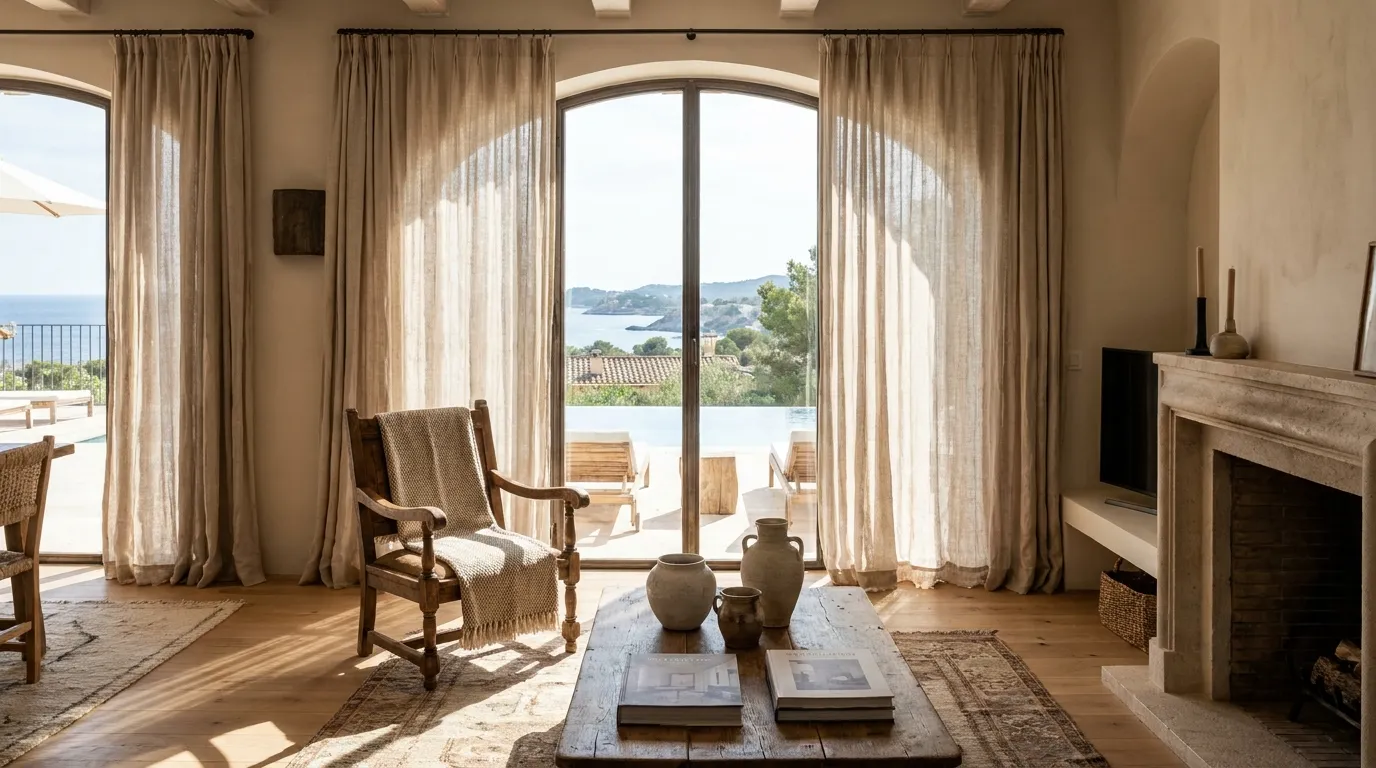
Layered window treatments provide flexible control throughout the day. A sheer curtain can soften daylight and reduce visual glare while maintaining a connection to the outdoors. A second, denser curtain can be drawn when stronger privacy, light reduction or shading is required. This arrangement is particularly useful in Bali villas, where large windows and sliding glass doors often connect indoor living areas with gardens, terraces or pools.
For a coordinated look, pair a neutral sheer with a heavier curtain in a complementary colour. Linen-look textures, warm whites, oatmeal, taupe and earthy shades can work well in relaxed tropical interiors. If the room already contains strong patterns or textured finishes, choose simpler curtains to avoid visual clutter.
Track and installation planning
Two layers generally require a double track or another compatible system that allows each curtain to move independently. Confirm the available ceiling or wall space, track projection, stacking space and clearance from handles, furniture and sliding doors. The heavier layer must also be supported by suitable brackets and hardware. For wide openings, calculate how much space the open curtains will occupy at the sides; the Almeers Living Stacking Calculator can help with initial planning.
Remember that a sheer curtain does not provide reliable night-time privacy when interior lights are on. If privacy is important, plan a second layer or select another suitable window covering.
7. Window Orientation and Room-Specific Planning
Window orientation influences the intensity and timing of direct sunlight. In general, east-facing windows receive morning sun, west-facing windows receive afternoon sun, and north- or south-facing exposure varies with location and season. In Bali, the property's surrounding buildings, roof overhangs, trees and local site conditions also influence the amount of sunlight reaching each window.
Living rooms
Protect upholstery, rugs and artwork from prolonged direct exposure while preserving a comfortable level of daylight. A sheer and lined curtain combination can provide flexibility. For large glazed doors, ensure the panels can be moved easily and do not obstruct access to outdoor areas.
Bedrooms
Prioritise privacy and the preferred sleeping environment. A dimout or blackout layer can reduce incoming light through the covered area, while a sheer layer can be used during the day. Check for light gaps around the sides and top if darkness is important.
Home offices and media rooms
Glare on screens can be distracting even when the room does not feel especially hot. Consider a fabric that offers practical glare control, and check the window at the hours when the room is most frequently used. A flexible layered system may be more useful than a single fixed-opacity curtain.
Hotels and rental villas
Hospitality spaces need window treatments that are straightforward for guests to operate and practical for housekeeping teams to maintain. Select durable fabrics and reliable hardware, and make the light-control function easy to understand. For bedrooms, specify the expected darkness level and inspect the completed installation rather than relying only on the fabric label.
8. Considerations for Bali's Tropical Climate
Bali's tropical conditions make fabric selection, ventilation and maintenance important. High humidity, strong sunlight, coastal air and frequent use can affect different fabrics and hardware in different ways. No curtain is entirely maintenance-free, and a UV-control feature does not automatically make a textile resistant to humidity, mould, fading or salt exposure.
- Manage indoor moisture: maintain ventilation and address leaks, condensation or persistent dampness at their source.
- Choose suitable hardware: discuss corrosion resistance and maintenance requirements, especially for properties close to the coast.
- Check fabric care: natural fibres, coated textiles and lined curtains may require different cleaning methods.
- Consider sun exposure: rooms with long periods of direct sun may need more frequent inspection for fading or material changes.
- Allow curtains to dry: avoid leaving damp fabric gathered tightly for extended periods.
- Plan for regular operation: tracks, gliders, hooks and brackets should be checked so curtains move smoothly.
For villas and hotels, create a simple maintenance routine that includes dust removal, inspection of hems and seams, checking hardware and following the manufacturer's cleaning recommendations. If mould appears, investigate the moisture source and use a cleaning method suitable for the fabric rather than applying harsh chemicals without guidance.
9. Care and Maintenance for Lasting Performance
Proper care helps preserve the appearance and function of curtains. Dust can accumulate in folds and along hems, while strong sunlight may gradually affect colours and fibres. The best maintenance routine depends on the fabric, lining and trim. Always follow the care label or supplier's instructions, especially for natural linen, specialist coatings and decorative finishes.
- Remove dust regularly: use a suitable low-suction vacuum attachment or another gentle method recommended for the fabric.
- Address spills promptly: blot rather than rub, and test any cleaning product in an inconspicuous area first.
- Avoid unapproved chemicals: bleach, strong solvents or unsuitable detergents can damage dyes, coatings and fibres.
- Inspect seams and headings: check hooks, pleats, stitching and hems during routine cleaning.
- Maintain the track: remove accumulated dust and have damaged gliders or brackets repaired.
- Rotate or reposition where practical: where the design permits, this may help reduce uneven exposure, but it does not eliminate fading.
UV protection is not permanent by definition. The performance of a textile or coating may change with age, cleaning and environmental exposure. If a specific UV rating is important to the project, ask the supplier whether the rating applies after cleaning or ageing and whether updated product data is available.
10. Planning and Ordering Custom Curtains
Custom curtains make it possible to select the face fabric, lining, heading, fullness, drop and track arrangement for the actual window. This is useful for Bali villas and hospitality projects with high ceilings, wide glazing, corner windows or a need to coordinate several rooms. A well-prepared specification helps avoid choosing a fabric based only on appearance when the room has particular light-control requirements.
Before requesting a quotation, prepare these details:
- Window information: measure the width and height using a consistent method, and identify whether the track will be ceiling- or wall-mounted.
- Sunlight conditions: note the direction of the window and the time of day when direct sunlight is strongest.
- Protection priorities: explain whether the main concern is UV exposure, glare, privacy, room darkness, solar heat or a combination.
- Fabric preference: shortlist colours and textures, then compare physical samples in the room.
- Lining specification: confirm whether standard lining, dimout, blackout or a specialist UV-control textile is required.
- Operation: decide whether manual or motorised operation is appropriate for the size and use of the window.
- Installation details: identify obstructions, access requirements and any coordination needed with other trades.
Use the Almeers Living Curtain Measuring Guide for a consistent measuring process. If the project includes blinds, consult the Shade Measuring Guide. For decorative top treatments, see the Valances and Cornices Measuring Guide.
Explore the Almeers Living curtains and blinds collection for window-treatment options for homes, villas and hotels in Bali. A site assessment can help match the fabric and lining to the window's exposure, the room's function and the desired interior style.
11. Frequently Asked Questions
Do curtains block UV rays?
Many curtains reduce some incoming sunlight, and some fabrics or linings are specifically designed and tested for UV reduction. The amount varies by material and construction. Ask for product-specific test information if a particular UV performance level is required.
Are blackout curtains the same as UV-protection curtains?
No. Blackout describes strong light blocking through the fabric, while UV protection refers to reducing ultraviolet transmission. The properties can overlap, but one does not automatically prove the other. Check the manufacturer's specifications for both.
Do dark curtains provide better UV protection than light curtains?
Colour can influence light absorption and transmission, but it is not a reliable standalone measure of UV performance. Fabric construction, fibre, dye, coating and lining all matter. Compare technical specifications rather than selecting by colour alone.
Can curtains prevent furniture from fading?
Curtains can reduce the amount of sunlight reaching furniture when closed, which may help slow fading. They cannot guarantee that fading will never occur. Glazing, external shading, material sensitivity and exposure time also influence the result.
Do UV-protection curtains reduce room temperature?
Some curtains can reduce direct sunlight and contribute to shading, which may improve comfort. However, UV reduction and heat reduction are different functions. Ask for thermal or solar-performance information separately, and consider external shading for windows with intense sun exposure.
Are sheer curtains enough for UV protection?
Sheers diffuse daylight and soften glare, but their open construction generally allows more light through than dense curtains. If stronger protection is needed, consider a second lined or specialist curtain layer and review the available product data.
What is the best curtain setup for a Bali villa?
There is no single best arrangement for every villa. A layered sheer and lined curtain can provide flexible daylight and privacy control, while bedrooms may benefit from a dimout or blackout layer. The choice should reflect window orientation, glazing, room use, design and maintenance requirements.
How can I check a curtain's UV performance before ordering?
Ask the supplier for the manufacturer's technical sheet and any test report stating UV transmission or reduction. Confirm the test method and whether the result applies to the fabric, lining or combined construction. A visual sample test can show opacity and appearance but cannot verify a precise UV rating.
Conclusion: Make Sunlight Control Part of the Design
UV protection is an important consideration when choosing curtains for homes, villas and hotels in Bali. The right window treatment can help reduce direct sunlight reaching interior furnishings, manage glare and contribute to a more comfortable room. To make a sound decision, separate UV performance from visible-light blocking and thermal control, and compare fabric and lining specifications carefully.
Start with the window's orientation and the room's daily use. Then choose a fabric, lining and track arrangement that balance protection, appearance and maintenance. With accurate measurements and a clear specification, curtains can become a practical part of a thoughtful tropical interior rather than an afterthought.