1. Understanding Bali's Seasonal Conditions
Bali has a tropical climate commonly described in terms of a wetter season and a drier season. The timing and intensity of rainfall, humidity and sunshine vary from year to year and by location. Coastal properties, elevated areas and homes surrounded by dense planting may experience different combinations of wind, moisture, shade and direct sunlight.
For window treatments, the important question is not simply which month it is. Consider the actual conditions around each window: whether it is exposed to driving rain, whether the room is well ventilated, how long direct sunlight reaches the glass, and whether the property is close to the coast. A west-facing villa window with strong afternoon sun may need a different solution from a shaded bedroom facing a tropical garden.
Two seasonal priorities
- Rainy season: manage indoor humidity, avoid prolonged contact between fabric and damp surfaces, choose suitable care-friendly materials and maintain ventilation.
- Dry season: consider glare, direct sunlight, fading risk and solar heat entering through exposed glazing.
These are planning priorities rather than strict seasonal rules. Sunlight can remain strong during wetter months, and humidity can still be present during drier periods. Curtains should therefore be selected for the property's year-round conditions, not just for one part of the calendar.
2. Rainy-Season Curtain Priorities
During wetter periods, humidity and limited ventilation can make fabrics feel damp or slow to dry. Curtains positioned close to wet window frames, walls or floors may be exposed to moisture for extended periods. This is particularly relevant in rooms with large sliding doors, bathrooms nearby, enclosed air-conditioned spaces or windows that are frequently opened during rain.
A curtain described as moisture-resistant should not be assumed to be waterproof or mould-proof. Moisture performance depends on fibre composition, weave, coatings, lining, drying conditions and maintenance. Even a synthetic textile can develop odours or mould if it remains damp and the room has an unresolved moisture problem.
Practical rainy-season choices
- Choose manageable fabrics: review the care instructions and drying requirements before selecting a textile for a frequently used room.
- Keep hems clear of damp floors: specify an appropriate finished drop so fabric does not rest on wet surfaces.
- Allow air circulation: avoid keeping damp curtains tightly gathered for long periods.
- Check window conditions: repair leaks and address condensation or water ingress rather than expecting curtains to solve the problem.
- Use practical decorative details: consider whether elaborate trims and heavy layers can be cleaned and dried appropriately.
3. Choosing Fabrics for Humid Environments
Fabric choice should balance appearance, touch, drape, care and the conditions of the room. Natural fibres such as linen and cotton offer distinctive textures and can suit relaxed tropical interiors, but their care needs vary by construction and finish. Synthetic fibres and blends may offer different drying, crease-resistance or cleaning characteristics, but they are not automatically immune to moisture-related problems.
Common fabric directions
| Fabric direction | Appearance and use | Points to review |
|---|---|---|
| Natural linen | Relaxed texture, visible slubs and an organic resort aesthetic | Can crease; check shrinkage, cleaning method and suitability for the room |
| Linen-look blend | Textured appearance with a range of possible performance characteristics | Confirm actual fibre composition; “linen-look” does not necessarily mean natural linen |
| Polyester or synthetic blend | Available in many weights, textures and opacity levels | Performance varies by construction and finish; follow care instructions |
| Cotton or cotton blend | Soft, familiar surface that can suit casual bedrooms and living spaces | Check cleaning, shrinkage and drying requirements |
| Lightweight sheer | Airy appearance and diffused daylight | Limited privacy after dark and generally less shading than dense curtains |
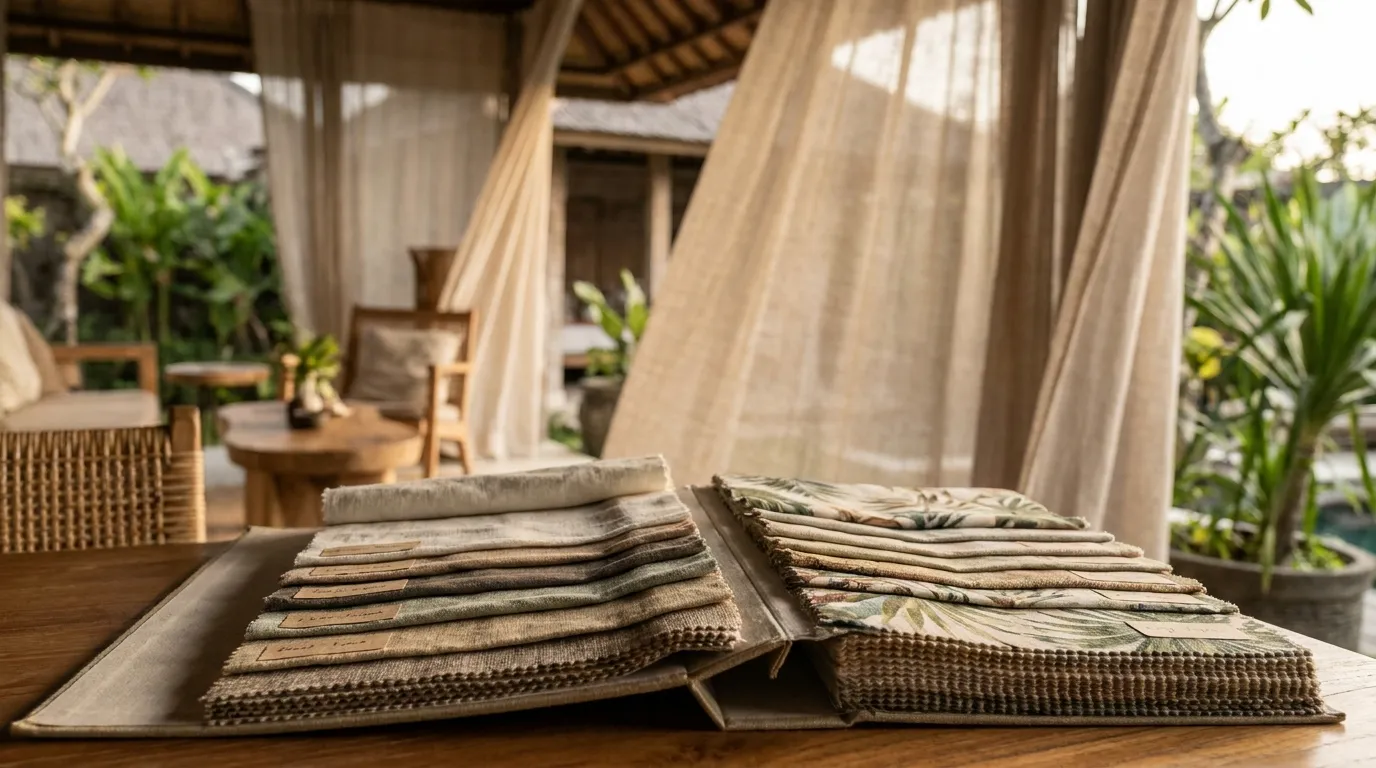
Ask for a physical sample and check it in the actual room. Feel the fabric, inspect the weave, compare the front and back, and review the manufacturer's cleaning instructions. If the property is used as a holiday rental, consider how frequently the curtains will be cleaned and whether the selected fabric can be maintained consistently by the housekeeping team.
4. Dry-Season Sunlight and Solar Heat Management
During periods of stronger sunshine, windows can admit intense visible light and solar energy. Direct sunlight can cause glare and contribute to fading in upholstery, rugs, timber finishes and artwork. Solar heat entering through glazing can also affect indoor comfort and increase reliance on air conditioning.
Curtains can contribute to shading when closed, but their effectiveness depends on fabric construction, colour, lining, distance from the glass, window size and installation details. A fabric that blocks visible light is not automatically a certified UV-control textile, and UV reduction is not the same as thermal performance. If a supplier provides technical ratings, ask what was tested and whether the rating applies to the fabric alone or to the complete installed arrangement.
Ways to manage intense sunlight
- Use a suitable sheer to soften daylight and reduce visual glare when maintaining an outdoor view is important.
- Choose a denser curtain or lined layer for periods when stronger shading is required.
- Consider blackout or dimout options in bedrooms and media rooms where reduced light is a priority.
- Assess external shading, roof overhangs or suitable glazing for windows with prolonged direct sun exposure.
- Close curtains before direct sunlight reaches sensitive furnishings, where practical.
For west-facing rooms, afternoon exposure may be an important design consideration. For east-facing rooms, morning light may be more relevant. Surrounding trees, neighbouring buildings and roof structures can change the amount of direct sun reaching each window, so evaluate the site rather than relying on orientation alone.
5. Selecting Sheers, Dimout and Blackout Layers
Different curtain types serve different purposes. Sheers diffuse light and create a soft connection with the outdoors. Dimout fabrics reduce incoming light to varying degrees. Blackout fabrics are designed to block most light through the covered textile area, although light can still enter around the sides, top and meeting points between panels.
| Window treatment | Seasonal role | Best suited to |
|---|---|---|
| Sheer curtains | Softens bright daylight and maintains an airy atmosphere | Living areas, garden-facing spaces and daytime privacy needs where appropriate |
| Dimout curtains | Reduces light while retaining some ambient brightness | Bedrooms and living spaces where complete darkness is not required |
| Blackout curtains | Provides strong light blocking through the fabric | Bedrooms, nurseries and media rooms |
| Sheer + lined curtain | Allows flexible adjustment between filtered daylight and stronger shading | Large glazing, villas and resort suites |
A layered arrangement is often practical for Bali properties because the sheer and heavier curtain can be operated independently. During bright hours, the sheer may soften the light while preserving the view. When more privacy or darkness is needed, the heavier layer can be closed. The two layers generally require a compatible double-track system and enough space for the curtains to stack neatly when open.
For night-time privacy, remember that a sheer alone may reveal silhouettes or allow views into the room when interior lights are on. Select the second layer according to the property's surroundings and guest expectations.
6. Island Resort Styling and Colour Trends
Island resort interiors often combine natural textures, calm colours and materials that connect indoor spaces with the surrounding landscape. Curtains can support this aesthetic through soft drape, understated patterns and colours inspired by sand, stone, foliage and timber. The objective is not to create a themed room, but to establish a comfortable visual relationship between the architecture, furnishings and tropical setting.
Colours that work across seasons
- Warm white and ivory: create a bright, relaxed atmosphere and coordinate with many natural finishes.
- Oatmeal and sand: add warmth while keeping the overall scheme understated.
- Taupe and mushroom: provide depth without the strong contrast of very dark colours.
- Muted olive and sage: echo tropical planting and work well with timber and stone.
- Terracotta and earthy rust: introduce warmth as an accent, especially in spaces with neutral walls and upholstery.
Colour should be evaluated in the property's real lighting. A pale fabric can appear warmer or cooler depending on daylight, wall colour and artificial lighting. Darker curtains may create a more intimate atmosphere, but they can also make a small room feel visually heavier. Compare samples against flooring, upholstery, wall finishes and timber before confirming the final selection.
Texture and detailing
Linen-look weaves, subtle slubs, soft cotton textures and carefully selected natural-look materials can reinforce a resort-inspired interior. Keep decorative trims proportionate to the room. A simple wave heading can create a contemporary, flowing finish, while pinch pleats offer a more tailored appearance. The most successful choice is one that complements the architecture and can be operated and maintained easily.
7. Seasonal Choices for Different Rooms
Villa living rooms
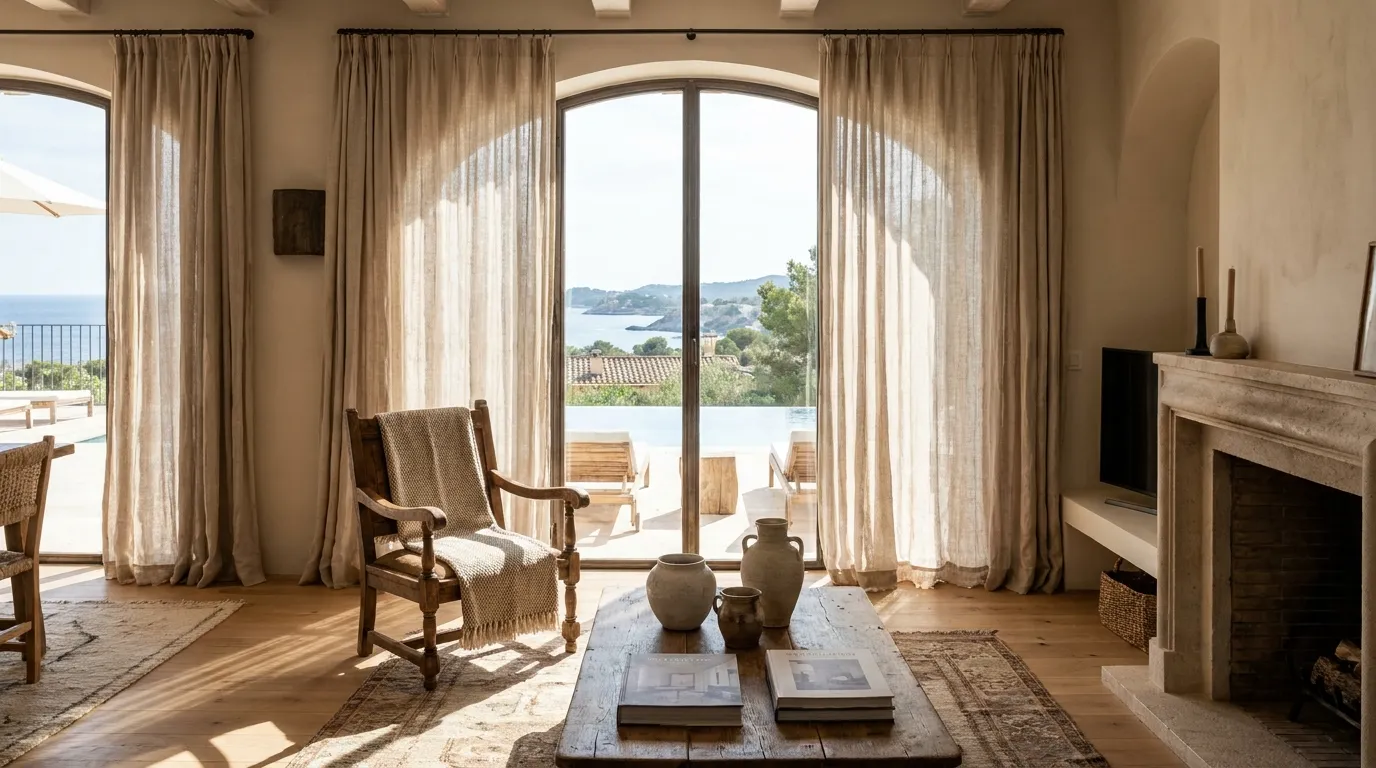
Living rooms often have large windows or sliding doors that connect to terraces and gardens. A sheer layer can soften daylight while retaining the view, with a heavier curtain available for privacy and stronger shading. Consider how the open panels will stack and whether they will obstruct door handles or access routes.
Bedrooms and guest suites
Bedrooms should prioritise privacy and a comfortable sleeping environment. A dimout or blackout layer can reduce incoming light, while a sheer can provide a lighter daytime look. If the room receives intense morning or afternoon sun, assess the exposure and choose the lining accordingly.
Bathrooms and nearby dressing areas
Textiles placed near showers, baths or frequently wet surfaces need particular care. In many bathrooms, a suitable blind or another moisture-appropriate window covering may be more practical than a full-length decorative curtain. If curtains are used, keep them away from direct water contact and ensure the room can ventilate and dry.
Dining rooms
Choose a fabric and trim that can be maintained around food, frequent use and movement of chairs. A simple textured curtain in a warm neutral can add softness without becoming difficult to clean.
Hotels and rental villas
Hospitality window treatments need to be intuitive for guests and manageable for housekeeping. Durable construction, reliable tracks and clear light-control functions are important. Consider spare fabric availability, cleaning frequency and how the curtains will look after repeated operation.
8. Tracks, Hardware and Installation Details
Fabric is only one part of a reliable curtain installation. Tracks, brackets, gliders, hooks and fixings must be appropriate for the curtain's weight, width and operating frequency. In coastal locations, discuss suitable hardware finishes and maintenance because salt-laden air can accelerate corrosion on unsuitable metal components.
For layered curtains, confirm that the tracks provide enough separation for both fabrics to move freely. For wide windows, consider the curtain weight and whether a centre support or motorised operation is appropriate. Ceiling-mounted tracks can create a clean, full-height appearance, while wall-mounted systems may be useful where ceiling conditions or access make them preferable.
Before installation, check:
- Track width, mounting position and available stacking space.
- Wall or ceiling construction and suitable fixing points.
- Clearance from window handles, doors, furniture and air-conditioning units.
- Whether the curtain drop leaves enough clearance from floors that may become wet during cleaning.
- Whether the selected hardware is suitable for the environment and expected use.
- Whether manual or motorised operation best suits the window size and guest experience.
Accurate measurements and a clear installation plan help avoid problems with curtain movement, floor clearance and the appearance of the finished folds.
9. Year-Round Curtain Care in Bali
Seasonal care is not simply about changing curtains twice a year. A consistent maintenance routine helps fabrics and hardware remain presentable across changing humidity and sunlight conditions. Follow the textile supplier's care instructions because natural fibres, synthetic blends, linings and decorative trims may require different cleaning methods.
- During humid periods: ventilate rooms, check for leaks or condensation, and avoid leaving damp curtains gathered tightly.
- After heavy rain: inspect nearby window frames and floors for water ingress before allowing curtains to hang against them.
- During strong sunshine: use suitable shading when practical and inspect exposed areas for uneven fading.
- Regularly: remove dust gently, check seams and hems, and keep tracks free from accumulated dirt.
- When cleaning: use approved methods and avoid untested bleach, solvents or harsh detergents.
- For hospitality properties: provide housekeeping teams with simple written care instructions and a schedule for inspecting tracks and fabric condition.
If a curtain develops a musty smell or visible mould, investigate the source of moisture. Cleaning the textile without addressing persistent dampness may only provide a temporary result. Seek professional cleaning advice when the fabric, lining or finish requires specialist treatment.
10. Planning Custom Curtains for Bali Properties
Custom curtains allow the fabric, lining, heading, fullness and track arrangement to be selected for the actual window and the property's seasonal requirements. This is particularly useful for villas and hotels with high ceilings, wide glazing, unusual window shapes or multiple rooms that need a consistent design language.
Before requesting a quotation, prepare the following information:
- Window measurements: record the intended track width and finished curtain drop. Use a consistent measuring method for every opening.
- Seasonal exposure: note whether the window receives direct morning or afternoon sun, wind-driven rain or persistent shade.
- Room function: identify whether the priority is privacy, filtered daylight, darkness, glare reduction or a combination.
- Fabric and colour: shortlist textures and colours, then review physical samples in the actual room.
- Lining and layers: specify sheer, dimout, blackout or another suitable construction based on the required performance.
- Hardware: confirm track type, mounting position, operation and environmental requirements.
- Maintenance: discuss cleaning frequency, care instructions and the practical needs of the property.
Use the Almeers Living Curtain Measuring Guide to prepare window dimensions. If the project also includes blinds, see the Shade Measuring Guide. For decorative top treatments, refer to the Valances and Cornices Measuring Guide.
For wide openings and layered installations, the Almeers Living Stacking Calculator can help estimate the space curtains may occupy when open. Treat the result as a planning reference and confirm the final configuration with the installer, since fabric thickness, fullness and track details affect the actual stack.
Explore the Almeers Living curtains and blinds collection for options for Bali homes, villas and hospitality interiors. A site assessment can help match each window treatment to the property's exposure, design direction and day-to-day requirements.
11. Frequently Asked Questions
Should I choose different curtains for Bali's rainy and dry seasons?
Not necessarily. It is usually more practical to choose year-round curtains that suit the property's humidity, ventilation and sunlight exposure. Seasonal adjustments can come from how layered curtains are operated, rather than replacing all the window treatments.
What curtains are best for humid conditions?
There is no single fabric that is best for every humid room. Compare fibre composition, weave, finish, care instructions and drying requirements. Good ventilation and control of leaks or condensation are essential regardless of fabric type.
Are moisture-resistant curtains mould-proof?
No. A moisture-resistant description does not mean a curtain is waterproof or mould-proof. Persistent dampness, poor ventilation and contact with wet surfaces can create conditions for mould on many materials.
Which curtains help reduce heat from the sun?
Denser curtains and suitable lined constructions can contribute to shading when closed. The result depends on fabric, colour, lining, glazing and installation. External shading and appropriate glazing may provide additional benefits, especially for windows exposed to intense direct sun.
Do blackout curtains reject solar heat?
Blackout describes light-blocking performance through the fabric, not a guaranteed level of heat rejection. Some blackout constructions may also contribute to shading, but thermal performance should be assessed separately using product-specific information.
Are sheer curtains suitable for Bali villas?
Sheers are useful for diffusing daylight and creating a soft connection to gardens or outdoor spaces. They provide limited privacy at night when interior lights are on and generally offer less shading than denser curtains. A second layer can provide more flexibility.
What colours create an island resort look?
Warm white, ivory, sand, oatmeal, taupe, muted olive and earthy terracotta are common choices for relaxed tropical interiors. Select colours in the room's actual lighting and coordinate them with timber, stone, upholstery and other finishes.
How often should curtains be cleaned in Bali?
Cleaning frequency depends on the fabric, room use, dust levels, humidity and supplier guidance. Regular gentle dust removal and periodic inspection are useful, while deeper cleaning should follow the care label or professional advice.
What should hotels consider when selecting curtains?
Hotels should consider durability, guest-friendly operation, cleaning requirements, privacy, light control, hardware reliability and replacement availability. The specification should reflect the room's exposure and housekeeping routine.
Conclusion: Choose Curtains for Bali's Climate and Lifestyle
Seasonal curtain planning in Bali is about balancing moisture awareness, sunlight management and a welcoming island aesthetic. During wetter periods, ventilation, fabric care and keeping textiles away from damp surfaces are essential. During brighter periods, suitable sheers, lined curtains and other shading measures can help manage glare and direct sunlight. Across the year, colour, texture and well-planned layering can give villas and resorts a cohesive, relaxed identity.
The best solution is the one that responds to each window's real conditions. Consider the room's orientation, glazing, exposure, privacy needs and maintenance routine before choosing fabric and hardware. With accurate measurements and a clear specification, custom curtains and blinds can support both the design and practical performance of Bali properties.