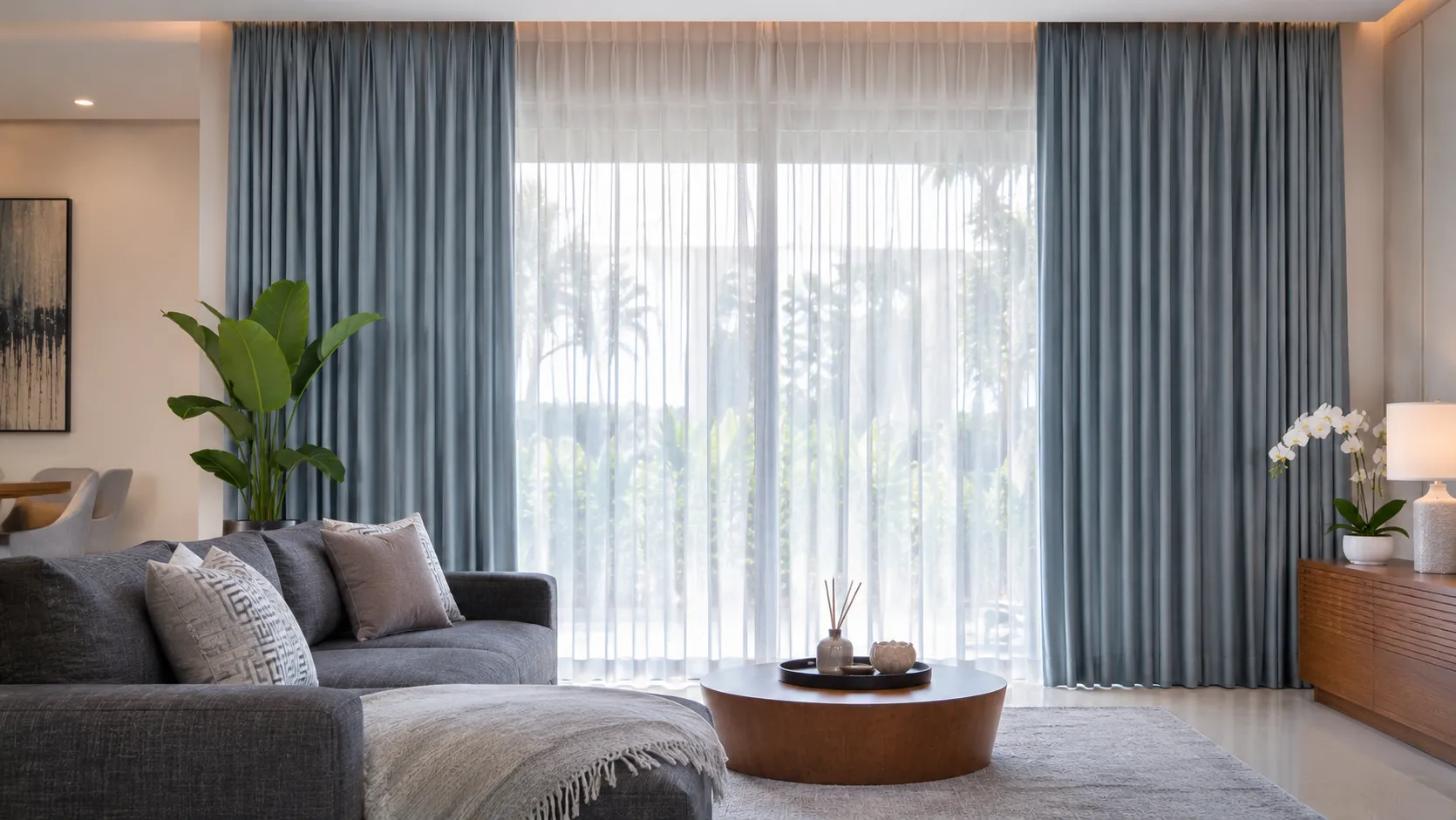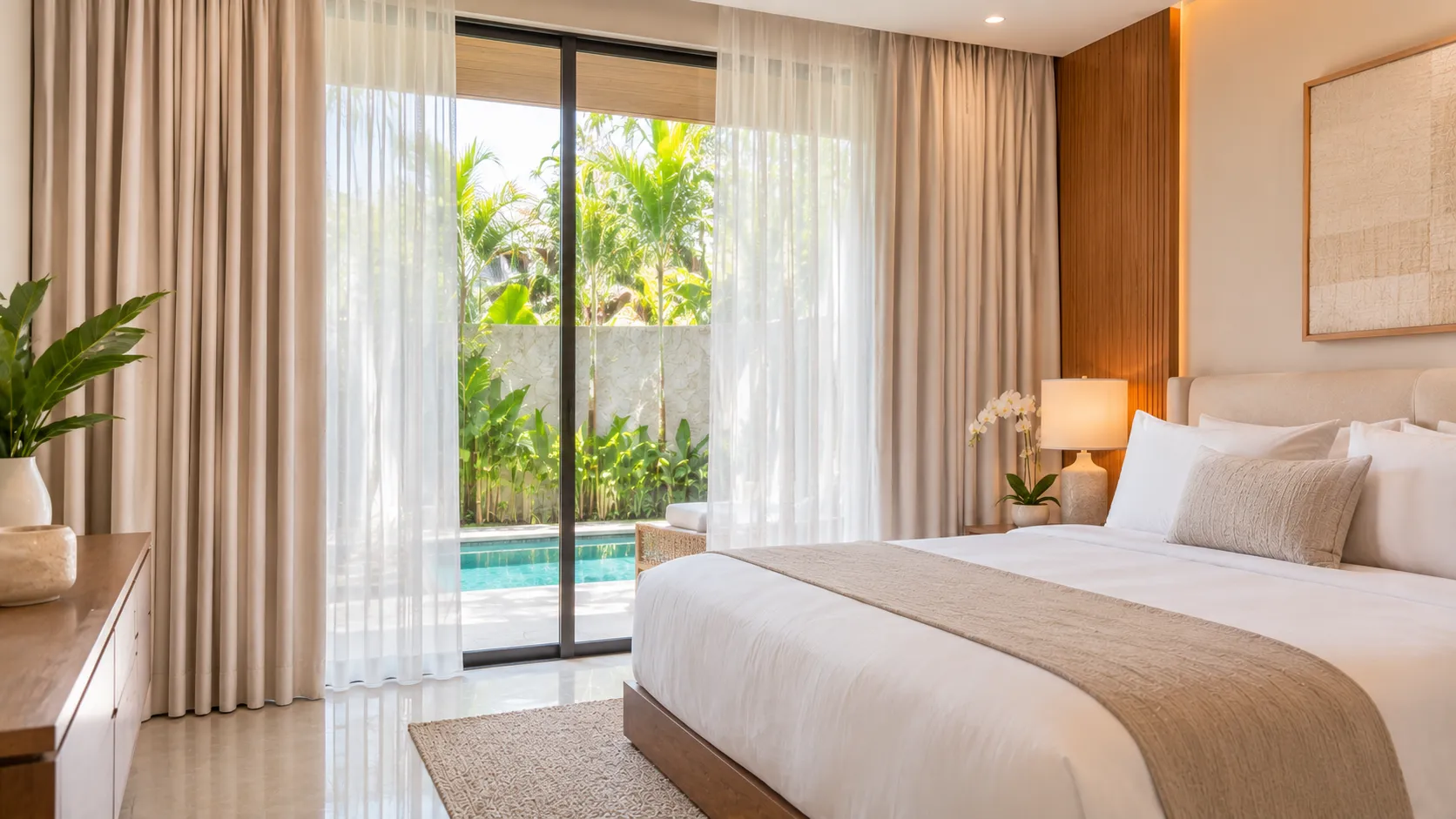
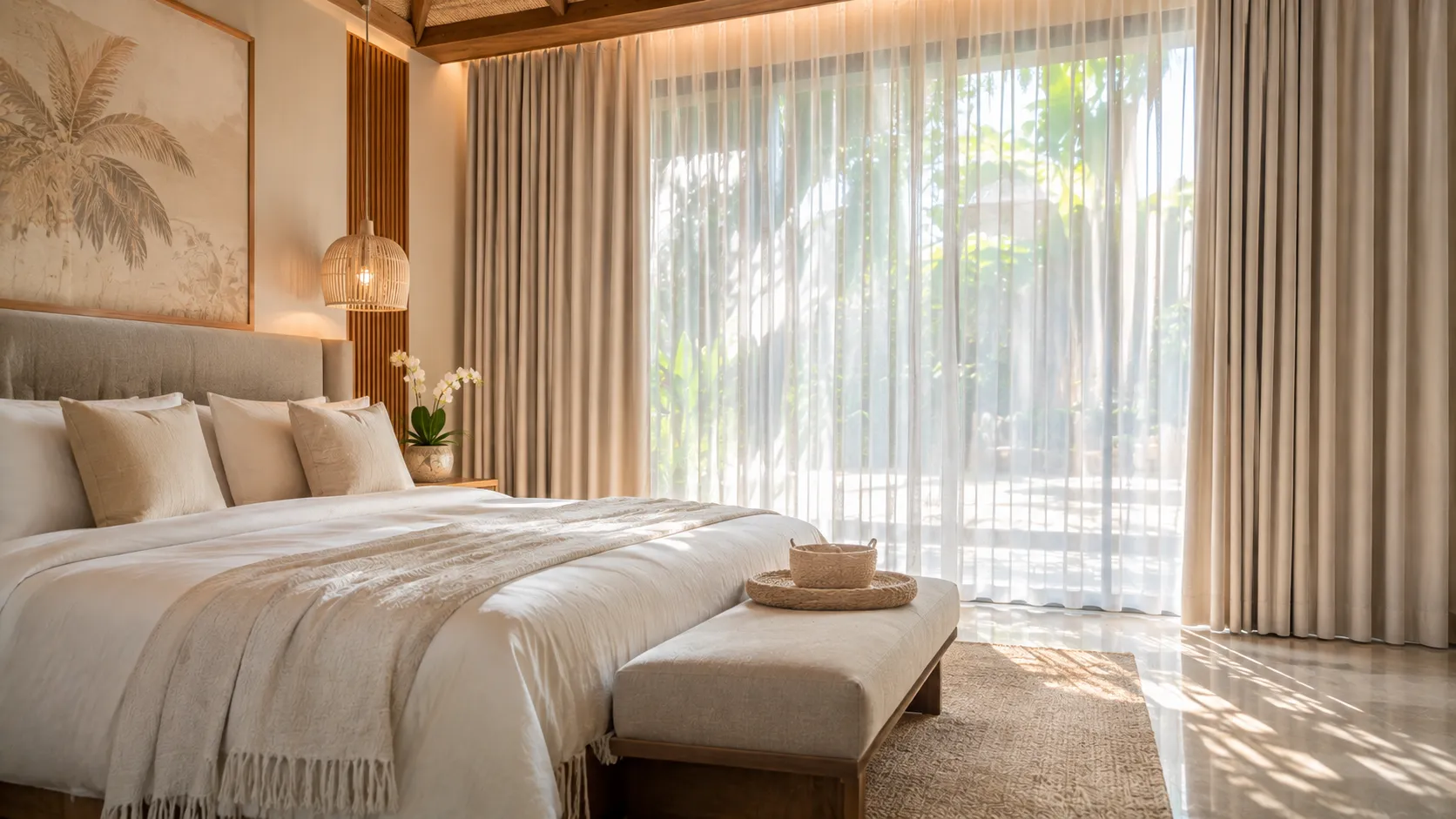
The right bedroom curtains can soften bright daylight, create privacy after sunset and bring warmth to the interior. Breathable-looking sheer fabrics, textured linen-look materials and effective blackout curtains each serve a different purpose. Combining them thoughtfully allows a bedroom to feel bright and relaxed during the day, then darker and more private when it is time to rest.
This guide from Almeers Living explains how to choose bedroom curtains for Bali villas, hotels, apartments and private homes. It covers fabric selection, blackout performance, colour palettes, curtain fullness, track planning and practical details to consider before custom production and installation.
1. The Role of Curtains in a Restful Bedroom
Bedroom curtains perform several functions at once. They influence how much daylight enters the room, how exposed the interior feels, and how the window relates to the rest of the design. A well-planned curtain arrangement should support the way the room is used rather than being selected only for its colour or appearance.
Light control from morning to night
Bedrooms often need different light conditions at different times. During the day, a sheer curtain can soften strong sunlight while keeping the room visually connected to the outdoors. At night, an opaque curtain can reduce external light and create a more enclosed, private environment.
Privacy for villas and urban homes
A bedroom facing a garden may have different privacy needs from an apartment overlooking a neighbouring building or a shared villa pathway. Consider the window's position from the outside as well as the view from the bed. Sheers can provide daytime screening in some conditions, but they are not a dependable night-time privacy solution when interior lights are on.
Texture and acoustic softness
Full-height curtains add a soft textile surface to rooms that may otherwise contain hard finishes such as glass, stone, tile and timber. Fabric can help reduce some reflected sound within a room, although curtains should not be treated as soundproofing. Their most noticeable contribution is usually visual and tactile: they make the window feel finished and the bedroom more layered.
2. Breathable-Looking Fabrics for Tropical Interiors
In a tropical setting, fabric selection should consider the room's humidity, ventilation, sunlight exposure and cleaning requirements. The word “breathable” is often used to describe a light, open or natural-looking textile, but it does not mean every curtain fabric actively cools a room. The actual comfort of a bedroom also depends on ventilation, glazing, shading, air conditioning and the building design.
Linen and linen-look curtains
Linen and linen-look fabrics are valued for their relaxed texture and natural visual character. Their subtle irregularities can complement timber furniture, woven details, stone surfaces and neutral bedroom palettes. Depending on the construction, some linen-look fabrics are more translucent while others are heavier and more suitable for decorative or lined curtains.
For bedrooms that need stronger darkness, a decorative linen-look face fabric can be combined with an appropriate blackout lining or used as part of a layered arrangement. Always confirm the full fabric construction and care instructions rather than assuming that a natural appearance indicates a particular performance.
Sheer and voile fabrics
Sheers and voile are lightweight translucent options that filter daylight without fully closing off the window. They can create a gentle morning atmosphere and soften the view of outdoor greenery. They are particularly useful as the daytime layer in a double-curtain arrangement.
Dimout and blackout fabrics
Dimout fabrics reduce incoming light but do not necessarily create a fully dark room. Blackout fabrics are designed to block light through the fabric itself, although light may still enter around the sides, top or bottom of an installed curtain. The distinction is important when selecting curtains for guests who prefer a dark sleeping environment.
| Fabric type | Typical role | Planning consideration |
|---|---|---|
| Sheer or voile | Filters daylight and maintains a soft view | Not intended to provide full darkness or reliable night privacy |
| Linen or linen-look | Adds natural texture and a relaxed finish | Check transparency, weight, lining needs and care instructions |
| Dimout | Reduces incoming light | Darkness varies by fabric and installation details |
| Blackout | Blocks light through the fabric | Side, top and bottom gaps must be considered for a darker room |
3. Understanding Blackout Curtains and Total Darkness
Blackout curtains are a common choice for bedrooms because they can significantly reduce light entering through a window. They are useful for guest rooms, bedrooms facing bright outdoor lighting and spaces where occupants prefer a darker environment for sleeping or resting during the day.
Fabric performance versus room darkness
A fabric described as 100% blackout is intended to prevent light passing through the fabric. However, this does not automatically guarantee complete darkness throughout the room. Light can still escape around the curtain edges, through gaps between panels, above the track or below the finished drop. The final result depends on both the fabric and the installation.
Reducing light gaps
For stronger room-darkening performance, consider the track position, overlap between curtain panels, side returns, top coverage and finished length. A ceiling-mounted track or a suitable pelmet or box detail may help reduce visible gaps, depending on the window and construction. The correct solution should be designed around the actual opening.
Blackout for guest bedrooms
In hospitality settings, guests may have different sleep schedules and light preferences. Blackout curtains provide more control than a sheer alone and can be especially valuable in bedrooms exposed to early morning sun. Pairing blackout curtains with a separate sheer gives guests the option to choose a bright filtered room or a darker private space.
Design note: When the goal is a very dark bedroom, specify the blackout fabric and discuss installation details together. Do not rely on the fabric label alone to predict the finished room's darkness.
4. Combining Sheer and Blackout Layers
A double-layer curtain system is one of the most flexible solutions for Bali bedrooms. It combines a translucent layer for daytime light with an opaque layer for night-time privacy and stronger light control. Each layer can be operated independently, so the room can adapt to different activities and times of day.
How the layers work
- Daytime: Keep the sheer closed to diffuse daylight and soften the view.
- Evening: Close the blackout curtain when privacy is needed.
- Resting hours: Use the blackout layer to reduce incoming light through the window.
- Open view: Draw both layers aside when a clear view or maximum daylight is preferred.
Choosing the right track system
Double curtains require a compatible double track or another suitable arrangement that allows the two fabrics to move independently. The track must have enough clearance for the fabric folds, brackets and window hardware. In a compact bedroom, check that the open curtain stack does not cover too much glass or interfere with bedside furniture and doors.
Matching the fabrics
The sheer and blackout fabrics do not need to be identical in colour or texture. A soft ivory sheer can sit comfortably with a warm beige, oatmeal or muted grey blackout curtain. Alternatively, a close tonal match can create a quiet, seamless appearance. Request samples of both layers together to judge the combination in the room's natural light.
Explore the Almeers Living product range for curtain and window-treatment options that can be considered for a layered bedroom design.
5. Calming Colours and Bedroom Aesthetics
Bedroom colours influence the visual mood of a space. Soft neutrals are popular because they work with many materials and can create a calm backdrop without competing with furniture or artwork. In Bali, these shades often complement timber, rattan, natural stone, woven accessories and tropical greenery.
Warm white and ivory
Warm white and ivory curtains create a light, gentle appearance. They can make a bedroom feel fresh while avoiding the sharper contrast that some cool whites create against warm timber or beige walls.
Oatmeal, sand and natural beige
Earthy neutrals add warmth and work well with organic materials. These colours can be especially effective for villa bedrooms designed around a relaxed tropical or contemporary natural aesthetic.
Soft grey and muted taupe
Soft grey and taupe can provide a more understated or modern finish. They are useful when the room already contains warm timber or patterned surfaces and the curtains need to create balance rather than become the main feature.
Using colour across two layers
For a layered arrangement, consider whether the sheer should blend into the background or provide a subtle contrast. A pale sheer with a slightly deeper blackout curtain creates gentle depth. A tonal combination keeps the window visually quiet. Test samples beside the bedding, wall finish and flooring before confirming the selection.
6. Curtain Styles and Heading Options
The heading style affects the rhythm of the folds and the overall character of a bedroom. It should be selected with the fabric, track system and desired fullness in mind.
Wave or S-fold curtains
Wave or S-fold curtains create regular, flowing curves along the track. They are often selected for contemporary villas and hotel rooms because the folds look consistent and understated. The track and glider spacing must be compatible with the specified wave system.
Pinch pleat curtains
Pinch pleat headings create more defined, tailored folds. They can suit classic, transitional or more formal bedroom interiors. The pleat construction and fabric weight influence how the finished curtain hangs.
Simple gathered styles
A simpler gathered heading can create a relaxed look, depending on the fabric and fullness. It may suit informal interiors, but the finished appearance should be reviewed with a sample or reference before production.
Whichever style is chosen, specify the finished width, fullness, heading type and track arrangement clearly. These details influence both fabric consumption and the final appearance.
7. Planning Curtains for Different Bedroom Types
Master bedrooms in private villas
Master bedrooms often have large windows or sliding doors opening to a private terrace. A full-height sheer can soften the daylight and frame the outdoor view, while a blackout layer gives occupants stronger privacy and light control. Check the curtain stack so the open panels do not obstruct access to the terrace.
Guest bedrooms in villas and holiday rentals
Guest rooms should be intuitive to use. A clearly separated sheer and blackout layer gives visitors straightforward choices for daylight and privacy. Durable tracks, practical operating access and fabrics with suitable care instructions can make ongoing property management easier.
Hotel and resort bedrooms
Hotels benefit from consistency across rooms, especially when multiple windows share similar dimensions. Establish a clear specification for fabric, colour, lining, heading, track and installation height. A coordinated specification helps maintain a consistent guest experience while making replacement and maintenance easier to manage.
Compact bedrooms and apartments
In smaller rooms, bulky curtain stacks can reduce the usable window area or compete with bedside furniture. Consider a neat track position, suitable fabric weight and a heading that creates the desired folds without excessive bulk. If a double layer is required, confirm there is sufficient room for both tracks and curtains.
8. Measurements, Tracks and Installation Details
Accurate measurement is essential for custom bedroom curtains. Small errors in width or drop can affect how panels meet, how much light enters around the edges and how the curtains sit against the floor. Measurement should be completed with the intended track position and heading style in mind.
Confirm the width and drop
Measure the proposed track width rather than relying only on the glass width. Decide how far the curtain should extend beyond the window opening and whether the panels will open to one side or both sides. For the drop, measure from the actual track position to the intended finished point, allowing for the selected heading and floor clearance.
Refer to the curtain measuring guide before finalising dimensions. For windows that use blinds or shades instead, see the shade measuring guide.
Choose fullness based on the heading and fabric
Fullness determines how much fabric is used relative to the track width and influences the depth and frequency of folds. A fuller curtain usually creates a richer appearance, while a lower fullness can look simpler. The appropriate ratio depends on the heading style, fabric behaviour and design preference. Confirm the specification with the curtain maker before production.
Allow for stack-back and access
Stack-back is the space occupied by gathered curtains when they are fully open. Consider this when a bedroom has a sliding door, balcony access, a bedside table close to the window or a view that should remain unobstructed. The curtain stacking calculator can support early planning, but final dimensions should be verified on site.
Coordinate tracks with ceiling and wall details
Check the ceiling construction, track fixing points, curtain recesses, pelmets and nearby lighting. If a concealed track is planned, coordinate its position with the ceiling design before installation. For double-layer curtains, verify that both tracks have enough clearance and that each layer can move without rubbing against the other.
Almeers Living provides custom window-treatment consultation, on-site measurement and installation in Bali. For new builds and renovations, involving the curtain team early can help coordinate tracks, recesses and finished floor levels with the interior design.
9. Care and Maintenance in Bali
Bedrooms in tropical properties may experience changing humidity, dust from outdoor areas and strong daylight. A suitable maintenance routine helps curtains remain presentable and operate smoothly over time.
- Follow the fabric supplier's care label and cleaning recommendations.
- Remove dust regularly with a soft brush or suitable vacuum attachment.
- Keep curtains from remaining damp or tightly gathered when wet.
- Allow adequate ventilation and address persistent moisture in the room.
- Check tracks, gliders and brackets periodically for smooth movement and secure fixing.
- Use professional cleaning when required by the fabric construction or care instructions.
Do not assume all fabrics can be machine-washed, steamed or treated with the same cleaning products. Linen, linen-look blends, sheers and lined blackout curtains may have different care requirements. Confirm the correct method before cleaning.
10. Frequently Asked Questions About Bedroom Curtains in Bali
What curtains are best for a bedroom in Bali?
The best choice depends on the room's sunlight, privacy needs and design. A sheer paired with blackout curtains is a flexible option because it provides filtered daylight during the day and stronger light control at night. Fabric, colour and track details should be selected for the specific window.
Are blackout curtains enough to make a bedroom completely dark?
Blackout fabric blocks light through the material, but light may still enter around the curtain edges, above the track or below the finished drop. For a darker room, the installation should be planned to minimise these gaps.
What is the difference between blackout and dimout curtains?
Blackout fabric is designed to block light through the fabric, while dimout fabric reduces light without necessarily blocking it completely. The actual room-darkening result also depends on installation and edge gaps.
Can I use sheer curtains without blackout curtains?
Yes, if the bedroom does not require strong darkness or night-time privacy from the window. Sheers are suitable for filtering daylight and creating a soft appearance, but they do not replace an opaque curtain where full privacy or stronger light control is needed.
Are linen curtains suitable for humid tropical climates?
Linen and linen-look fabrics can suit tropical interiors aesthetically, but suitability depends on the specific fibre, construction, room ventilation and care requirements. Ask for the fabric specification and maintenance instructions before choosing.
Which curtain colour makes a bedroom feel cozy?
Warm white, ivory, oatmeal, sand, beige and muted taupe are common choices for a calm bedroom palette. The best shade depends on the wall colour, flooring, furniture and natural light. Compare samples in the actual room.
Are wave curtains suitable for bedroom windows?
Wave or S-fold curtains can work well in bedrooms where a regular, flowing fold is desired. Confirm that the track system, gliders, fabric weight and fullness are compatible with the selected wave specification.
Does Almeers Living provide custom bedroom curtains in Bali?
Almeers Living offers custom window-treatment services in Bali, including fabric consultation, on-site measurement and installation. Homeowners, villa operators, hotels, contractors and interior designers can discuss their project requirements and suitable options.
Conclusion: Create a Bedroom That Feels Calm and Comfortable
Cozy bedroom curtains are created by combining the right fabric, light control, colour and installation details. In Bali, a sheer layer can soften tropical daylight and preserve an airy connection to the outdoors, while blackout curtains provide stronger privacy and darkness when needed. Linen-look textures and warm neutral colours can complete the room without overwhelming its architecture.
Before ordering, consider the window orientation, privacy conditions, fabric care, heading style, fullness, track position and stack-back space. Planning these elements together helps the finished curtains look balanced and work comfortably every day.
For custom bedroom curtains, sheers and blackout layering in Bali, contact Almeers Living to discuss your property and arrange the next steps.