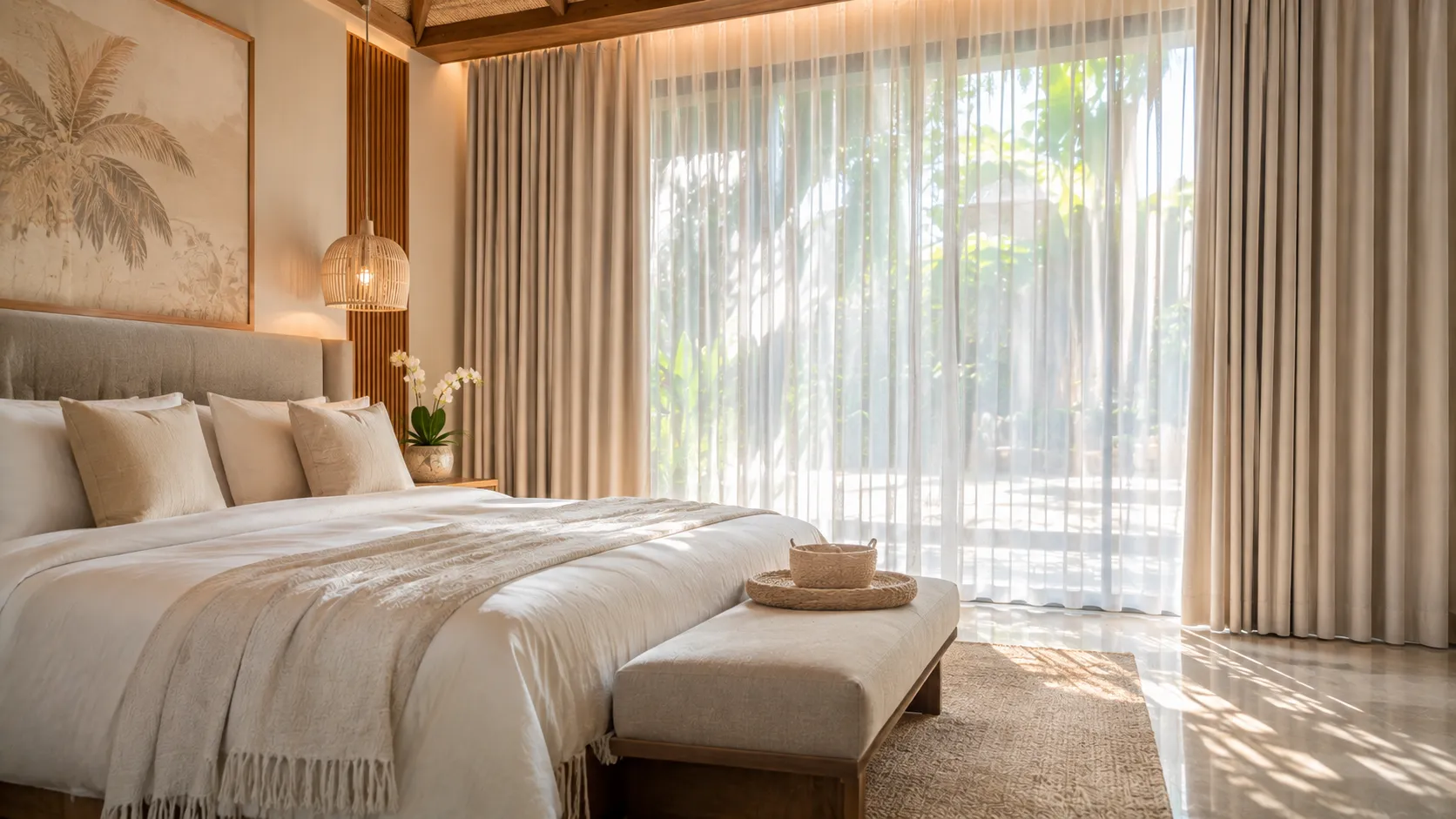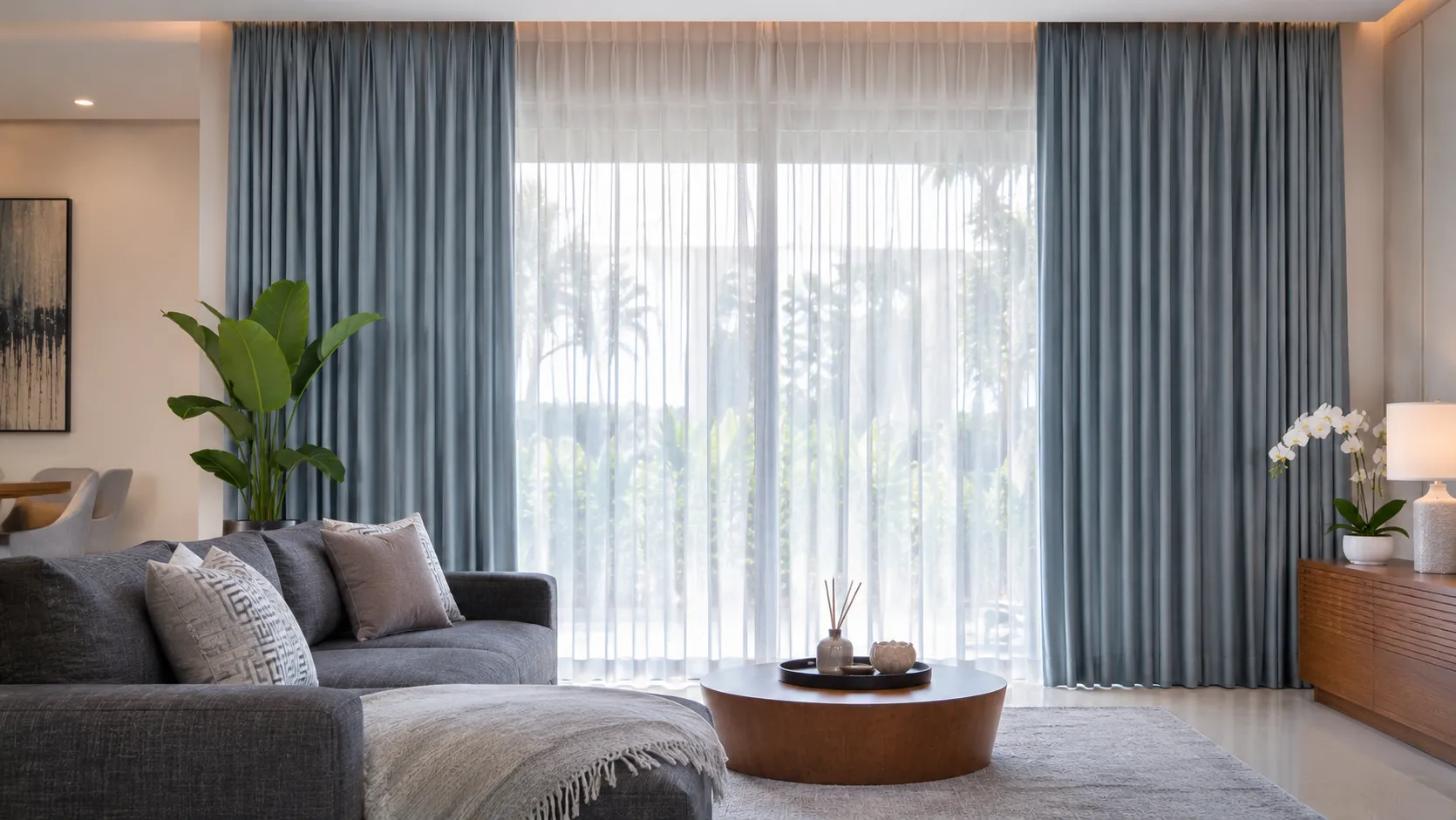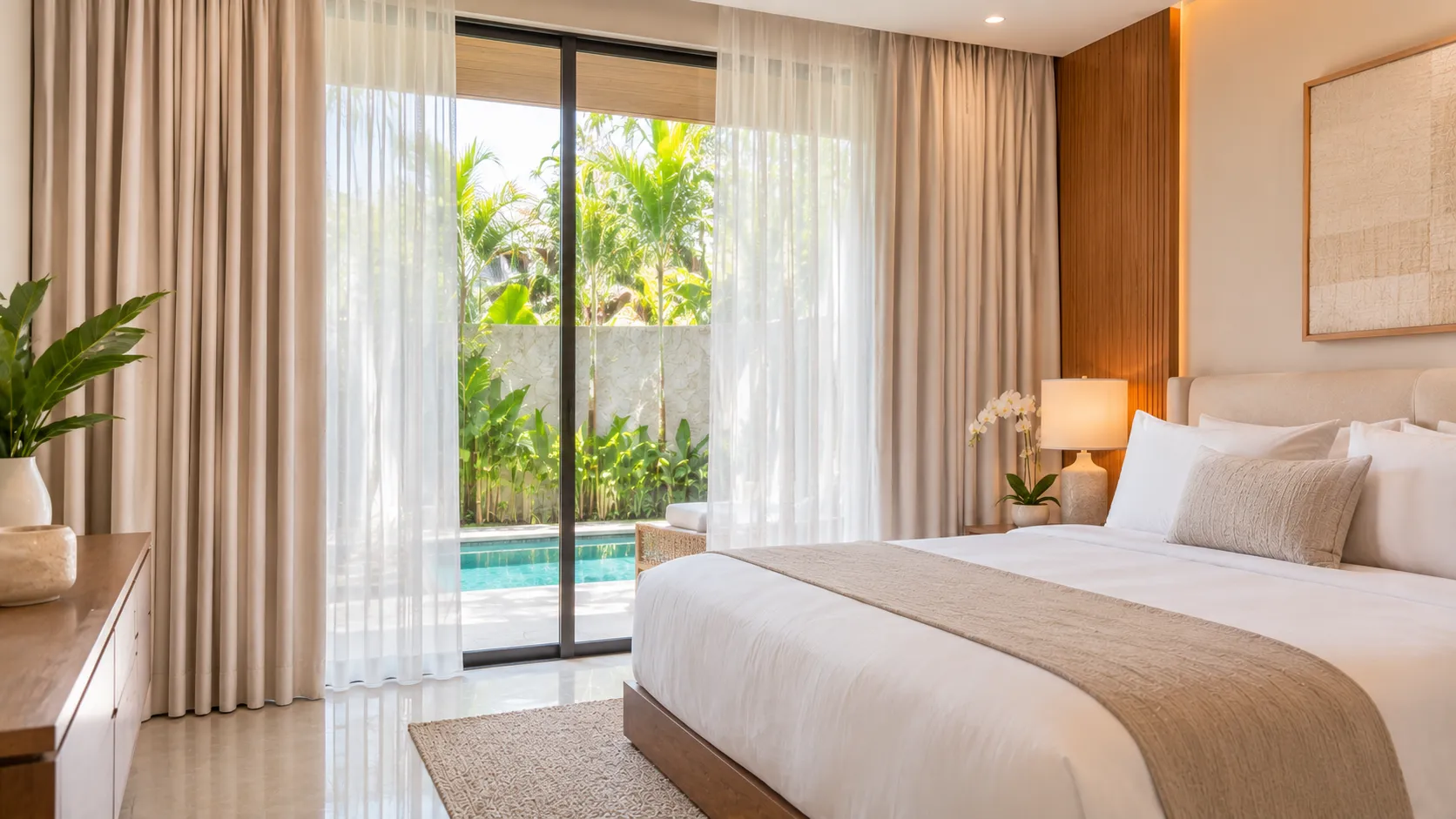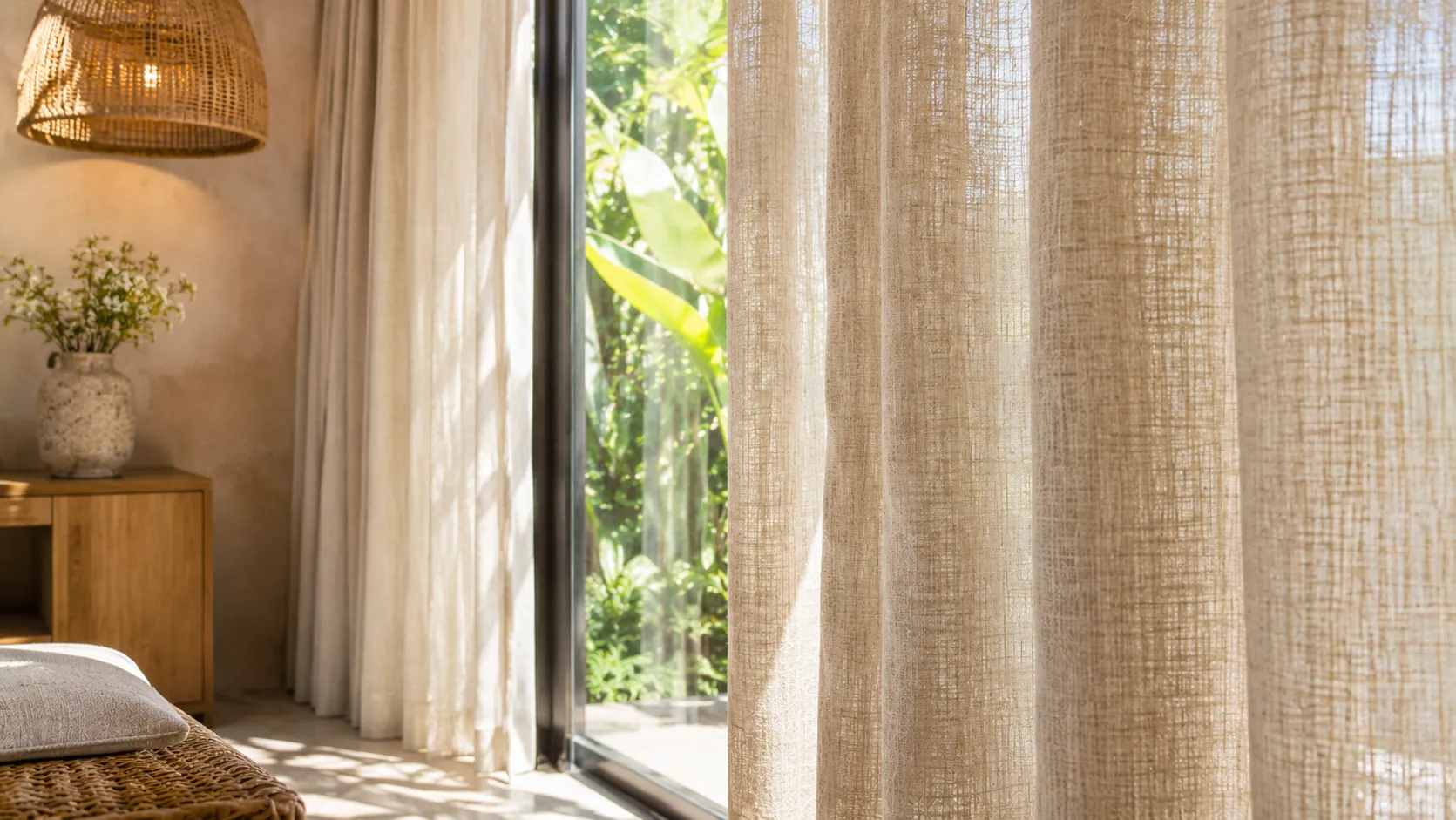
Organic linen, recycled-fibre textiles and durable curtain systems are often considered when planning a more sustainable home. However, a material should not be described as environmentally friendly based on appearance or a product name alone. Fibre origin, processing, certification, transport, expected service life and end-of-life options all matter. It is also important to distinguish material sustainability from thermal performance: a curtain may be made with recycled fibres but may not provide meaningful insulation or solar control unless its construction and installation are suitable.
This guide from Almeers Living explains how to assess eco-conscious curtains for Bali villas, houses, apartments and hospitality spaces. It covers organic linen, recycled-fibre drapery, practical shading, thermal comfort, maintenance and the questions to ask before ordering custom curtains.
1. What Makes a Curtain Choice More Sustainable?
A curtain's environmental impact is influenced by several stages of its life cycle. These include the source of the fibre, how the yarn and fabric are produced, dyeing and finishing processes, packaging, transportation, how long the curtain remains in use, and what happens when it is eventually replaced. No single label explains every part of this picture.
Look beyond the fibre name
Natural fibres are not automatically low-impact, and synthetic fibres are not automatically unsuitable. Organic cultivation standards, water and energy use, chemical management, recycled content, manufacturing practices and durability all influence the overall picture. Ask suppliers for specific product information instead of relying on broad terms such as natural, green or eco.
Prioritise long-term use
A well-made curtain that remains attractive and functional for many years may avoid frequent replacement. Correct measurements, suitable lining, reliable tracks and appropriate care can help extend the service life of a window treatment. Choosing a fabric only because it is inexpensive or currently fashionable may lead to earlier replacement if it does not suit the room's exposure or daily use.
Choose performance appropriate to the room
Bedrooms, living areas and hospitality spaces have different requirements. A bedroom may need strong light control, while a living room may benefit from filtered daylight. Selecting a curtain that performs the intended job can reduce the need for additional products or premature changes.
Responsible buying principle: Request verifiable details about fibre content, recycled percentage, certification and care instructions. If a supplier cannot substantiate an environmental claim, treat it as a marketing description rather than a verified product attribute.
2. Organic Linen and Natural-Fibre Curtains
Linen is made from flax fibres and is valued in interior design for its distinctive texture, relaxed drape and natural appearance. Linen curtains can suit Bali homes that use timber, stone, woven furniture and earthy colours. The term organic linen, however, should only be used when the product's fibre sourcing and relevant processing claims are supported by suitable documentation or certification.
Why linen is popular in tropical interiors
Linen-look and linen fabrics bring visible texture without necessarily making a room feel visually heavy. Their irregular yarn character can complement contemporary tropical, coastal and natural-modern interiors. Depending on the weave and construction, linen fabrics may range from relatively open and light-filtering to heavier materials suitable for lined curtains.
Understand the difference between linen and linen-look
A linen curtain contains linen fibre, while a linen-look curtain may be made from polyester, a blend or another fibre designed to resemble linen. Both can have a natural-looking finish, but their fibre content, care needs, price and environmental profile may differ. Read the composition label rather than judging by texture alone.
Practical considerations before choosing linen
- Check the exact fibre composition and whether the fabric is certified organic.
- Ask whether the fabric may shrink, crease or change appearance after cleaning.
- Review the recommended cleaning method and whether professional care is required.
- Assess the fabric sample in the room's natural light to understand its transparency and colour.
- Consider lining where stronger privacy or light control is required.
For a bedroom or media room, an attractive linen face fabric may be combined with a suitable lining or a separate blackout curtain. The correct solution depends on the desired appearance, light-control requirement and fabric specification.
3. Recycled-Fibre Drapery
Recycled-fibre fabrics use recovered material as part of their yarn or textile composition. Some products use recycled polyester made from post-consumer plastic, while others may incorporate pre-consumer textile waste or recycled natural fibres. The exact source and percentage can vary significantly between products.
Questions to ask about recycled content
Ask whether the recycled content is post-consumer, pre-consumer or a combination, and request the percentage by weight. A fabric described as recycled may contain only a portion of recycled material, with the remainder made from virgin fibres. Clear product documentation helps buyers compare like with like.
Performance and appearance
Recycled-fibre drapery can be available in a range of textures, colours and weights. Its suitability for a particular window depends on the fabric construction, UV exposure, colourfastness, drape and cleaning instructions. Recycled content alone does not determine whether a curtain is durable or appropriate for a humid or sun-exposed room.
Balancing recycled content and service life
When comparing options, consider the full product specification and expected use. A durable fabric that can be maintained correctly may offer better long-term value than a material that needs frequent replacement. Ask for samples and technical information before confirming a project specification.
| Material description | What to verify | Useful selection question |
|---|---|---|
| Organic linen | Fibre composition, organic certification and processing details | Can the organic claim be supported by current documentation? |
| Linen-look blend | Exact fibre percentages and care requirements | Is the fabric actual linen, a blend or a synthetic look-alike? |
| Recycled polyester | Recycled content percentage and source | Is the recycled content post-consumer, pre-consumer or both? |
| Recycled textile blend | Composition, traceability and performance data | What portion is recycled and how should the fabric be maintained? |
4. Thermal Comfort and Energy Efficiency
Curtains can contribute to a more comfortable indoor environment by changing how sunlight enters through a window and by adding a textile layer between the glass and the room. Their effect depends on fabric weight, colour, lining, coverage, air gaps, window orientation and how consistently the curtains are used. Curtains are not a replacement for appropriate glazing, external shading, ventilation or an efficient cooling system.
Managing direct solar exposure
Windows that receive strong direct sun can contribute to glare and heat gain. A suitable curtain can reduce the amount of direct sunlight entering the room, particularly when it is closed before the strongest sun reaches the glass. The best fabric and colour depend on the window's orientation and the desired level of daylight.
Layering for flexible control
A sheer and an opaque curtain can provide two levels of control. The sheer filters daylight and maintains a softer view, while a dimout or blackout layer provides stronger light reduction and privacy. For rooms with significant sun exposure, a carefully selected lined curtain may be more suitable than a sheer alone.
Do curtains reduce air-conditioning use?
Appropriate window coverings may help manage solar gain and improve perceived comfort, which can support a more considered cooling strategy. However, energy savings cannot be guaranteed from a curtain specification alone. Results depend on the building envelope, glazing, window size and direction, outdoor temperature, air-conditioning settings, occupancy and curtain use. Avoid assigning a specific energy-saving percentage unless it is supported by a relevant test or project measurement.
Consider external shading too
Where possible, roof overhangs, verandas, screens, shutters, vegetation and other external shading measures can reduce direct sun before it reaches the glass. Interior curtains can complement these features, creating a layered approach to daylight and comfort.
5. Choosing Curtains for Bali's Tropical Conditions
Bali properties experience warm temperatures, strong daylight and seasonal changes in humidity and rainfall. Conditions differ between coastal locations, inland areas, shaded gardens and highly exposed upper floors. The most suitable curtain is therefore the one that matches the actual room conditions rather than a general assumption about tropical design.
Humidity and ventilation
In rooms with limited ventilation or persistent moisture, allow curtains to dry fully and avoid leaving damp fabric tightly gathered. Maintain airflow around windows and address the underlying source if condensation or moisture problems occur. Fabric selection should follow the supplier's care guidance.
Sunlight and fading
Strong daylight can affect some fabrics and colours over time. Ask about colourfastness and suitability for the intended exposure. Lining, window orientation, external shading and rotating or adjusting curtains can influence how evenly the material ages.
Coastal and poolside properties
Bedrooms and living areas near pools, open terraces or coastal environments may experience more moisture, airborne particles or frequent door movement. Consider how easily the curtains can be opened, whether the hem is likely to contact wet floors and how the fabric should be cleaned. A sample review and site assessment can help identify practical concerns before production.
6. Design, Colour and Layered Window Treatments
Sustainable material choices should still support the architecture and interior design. A curtain that fits the room's style and functional needs is more likely to remain in use for longer. Neutral colours and simple heading styles can be versatile, but the best choice depends on the finishes, natural light and character of each property.
Natural neutral palettes
Ivory, warm white, oatmeal, sand, taupe and muted grey can work with timber, stone and woven materials often used in Bali interiors. These shades can create a calm backdrop and make it easier to coordinate curtains with changing furniture or decorative accessories.
Sheer plus dimout or blackout
Layering a sheer with dimout or blackout curtains offers flexibility across the day. The sheer provides filtered daylight, while the second layer supports privacy and stronger light control. A double-track arrangement should be planned so both fabrics move independently and stack neatly when open.
Wave, S-fold and pinch pleat headings
Wave or S-fold headings create regular flowing folds and suit many contemporary interiors. Pinch pleats provide a more tailored, decorative appearance. The chosen heading affects fabric consumption and track compatibility, so it should be confirmed before calculating the final material quantity.
Choose a timeless design
Simple colours, suitable fabric weights and well-proportioned folds can help a window treatment remain visually relevant. This is not a guarantee of sustainability by itself, but avoiding unnecessary replacement is a practical part of making a longer-term purchasing decision.
7. Durability, Cleaning and Product Lifespan
Maintenance has a direct influence on how long curtains remain presentable and functional. A fabric that is difficult to clean or unsuitable for its environment may be replaced earlier than expected. Before purchasing, understand how the material should be cleaned and whether the finished curtain can be removed easily for maintenance.
- Follow the manufacturer's care label and cleaning instructions.
- Remove dust regularly using a soft brush or a suitable vacuum attachment.
- Do not leave damp curtains tightly gathered for extended periods.
- Keep hems clear of wet floors and areas where water may collect.
- Check tracks, gliders, brackets and operating mechanisms periodically.
- Use professional cleaning where required by the fibre or curtain construction.
- Keep fabric and product details for future repairs or matching replacements.
Do not assume that linen, recycled polyester, blends and lined curtains can all be washed or steamed in the same way. Cleaning methods should be selected according to the specific product specification.
Repair and replacement planning
Where practical, consider whether a curtain can be repaired, relined or have its hardware serviced instead of replacing the entire window treatment. Retaining the fabric composition, colour reference and track details can make future maintenance more straightforward.
8. Certifications and Responsible Product Claims
Environmental claims can be difficult to compare because terms such as organic, recycled, natural and sustainable may be used in different ways. Look for a recognised certification or traceable product documentation that clearly applies to the specific fabric being offered. Check the scope of the certificate, the product or fibre covered, the certificate holder and its validity.
What documentation may help?
- Fibre composition showing the percentage of each material.
- Documentation supporting organic fibre claims, where applicable.
- Recycled-content information stating the percentage and source category.
- Relevant textile or chemical-safety certifications, with their scope clearly identified.
- Care instructions and technical information about durability and performance.
A certification may cover only one part of a product's supply chain or a specific environmental or chemical criterion. It should not be interpreted as proof that a finished curtain has no environmental impact. Ask the supplier what exactly has been certified and avoid broad claims that go beyond the documentation.
9. Measurements and Installation Planning
Correct measurement and installation help curtains perform as intended and reduce the risk of avoidable rework. For custom curtains, the track width, finished drop, heading style, fullness and opening direction should be confirmed before production begins.
Measure the actual installation area
Record the proposed track or pole width and measure the drop from the intended track position to the finished curtain length. Consider whether the track will be ceiling-mounted, wall-mounted or concealed in a recess. Check window handles, door access, furniture and nearby lighting before confirming the final position.
Use the curtain measuring guide as a reference. For blind or shade projects, see the shade measuring guide.
Plan fullness and stack-back
Fullness affects the depth and frequency of curtain folds and the quantity of fabric required. Stack-back is the space occupied by the curtain when it is fully open. Both details matter for large glass doors and windows where the view or access should remain clear. The curtain stacking calculator can assist with early planning, but final dimensions should be verified for the property.
Coordinate tracks and installation details
Choose a track system compatible with the curtain weight and heading style. For double-layer curtains, confirm that both tracks have adequate clearance and can be operated independently. If the project includes a pelmet, concealed track or ceiling recess, coordinate the dimensions with the builder or interior designer before the ceiling and finishing work are completed.
Almeers Living provides custom window-treatment consultation, on-site measurement and installation in Bali. Homeowners, villa operators, hotels, contractors and interior designers can discuss fabric options and project requirements before confirming the specification.
10. Frequently Asked Questions About Eco-Friendly Curtains in Bali
What are the most sustainable curtains for a Bali home?
There is no single best option for every home. Organic linen with verifiable sourcing, recycled-fibre fabrics with clearly stated content and durable materials suited to the room may all be considered. Compare documentation, expected service life, maintenance and performance rather than relying on a material name alone.
Are organic linen curtains better for the environment?
Organic linen may offer benefits related to how the flax is cultivated, depending on the standard and certification used. Its overall impact also depends on processing, dyeing, transport, durability and care. Verify that the specific product is certified or documented as organic before making that claim.
Are recycled polyester curtains a sustainable choice?
Recycled polyester can make use of recovered material, but the environmental profile depends on the recycled percentage, source, manufacturing process, durability and end-of-life options. Ask for the exact recycled-content percentage and supporting product information.
Can curtains help keep a Bali home cooler?
Suitable curtains can reduce direct sunlight and help manage the indoor environment, especially when used on exposed windows. Their effect depends on fabric, colour, lining, coverage, glazing and orientation. They work best as part of a broader approach that may include external shading and appropriate ventilation.
Do blackout curtains improve thermal comfort?
Some lined or heavier blackout curtains may influence heat transfer and solar exposure, but performance varies by construction and installation. Blackout describes light-blocking performance through the fabric; it does not automatically indicate a tested thermal rating.
Is linen-look fabric the same as organic linen?
No. Linen-look describes an appearance and may refer to polyester, a blend or another fibre. Organic linen refers to linen fibre produced under an applicable organic standard. Check the composition and documentation to distinguish them.
How can I make curtains last longer in a humid climate?
Follow the fabric's care instructions, maintain ventilation, avoid leaving damp curtains gathered and check tracks regularly. Select a fabric suited to the room's exposure and arrange professional cleaning when required.
Does Almeers Living offer custom curtains in Bali?
Almeers Living provides custom window-treatment services in Bali, including fabric consultation, on-site measurement and installation. Project requirements can be discussed for private homes, villas, hotels and other properties.
Conclusion: Make a Considered Choice for Your Bali Home
Eco-conscious curtains are not defined by one fibre or one label. Organic linen, recycled-fibre drapery and durable curtain systems can all be considered, provided their composition and claims are understood. For Bali homes, the decision should also account for sunlight, humidity, privacy, cleaning requirements and the way each room is used.
Compare verified material information, choose a fabric that suits the window and plan the track, lining and installation carefully. A well-specified curtain that remains useful and attractive over time is a practical step towards a more considered interior.
To explore custom curtains, sheers and layered window treatments for your property in Bali, contact Almeers Living.