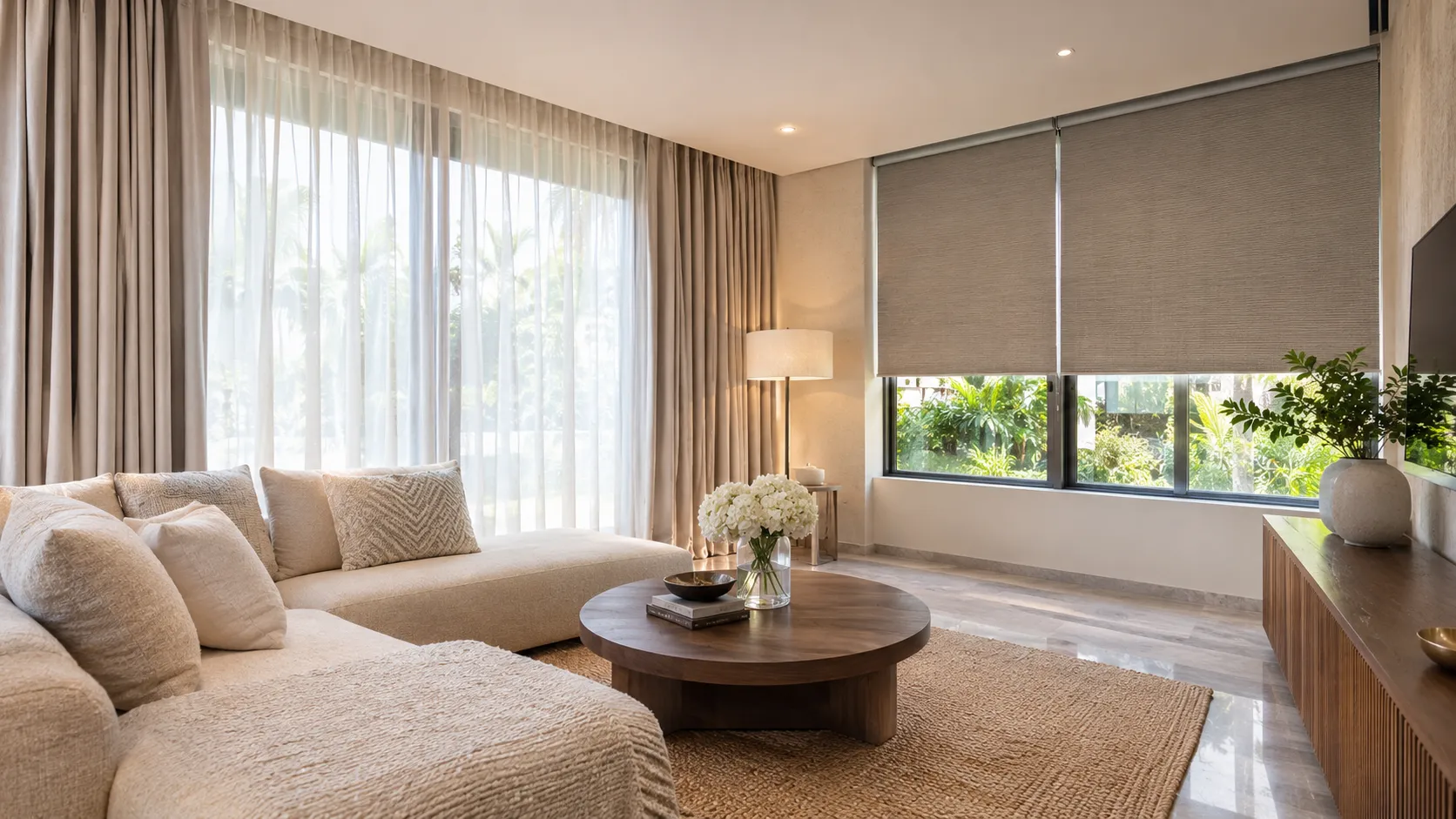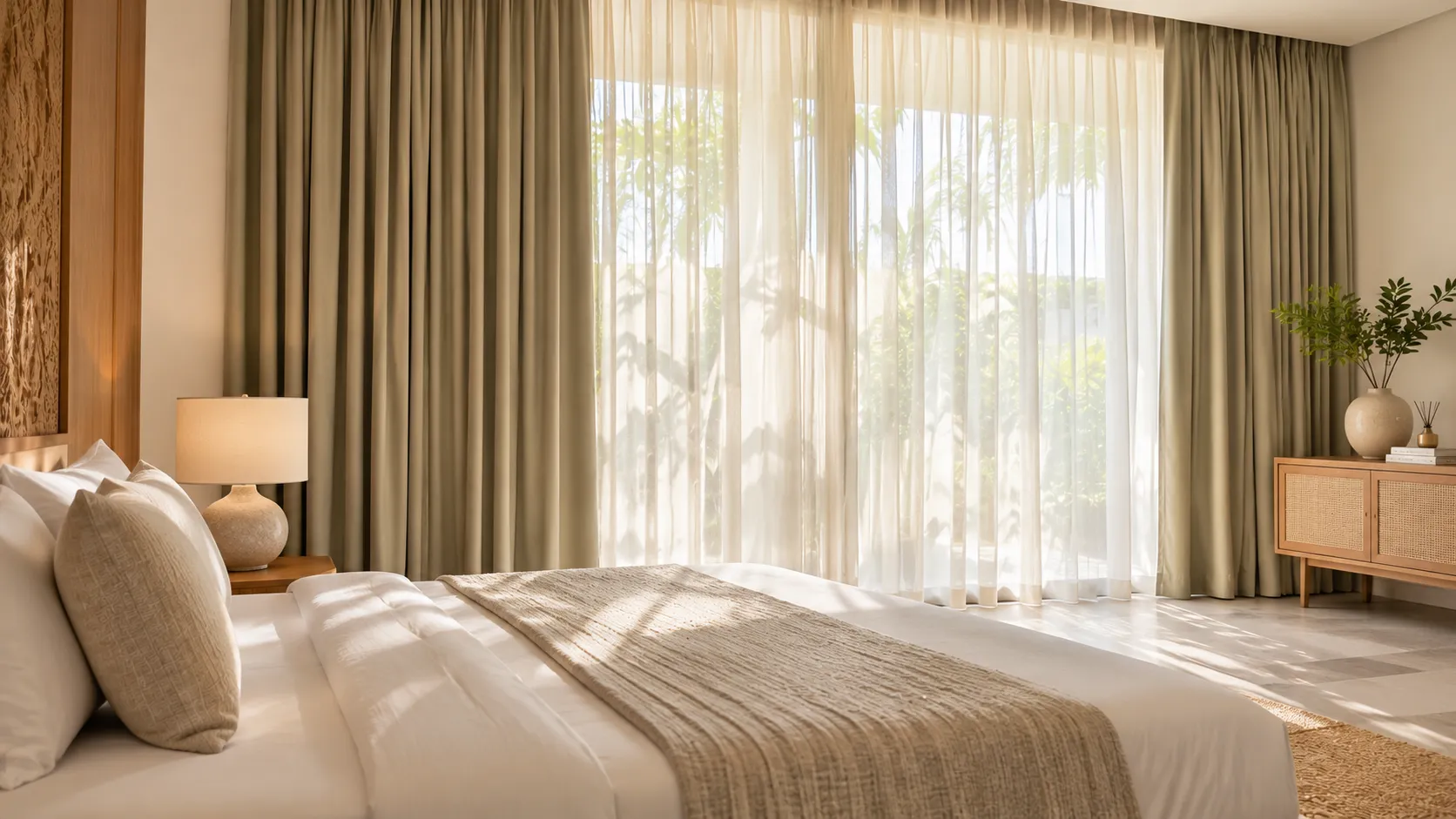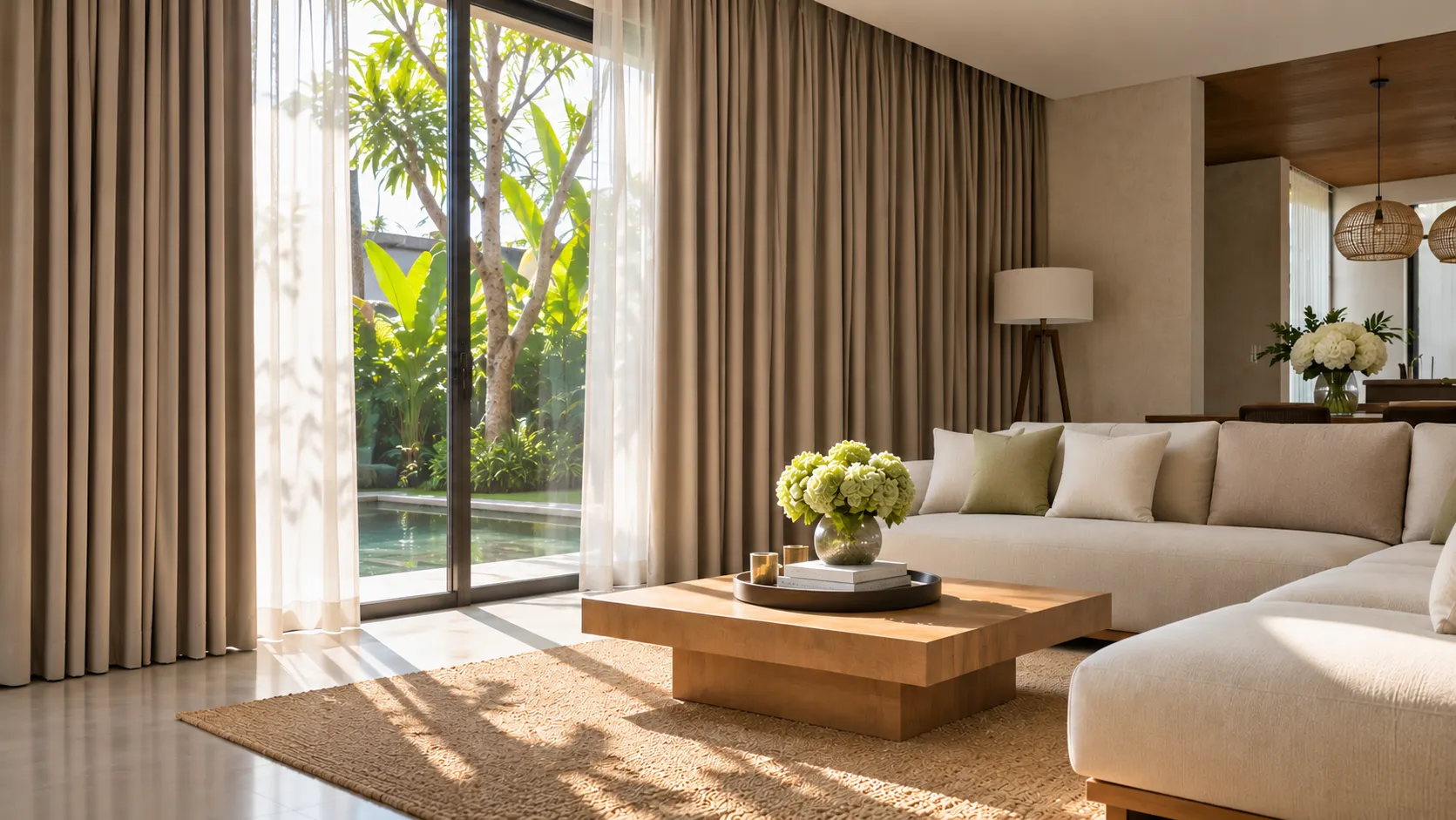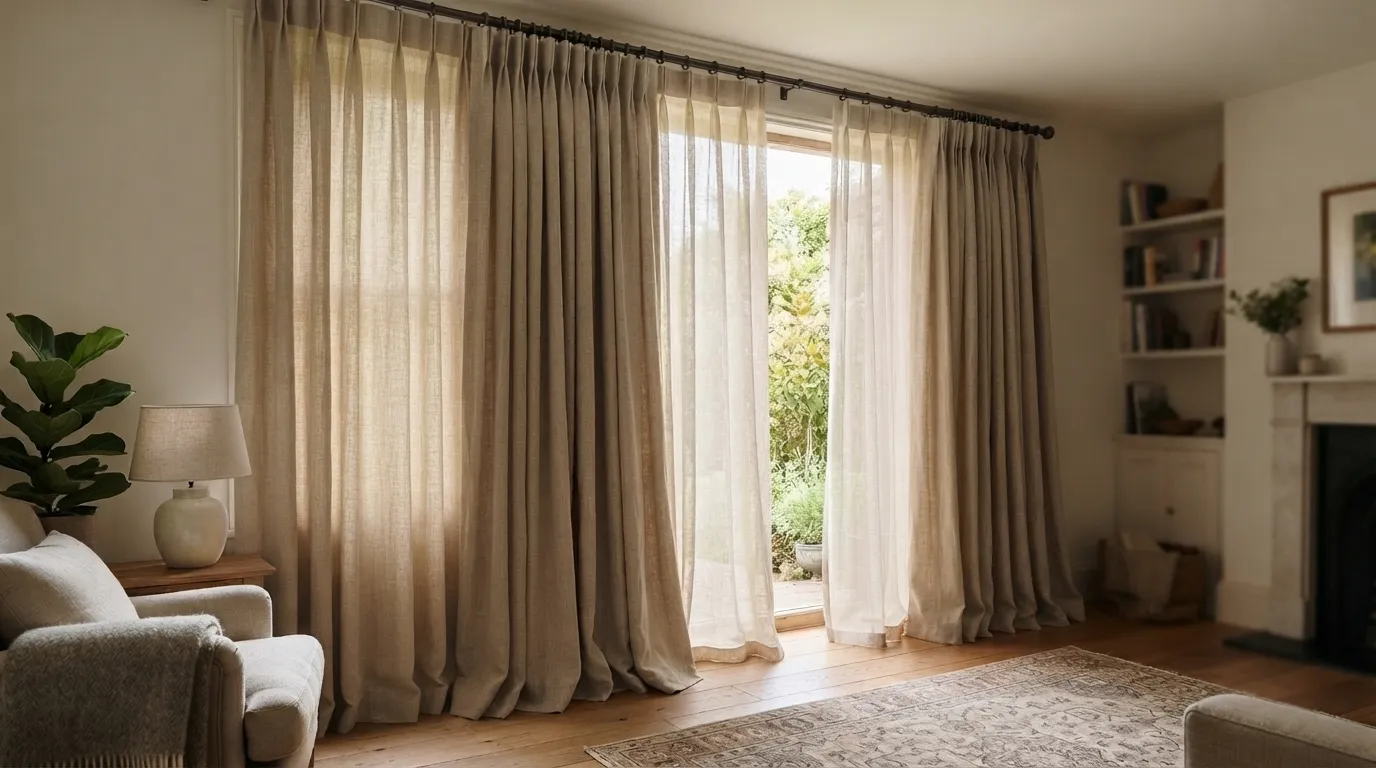
Curtain Fabric Types and Lining Options: Texture Selection, Opacity Control, and Longevity Factors
Crafting high-end custom drapery requires understanding how face fabric fibers interact with specialized secondary lining backings. The combination of face textile and lining determines the drape’s visual texture, light opacity, thermal insulation, acoustic performance, and overall lifespan.
Here is an expert masterclass on selecting curtain fabric types and pairing them with the correct lining options.
1. Primary Face Fabric Fiber Characteristics
- Natural Flax Linen: Renowned for its raw slubbed texture and airy breathability. Naturally relaxes into graceful folds, perfect for Japandi, coastal, and tropical modern aesthetics.
- Rich Cotton Weaves: Offers smooth matte finishes and structured draping pliability, suitable for classic and contemporary interiors.
- Tactile Velvet: Dense pile fabric delivering luxurious weight, rich acoustic dampening, and opulent light absorption for master suites and formal dining rooms.
- High-Performance Polyester Blends: Engineered for exceptional dimensional stability, wrinkle resistance, stain repellency, and colorfastness under sunlight.
2. Secondary Drapery Lining Categories Explained
Attaching a secondary lining behind your face fabric provides essential functional enhancements:
Standard Cotton/Satinette Lining: Protects delicate face fabrics from direct UV sun damage and provides a clean, uniform white appearance from the exterior building facade.
Thermal Interlining: Adds a soft brushed flannel layer between face fabric and lining, creating a plush padded volume while increasing thermal insulation and acoustic sound absorption.
3-Pass Coated Blackout Lining: Features an acrylic layer that blocks 100% of light penetration, providing total darkness and maximum thermal barrier defense.
3. Longevity Factors and Textile Care
To maximize drapery lifespan, always specify UV-resistant linings for windows exposed to direct solar radiation. Regular gentle vacuuming using a soft brush attachment removes surface dust before it settles into fabric fibers, preserving vibrant colors and textile hygiene for years to come.