Curtain Hook Installation: Hardware Mounting Guide, Proper Pleat Placement, and Heavy Fabric Weight Support
The architectural grace of custom drapery relies heavily on the precision of its hanging hardware. While selecting luxury textiles and correct track lengths is fundamental, the meticulous execution of curtain hook installation determines whether your drapes fall in crisp, uniform folds or sag unevenly under their own weight. Professional drapery fitters understand that proper pin spacing, pleat engagement, and secure hardware weight distribution are critical to achieving a flawless high-end finish in luxury residential and commercial properties.
Whether you are styling a contemporary villa in Canggu, a chic coastal residence in Seminyak, or an expansive estate in Ubud, mastering hardware mounting standards guarantees long-term mechanical reliability and visual elegance.
1. Understanding Curtain Hook Types and Pleat Headings
Before inserting hardware, identify your drapery header style. Different pleating configurations require specific hook types to maintain correct tension and wave projection:
- S-Fold / Ripplefold Carriers: Utilize specialized snap-tapes and adjustable carrier cords built directly into ceiling tracks, eliminating traditional pin hooks entirely.
- Pinch Pleat (French Pleat) Hooks: Fixed metal pin hooks inserted into designated pockets behind sewn pleats, offering structured, formal heading lines.
- Euro Pleat / Goblet Pleat Hooks: Positioned lower behind the pleat neck to allow the cylindrical goblet head to stand proud above the track channel.
2. Professional Pin Placement Rules for Balanced Weight Distribution
Incorrect pin height placement causes drapes to either scrape against track channels or droop below the bottom track edge, exposing unwanted mounting hardware. Follow these professional spacing rules:
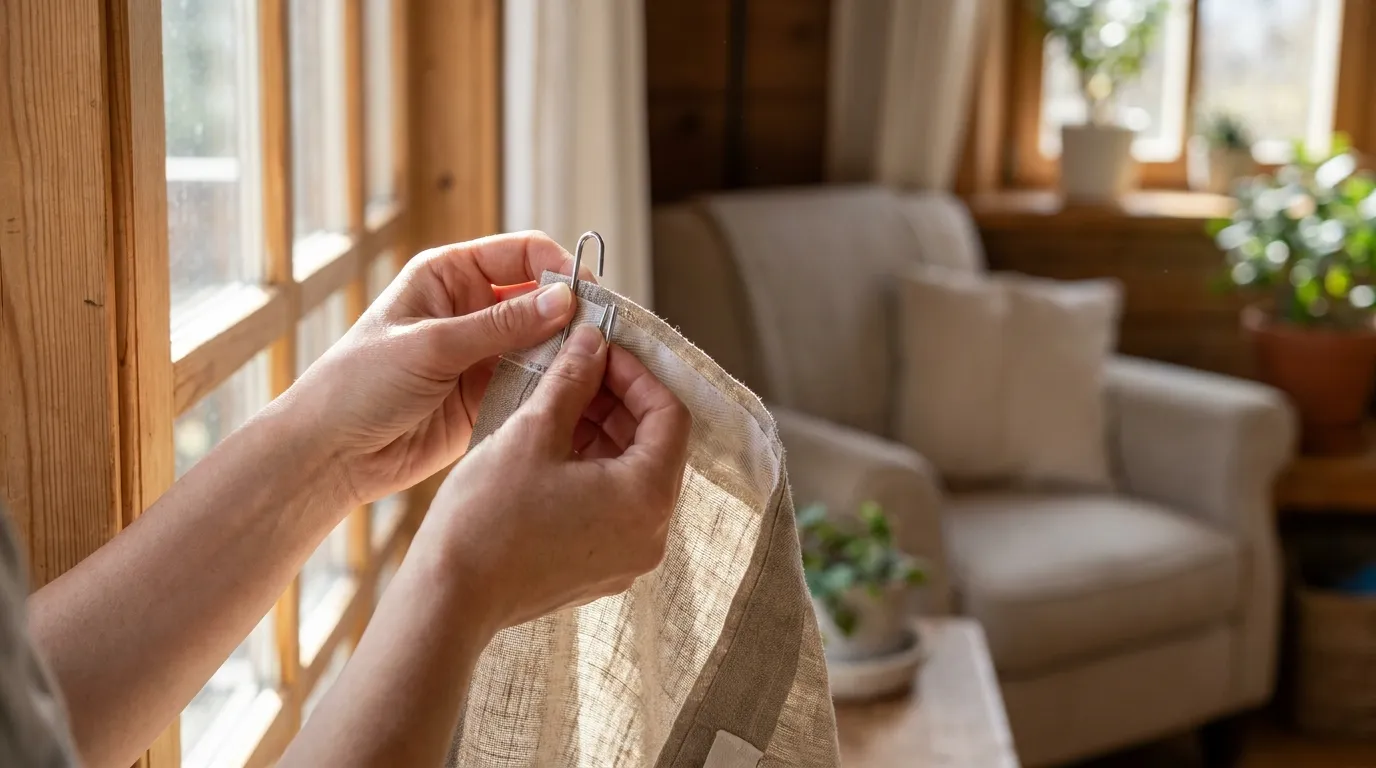
- The 1-Centimeter Rule: Insert pin hooks approximately 1 centimeter below the top edge of the heading tape for standard face-mounted tracks, ensuring the fabric conceals the glider eyelets completely.
- Even Interval Spacing: Space pin hooks evenly across the heading tape (typically every 4 to 6 pockets) to prevent fabric sagging between suspension points.
- Heavy Fabric Reinforcement: For heavy velvet or multi-layer blackout drapes, add extra support hooks near leading edges and end returns to maintain structural tension.
3. Hardware Mounting Standards for Heavy Fabric Support
Heavy textiles demand robust structural anchorage. When mounting tracks or rods into concrete lintels or gypsum ceiling structures, utilize heavy-duty wall anchors, stainless steel toggle bolts, and reinforced brackets spaced no more than 50 cm apart. This prevents track bowing under continuous fabric tension.
4. Expert Installation Standards with Almeers Living
Executing precise hardware installation requires specialized technical skill and equipment. As a trusted window treatment specialist in Bali, Almeers Living provides comprehensive turn-key installation services—ensuring every hook, track, and panel is mounted to exacting international standards across your property.