1. What Makes Curtains Feel Minimalist?
Minimalist curtain design is about clarity rather than having no decoration. The fabric, colour, folds, track, and finished length should work together as one quiet architectural element. A well-chosen curtain can frame a window and soften a hard surface while remaining visually understated.
Start with the character of the room. Look at the window proportions, ceiling height, wall finish, flooring, furniture, and direction of natural light. In a room with strong architectural details, a plain fabric and concealed track may be enough. In a simpler room, a subtle woven texture can provide warmth and depth.
- Keep the silhouette clean: choose a consistent drop and avoid unnecessary decorative trims.
- Prioritise proportion: full-height curtains can make a room feel taller and more cohesive.
- Use texture selectively: a fine linen-look weave or soft matte finish adds interest without a busy pattern.
- Make hardware discreet: a slim or recessed track keeps attention on the overall room.
2. Choose Fabric for Texture and Light
Fabric determines how a curtain hangs, how much daylight enters, how private the room feels, and how the window looks when the curtain is closed. For minimalist interiors, tactile surfaces and restrained patterns often work better than prominent prints.
Linen and linen-look fabrics
Linen has a natural, relaxed texture that suits warm contemporary spaces. Its irregular weave can make a neutral room feel more inviting. Linen-look fabrics offer a similar visual direction, with options that may be easier to maintain or more consistent in appearance. Check the actual fabric composition, weight, drape, and care instructions rather than choosing by appearance alone.
Sheer and light-filtering fabrics
Sheers soften direct daylight and provide daytime screening, depending on the fabric, lighting conditions, and view from outside. They are useful where the aim is to keep a room bright while reducing glare and visual exposure. Sheers do not provide full privacy at night when interior lights are on.
Dimout and blackout fabrics
Dimout fabrics reduce incoming light but do not necessarily create a dark room. Blackout fabrics are designed to block light through the fabric itself; however, light can still enter around the sides, top, or bottom if the installation does not cover those gaps. For bedrooms and media rooms, consider the fabric together with track position, overlap, and side returns.
For tropical properties in Bali, consider the room’s exposure to sunlight, ventilation, humidity, and cleaning requirements. Ask for a physical sample because colour and texture can look different under daylight, warm lamps, and screen settings.
3. Build a Calm Colour Palette
Neutral colours are common in minimalist interiors because they complement a wide range of materials. Warm white, ivory, oatmeal, sand, beige, greige, and soft grey can create a quiet backdrop. The best choice is the one that relates naturally to the wall colour, floor, upholstery, and amount of daylight.
For a seamless appearance, select a curtain colour close to the wall tone. To create gentle definition, choose a shade slightly warmer or deeper than the wall. In a room with timber, stone, or rattan details, earthy neutrals can connect soft furnishings with natural finishes.
- Warm minimalism: ivory, oatmeal, sand, and warm beige.
- Cool minimalism: soft grey, stone, and muted off-white.
- Natural contemporary: flax, taupe, and muted earthy tones.
Request samples and compare them beside the wall and flooring at different times of day. A colour that appears neutral in a showroom may look more yellow, pink, or grey in the actual room.
4. Use Recessed and Discreet Curtain Tracks
Hardware has a significant effect on the finished look. A recessed curtain track is installed within a ceiling pocket or prepared ceiling detail, allowing the curtain to appear as though it emerges neatly from the ceiling. This approach supports a clean line and reduces visible hardware.
Recessed mounting is best planned during the design or renovation stage. The ceiling pocket must allow enough room for the selected track, runners, brackets, curtain hooks, and fabric movement. For a double-layer arrangement, such as sheer plus blackout, the pocket needs to accommodate both tracks and the required spacing.
When a recessed track is not possible
A slim ceiling-mounted track can still create a minimal appearance when installed straight and close to the ceiling. A wall-mounted track positioned high above the window can also visually increase the height of the opening. Choose a finish that blends with the ceiling or surrounding architecture.
Planning points
- Confirm the track type and dimensions before the ceiling detail is finalised.
- Check the required recess depth and width with the track supplier or installer.
- Allow sufficient clearance for curtain hooks, gliders, and fabric folds.
- For double tracks, confirm the distance between layers so the fabrics do not interfere.
- Plan access for maintenance and consider how the track will be supported.
Do not assume every track can fit every ceiling pocket. Confirm the exact hardware specification and installation detail before construction.
5. Select a Simple Curtain Heading
The heading controls the way the fabric gathers and falls. For minimalist spaces, the goal is usually an even, consistent rhythm rather than an elaborate decorative effect.
Wave or S-fold
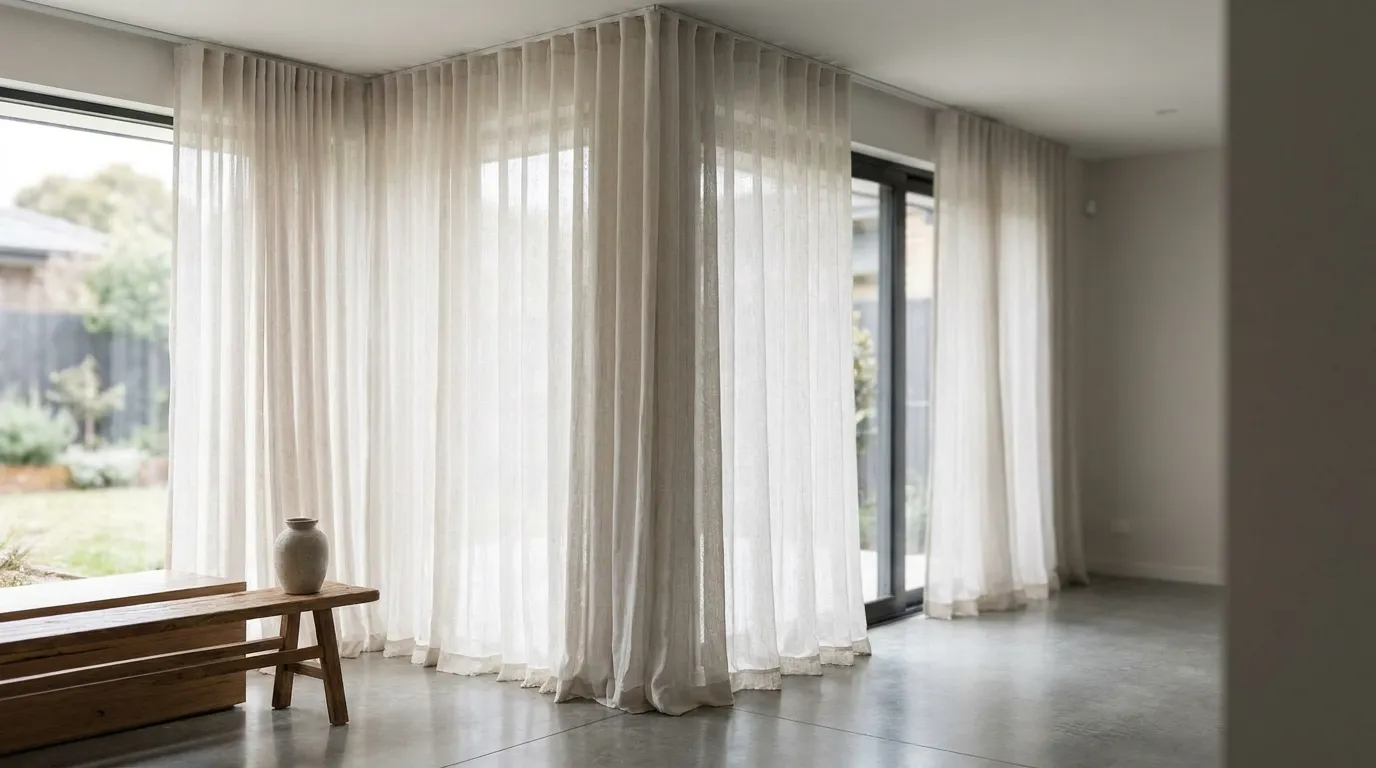
Wave-style headings create a repeated, flowing shape when paired with a compatible track and the correct spacing accessories. They are often selected for contemporary interiors because the folds look consistent when the curtain is open or closed. The finished wave depends on track compatibility, fabric suitability, fullness, and accurate installation.
Pencil pleat or pinch pleat
Pencil pleat provides a gathered appearance and can suit relaxed interiors. Pinch pleat creates a more tailored fold and may feel more formal. Either can work in a minimalist room when the fabric and proportions remain restrained.
Discuss the intended appearance with the curtain maker before production. A heading should be selected together with fabric weight, track system, desired fullness, and available stacking space.
6. Create Subtle, Layered Light Diffusion
Light is central to minimalist interiors. Rather than treating curtains only as decoration, plan them as a system for managing daylight, glare, privacy, and darkness throughout the day.
A popular solution is a double-layer arrangement: a sheer curtain for daytime light diffusion and a dimout or blackout curtain for stronger light control and privacy when needed. The layers can be used independently, giving the room more flexibility without introducing visual complexity.
- Sheer layer: softens daylight and helps reduce direct views during the day, depending on conditions.
- Dimout layer: reduces brightness for resting areas while allowing some light through.
- Blackout layer: blocks light through the fabric and is useful for bedrooms or media spaces when paired with suitable coverage.
Consider the direction of the window. East-facing rooms receive morning sun, while west-facing rooms may experience stronger afternoon heat and glare. A fabric sample viewed in the actual room can help you assess the effect more accurately.
7. Minimalist Curtain Ideas for Each Room
Living room
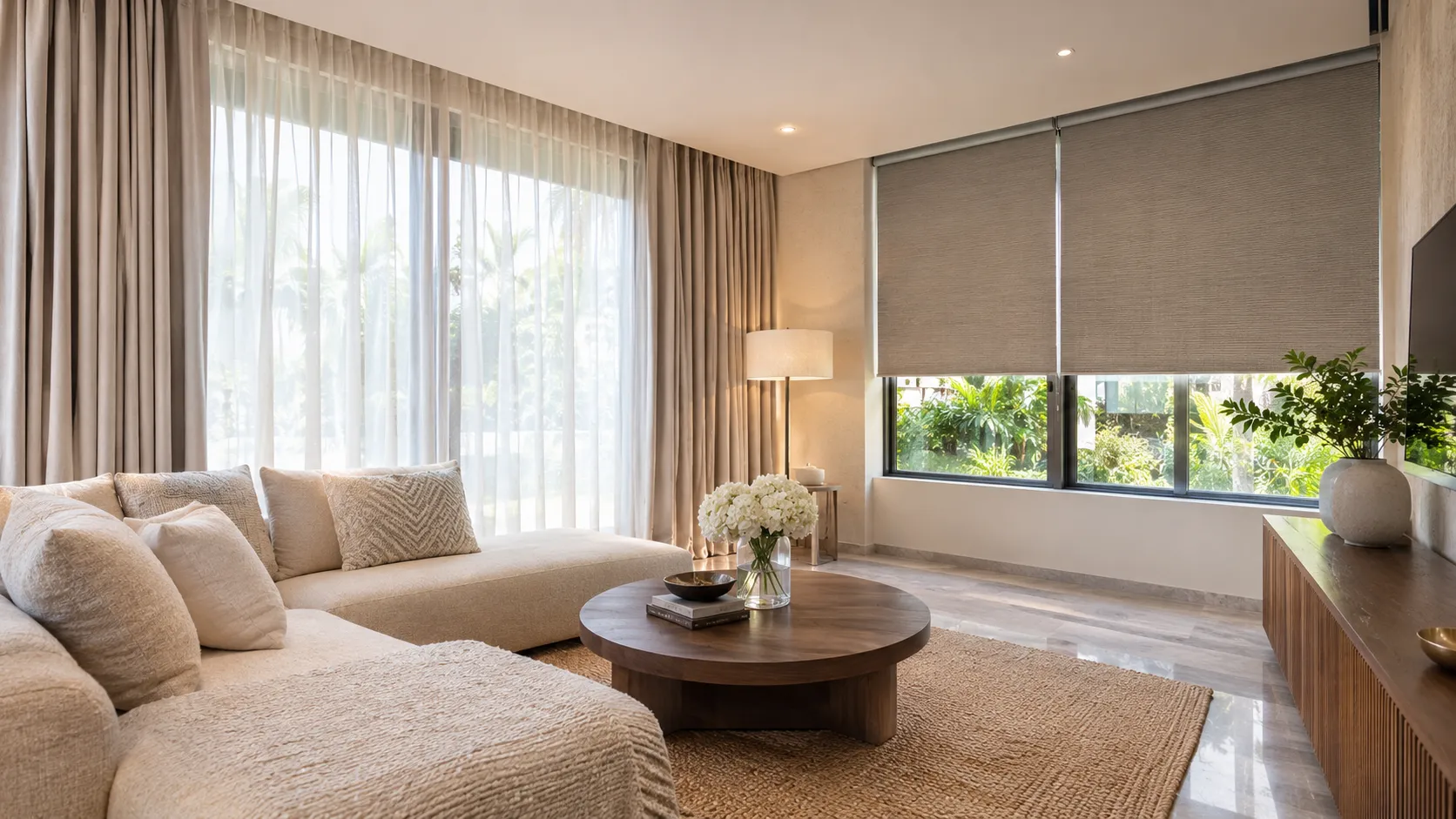
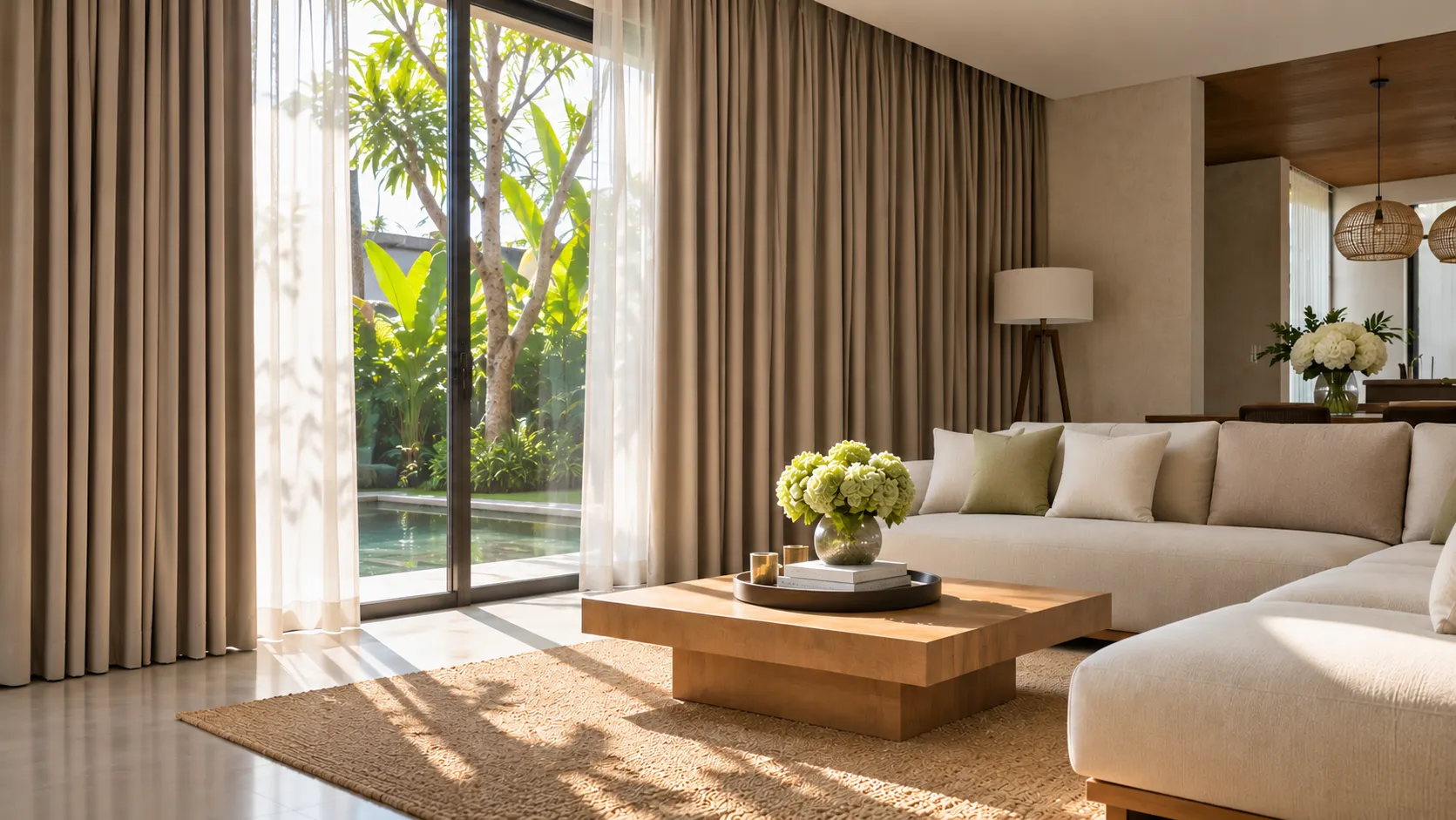
Use full-height sheers or a sheer-and-dimout combination to soften the window while keeping the space adaptable. A neutral woven texture can complement timber, stone, and simple upholstery. If the living room has large glazing, plan where the curtains will stack when open so they do not cover too much of the view.
Bedroom
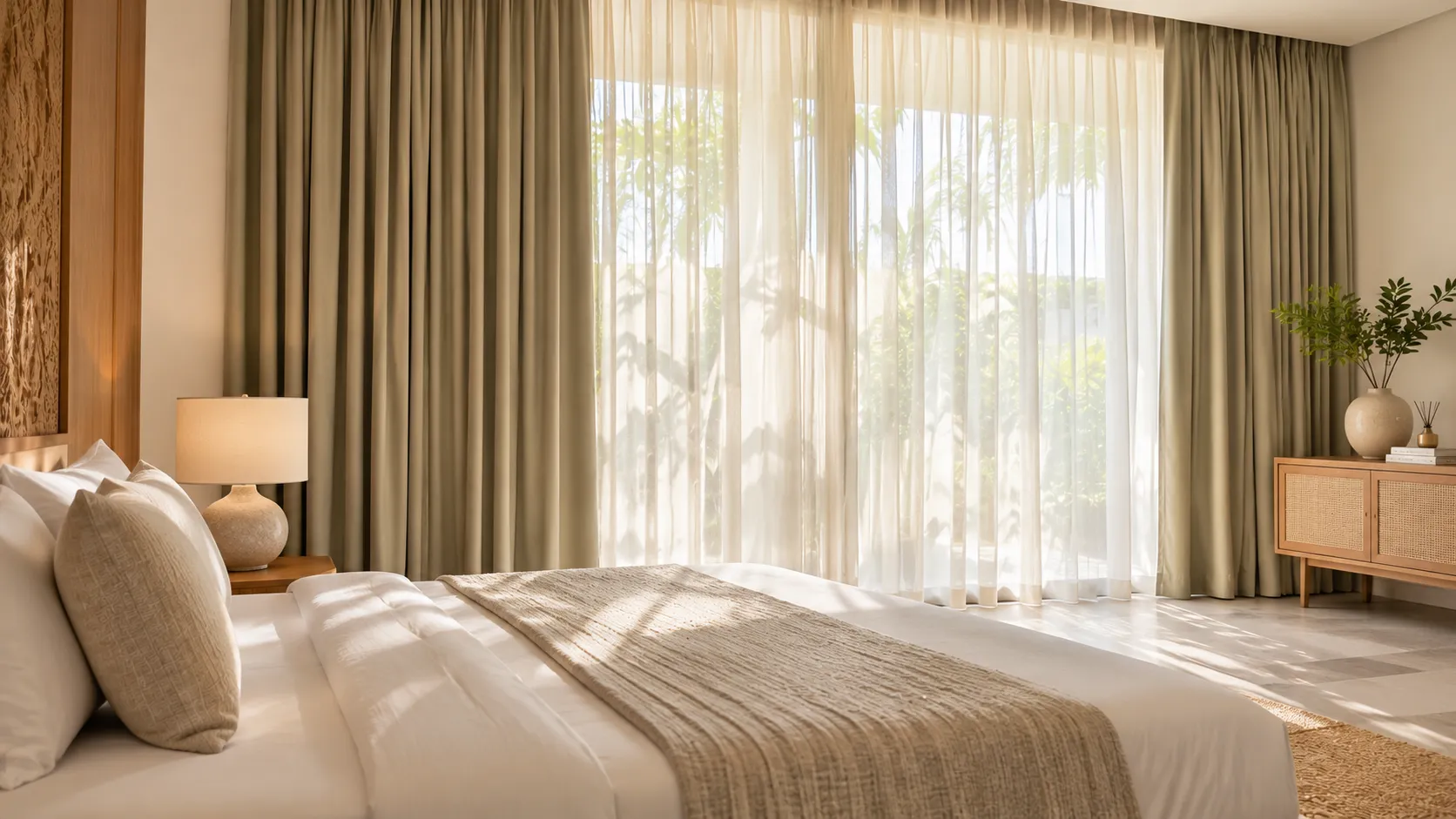
Choose a fabric opacity that supports the room’s sleeping requirements. A blackout layer can improve darkness, while a sheer layer provides softer daytime light. Pay attention to side coverage and the gap above the curtain because fabric performance alone does not guarantee a completely dark room.
Dining area
Keep the treatment simple and easy to operate. A light-filtering fabric can soften the atmosphere without competing with the dining table, lighting, or artwork. Consider how close the curtain is to chairs and other furniture.
Home office
Prioritise glare management and comfortable daylight. A sheer or light-filtering fabric may help diffuse bright light, while an additional layer can provide stronger control for video calls or screen use.
Villa and hospitality spaces
For villas and hotels, coordinate the curtain design across bedrooms and shared spaces while adjusting opacity to each room’s function. Select materials and hardware with maintenance, guest use, sunlight exposure, and replacement availability in mind.
8. Measure and Plan Carefully
Good proportions begin with accurate measurements. Decide whether the track will be ceiling-mounted, recessed, or wall-mounted before finalising curtain dimensions. Measure the full track width rather than relying only on the visible glass width, and confirm the intended finished drop from the correct reference point.
Also plan the curtain stack. When open, the fabric occupies space at the sides of the window. The amount depends on fabric thickness, heading style, fullness, and track configuration. This is especially important for sliding doors and wide windows where preserving the opening and view matters.
Use these guides when preparing measurements:
- Curtain Measuring Guide — for curtain width, drop, and installation measurements.
- Shade Measuring Guide — for blinds and window shades.
- Curtain Stacking Calculator — to estimate the space curtains may occupy when open.
For complex glazing, recessed ceiling pockets, arched windows, or double-layer systems, a professional site measurement is recommended before production.
9. Common Minimalist Curtain Mistakes to Avoid
- Choosing fabric from a screen alone: request a physical sample and review it in the room’s lighting.
- Using an undersized track: insufficient track capacity or poor positioning can affect movement and appearance.
- Ignoring the stack: curtains may cover glazing or obstruct a door when opened if stack space is not planned.
- Assuming blackout means zero light: gaps around the installation can still allow light into the room.
- Overcomplicating the palette: too many competing colours and textures can weaken the calm visual effect.
- Planning a ceiling recess too late: recessed tracks need coordination with ceiling construction and hardware specifications.
- Ignoring maintenance: choose fabrics and finishes that suit the property’s exposure and cleaning routine.
10. Frequently Asked Questions
What type of curtains look best in a minimalist interior?
Plain or subtly textured fabrics in restrained colours are a reliable starting point. Linen-look, sheer, dimout, and blackout fabrics can all work when selected for the room’s function and paired with a simple heading.
Are recessed curtain tracks worth considering?
Yes, when planned early and detailed correctly. They conceal much of the hardware and create a neat ceiling line. They require coordination between the ceiling design, track dimensions, supports, and installation access.
Are wave curtains suitable for minimalist homes?
Wave curtains are often suitable because they create regular, flowing folds. The result depends on using a compatible track, suitable fabric, correct fullness, and accurate installation.
Should minimalist curtains match the wall colour?
They do not have to match exactly. A close tone creates a seamless effect, while a slightly warmer or deeper neutral adds gentle contrast. Compare samples with the wall and flooring before deciding.
Can sheer curtains provide privacy at night?
Usually not when the room is illuminated and it is darker outside. If night-time privacy is important, consider adding a dimout or blackout layer.
How high should minimalist curtains be installed?
Ceiling-mounted or high-mounted tracks often create a taller, more continuous appearance. The correct position depends on the ceiling, window, track type, and available space for the curtain to operate.
Bring the Details Together
The strongest minimalist curtain designs combine thoughtful fabric selection, a restrained colour palette, clean folds, discreet hardware, and carefully planned light control. Recessed tracks can create an especially seamless result, but a well-positioned slim ceiling track can also look refined when a recess is not practical.
At Almeers Living, we help homeowners, villa owners, and hospitality teams in Bali select custom curtains and blinds based on the character and practical needs of each space. Explore our curtain and blinds collection, or visit our design journal for more window-treatment ideas.