Curtain Selection for Glass Sliding Doors: The Mistakes to Avoid — Smooth Track Clearance, High-Traffic Fabric Durability, and Stacking Space Calculations
Designing and outfitting world-class residential estates, luxury rental villas, and boutique hospitality resorts across Bali—from the vibrant coastal corridors of Canggu, Seminyak, and Umalas to the lush jungle river valleys of Ubud and dramatic clifftop sanctuaries in Uluwatu—demands an uncompromising focus on functional architectural design. Expansive glass sliding doors are the defining signature of modern tropical resort architecture, seamlessly connecting air-conditioned indoor living lounges with infinity pools, timber sun decks, and tropical gardens. However, outfitting massive sliding glass spans with drapery frequently leads to severe functional and aesthetic errors if technical design rules are overlooked. Property owners, interior architects, and hospitality developers frequently search for authoritative guidance on curtain selection for glass sliding doors: the mistakes to avoid (mastering smooth track clearance, high-traffic fabric durability, and stacking space calculations) to ensure long-term operational ease and uncompromised aesthetic luxury.
Selecting draperies for wide glass sliders involves far more than picking decorative face fabrics or matching wall colors. It requires an integrated engineering approach: calculating precise fabric stack allowances so pulled-back panels do not block active door openings, engineering heavy-duty dual tracks that withstand coastal wind loads, specifying high-traffic tear-resistant textiles, applying non-toxic anti-mold treatments, and integrating whisper-quiet smart motorization. In this comprehensive editorial masterclass, we break down the most critical curtain selection mistakes and provide professional engineering standards to help you design a resort-grade entrance.
1. Mistake #1: Underestimating Stacking Space Calculations
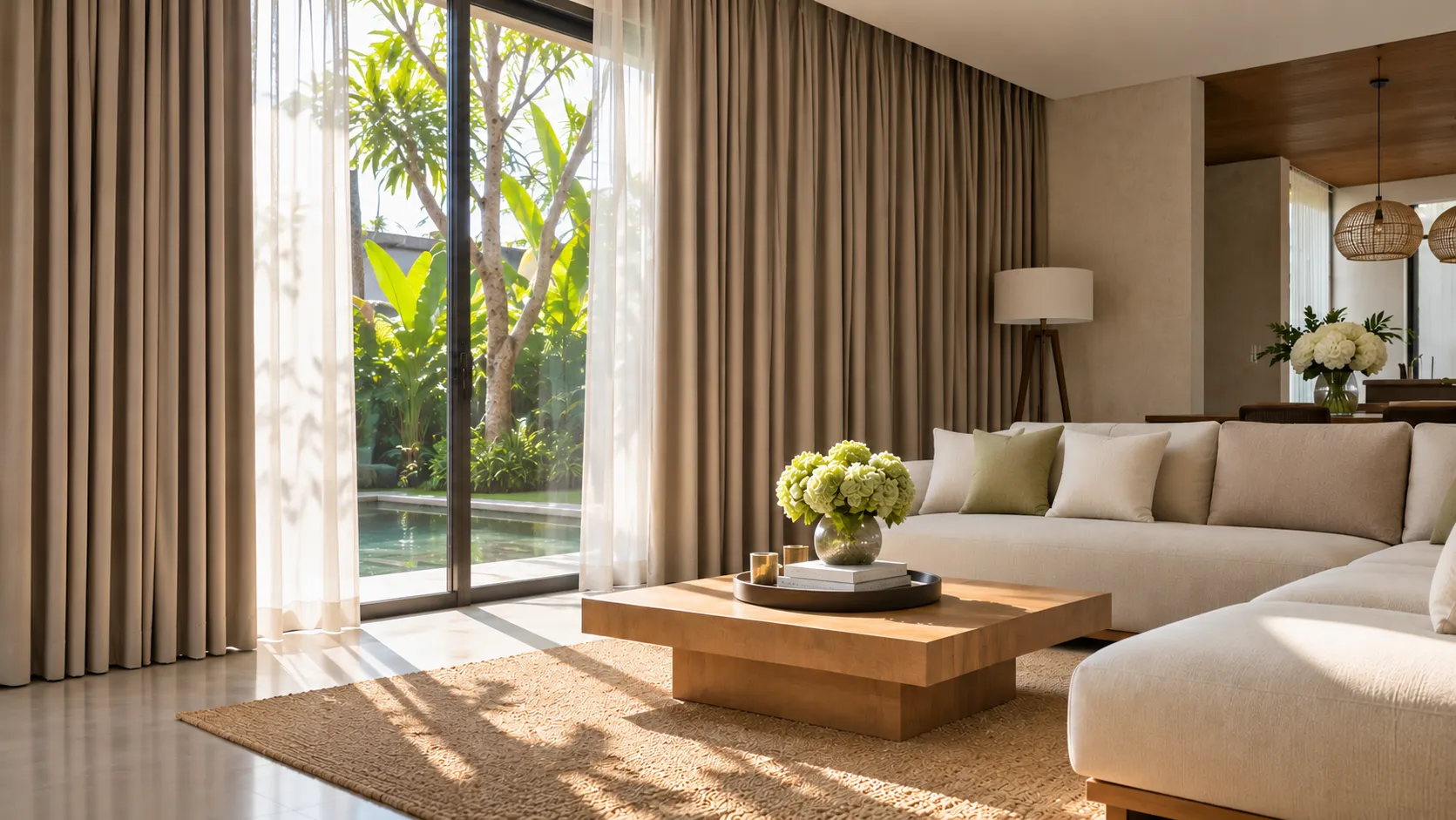
The single most frequent and disruptive architectural error in sliding door drapery design is underestimating **fabric stack-back**—the total physical width that drawn curtain panels occupy when fully opened. When interior designers fail to extend track channels far enough past the glass frame onto adjacent masonry walls, stacked drapery panels overlap active sliding door frames, restricting physical walkway clearance, trapping guests, and blocking outdoor garden views.
- The 30% Stacking Rule: Standard S-fold (ripplefold) curtain panels require roughly 30% of the total window width in stack-back space. For example, a 4-meter wide sliding door span requires an additional 60 cm of track extension on each side (or 120 cm on one side for single-one-way draws) to park fabric completely clear of the glass opening.
- One-Way Draw vs. Center Split Planning: For sliding doors that open from one side only, specify a one-way draw track that parks all fabric on the fixed glass side. For multi-panel telescopic sliding doors, a center-split double draw balances symmetry while keeping walkways unobstructed. Architects and project managers can calculate exact fabric stack allowances using our digital stacking calculator.
2. Mistake #2: Ignoring Smooth Track Clearance and Floor Obstructions
Sliding doors serve as primary pedestrian walkways between indoor living rooms and outdoor pool terraces. Window treatments must open and close smoothly without catching on door handles, floor tracks, or frame latches:
- Track Projection and Wall Clearance: Tracks must be mounted with sufficient outward clearance from the wall and window frame. If brackets are mounted too close, thick thermal blackout drapes or S-fold waves will rub against door handles, causing friction and fabric snagging.
- The 1 cm Floor Hover Clearance Standard: Tailor sliding door curtains to hover precisely **1 cm above finished floor surfaces**. Letting drapes drag directly across the floor causes them to catch on sliding door tracks, collect dirt, or absorb moisture during routine terrace washing. Step-by-step measurement protocols can be verified on our curtain measuring guide and dedicated shade measuring guide.
3. Mistake #3: Specifying Low-Durability Fabrics in High-Traffic Zones
Glass sliding doors experience heavy daily physical interaction. Choosing delicate, low-density fabrics in high-traffic family lounges or rental villas leads to rapid wear and tear:
- High-Traffic Fabric Durability: Avoid ultra-fragile silks or loosely woven unspun yarns in high-traffic sliding door zones. Specify high-tensile solution-dyed acrylics, heavy linen-blend slubs, or durable polyester-cotton composites engineered to withstand frequent hand manipulation, pet contact, and sliding friction. Explore fabric swatches starting at Rp 60.000/m on our products page.
- Continuous Lead Weight Hems: To prevent light ocean winds from blowing sheer drapes outward into sliding door mechanisms, high-performance draperies utilize heavy continuous lead weight tapes encased inside bottom hems, maintaining straight, vertical S-waves at all times.
4. Mistake #4: Neglecting Dual-Track Day-to-Night Layering
Relying on a single layer of fabric across wide sliding doors forces a compromise between privacy and daylight. Luxury villas and hotels require double-track drapery configurations:
- Daytime Layer (Translucent Sheer Voiles): Positioned on the track closest to the room interior, lightweight slubbed linen sheers filter harsh sun glare into a soft ambient glow, maintain daytime privacy, and allow sea breezes to circulate while keeping insects out.
- Nighttime & Thermal Layer (100% Coated Blackout): Positioned on the secondary track, dense multi-pass acrylic coated blackout drapes block 100% of light transmission, seal out evening pool glare, absorb room acoustic echo, and reflect radiant heat outward (starting at Rp 60.000/m to Rp 110.000/m).
5. Mistake #5: Failing to Integrate Ceiling Recess Pelmet Pockets
In modern minimalist, Japandi, and contemporary tropical villa architecture, visible tracks and mounting brackets disrupt clean interior lines. Interior architects insist on **ceiling recess mounting**, embedding heavy-duty aluminum tracks flush inside concealed ceiling pelmet pockets built during early framing phases:
- Pelmet Pocket Width Dimensions: A double S-fold drapery system installed over wide sliding doors requires a minimum internal pelmet pocket width of **20 cm to 25 cm**. This provides sufficient lateral clearance for both fullness wave layers to glide smoothly without rubbing against gypsum drywall boundaries.
- Pelmet Pocket Depth Dimensions: Pelmet cavities should be framed with a depth of **10 cm to 15 cm** to conceal track channels, master gliders, motor drives, and curtain heading tapes completely from eye-level view. Complete spatial tolerances can be reviewed on our valances and cornices measuring guide.
6. Mistake #6: Overlooking Tropical Climate Resilience and Anti-Mold Protection
In Bali’s humid tropical environment, open sliding doors allow humid outdoor air to enter air-conditioned interior lounges. This temperature contrast creates heavy condensation along sliding glass frames and lower door tracks. Untreated drapery fabrics hanging near sliding glass absorb dampness, leading to dark mildew spots, fiber rotting, and unpleasant damp odors.
To preserve long-term fabric cleanliness and indoor hygiene, high-performance draperies supplied by Almeers Living feature advanced **Anti-Mold** (anti-jamur) technology. This specialized antimicrobial treatment creates an active hydrophobic shield that repels moisture droplets, preventing fungal spore germination and keeping your villa draperies clean, allergen-free, and pristine season after season.
7. Mistake #7: Omitting Smart Motorization for Wide Sliding Spans
Manually drawing heavy, multi-layer draperies across 5-meter to 8-meter wide villa sliding spans can be cumbersome for guests and house staff, often resulting in fabric tugging and hem damage. Upgrading sliding door curtains to a motorized track system powered by whisper-quiet DC actuators offers ultimate resort convenience.
Motorized tracks integrate seamlessly with touch remotes, wall keypads, smartphone apps, and smart home systems like Apple HomeKit, Google Assistant, Amazon Alexa, and Control4. Automated solar scheduling closes blackout drapes during peak afternoon heat hours (11:00 AM – 3:00 PM), maintaining cool indoor temperatures passively before guests return from beach excursions.
8. Elevate Your Villa and Hotel Projects with Almeers Living
Outfitting glass sliding doors in luxury villas and hospitality properties requires avoiding common design pitfalls through expert spatial planning, heavy-duty mechanical engineering, and climate-resilient fabric tailoring. Partnering with an experienced local specialist guarantees precise stack-back calculations, smooth track clearances, and long-term operational durability. As a recognized premier window treatment specialist in Bali, Almeers Living offers complete turnkey execution—from complimentary laser site surveys and custom fabric sampling to professional motorized installation across the island.
Transform your resort or villa property into a seamless indoor-outdoor sanctuary today. Browse our full range of custom drapery collections, dual-track hardware, and automated sliding door systems on our products page to schedule your personalized on-site consultation with Bali’s trusted window experts.