1. Understanding the Modern Balinese Home
Modern Balinese architecture often combines contemporary planning with materials and spatial ideas associated with tropical living. Open-plan rooms, broad glazing, timber details, stone surfaces, shaded outdoor areas and garden-facing doors are common design features. The result can feel calm and connected to nature, but it also creates specific requirements for window treatments.
Curtains in these homes are part of the overall architectural composition. They may frame a garden view, soften a tall glass opening, add privacy to a bedroom or reduce direct daylight in a living area. Their appearance should relate to the surrounding materials, while their construction should suit the practical conditions of the room.
A successful scheme avoids treating every window identically. A bedroom facing a neighbouring property may need a different combination from a living room opening onto a private garden. A west-facing window exposed to strong afternoon sun may require a different opacity from a shaded opening beneath a deep roof overhang.
Begin by observing the room throughout the day. Notice where sunlight enters, which doors are regularly opened, where privacy is needed and how furniture is arranged. This simple assessment provides a better foundation for selecting curtains than choosing fabric based on a photograph alone.
2. Integrating Curtains with Indoor-Outdoor Airflow
Indoor-outdoor living is an important part of many Balinese homes. Sliding doors, folding doors and large openings can connect living spaces with terraces, courtyards, pools and gardens. Curtains should support this relationship rather than obstruct the way people move through the space.
Keep doorways and circulation clear
Before selecting a curtain system, identify the active door panels and the direction in which they open or slide. Consider where the curtain will stack when fully open, whether it will cover a handle or access point, and whether people can pass through comfortably. A wide opening may need a track that extends beyond the glazed area so the fabric can be drawn clear of the main view and access route.
Stack-back space is especially important for large sliding doors. Thick or heavily lined curtains can occupy more space when gathered than lightweight sheers. The fabric width, fullness, heading style and track arrangement all affect the final stack. A stacking calculation and a site assessment can help establish whether the proposed arrangement is practical.
Do not confuse a sheer curtain with a ventilation system
A lightweight sheer may move gently when air passes through an open doorway, but it does not create ventilation by itself. Actual airflow depends on the building layout, opening sizes, prevailing conditions, insect screens and other factors. Curtains should be selected to coexist with the ventilation strategy, not as a substitute for it.
When doors are frequently left open, consider how the curtain behaves in moving air. Very lightweight fabric may billow, twist or move into walkways. Suitable weights, side returns, discreet holdbacks or an appropriate track arrangement may help manage movement, depending on the opening and design. Avoid fittings that create trip hazards or interfere with door operation.
Consider screens, blinds and curtains together
Some openings need insect screening, privacy and decorative softness at the same time. These functions may be best handled by separate systems. For example, a fixed or retractable insect screen can support ventilation while a curtain provides the decorative layer and a blind offers additional light control. The best combination depends on the opening, the building’s existing provisions and the owner’s priorities.
3. Pairing Curtains with Teak and Natural Finishes
Teak is often used in tropical interiors for furniture, doors, frames and decorative details. Its warm colour and visible grain can create a strong natural foundation for a room. Curtains can complement teak by repeating its warmth, balancing its visual weight or introducing a subtle contrast.
Warm white, ivory, oatmeal, sand, taupe and muted earthy shades often sit comfortably beside teak. These colours can create a quiet transition between timber, stone, plaster and textiles. Deeper olive, charcoal, rust or muted blue can also work when the room needs a stronger accent, especially if the colour appears elsewhere in the interior.
Coordinate undertones, not just colour names
Two fabrics described as beige can look very different beside the same timber. One may have a yellow undertone, another a pink or grey undertone. Compare fabric samples directly with the teak finish, flooring and wall colour under the room’s natural light. A sample viewed in a showroom may appear different in a room with warm timber and strong tropical daylight.
Balance grain and weave
Teak already contributes a visible natural pattern through its grain. If the room contains prominent timber surfaces, a quiet curtain texture may create a more balanced result than a large, high-contrast print. In a simpler room with limited surface detail, a botanical motif or woven pattern can introduce additional character.
Think about texture as a composition. Smooth timber, rough stone, woven rattan and soft fabric can complement one another when their scale and contrast are controlled. Repeating every material in every room is unnecessary; a consistent palette and a few related textures are often enough to make the interior feel cohesive.
4. Choosing Tropical Natural Fibres and Fabric Blends
Natural fibres are appealing in tropical interiors because of their tactile surfaces and relaxed appearance. Linen, cotton, hemp and selected blends can provide a natural visual character that works well with timber and woven materials. However, the phrase “natural fabric” does not automatically mean that a textile is suitable for every Bali room or maintenance condition.
| Fabric type | Appearance and character | Points to check |
|---|---|---|
| Linen | Relaxed texture, natural irregularity and soft drape | Composition, crease behaviour, care instructions, shrinkage guidance and lining requirements. |
| Cotton | Versatile surface with a wide range of weights and finishes | Colourfastness, possible shrinkage, sunlight exposure and cleaning instructions. |
| Hemp or hemp blends | Distinctive natural texture and a more structured visual character in some constructions | Actual fibre content, availability, drape, finish and care guidance. |
| Viscose or other regenerated-cellulose blends | Can provide a soft hand and fluid appearance | Specific fibre composition, moisture sensitivity, cleaning method and suitability for the intended location. |
| Polyester and mixed-fibre textiles | Available in many textures, colours and performance constructions | Fabric-specific breathability, heat exposure, durability, cleaning and environmental claims. |
| Linen-look or natural-look fabrics | Replicate the visual texture of natural fibres | Do not assume they contain linen; check the product composition and performance details. |
In humid environments, fabric selection should be paired with suitable ventilation and routine care. Some natural fibres can crease, shrink or respond sensitively to moisture and cleaning. The performance of a curtain depends on its exact fibre blend, weave, finish, lining, installation and room conditions.
For windows exposed to frequent moisture, splashing or limited ventilation, discuss the location with the supplier before choosing a natural textile. A fabric that looks beautiful in a dry bedroom may not be the most practical option beside a frequently used bathroom or an exposed outdoor opening.
Ask for the exact fibre composition rather than relying on broad descriptions such as “eco fabric”, “organic look” or “natural linen”. If sustainability is important to the project, request verifiable information about fibre content, manufacturing and relevant certifications rather than assuming these qualities from appearance.
5. Managing Tropical Sunlight, Heat and Privacy
Strong tropical daylight can make a room feel bright and connected to the outdoors, but direct sun may also create glare, increase solar heat entering through glazing and contribute to fading of some interior materials. Curtains help manage the light that passes through a window, although the result depends on the fabric, colour, lining, glazing, orientation and installation.
Choose opacity according to the window’s job
- Sheer curtains: Diffuse daylight and soften the view while maintaining a light, airy appearance. Privacy varies with the difference between indoor and outdoor light, so sheers should not be relied on for night-time privacy.
- Dimout curtains: Reduce incoming light more substantially than many decorative sheers and can provide a useful middle ground for bedrooms and living areas.
- Blackout curtains: Block light through the fabric when properly specified, but light can still enter around the top, sides, bottom and panel overlaps.
- Decorative unlined curtains: Can provide colour and texture while allowing more daylight through, depending on the fabric construction.
For rooms with intense sun, assess the time of day when glare becomes uncomfortable. A window facing the afternoon sun may need a different solution from one receiving soft morning light. In some projects, exterior shading, suitable glazing or blinds may be more effective for reducing solar heat gain than relying on curtains alone.
Colour also affects the visual experience. Pale fabrics can create a soft, bright atmosphere, while deeper colours may add contrast and visual weight. However, fabric colour alone does not establish a guaranteed thermal or UV performance. Ask for product-specific information when measurable performance is a project requirement.
6. Using Layered Curtains for Flexible Living
Layering is particularly useful in homes where a room changes function throughout the day. A living area may need filtered daylight in the morning, a clearer garden view during the afternoon and greater privacy in the evening. Two independent layers can make these transitions easier to manage.
A common two-layer arrangement
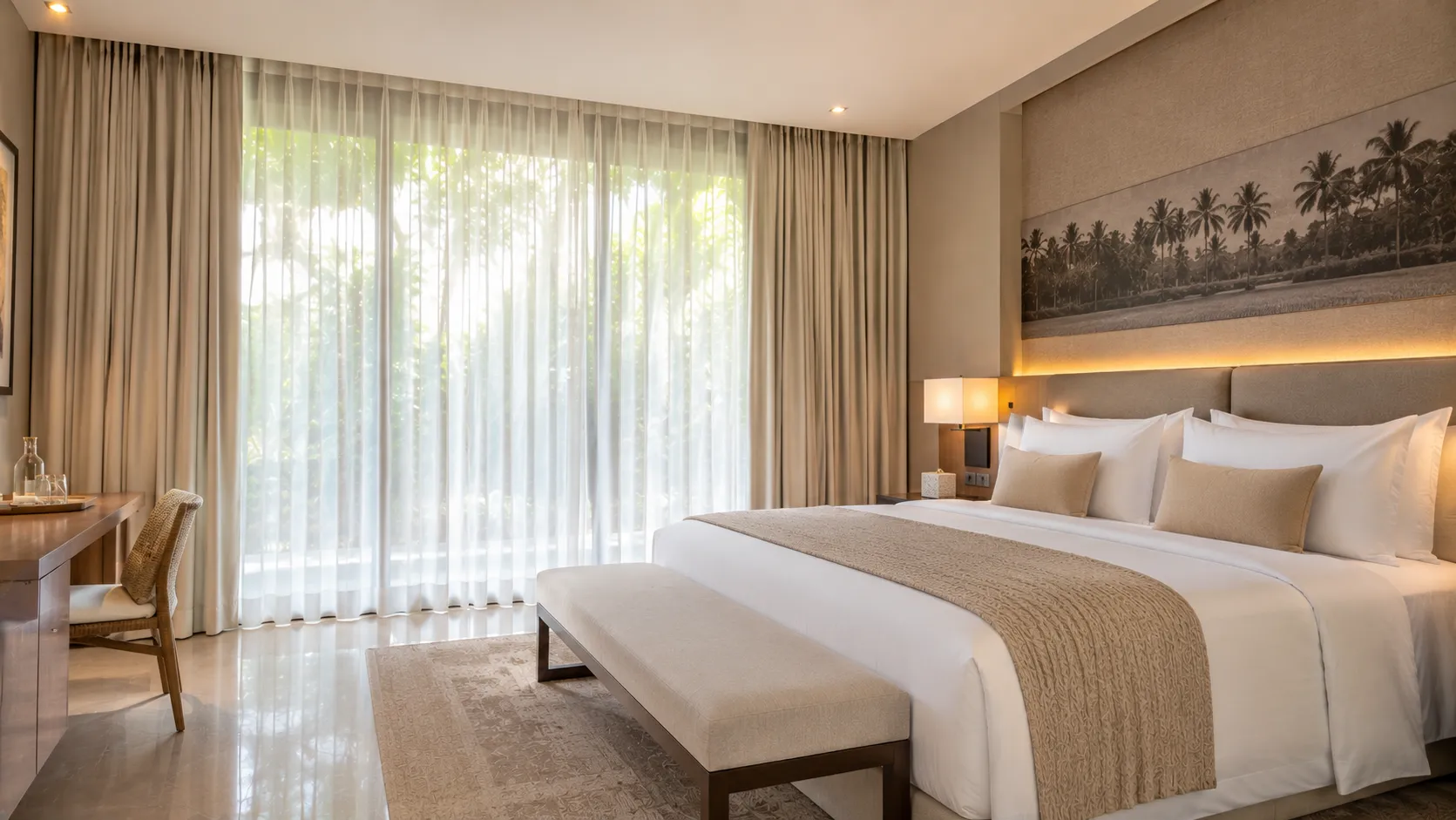
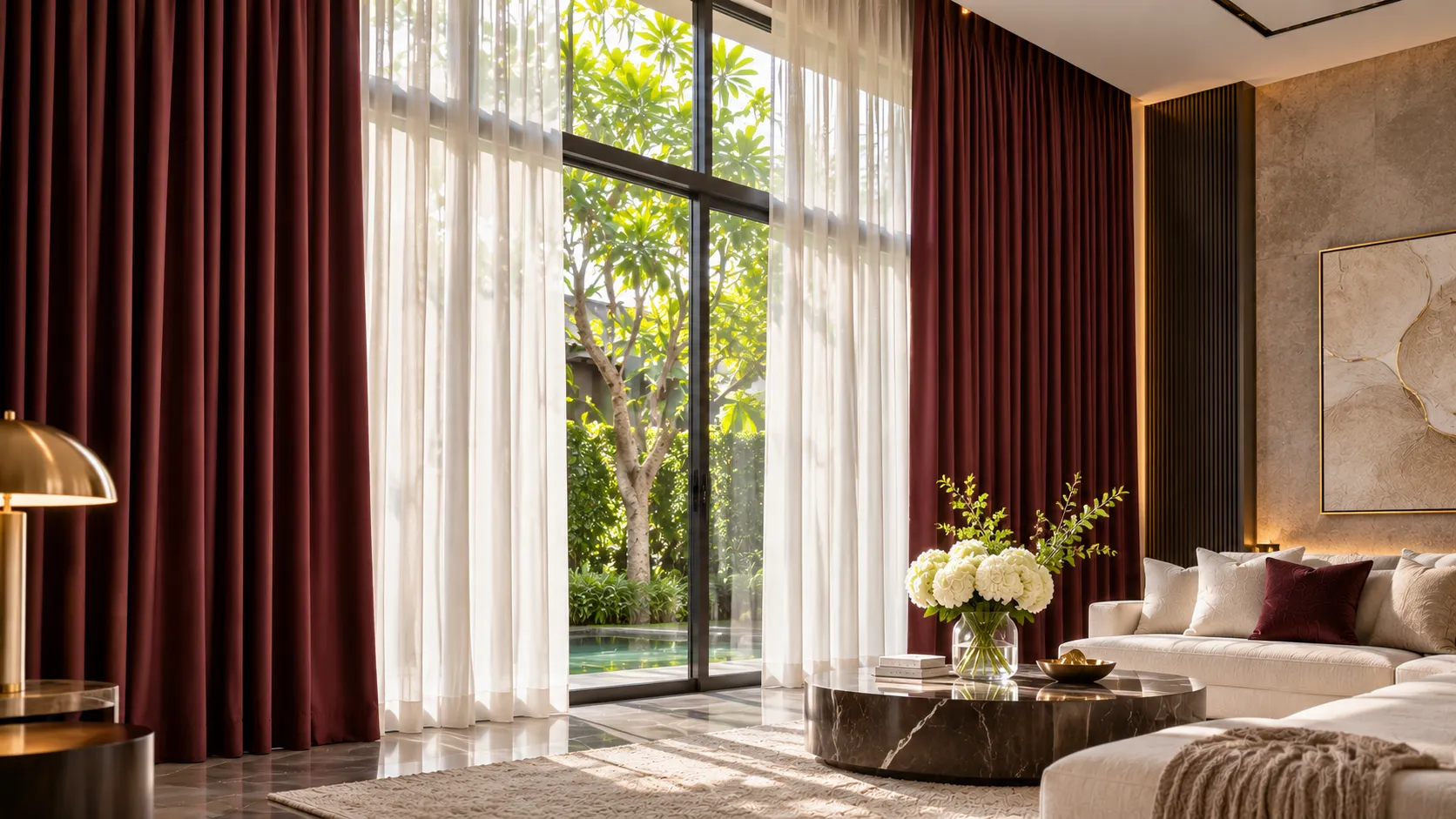
A practical arrangement pairs a sheer curtain on one track with a dimout or blackout curtain on a separate track. The sheer can soften daylight and reduce direct visibility in some daytime conditions. The heavier layer can be drawn when stronger privacy or light reduction is needed. Each layer should be able to operate without catching or obstructing the other.
In a modern Balinese interior, a warm-white or natural-toned sheer can provide a gentle transition between indoor spaces and garden views. A heavier outer curtain in a complementary neutral or earthy colour can add depth and provide more control when required.
Plan the visual effect when both layers are open
When curtains are stacked at the sides, the visible folds become part of the room’s design. Check that the combined fabric volume will not cover too much glass, crowd a corner or interfere with furniture. A wider track may be needed to keep the opening clear, but available wall space and architectural details will determine what is possible.
Layering is not automatically the best solution for every window. A small room, narrow opening or minimal interior may look better with a single well-chosen fabric. Consider the functional need and available space before adding another layer.
7. Choosing Curtains Room by Room
Living room and open-plan lounge
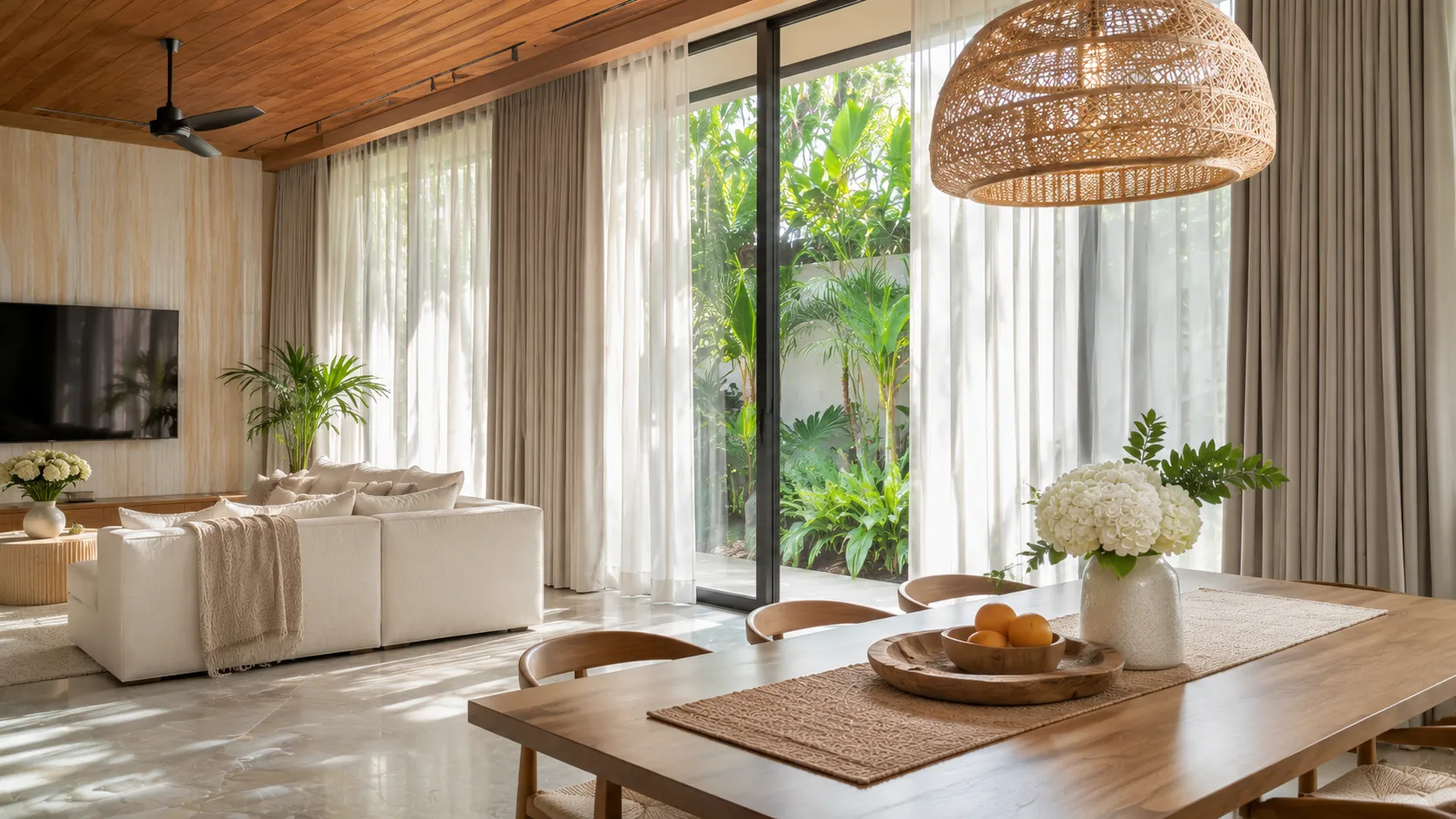
Living rooms often have the strongest connection to terraces and gardens. Choose a system that allows the curtains to move clear of the main opening and does not interrupt daily circulation. A sheer layer can soften the view, while a separate heavier curtain can provide privacy and reduce light when needed. Coordinate the fabric with the room’s teak furniture, stone surfaces and upholstery.
Bedrooms
Bedrooms usually place greater emphasis on privacy and light control. A decorative sheer can be paired with dimout or blackout curtains where appropriate. Confirm the desired level of darkness and consider light leakage around the installation. Select a fabric that feels comfortable in the room and can be maintained according to its care instructions.
Dining areas
Dining rooms benefit from fabrics that complement the table, chairs and lighting without becoming difficult to maintain. Consider whether curtains sit close to dining chairs, food preparation areas or frequently opened doors. A subtle woven texture or restrained pattern can add interest while remaining visually calm.
Bathrooms and dressing areas
Bathrooms and dressing areas require careful attention to moisture, ventilation and privacy. Not every natural fibre is appropriate for a damp location. Where a window is close to a shower or exposed to regular splashing, discuss alternative materials or a suitable blind system with the supplier. Keep fabric away from wet surfaces and ensure it can dry properly.
Villa suites and guest rooms
Guest rooms need window treatments that are attractive and easy to operate. Guests should be able to understand which layer provides privacy and which controls daylight. Durable tracks, accessible controls and clear operating arrangements can make the experience more comfortable and reduce maintenance problems for property teams.
8. Colours, Textures and Proportions
A modern Balinese palette often includes warm neutrals, natural timber tones, stone-inspired shades and restrained greens. Curtains can follow this palette for a calm result or introduce a controlled accent when the room needs more personality. The most effective choice depends on the balance of colour already present in the architecture and furnishings.
| Colour direction | Interior effect | Pairing idea |
|---|---|---|
| Warm white and ivory | Bright, soft and understated | Teak, pale stone, natural woven accessories. |
| Oatmeal and sand | Relaxed and earthy | Timber furniture, textured plaster, rattan and warm flooring. |
| Taupe and warm grey | Quiet contrast with a contemporary feel | Dark teak, concrete-look finishes and neutral upholstery. |
| Olive and muted green | Organic accent connected to garden tones | Natural timber, cream walls and botanical details. |
| Terracotta and rust | Warm focal point with an earthy character | Sand-coloured walls, teak and restrained decorative accents. |
| Deep charcoal or navy | Strong contrast and visual definition | Use selectively with lighter walls and balanced natural textures. |
Texture is as important as colour. Linen-like slubs, woven surfaces and soft matte finishes can add depth without creating a busy pattern. If the room already contains prominent teak grain, stone veining and woven furniture, a quieter curtain may help the materials work together. If the architecture is minimal, a more expressive textile can become the main decorative feature.
Proportion is equally important. Full-height curtains can emphasise vertical space, while tracks extending beyond the window frame can allow more glass to remain visible when the curtains are open. The appropriate mounting position and track width depend on ceiling details, wall space, window construction and the intended curtain stack.
9. Tracks, Headings and Practical Installation
The track and heading style influence how the curtain operates and how its folds appear. A well-selected fabric can still look untidy if the heading is unsuitable, the track is poorly supported or the curtain does not have enough room to stack back.
- Wave or S-fold: Creates a regular, contemporary wave and can suit broad glazed openings where a consistent fold is desired.
- Pinch pleat: Produces a more tailored appearance and can work well in formal bedrooms and living spaces.
- Eyelet or ring heading: Makes the pole or hardware part of the visible design and may suit a more relaxed decorative direction.
- Gathered or pencil pleat: Offers a softer gathered appearance, with the result depending on tape construction and fabric fullness.
Consider the curtain’s weight, fabric width, fullness, track capacity and frequency of use together. Large openings may require a suitable track system and correctly positioned brackets. In coastal or exposed environments, discuss hardware material, finish and maintenance with the installer. Do not assume that every metal finish offers the same corrosion resistance.
Installation should also account for ceiling structure, wall condition, access equipment, electrical fittings and any concealed services. For motorised curtains, confirm the power supply, motor location, control method and maintenance access before the track is installed.
10. Care and Maintenance in Bali’s Climate
Humidity, ventilation, dust, direct sunlight and regular use all influence how curtains age. A suitable care routine starts with the fabric manufacturer’s instructions and the conditions of the room. No single cleaning method is appropriate for every fibre, lining or finish.
- Keep rooms ventilated where practical, especially after periods of high indoor humidity.
- Remove surface dust gently and regularly using a method suitable for the fabric.
- Address spills promptly according to the care label; avoid aggressive rubbing or unapproved cleaning chemicals.
- Do not wash or steam a curtain unless the fabric and lining instructions permit it.
- Check tracks, gliders, brackets and operating cords periodically for smooth movement and signs of wear.
- Review curtains exposed to strong sunlight for changes in colour or fabric condition.
- For rental properties, establish a consistent cleaning and inspection routine between guest stays.
If a curtain develops persistent dampness or musty odours, investigate the room’s moisture source and ventilation rather than simply masking the smell or cleaning the fabric repeatedly. Curtains should be allowed to dry fully after approved cleaning. Where a textile is unsuitable for the conditions, replacement with a more appropriate product may be necessary.
11. Measuring and Planning a Custom Solution
Accurate measurements help ensure that curtains frame the opening correctly, clear doors and furniture, and stack in a practical position. Measure the proposed track or pole location rather than relying only on the visible glass dimensions. Confirm the finished width, drop, floor clearance, returns, overlaps and any obstructions.
For Bali homes with large sliding doors or indoor-outdoor openings, record how each door panel operates and where the curtain can gather. For layered systems, plan the position of both tracks and check that the curtains can move independently. Also consider whether the installation needs to accommodate a pelmet, recessed ceiling detail or motorised track.
Custom curtain planning checklist
- Identify the purpose of each window treatment: decoration, privacy, light control or a combination.
- Record the window orientation and the times when direct sunlight is strongest.
- Map door movement, ventilation openings, furniture and everyday circulation paths.
- Compare fabric samples with teak, stone, wall finishes and upholstery in the actual room.
- Confirm the fabric composition, opacity, lining and care requirements.
- Choose the heading, fullness and track arrangement based on the fabric and available space.
- Confirm installation access, fixing points, hardware finish and operating method.
Use the Curtain Measuring Guide as a starting point for curtain measurements. If the project includes blinds, refer to the Shade Measuring Guide. For decorative top treatments, see the Valances and Cornices Measuring Guide. The Curtain Stacking Calculator can help estimate the space curtains may occupy when open.
Explore the Almeers Living curtains and blinds collection for window treatment options, or browse the Almeers Living design blog for further inspiration. For complex openings, on-site measurement and consultation can help resolve details that are difficult to confirm from photographs alone.
12. Frequently Asked Questions
What curtains work best for a modern Balinese home?
There is no single best fabric for every home. Lightweight sheers, linen and linen-look textiles, cotton blends, dimout and blackout curtains can all be suitable in different rooms. Choose according to sunlight, privacy, ventilation, fabric care and the interior materials.
Are linen curtains suitable for Bali’s humidity?
Linen can be used in Bali interiors, but suitability depends on the exact fabric construction, room ventilation, moisture exposure and care requirements. Check the supplier’s guidance and avoid placing a moisture-sensitive textile where it is regularly exposed to damp conditions.
Which curtain colours complement teak furniture?
Warm white, ivory, oatmeal, sand and taupe often complement teak. Muted green, rust, charcoal and other accent colours can also work when balanced with the room’s walls, flooring and furnishings. Compare physical samples with the actual timber finish.
Do sheer curtains allow airflow?
Air can pass through many sheer fabrics, but the amount depends on the textile’s weave and the surrounding conditions. A sheer does not create ventilation; airflow depends on the building’s openings and ventilation design. Very light fabric may also move in a breeze and need practical management.
Should I use one curtain layer or two?
Use two layers when the room needs both soft daylight filtering and stronger privacy or light reduction. A single layer may be more suitable for a simple design, limited stack space or a window with fewer functional requirements.
Are natural fibres always more sustainable?
Not automatically. Sustainability depends on fibre sourcing, processing, manufacturing, transport, durability and end-of-life considerations. Request specific product information and verified claims rather than relying only on the appearance or general description of a fabric.
How can I reduce sunlight entering a Bali villa?
Start by assessing window orientation, glazing, external shade and the time of day when heat or glare is most noticeable. Curtains and blinds can help manage indoor light, but external shading and suitable glazing may be important for reducing solar heat gain.
How should curtains be measured for large sliding doors?
Measure the proposed track position and the full opening, then account for panel overlap, returns, stack-back space, door movement and the selected fullness. A site measurement is recommended for wide or complex openings.
Choose Curtains That Belong to the Architecture
The best curtains for a modern Balinese home are those that feel connected to the architecture and work naturally with the way the property is used. They should complement teak and other natural finishes, respond to tropical daylight, respect ventilation and circulation, and provide the required level of privacy and light control.
Rather than choosing a fabric on appearance alone, assess each opening individually. Compare samples in the room, confirm the fibre composition and care requirements, and plan the track and curtain stack before ordering. With these details considered together, window treatments can support the calm, open and material-rich character of contemporary Balinese living.
For custom curtains and blinds in Bali, explore Almeers Living and discuss the requirements of your home, villa or hospitality project with the team.
Product note: Fabric composition, colour, opacity, airflow, durability and cleaning requirements vary by product and installation. Confirm the selected fabric’s technical details and care instructions before purchase.