How to Achieve a Hotel-Style Bedroom with Curtains
A hotel-style bedroom is not defined by an expensive bed or a carefully selected colour palette alone. It is the result of several details working together: controlled lighting, a calm visual composition, comfortable fabrics, privacy and a quiet atmosphere. Curtains play an important role because they occupy a large part of the room’s visual field while also influencing how daylight, outside views and sound are experienced.
In a well-designed guest suite, window treatments should feel generous and tailored, operate smoothly and provide the level of darkness guests expect. For bedrooms in Bali villas, boutique hotels and modern residences, the specification also needs to account for strong sunlight, humidity, cleaning routines and the practical demands of hospitality use.
This guide explains how to use floor-to-ceiling drapery, blackout linings and layered window treatments to create a bedroom with a considered hotel-inspired finish. It also explains what curtains can and cannot do for acoustic comfort, so that design expectations remain realistic.
1. What Creates a Hotel-Style Bedroom?
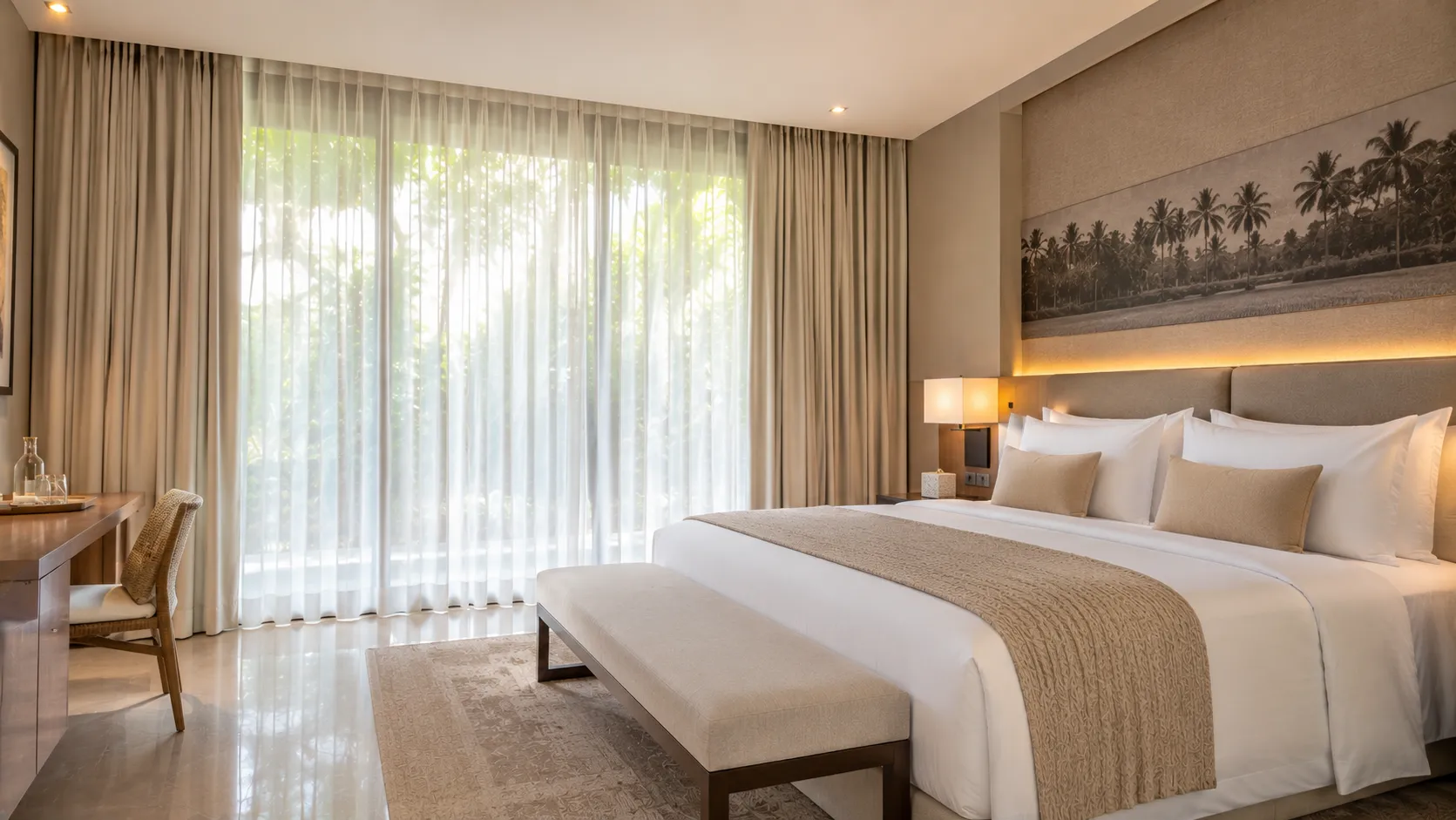
The hotel bedroom aesthetic is usually built around visual consistency and practical comfort. Window coverings should complement the bed, headboard, flooring, wall finishes and lighting rather than compete with them. Full-height curtains can frame a window and make the room feel more complete, while a blackout layer can help guests rest when daylight or exterior lighting would otherwise enter the room.
Good hotel-inspired design is not necessarily formal or overly decorative. A contemporary villa may use relaxed linen-look sheers and warm neutral blackout curtains, while a more classic suite may call for heavier textured drapery, a defined pleat and discreet hardware. The common principle is that the finished treatment looks intentional and functions reliably.
The details that matter most
- Proportion: Curtain width, height and stack-back should be appropriate for the window and wall.
- Light control: The fabric and installation should match the room’s need for filtered daylight or darkness.
- Texture: A considered fabric adds depth without making the room feel visually crowded.
- Operation: Curtains should glide smoothly and be easy for residents or guests to use.
- Finishing: Neat hems, consistent pleats, aligned tracks and carefully managed side gaps create a tailored appearance.
2. Why Floor-to-Ceiling Curtains Make a Difference
Floor-to-ceiling curtains create a continuous vertical line that can make a bedroom feel taller and more composed. Instead of stopping at the top of the window frame, the track is positioned near the ceiling or at a planned pelmet or recess, allowing the fabric to fall across a greater height. This approach is especially effective in rooms with high ceilings, full-height glazing or wide openings.
Track placement and visual proportion
Where the architecture allows, a track installed close to the ceiling can create a clean, elongated appearance. Recessed or concealed tracks offer a minimal finish, while an exposed decorative track can become part of the room’s design. The right solution depends on ceiling construction, access for installation and the desired interior style.
Measure the finished floor-to-track height rather than estimating from the window frame. Confirm whether the curtains should lightly touch the floor, finish just above it or form a deliberate break. A small, consistent clearance can be practical in rooms where floors are cleaned frequently, while a floor-grazing finish often creates a more tailored appearance. The correct drop should be agreed before production.
Fullness and pleat style
Curtain fullness affects how the fabric falls and how generous it looks when closed. The appropriate fullness depends on the fabric weight, track system, pleat construction and desired appearance. A heavier fabric may require a different specification from a light sheer. Rather than applying one ratio to every project, confirm the recommended fabric consumption and finished appearance with the curtain maker.
Wave or S-fold curtains create regular, flowing folds and suit contemporary bedrooms. Pinch pleat and other tailored headings can create a more structured, classic look. The selected heading must be compatible with the track and available space.
Design tip: For a hotel-inspired finish, consider the open position as carefully as the closed position. The curtain stack should not unnecessarily cover the glass, obstruct a balcony door or interfere with bedside furniture.
3. Choosing Blackout Lining for Better Darkness
Light control is one of the most important functions of bedroom curtains. Exterior street lighting, early morning sunlight and bright tropical conditions can affect sleep comfort. A blackout curtain or a decorative curtain with a suitable blackout lining can significantly reduce light entering through the fabric. However, the term “blackout” does not automatically mean that a room will become completely dark.
Fabric opacity versus the complete installation
Even an opaque blackout fabric can allow light to enter around the edges if the curtain does not cover the window area adequately. Light may pass through gaps at the sides, above the track, below the hem or between separate panels. Window shape, track position, wall clearance and the way the curtain returns at each side all influence the final result.
For a bedroom where darkness is a priority, discuss the following details before ordering:
- Fabric specification: Confirm whether the selected material is blackout fabric or a decorative face fabric paired with blackout lining.
- Side coverage: Allow suitable overlap beyond the window opening where the wall and furniture layout permit.
- Top coverage: Consider a ceiling-mounted track, recess or pelmet to reduce light entering above the curtain.
- Bottom finish: Select a finished drop that provides the desired coverage without creating a trip or cleaning issue.
- Panel meeting point: Ensure the centre overlap or meeting arrangement is appropriate for the width and curtain heading.
Blackout lining or blackout fabric?
Blackout lining is often used behind a decorative face fabric, allowing the bedroom design to retain a chosen colour and texture while adding stronger light control. A dedicated blackout fabric may provide a simpler single-layer construction. The better option depends on the required appearance, fabric availability, weight, track capacity and care instructions.
Remember that blackout performance is a property of the finished system, not just the fabric sample. Ask to review a sample and discuss expected light leakage based on the actual window and installation details. For unusually shaped windows, doors or wide glazed openings, a site assessment is particularly useful.
4. Curtains and Acoustic Comfort
Soft furnishings can help make a bedroom feel less harsh acoustically. Curtains, rugs, upholstered furniture and bedding introduce absorbent surfaces that may reduce some sound reflections within a room. This can contribute to a softer, less echo-prone atmosphere, particularly in spaces with hard floors, large glass areas and minimal furniture.
Heavy or densely constructed curtains may absorb more mid- and high-frequency sound than a very light sheer, depending on the textile, fullness, air gap and installation. A curtain positioned with some space between the fabric and the wall or glazing may behave differently from one installed tightly against the surface. Nevertheless, ordinary curtains should not be presented as a complete soundproofing solution.
Sound absorption is not soundproofing
Sound absorption helps manage reflections inside a room. Sound insulation or soundproofing aims to limit sound transmission through walls, windows, doors and other building elements. Curtains alone cannot reliably block traffic noise, construction noise or sound travelling through a poorly insulated building envelope.
If external noise is a major concern, review the glazing, window seals, door seals, wall construction and other potential sound paths. Acoustic consultants or qualified building professionals can recommend solutions based on the source and frequency of the noise. Curtains can then form one part of a broader comfort strategy.
Practical ways to improve the acoustic feel
- Choose a fabric with enough body and fullness for the scale of the window.
- Consider lined drapery rather than relying on a very lightweight sheer as the only window treatment.
- Use rugs and upholstered furniture to complement the soft surfaces in the room.
- Check whether the curtain track can be installed with a suitable wall or glazing clearance.
- Address gaps around windows and doors separately when sound transmission is the main issue.
5. Layering Sheers and Blackout Drapery
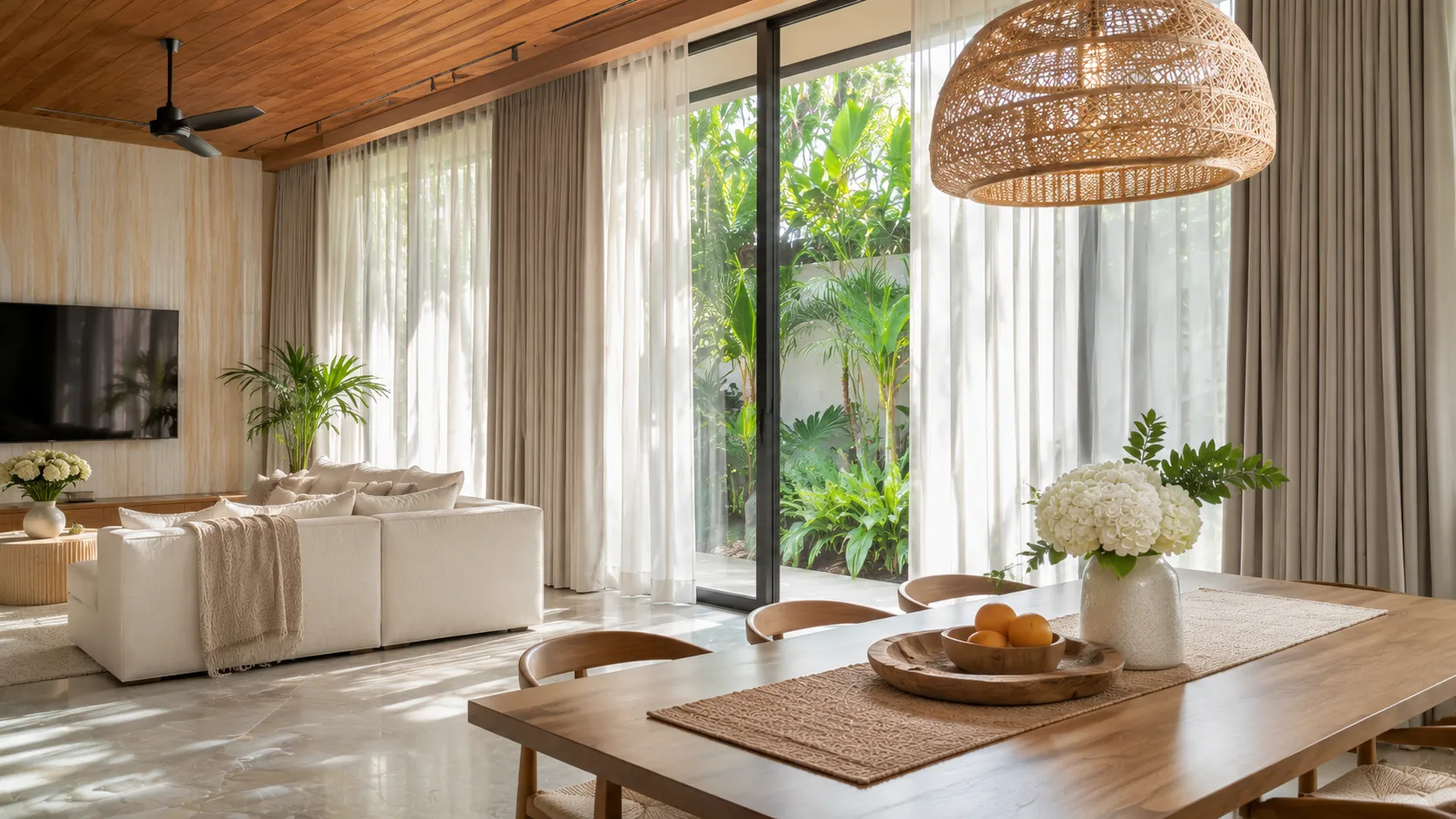
A two-layer curtain arrangement is a practical way to achieve the flexible atmosphere associated with quality hotel bedrooms. The sheer layer softens daylight and provides a degree of daytime screening, while the blackout layer can be closed when guests need privacy or darkness. Each layer can be operated independently, allowing the room to respond to different times of day.
How the layers work together
During the day, the sheer can remain closed to diffuse direct views while allowing natural light to enter. In the evening, the blackout curtain can be drawn across the window for privacy. At night or during daytime rest, both layers can be closed to create a more enclosed environment.
The two layers may use separate tracks or a purpose-designed double track. Before selecting the system, confirm that there is sufficient ceiling or wall space for the tracks, brackets and fabric movement. Also check that the open curtain stacks do not block doors, wardrobes, bedside tables or access to the window.
Choosing the sheer
Sheer fabrics vary in openness, texture and privacy. A more open weave may preserve a brighter view but provide less screening after dark when interior lights are on. A denser sheer may offer more daytime privacy but reduce the amount of daylight passing through. Request samples and view them in the actual bedroom, both in daylight and with the room lights switched on.
6. Selecting Fabric, Colour and Pleat Style
The fabric is one of the most visible elements in a hotel-style bedroom. Neutral colours such as warm white, ivory, oatmeal, beige, taupe and soft grey can create a calm foundation, while deeper colours may add contrast and a more dramatic mood. The right choice depends on wall colour, flooring, headboard material, natural light and the overall design direction.
Fabric choices for a refined bedroom
| Fabric direction | Visual character | Points to consider |
|---|---|---|
| Linen and linen-look textures | Relaxed, natural and understated. | Check weave stability, lining needs, light exposure and care instructions. |
| Velvet and heavier textured fabrics | Rich, tactile and visually substantial. | Confirm weight, track capacity, dust care and suitability for the room’s humidity. |
| Polyester and performance blends | Available in many colours, textures and practical constructions. | Review the exact composition, finish, drape and cleaning guidance. |
| Sheer voile and lightweight woven fabrics | Soft, airy and light-diffusing. | Assess openness, privacy, snag resistance and how the fabric hangs. |
Fabric weight alone does not determine quality. Consider the weave, finish, colour consistency, drape, lining compatibility and how the textile is expected to perform in the room. For hospitality projects, cleaning frequency and the availability of replacement fabric can be just as important as the initial appearance.
Matching the heading to the interior
Wave or S-fold headings create a regular, contemporary rhythm and work well with compatible wave tracks. Pinch pleats create a more tailored and traditional appearance. Eyelet headings are generally associated with a more casual exposed-pole look. Each style creates a different stack width and finished profile, so the heading should be chosen alongside the track rather than as an isolated decorative detail.
7. Bedroom Curtain Considerations for Bali Properties
Bedrooms in Bali villas and hotels may face intense sun, high humidity, poolside moisture and, in coastal locations, salt-laden air. These conditions make product selection and maintenance especially important. A beautiful curtain should also be suitable for the room’s exposure and the way the property is operated.
Manage strong tropical sunlight
Assess the direction and duration of direct sunlight at each bedroom window. West-facing glazing may receive strong afternoon sun, while east-facing rooms can be bright early in the morning. A suitable lining, fabric opacity and coverage arrangement can help manage light and protect interior finishes from direct exposure, although the overall result also depends on the glazing and external shading.
Plan for humidity and ventilation
Keep curtains dry and allow air to circulate around fabric where possible. Avoid leaving damp curtains tightly gathered for extended periods. In rooms with limited ventilation, choose materials and care routines appropriate to the conditions, and follow the manufacturer’s cleaning recommendations.
Consider coastal hardware exposure
For villas near the sea, discuss track, bracket, screw and fitting materials with the supplier. Corrosion resistance varies by material grade, finish and exposure. Regular inspection and cleaning may be needed, and no hardware should be assumed to be maintenance-free in a coastal environment.
Think about guest use
In rental villas and hotels, guests should be able to understand and operate the curtains easily. Avoid controls that are hidden or confusing. For large windows, motorized operation may be worth considering, provided the motor and track are correctly specified and the property team understands basic operation and maintenance.
8. Measurement and Installation Details
Accurate measurement is essential for a polished finish. A small error in curtain height can change the way the fabric meets the floor, while insufficient width can make the curtains look flat when closed. Measurement should account for the track location, finished floor level, wall returns, window handles, door openings and the space required for the curtains to stack when open.
What should be checked on site?
- Finished ceiling height and the exact track mounting position.
- Window width and the desired curtain coverage beyond each side.
- Available stack-back space when curtains are fully open.
- Floor level and any changes in flooring or thresholds.
- Obstructions such as air-conditioning units, cabinetry, handles and doors.
- Power access and control requirements if motorization is selected.
- Track fixing points and the suitability of the ceiling or wall substrate.
For a detailed starting point, review the curtain measuring guide. For a project with multiple windows, unusual ceiling details or full-height glazing, professional on-site measurement helps confirm the specification before production.
Installation quality and finishing
Tracks should be level, securely fixed and appropriate for the weight and width of the curtain. Panels should hang consistently, meet neatly when closed and move without catching. After installation, operate every panel, inspect the hems and headings, and confirm that the curtains clear nearby furniture and doors.
9. Maintenance for Homes and Hospitality Properties
A maintenance plan helps preserve the appearance and operation of bedroom curtains. The correct method depends on the fabric, lining, heading and hardware, so always follow the product’s care instructions. Do not assume that every curtain can be machine washed, steamed or cleaned with the same products.
- Dust or vacuum curtains gently using a suitable upholstery attachment.
- Attend to spills promptly using the recommended method for the fabric.
- Allow curtains to dry completely after approved cleaning.
- Inspect tracks, gliders, brackets and motorized components periodically.
- Check for snagging caused by sharp furniture edges or window hardware.
- In coastal properties, inspect exposed metal components for corrosion or finish damage.
- For hotels and rental villas, keep fabric and hardware specifications on record to simplify future repairs or replacements.
For hospitality operators, consistency is valuable. A documented cleaning routine and a record of fabric codes, lining types and track details can reduce confusion when rooms need maintenance or refurbishment.
10. Frequently Asked Questions
How can I make my bedroom look like a luxury hotel room?
Use well-proportioned floor-to-ceiling curtains, a coordinated colour palette, quality fabric, neat pleats and a track system suited to the window. Add a separate sheer or blackout layer if the room needs flexible daylight and privacy control.
Do blackout curtains make a bedroom completely dark?
Blackout fabric or lining can block light through the curtain material, but light may still enter through gaps at the sides, top, bottom or between panels. The final result depends on the fabric and the complete installation.
Are heavy curtains good for soundproofing?
Heavier curtains can help absorb some sound reflections inside a room and make the acoustics feel softer. They do not provide reliable soundproofing against external noise. Glazing, seals, doors and wall construction should be assessed if sound transmission is the main concern.
Should hotel bedroom curtains touch the floor?
They may lightly touch the floor or finish just above it, depending on the design and cleaning requirements. The important point is to specify the finished drop accurately and maintain a consistent appearance across the room.
Is a sheer and blackout combination suitable for a Bali villa?
Yes. It provides flexible control: the sheer can filter daylight during the day, while the blackout layer can be closed for privacy and reduced light at night. Fabric and hardware should be selected for the room’s humidity, sunlight and maintenance needs.
Which curtain colour is best for a hotel-style bedroom?
Warm neutrals such as ivory, oatmeal, beige and taupe are versatile choices, but the best colour depends on the interior palette, natural light and desired mood. Always view samples in the actual room before confirming an order.
Can motorized curtains be used in bedrooms?
Yes. Motorized curtains can be convenient for wide windows, high ceilings and guest suites. Confirm motor capacity, track compatibility, power access, controls and maintenance arrangements before installation.
How do I measure curtains for a floor-to-ceiling finish?
Measure from the planned track position to the finished floor at several points, then confirm the desired floor clearance. Also measure the required width, stack-back area and any obstructions. A professional site measurement is recommended for complex openings.
Conclusion: The Right Curtains Bring the Hotel Experience Home
A hotel-style bedroom is created through thoughtful details rather than decoration alone. Floor-to-ceiling drapery establishes proportion and visual softness, blackout lining helps control unwanted light, and appropriately specified heavier fabrics can contribute to a more comfortable acoustic atmosphere. Layering sheers and blackout curtains adds flexibility for different times of day.
For Bali villas, hotels and modern residences, the specification should also account for sunlight, humidity, coastal exposure, guest use and ongoing maintenance. The best solution is the one that balances appearance with reliable everyday performance.
Almeers Living provides custom curtains and blinds for residential and hospitality projects in Bali, with fabric selection, on-site measurement and installation support. Explore the Almeers Living product collection or contact the team to discuss a bedroom window-treatment project.