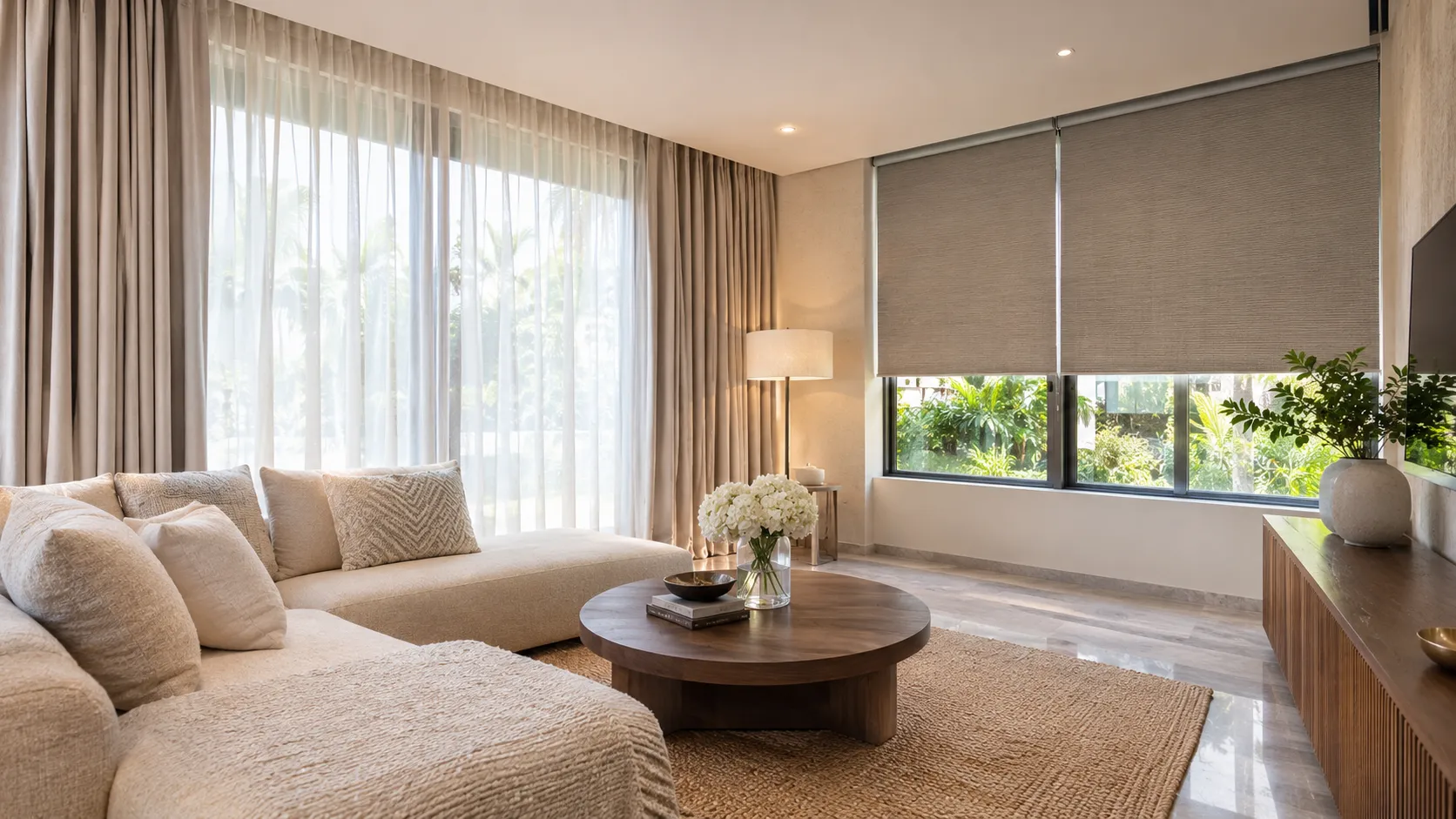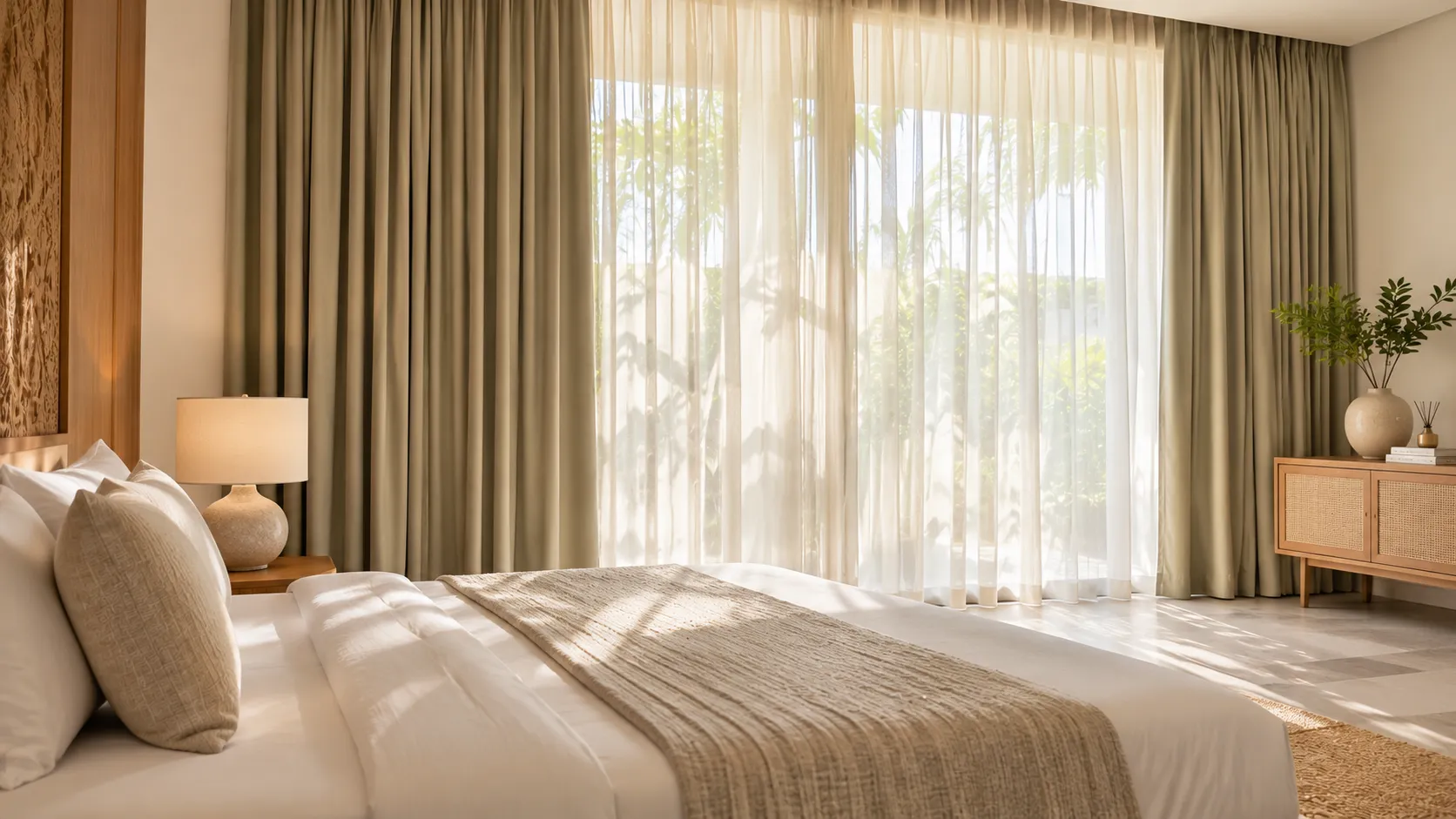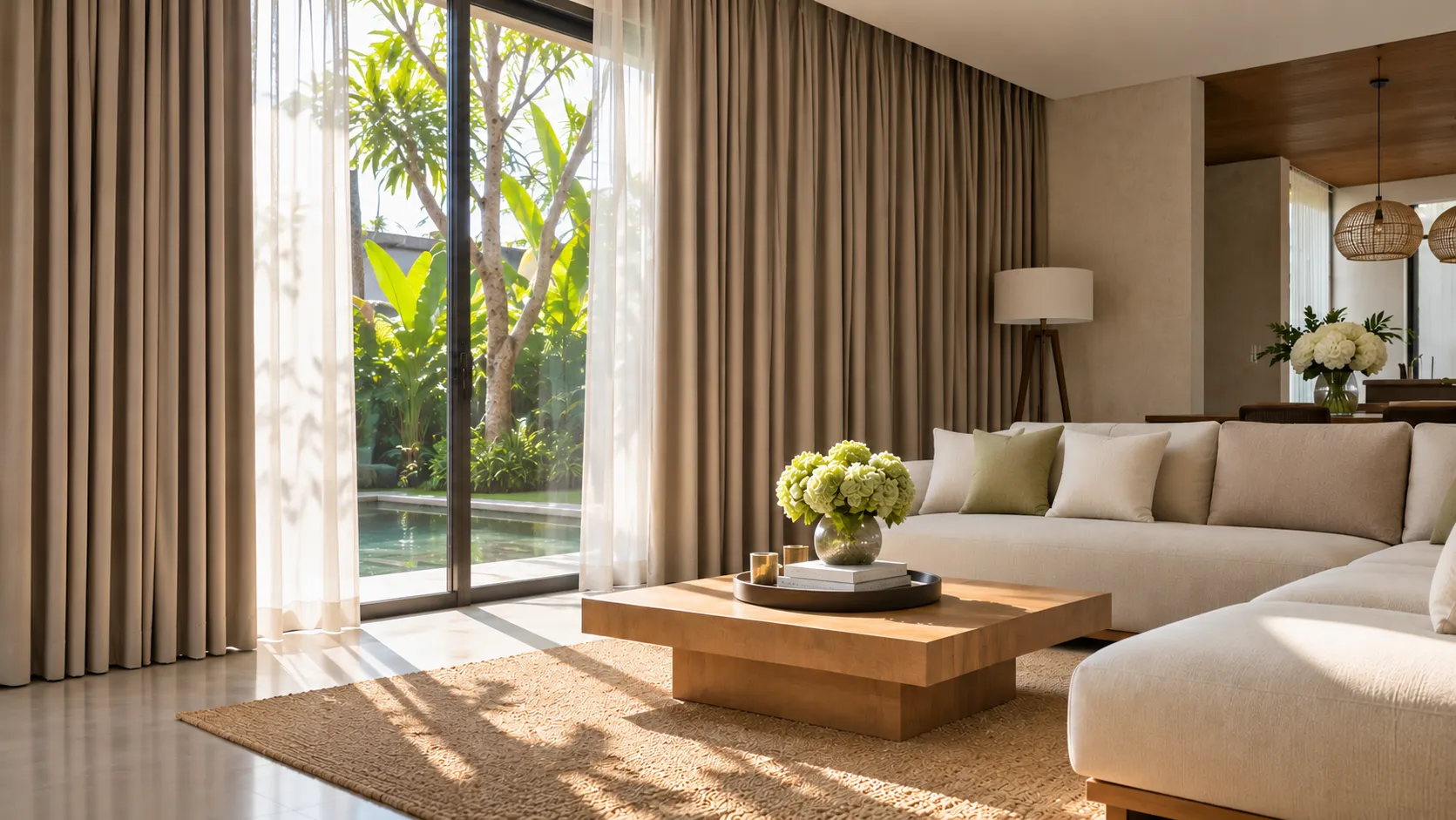
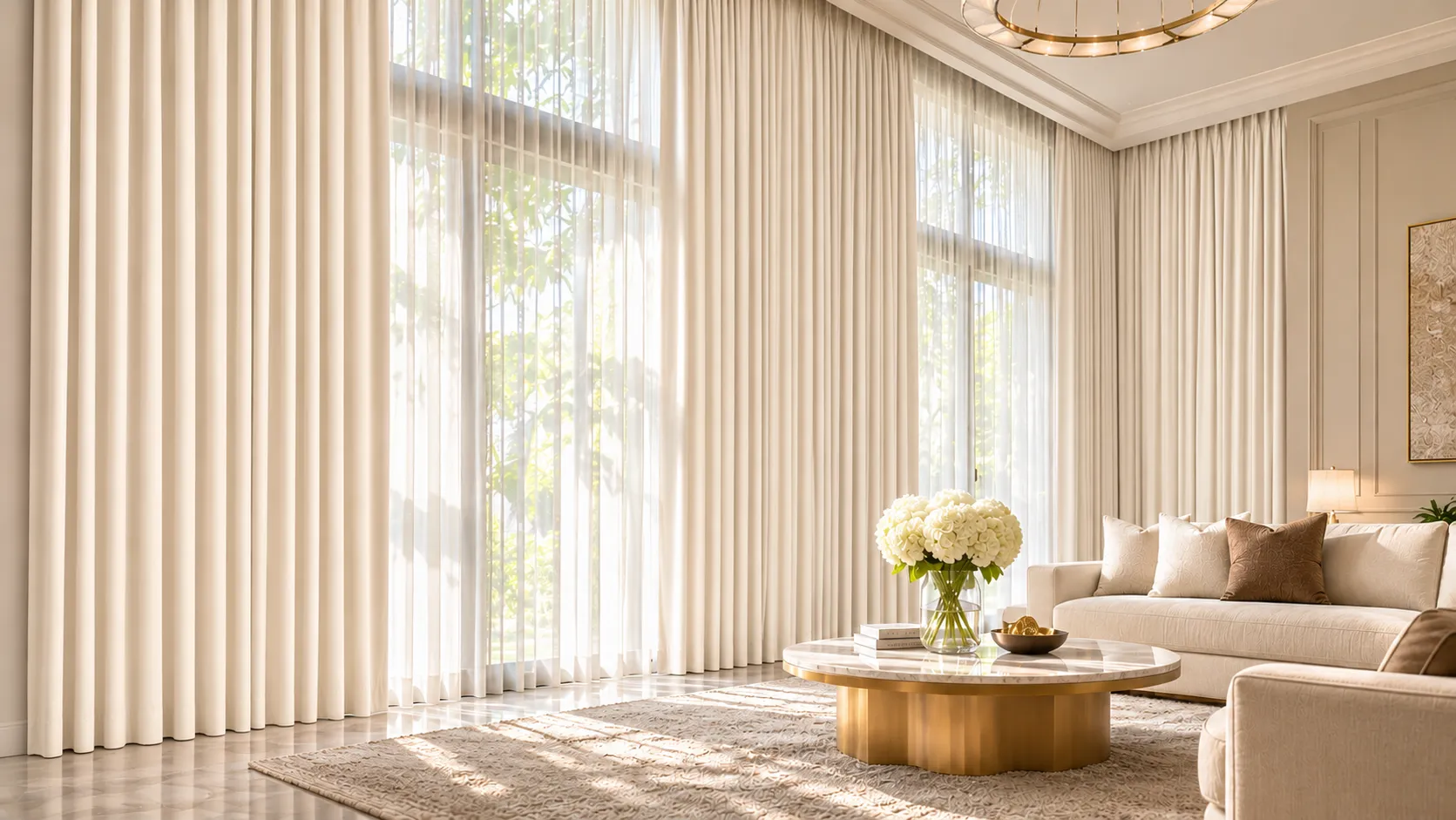
Drapery has a distinctive ability to change the atmosphere of a room. It softens hard architectural lines, frames a view, introduces texture and helps control light and privacy. When the proportions and details are right, curtains can feel like an integrated part of the interior rather than an accessory added at the end of a project.
This guide explores three design decisions that have a strong influence on the finished appearance: a high floor-to-ceiling drop, the structure and fullness of heavyweight fabric pleating, and the finish of premium brass hardware. It also covers fabric selection, heading styles, measuring, installation and practical considerations for luxury properties in Bali.
1. What Makes Drapery Feel Luxurious?
A luxurious curtain installation is defined by proportion, material quality, workmanship and consistency. A beautiful fabric can lose its impact if the panels are too short, the pleats are uneven or the track is poorly positioned. Equally, premium hardware cannot compensate for fabric that is unsuitable for the window or a heading that does not suit the overall design.
Consider the curtain as part of the room's architecture. Its height influences how tall the space appears, its width affects the visual balance of the window, and its texture changes how light moves across the walls. The hardware and finishing details should support this composition without competing with it.
For villas and hotels in Bali, a refined result often combines natural-looking textures, generous but controlled folds, discreet tracks and carefully selected metal finishes. The objective is not simply to make a room look expensive. It is to create a cohesive, comfortable interior that feels intentional and works well every day.
2. The Impact of Floor-to-Ceiling Drapery
One of the most effective ways to create a sense of height and elegance is to extend curtains from a high track position down towards the floor. Rather than stopping at the window frame, full-height drapery draws the eye vertically and connects the ceiling, wall and floor into one visual composition.
Install the track high where the architecture allows
Mounting the track close to the ceiling can make the window treatment feel taller and more integrated. In rooms with a dropped ceiling, concealed pelmet or architectural recess, the track can be coordinated with those details. The exact position should account for ceiling construction, access, curtain weight and the desired finished drop.
Choose the right floor finish
The curtain hem should be planned in relation to the flooring and the way the room is used. A clean floor-grazing finish creates a tailored appearance and is often practical for high-traffic spaces. A slight break or soft contact with the floor can create a more relaxed look, while a deliberate puddled finish produces a decorative effect that may require more frequent care.
For hotels, villas and family homes, consider cleaning routines, floor conditions and the risk of moisture before choosing a longer hem. In tropical properties, keeping fabric from resting in damp areas is particularly important.
Make sure the panels have enough width
Full-height curtains need sufficient fabric width to create attractive folds. The required fullness depends on the heading style, fabric weight and the look desired. A wide window with insufficient fabric can appear flat, while excessive fullness may create bulky stacks and require more space when the curtains are open.
3. Heavyweight Fabric and Tailored Pleating
Heavier drapery fabrics can create a rich, substantial appearance. Their folds may look deeper and more sculptural than those of lightweight sheers, especially when the fabric has enough body to hold its shape. However, weight alone does not guarantee a premium result. The textile's drape, backing, weave, thickness and compatibility with the heading style all influence the finished appearance.
Understand fullness
Fullness describes the amount of fabric used in relation to the track or finished curtain width. More fullness generally creates more folds, but the ideal amount depends on the fabric and heading. A stiff heavyweight textile may need a different fullness ratio from a soft, fluid fabric. The fabric supplier or curtain maker should advise on the suitable specification for the selected material.
Why pleat consistency matters
Even spacing and consistent fold formation make a curtain look tailored. The top heading should distribute fabric evenly so the panels hang in a balanced way. Uneven pleats, inconsistent spacing or poorly finished returns can be noticeable across large windows and full-height installations.
Consider the total weight
Heavy fabric, lining and generous fullness can produce substantial panel weight. Tracks, brackets, carriers and fixing points must be selected for the actual load and window span. Wide installations may need additional supports or a track system designed for heavier curtains. Smooth operation is part of the luxury experience, not an optional extra.
4. Choosing the Right Curtain Heading
The heading determines how the fabric is attached to the track and how it forms its folds. It has a major influence on the overall style, stack-back, fabric consumption and operating characteristics.
| Heading style | Visual character | Where it may work well |
|---|---|---|
| Pinch pleat | Structured, tailored folds with a classic decorative appearance | Formal living rooms, bedrooms and traditional or transitional interiors. |
| Double or triple pleat | More defined and substantial fold formation | Spaces where a more formal, detailed drapery finish is desired. |
| Wave fold / S-fold | Regular, continuous wave-like folds with a clean contemporary look | Modern villas, large glazed openings and minimalist interiors. |
| Eyelet | Soft, evenly spaced folds created by rings through the fabric heading | Casual contemporary settings where a visible pole is part of the design. |
| Pencil pleat | Gathered, flexible heading with a more traditional appearance | Versatile residential applications and selected decorative schemes. |
Not every heading is equally suitable for every heavyweight textile. Some fabrics may be too thick for a compact heading or may not form a smooth wave. Always review a sample or a made-up demonstration before confirming the final specification, especially for large projects where the same treatment will be repeated across multiple rooms.
5. Premium Brass Hardware and Finishing Details
Hardware is both a functional component and a visible design detail. A brass pole, finial or bracket can introduce warmth and a subtle metallic accent, while a concealed track allows the fabric to remain the main visual feature. The right choice depends on the architecture, the curtain weight and the desired level of decoration.
Select the right brass tone
Brass finishes vary widely. Polished brass has a brighter reflective appearance, brushed or satin brass offers a softer sheen, and antique or aged finishes introduce a deeper, more characterful tone. Coordinate the finish with nearby lighting, cabinet handles, furniture details and other metal accents rather than trying to match every component exactly.
Use visible hardware with intention
Where a decorative pole is part of the design, consider its diameter, projection, finials, brackets and relationship to the curtain heading. The pole should feel proportionate to the window and capable of supporting the curtain's weight. Oversized decorative details can overwhelm a restrained interior, while hardware that is too small may look visually weak.
Choose concealed tracks for a minimal finish
In contemporary villas and hotels, a ceiling-mounted or recessed track can create a clean line with minimal visible hardware. This approach works particularly well with full-height wave-fold or tailored pleat curtains. Concealed systems still require appropriate access, structural fixing and enough clearance for the fabric and carriers.
Consider the environment and maintenance
In Bali, humidity and coastal air can affect metal finishes over time. Confirm the hardware's material, finish, suitability for the property's location and recommended care. A brass-coloured finish is not necessarily solid brass, and different coatings or base metals may age differently. Ask for clear product specifications before making a selection.
6. Selecting Fabrics for a Refined Bali Interior
Fabric is the largest visual surface in a curtain installation, so its colour, texture and drape strongly influence the room. Luxury interiors do not always require ornate textiles. A well-made neutral curtain with a beautiful weave and accurate tailoring can feel more sophisticated than a heavily patterned fabric that competes with the rest of the space.
Linen and linen-look textures
Linen has a natural texture and relaxed character that works well with tropical, coastal and contemporary interiors. Linen-look fabrics can provide a similar visual impression with different performance and care characteristics. Confirm the fibre composition rather than assuming that a linen appearance means the textile is made from natural linen.
Velvet and other substantial textiles
Velvet and selected heavyweight woven fabrics can create depth, rich colour and a more formal appearance. Their weight and pile may require careful handling, suitable lining and stronger hardware. Check whether the textile is appropriate for the room's sunlight exposure and cleaning requirements.
Layering with sheers
A double-layer arrangement pairs a sheer curtain with a heavier decorative or room-darkening layer. The sheer softens daylight and provides a light daytime screen, while the outer curtain offers greater privacy and light control when required. This combination is particularly useful in bedrooms and living areas with large windows.
| Fabric direction | Design effect | Practical consideration |
|---|---|---|
| Natural linen | Relaxed, tactile and understated | Review fibre content, care instructions, shrinkage and sunlight exposure. |
| Linen-look woven | Textured natural appearance with varied construction options | Compare composition, drape and quality between collections. |
| Velvet | Deep colour, plush texture and formal richness | Consider weight, pile direction, cleaning and suitable track capacity. |
| Heavy decorative weave | Substantial folds and visible textile character | Check how the material forms pleats and stacks when open. |
| Sheer voile or textured sheer | Soft daylight and a lighter visual layer | Provides limited night privacy and is not a substitute for a privacy layer. |
7. Room-by-Room Luxury Drapery Ideas
Master bedrooms
Full-height curtains can frame the bed wall or large glazed openings and create a calm, enveloping atmosphere. A sheer and blackout combination gives occupants flexible daylight and privacy control. Select a heading and track that operate smoothly and do not create unnecessary noise or resistance.
Living rooms
In a living room, curtains can soften architectural lines and connect the interior palette with the view outside. Consider the relationship between curtain colour, upholstery, flooring and wall finishes. For wide windows, ensure there is enough wall space for the panels to stack without covering too much glass when open.
Dining rooms
Choose a fabric that complements the furniture and lighting without dominating the space. A tailored pleat can create a formal finish, while a soft wave heading may suit a more contemporary dining area. Consider clearance from dining chairs, sideboards and doors.
Hotel suites and boutique villas
Consistency across guest rooms creates a polished impression, but each room should still be measured individually. Window widths, ceiling heights and track positions may vary even within the same property. Standardise the visual specification while allowing for accurate room-specific measurements.
Double-height spaces
Very tall windows create an opportunity for dramatic drapery, but they require careful planning. Consider access for installation and future maintenance, panel weight, track support, fabric joining and the practicality of operating the curtains. Motorised operation may be suitable for some tall or wide installations.
8. Measurements and Installation Details
Precise measurement is essential to achieving the intended luxury finish. A small error in a standard window may be easy to overlook, but it becomes more visible across a full-height curtain or a series of repeated openings.
- Confirm the finished track position: Measure from the actual planned track location, not automatically from the top of the window frame.
- Measure the finished drop carefully: Account for the track or pole system, hooks, carriers and the chosen floor clearance.
- Check the full width: Record the track length and determine the required fabric fullness for the selected heading.
- Plan stack-back: Make sure the open panels have enough space and do not obstruct doors, views or furniture.
- Check structural support: Confirm that the ceiling or wall can safely support the track and the total curtain weight.
- Coordinate other finishes: Review pelmets, cornices, ceiling details, lighting and nearby joinery before installation.
- Inspect the finished hang: Allow the fabric to settle as appropriate, then check hem level, pleat consistency and smooth operation.
Use the Almeers Living Curtain Measuring Guide as a starting point for recording window and track dimensions. The Curtain Stacking Calculator can help estimate the space occupied by open curtain panels. For complex, tall or unusually shaped openings, professional site measurement is recommended.
9. Common Mistakes to Avoid
- Hanging curtains too low: A track positioned directly above the window frame may make the overall installation feel shorter than intended when the architecture allows a higher position.
- Choosing fabric by appearance alone: A textile must also suit the heading, window size, sunlight exposure, maintenance plan and operating requirements.
- Using insufficient fullness: Too little fabric can make heavyweight drapery look flat and reduce the intended richness of the folds.
- Overloading the track: Heavy fabric and lining require hardware and fixing points designed for the total load.
- Ignoring stack space: Panels may cover glass or interfere with doors if the open position is not planned.
- Mixing metal finishes without a plan: Different finishes can work together, but they should relate to the wider interior palette.
- Assuming brass-coloured hardware is solid brass: Confirm the actual material and finish to understand durability and maintenance.
- Skipping final installation checks: Uneven hems, inconsistent pleats and difficult operation can undermine an otherwise premium specification.
10. Luxury Drapery Planning Checklist
Before approving a custom drapery order for a Bali residence, villa or hotel, review these details:
- Confirm the room's design direction, function and desired level of formality.
- Choose the curtain fabric and verify its composition, weight, drape and care instructions.
- Select a suitable heading style, such as pinch pleat, double pleat or wave fold.
- Decide the track or pole position and the intended floor finish.
- Calculate fabric fullness according to the selected textile and heading specification.
- Check the total panel weight and specify suitable tracks, brackets and supports.
- Select brass or other hardware finishes that coordinate with the interior.
- Allow sufficient stack-back space and confirm access to doors and windows.
- Record accurate measurements for every opening rather than assuming rooms are identical.
- Review the finished installation for alignment, pleat consistency and smooth operation.
Explore custom curtain and blind options through the Almeers Living product collection, and discover more design guidance in the Window Treatment Journal. For projects involving blinds or shades, see the Shade Measuring Guide.
11. Frequently Asked Questions
How do floor-to-ceiling curtains make a room look more luxurious?
They create a strong vertical line that can make the room feel taller and visually connect the ceiling and floor. The effect is strongest when the track position, fabric width, pleating and hem length are carefully proportioned to the space.
Which pleat style looks most luxurious?
Pinch pleats and structured double or triple pleats create a tailored, formal appearance, while wave-fold curtains offer a clean and contemporary finish. The best option depends on the fabric, interior style, track system and desired amount of visual detail.
Are heavyweight curtains better quality?
Not automatically. Weight can create fuller folds and a substantial appearance, but quality also depends on fibre, weave, finishing, drape, colour consistency and suitability for the application. Heavy curtains also require correctly specified hardware.
Is brass hardware suitable for Bali villas?
It can be, provided the selected material and finish are appropriate for the property's environment and maintenance requirements. Coastal air and humidity can affect different metals and coatings differently, so confirm product specifications and care guidance.
Should luxury curtains touch the floor?
There is no single rule. A floor-grazing finish is clean and practical, a slight break can feel relaxed, and a puddled hem creates a more decorative look. Consider cleaning, moisture, floor conditions and daily use before choosing.
Can I combine sheer and heavyweight curtains?
Yes. A double-layer arrangement provides flexibility: the sheer can soften daylight during the day, while the heavier layer can be closed for more privacy and light control. The track must be designed for two layers and sufficient stacking space.
Do heavyweight curtains need special tracks?
They may. The track, brackets, carriers and fixing points should be selected according to the combined weight of the face fabric, lining and accessories, as well as the span and frequency of operation. Ask the supplier to specify a suitable system.
Conclusion: Luxury Is in the Details
Beautiful drapery is created through a series of coordinated decisions. A high floor-to-ceiling drop establishes proportion, carefully selected heavyweight fabric creates depth, and well-tailored pleating gives the panels their character. Premium brass hardware or a discreet concealed track completes the design in a way that supports the architecture.
For Bali villas, hotels and modern residences, the best curtain solution balances visual refinement with practical performance, including privacy, light control, maintenance and smooth daily operation. Almeers Living can help explore custom curtain fabrics, headings and hardware options to create a window treatment that feels considered from the first measurement to the final installation.