Do Roller Blinds Keep the Heat Out? What Actually Works in Bali — Tropical Solar Heat Rejection, Thermal Performance Ratings, and Sunscreen Fabric Efficiency
Living in Bali means enjoying year-round tropical sunshine, but for glass-heavy villas and residences facing east or west, intense solar radiation can convert indoor rooms into uncomfortable hotboxes. A frequent question among homeowners and villa developers is: Do roller blinds actually keep the heat out, or are they purely decorative?
Understanding tropical solar heat rejection, thermal performance ratings, and technical sunscreen fabric efficiency reveals why high-performance roller shades are vital for passive climate control.
1. The Physics of Solar Heat Gain Through Glass
Up to 76% of solar energy striking standard window glass enters the room as shortwave radiation, transforming into trapped ambient heat inside living spaces. Unshielded windows force air conditioning units to work overtime, driving up electricity bills.
2. Sunscreen Fabric Efficiency and Openness Factors
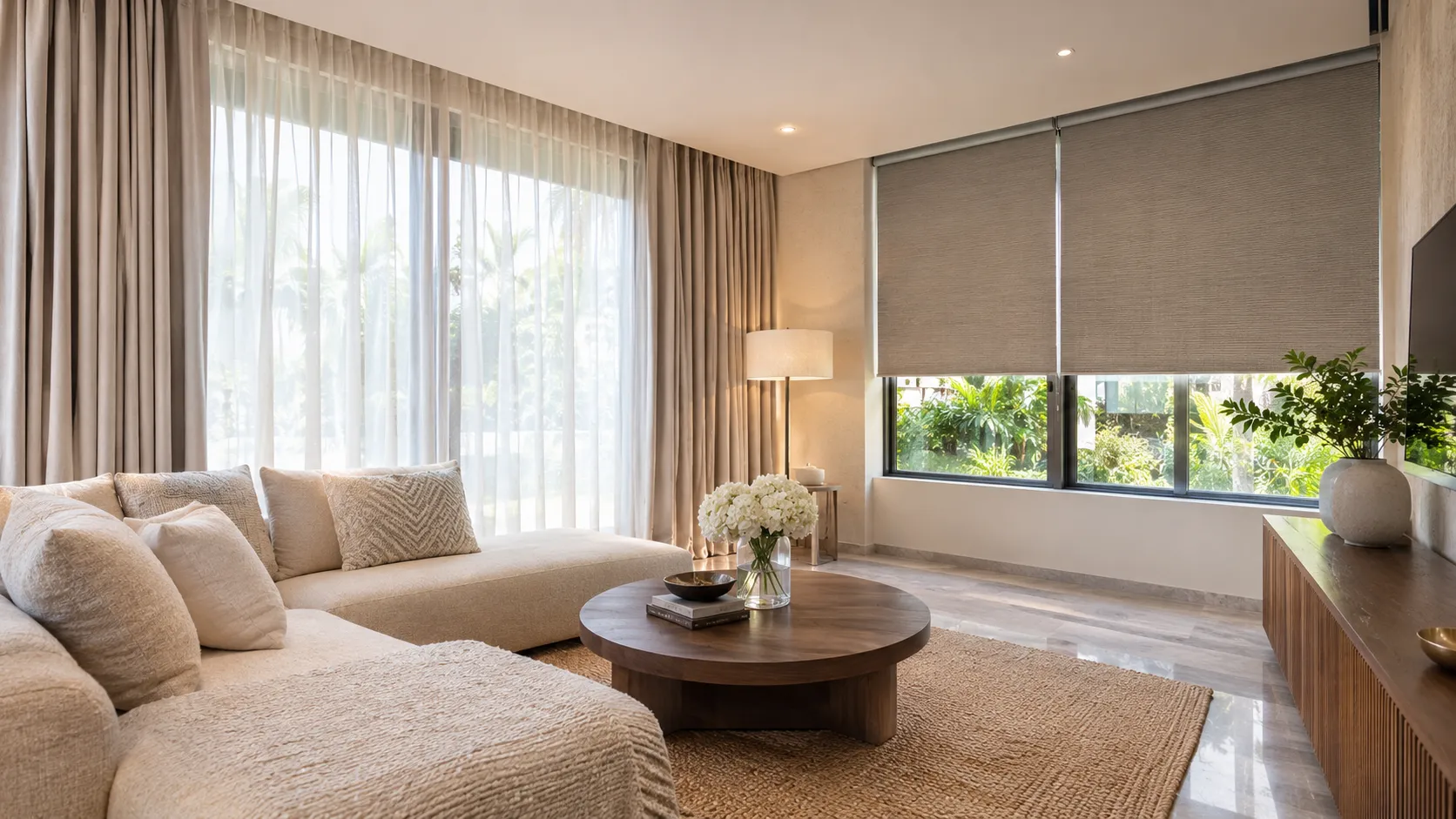
Technical sunscreen roller blinds are woven from PVC-coated fiberglass or polyester yarns engineered to reflect and absorb solar energy before it penetrates deep into the room:
- 1% to 3% Openness Factor: Provides maximum solar heat deflection and 97% to 99% UV blockage, perfect for blazing west-facing glass facades.
- 5% Openness Factor: Balances thermal reflection with optical clarity, preserving daytime garden and pool views.
3. 100% Blackout Roller Blinds for Total Thermal Isolation
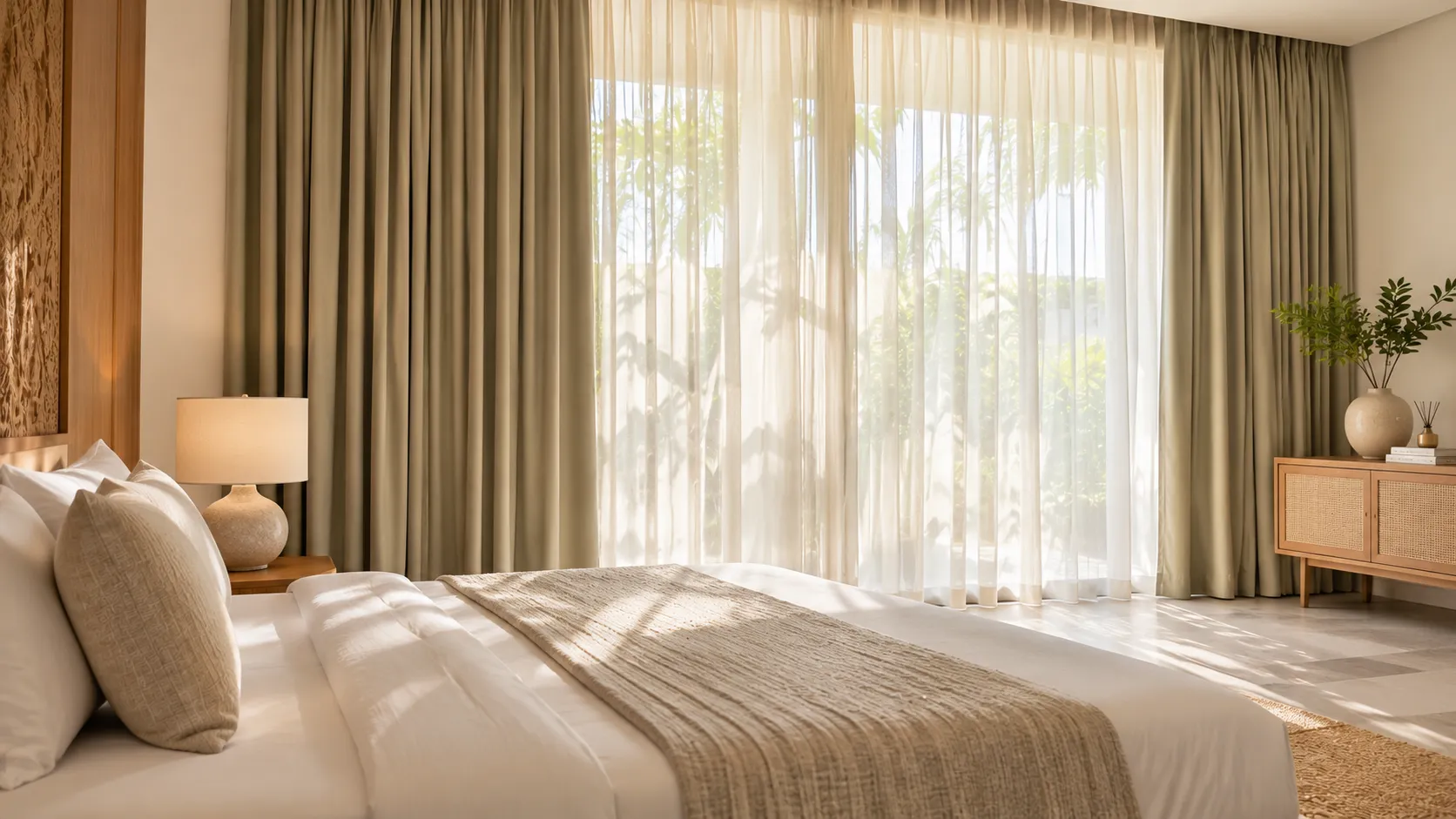
For master bedrooms and media rooms, coated blackout roller blinds provide complete solar isolation, creating an impenetrable radiant heat barrier that keeps indoor room temperatures cool.
4. Expert Shading Solutions with Almeers Living
Maximize your home cooling efficiency with professional guidance. As a premier window treatment specialist in Bali, Almeers Living offers custom sunscreen and blackout roller blinds engineered for exceptional tropical thermal performance.