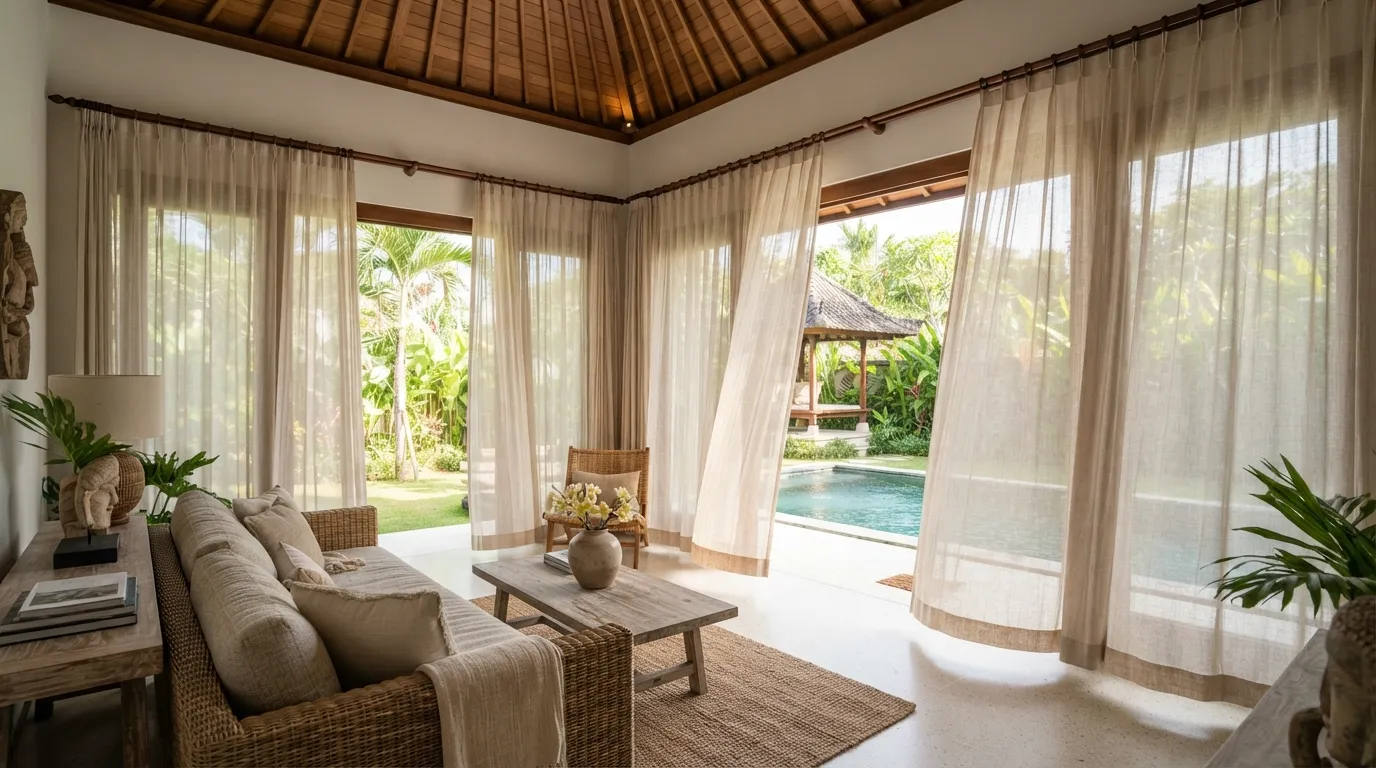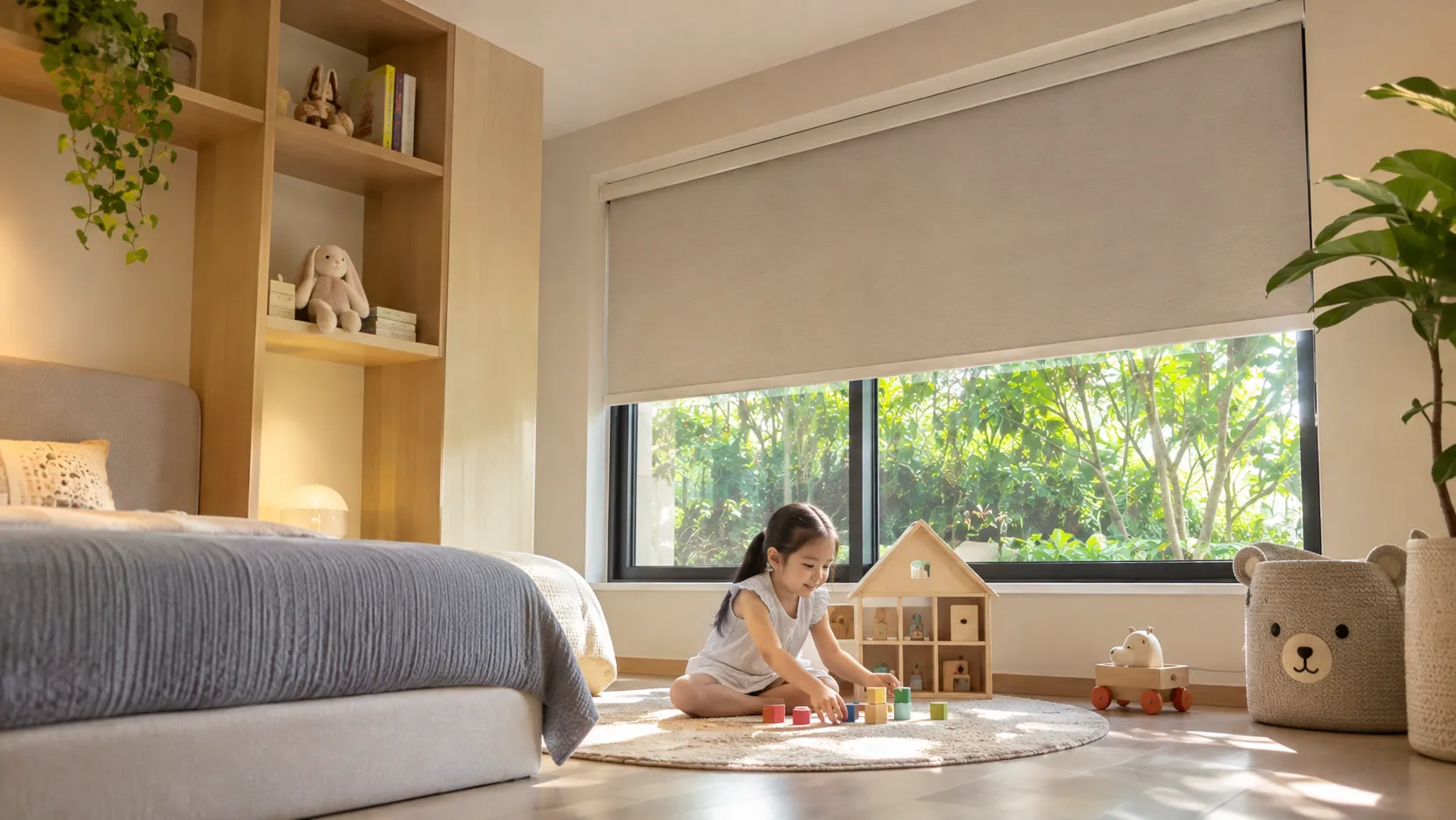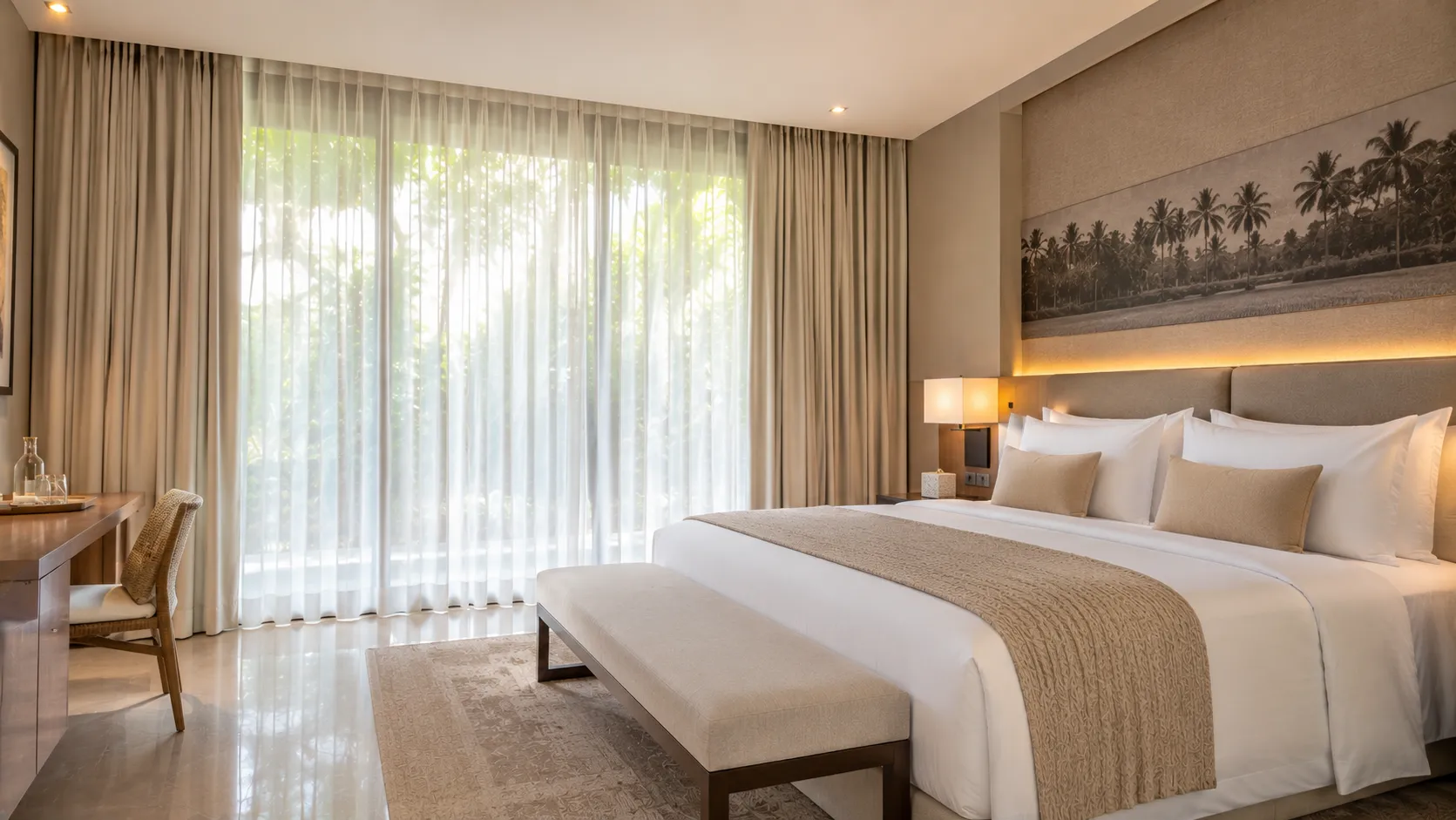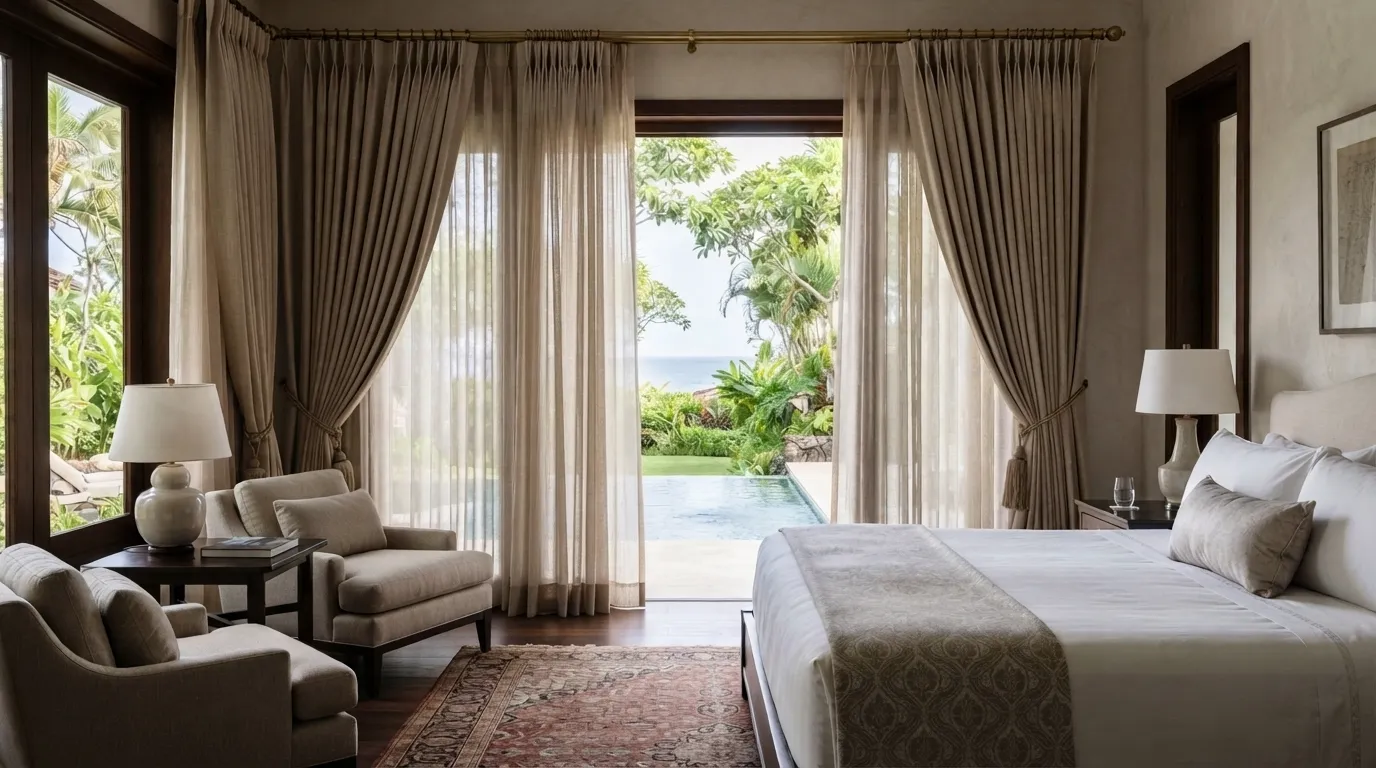
In a luxury hotel or villa, curtains do more than cover windows. They frame architectural views, soften interior finishes, support guest privacy and help create the atmosphere that defines the property. Their quality is noticed in the way the fabric falls, how evenly the pleats are formed, how smoothly the panels move and how well the entire installation relates to the room.
Elegant curtain design is therefore a combination of visual decisions and technical details. Heavyweight drapery can create a generous, tailored appearance, while a carefully selected lining can improve opacity and help the curtain maintain its shape. Tracks, brackets, carriers and operating systems must also be appropriate for the curtain's dimensions, fabric weight and expected frequency of use.
For luxury hotels, resorts and private villas in Bali, these decisions need to account for tropical conditions as well as interior design. Sun exposure, humidity, coastal air, wide glazed openings and frequent guest use can influence material and hardware selection. This guide explains how to plan elegant hospitality curtains that balance premium appearance, practical performance and long-term maintenance.
1. What Makes a Curtain Design Feel Luxurious?
A premium result is usually created by several details working together rather than by fabric price alone. The proportions should suit the window and ceiling height, the folds should look intentional, the hem should hang evenly and the hardware should operate smoothly. A beautiful fabric can still look poorly finished if the track is underspecified or the curtain is not measured accurately.
- Proportion: curtain height, width and stack position should relate to the window and the room's architecture.
- Fabric quality: texture, weight, drape and construction should suit the desired appearance and use.
- Pleat consistency: folds should be evenly distributed and appropriate for the fabric and heading system.
- Light control: lining and layering should meet the room's privacy and darkness requirements.
- Hardware: tracks, brackets and operating components should be selected for the actual load and installation conditions.
- Finishing: hems, returns, overlaps and installation alignment contribute to a refined overall appearance.
2. Choosing Heavyweight Drapery Fabrics
Heavyweight drapery can create a sense of depth and formality, particularly in tall bedrooms, suites, formal living areas and hospitality spaces with generous glazing. The additional fabric weight can help create a substantial visual presence, but weight alone does not guarantee an elegant result. The fabric must drape well, suit the heading and remain manageable on the selected track.
Texture and surface character
Textured fabrics can add visual richness without relying on strong patterns. Linen-look weaves, subtle slubs, velvet-like surfaces and refined plain fabrics each create a different mood. Choose a surface that relates to the room's upholstery, wall finishes, timber and stone rather than selecting a fabric in isolation.
Colour and interior coordination
Warm ivory, oatmeal, taupe, stone, muted brown and charcoal are common directions for sophisticated interiors. Lighter colours can keep a large curtain visually soft, while deeper shades can frame a window and add contrast. Always review samples in the actual room because natural and artificial lighting can change how a colour appears.
Fabric weight and practical operation
Before specifying a heavyweight fabric, confirm its width, composition, care instructions and finished weight where available. Consider the total curtain dimensions and the number of panels. A wide, tall curtain made from a heavy material may require a stronger track, appropriate brackets and a suitable operating method.
3. Pleating Styles and Tailored Fullness
The heading determines how fabric is arranged at the top of the curtain and influences the rhythm of the folds. It should be selected with the fabric, track and desired interior style in mind. Fullness is the relationship between the flat fabric width and the finished track width; the appropriate amount depends on the heading style, fabric thickness, pattern and project specification.
Wave or S-fold
Wave headings create a regular, flowing sequence of folds. They suit contemporary hotel rooms and villas where a clean, consistent curtain profile is desired. The track and glider spacing must be compatible with the specified wave system, and the fabric needs to be suitable for forming the intended folds.
Pinch pleat
Pinch pleats create a more structured and tailored appearance. They can work well in formal suites, classic interiors and rooms where the curtain is intended to feel decorative as well as functional. The pleat construction and fullness should be agreed before calculating fabric quantities.
Goblet and other decorative headings
More decorative headings can introduce a traditional or formal character. They may require more fabric and careful finishing, and are not automatically suitable for every track or operating arrangement. Confirm the intended appearance with a sample or specification before production.
For any heading, avoid choosing fullness by appearance in a small photograph alone. Review the fabric's body, width, pattern repeat and stack requirements. The finished curtain should have enough material to create the intended folds without becoming unnecessarily bulky or difficult to operate.
4. Understanding High-Density Linings
Lining is an important part of hospitality curtain specification. Depending on its construction, a lining can change the curtain's opacity, body, drape and protection from light exposure. It can also affect the finished weight and the amount of space required at the track.
High-density lining is often considered where stronger light control, a fuller appearance or additional fabric protection is desired. However, the term "high-density" should be supported by a clear product specification. Confirm the lining type, composition, opacity or performance information supplied by the manufacturer, and whether it is compatible with the face fabric.
Blackout lining
Blackout lining is used where a room requires substantial reduction of incoming light, such as guest bedrooms or media spaces. The final result depends on both the lining and the installation. Light may still enter through gaps at the sides, top or bottom, so returns, overlaps, track position and window coverage need to be considered.
Dimout and light-filtering options
Dimout options can reduce incoming light without necessarily providing the same darkness as a blackout construction. They may suit living areas, lounges and rooms where a softer level of light control is preferred. Select according to the actual room requirement rather than treating all lined curtains as equivalent.
Thermal and protective considerations
Some lining constructions are selected to support insulation or reduce direct sunlight reaching the face fabric. Performance varies by product and installation. Request manufacturer information and avoid assuming that a lining will eliminate heat gain or prevent all fading.
5. Layering Sheers and Main Curtains
Layered window treatments are especially useful in hotels and villas because they allow guests to adjust the room throughout the day. A sheer can diffuse daylight and soften the view, while a heavier outer curtain can provide greater privacy and room darkening when closed.
For a refined layered arrangement, coordinate the two fabrics by undertone and texture. A warm ivory sheer can sit comfortably behind an oatmeal, taupe or muted brown curtain. In a cooler contemporary interior, a soft white sheer may work with stone or warm grey drapery. The layers do not need to be identical, but they should look intentional together.
A double track is commonly used when the sheer and main curtain need to operate independently. Check the available ceiling or pelmet depth, the projection of each track, the curtain stack and the direction in which the panels will open. For wide doors, make sure the stack does not obstruct handles, access routes or important views.
6. Hospitality Tracks and Hardware Standards
Hardware is a functional part of the curtain system and should be specified with the same care as the fabric. Hospitality environments may involve frequent opening and closing, large window spans, tall drops and different users operating the curtains every day. A system that works for a small residential window may not be appropriate for a wide hotel suite or a full-height villa opening.
Track capacity and support
Track selection should account for the total finished curtain weight, span, fixing surface, bracket spacing and operating method. Confirm the manufacturer's load guidance and installation requirements. Very wide or heavy installations may need additional support or a different track configuration.
Carriers, gliders and operating components
Carriers and gliders should be compatible with the track and heading system. Smooth operation depends on correct component selection, alignment and installation. For frequently used guest areas, discuss the expected operating frequency and maintenance access with the supplier or installer.
Brackets, fixings and ceiling conditions
Fixings must be suitable for the substrate, whether the track is installed to concrete, timber, a suspended ceiling or another construction. Decorative finishes do not confirm structural suitability. The installer should check the fixing surface and use an appropriate method for the actual site conditions.
Manual and motorised operation
Manual systems can be practical for many rooms, while motorised systems may be useful for high windows, wide openings and premium guest suites. Motorisation requires planning for power, controls, compatibility, access for servicing and the preferred method of operation during a power interruption.
7. Adapting Luxury Curtain Specifications to Bali's Climate
Bali properties can experience strong sunlight, warm temperatures, high humidity, seasonal rain and, in coastal locations, salt-laden air. The actual exposure varies by building orientation, landscaping, glazing, ventilation and proximity to the sea. A specification suitable for an air-conditioned interior may not be ideal for an open-sided living space.
Sun exposure and fabric care
Assess which windows receive direct sun and for how long. Strong exposure can contribute to fading and gradual material deterioration. Consider suitable face fabrics, lining options, external shading and care instructions. No fabric or lining should be assumed to provide complete protection under every exposure condition.
Humidity and ventilation
Allow for appropriate air circulation and avoid placing fabric where it remains in contact with damp surfaces. Confirm cleaning and care requirements, especially for heavyweight curtains that may be more difficult to remove and handle. If the building has persistent moisture issues, address the source rather than expecting the window treatment to resolve it.
Coastal hardware exposure
For villas and hotels near the coast, discuss corrosion suitability for tracks, brackets, screws and other metal components. Ask for the material specification and maintenance guidance appropriate to the location. A decorative surface finish alone does not establish how a component will perform in salt-laden air.
Open-plan and indoor-outdoor layouts
Large openings often need curtains that stack neatly and do not obstruct movement between indoor and outdoor spaces. Confirm stack direction, track position, panel quantity and clearance from door hardware. Where wind can move curtains significantly, discuss practical ways to manage the panels when doors are open.
8. Room-by-Room Curtain Planning for Hotels and Villas
Guest bedrooms and suites
Prioritise privacy, intuitive operation and the required level of darkness. A sheer and blackout combination can provide flexible daytime and nighttime use. Ensure that the curtain covers the opening appropriately and that the track can support the complete finished weight.
Living rooms and lounges
In living areas, the curtains should relate to the furniture, view and architectural proportions. A sheer layer can soften daylight while a decorative outer curtain adds texture and depth. For large glazed openings, plan the stack so that the view remains as open as possible when the curtains are drawn aside.
Dining rooms and event spaces
Choose fabrics that support the desired atmosphere but can also be maintained according to the property's operating schedule. Consider how often the curtains will be opened, whether they are near food service areas and how easily they can be cleaned or replaced.
Meeting rooms and media rooms
These spaces may require stronger glare reduction or room darkening for screens and presentations. Select the lining and coverage based on the intended use. Where precise light control is important, consider whether a blind or an additional layer is needed.
Bathrooms and spa areas
Moisture exposure should guide material selection. Confirm the manufacturer's suitability and cleaning guidance before using fabric close to showers, baths or areas with recurring condensation. A different window treatment may be more practical in locations that remain damp.
9. Maintenance and Operational Planning
A luxury curtain installation should be maintainable throughout the property's operating life. Before production, establish how the curtains will be cleaned, removed, rehung and inspected. Heavy fabrics and complex headings may require more handling than lighter treatments, so maintenance access should be considered from the beginning.
- Keep a record of fabric names, codes, composition, lining and supplier details.
- Confirm the recommended cleaning method and any restrictions before installation.
- Plan access to tracks, motor components and concealed fixings where maintenance may be required.
- Inspect gliders, brackets, fixings and operating components as part of routine property maintenance.
- Keep spare fabric or matching material information where future repairs or replacements may be needed.
- Train housekeeping or operations staff to use the system without pulling or forcing the curtains.
For hospitality projects, a consistent record of specifications can make future room refurbishments and replacement orders easier. It also helps the property maintain a coordinated appearance when individual curtains need attention.
10. Common Curtain Specification Mistakes
- Choosing fabric before checking the track: the finished weight and heading may exceed the system's intended capacity.
- Assuming all blackout curtains create complete darkness: installation gaps can still admit light.
- Using excessive fullness without checking stack space: bulky curtains can obstruct views or access when open.
- Ignoring the fixing surface: brackets and fixings must suit the actual ceiling or wall construction.
- Overlooking coastal exposure: hardware should be specified for the property's location and maintenance conditions.
- Not testing fabric samples in the room: colour, texture and opacity can look different under the property's lighting.
- Leaving motorisation planning too late: power and control requirements are easier to coordinate before finishing work is complete.
- Failing to document product details: missing fabric codes and hardware specifications can complicate future maintenance.
11. Project Specification Checklist
- Measure each window and record width, height, shape and installation surface.
- Identify the room's purpose and required privacy or darkness level.
- Review sunlight direction, ventilation, moisture exposure and coastal conditions.
- Select the face fabric and confirm composition, weight, width and care instructions.
- Choose the lining according to the required light control and product specification.
- Confirm heading style, fullness, panel quantity, hem and return details.
- Specify tracks, brackets, carriers and fixings for the actual curtain load and site conditions.
- Plan stack direction, access clearance and any motorisation requirements.
- Agree production details, fabric availability, installation scope and maintenance guidance.
Accurate site measurements are essential to a professional finish. Review the curtain measuring guide, the shade measuring guide and the valances and cornices measuring guide before finalising the installation plan. For early planning of curtain stack space, use the curtain stacking calculator.
12. Frequently Asked Questions
What makes curtains suitable for a luxury hotel?
Luxury hotel curtains should combine an appropriate visual style with reliable operation, suitable light control, consistent finishing and a maintenance plan. Fabric, lining, heading, track and installation all contribute to the result.
Are heavyweight curtains always better for luxury villas?
No. Heavyweight fabrics can create a substantial, elegant appearance, but the right choice depends on the room, track capacity, operating frequency, climate exposure and maintenance requirements. A lighter fabric may be more suitable in some spaces.
Which pleating style is best for hotel curtains?
Wave headings suit many contemporary interiors, while pinch pleats can create a more tailored or formal look. The best option depends on the fabric, track system, desired fullness, stack space and overall design direction.
What is the difference between blackout and dimout lining?
Blackout products are intended to provide a higher level of light blocking than typical dimout products. Actual performance depends on the product specification and how completely the curtain covers the window perimeter.
What track should be used for heavy curtains?
The track should be selected according to the finished curtain weight, span, fixing surface, bracket spacing and operating method. Follow the manufacturer's capacity and installation guidance and have the site conditions checked by the installer.
Are motorised curtains useful in luxury villas?
They can be useful for tall windows, wide openings and rooms where convenient operation is important. Plan power, controls, compatibility, service access and manual operation arrangements before installation.
What should be considered for curtain hardware near the Bali coast?
Ask the supplier or installer to specify tracks, brackets and fixings appropriate to salt-laden air and the property's exposure. Confirm material details and maintenance recommendations rather than relying only on a product's appearance.
How can hotels keep curtain designs consistent across rooms?
Create a documented specification for fabric, colour, lining, heading, track and finishing. A shared palette can maintain visual consistency while allowing each room to use a different treatment according to its function.
Conclusion: Luxury Is in the Details
Elegant curtain designs for luxury hotels and villas are built through careful coordination. Premium heavyweight drapery, tailored pleating, suitable high-density linings and properly specified hospitality hardware can work together to create a polished and functional result. None of these elements should be selected independently of the window dimensions, room use and installation conditions.
For Bali properties, tropical exposure adds another layer of consideration. Sunlight, humidity, coastal air, wide openings and frequent guest operation all influence the right specification. Reviewing samples, confirming product information and planning the hardware early can help avoid costly adjustments later.
Explore the Almeers Living product range for custom curtains and blinds, or browse the Almeers Living blog for more window treatment guidance. Almeers Living supports custom window treatment planning in Bali, with solutions considered around each property's measurements, interior direction and functional requirements.