How to Childproof Window Treatments: Expert Tips for Tropical Homes
The safest starting point is to choose window coverings without accessible operating cords or loops wherever possible, then follow the manufacturer’s installation and safety instructions. Cords and loops can pose a serious strangulation hazard to young children. Secure mounting and furniture placement help, but do not replace a safer operating design.
1. Inspect every room
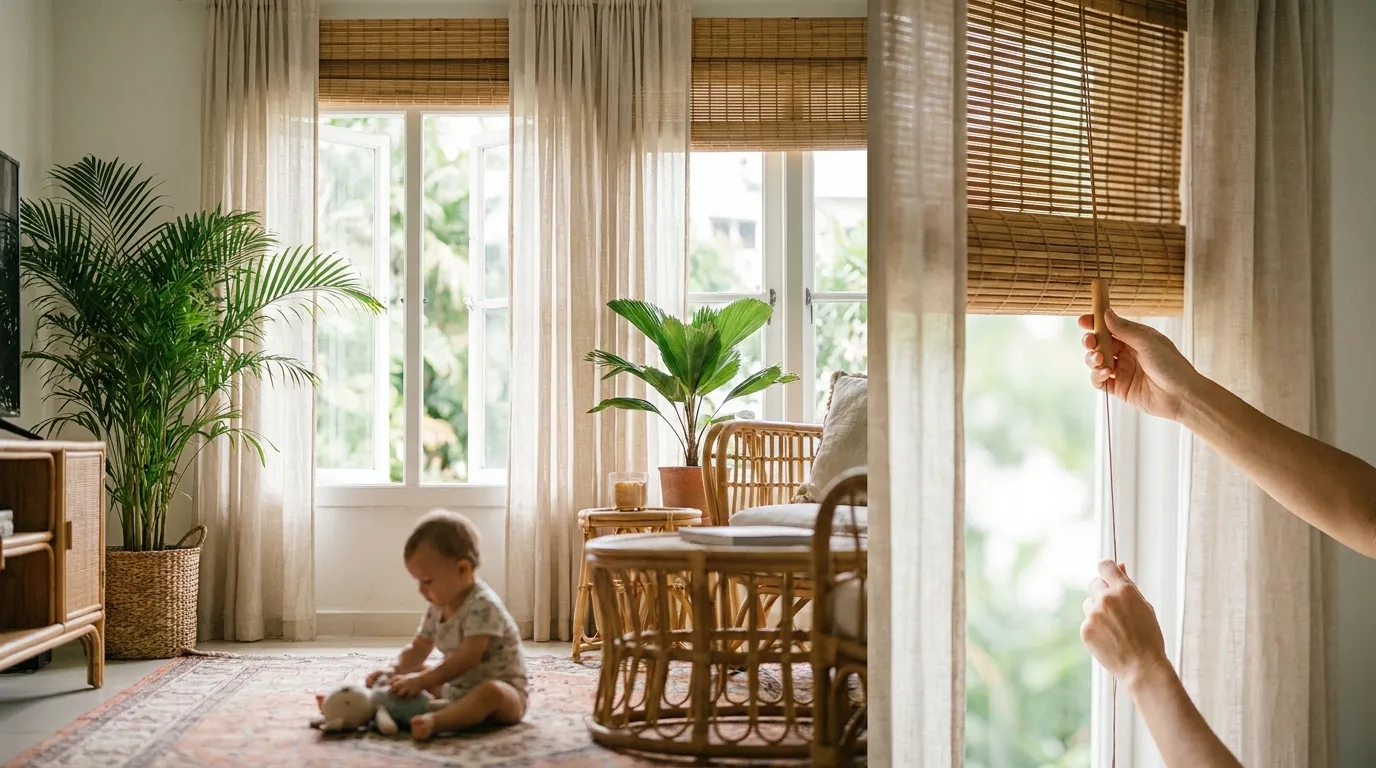
Check bedrooms, living areas, play spaces and guest rooms at a child’s height. Look for pull cords, continuous loops, chains, loose cords, decorative ties and controls reachable from a bed or sofa. Do not assume a treatment is safe because it looks tidy. In villas or rentals, inspect all rooms before children arrive, including older blinds and temporary repairs.
2. Consider safer operating styles
- Cordless blinds: remove an exposed operating cord, but still require correct installation and use.
- Motorized curtains or blinds: can reduce the need for manual pull cords. Confirm controls, power, backup operation and access to remotes.
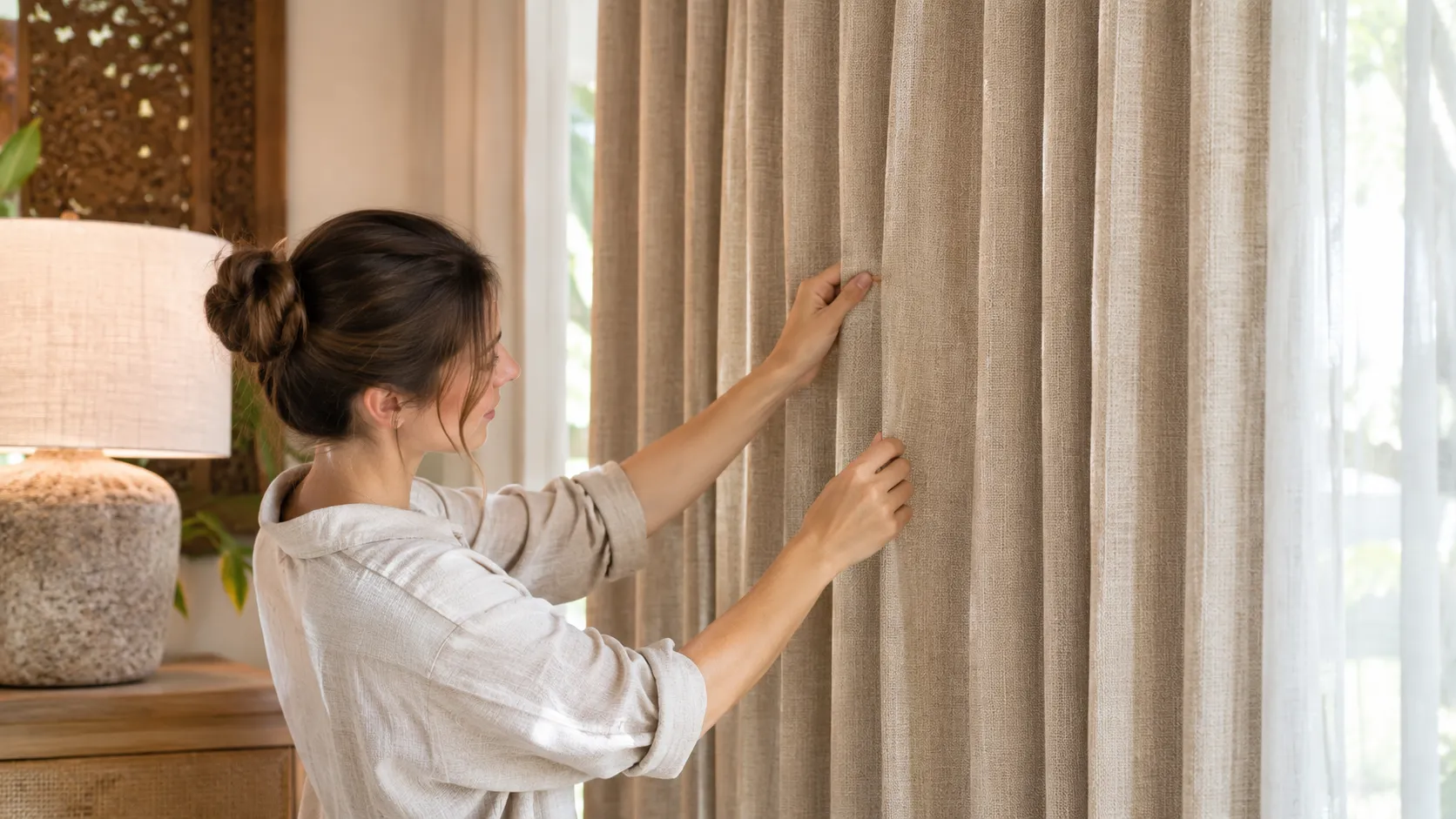
- Manual curtains: can work well when the track and opening method do not introduce accessible loops or long cords. Check any wand or accessory supplied.
Do not assume every motorized product is automatically child-safe. Request the specific product’s safety documentation and check any remaining cords or backup controls.
3. Secure the hardware
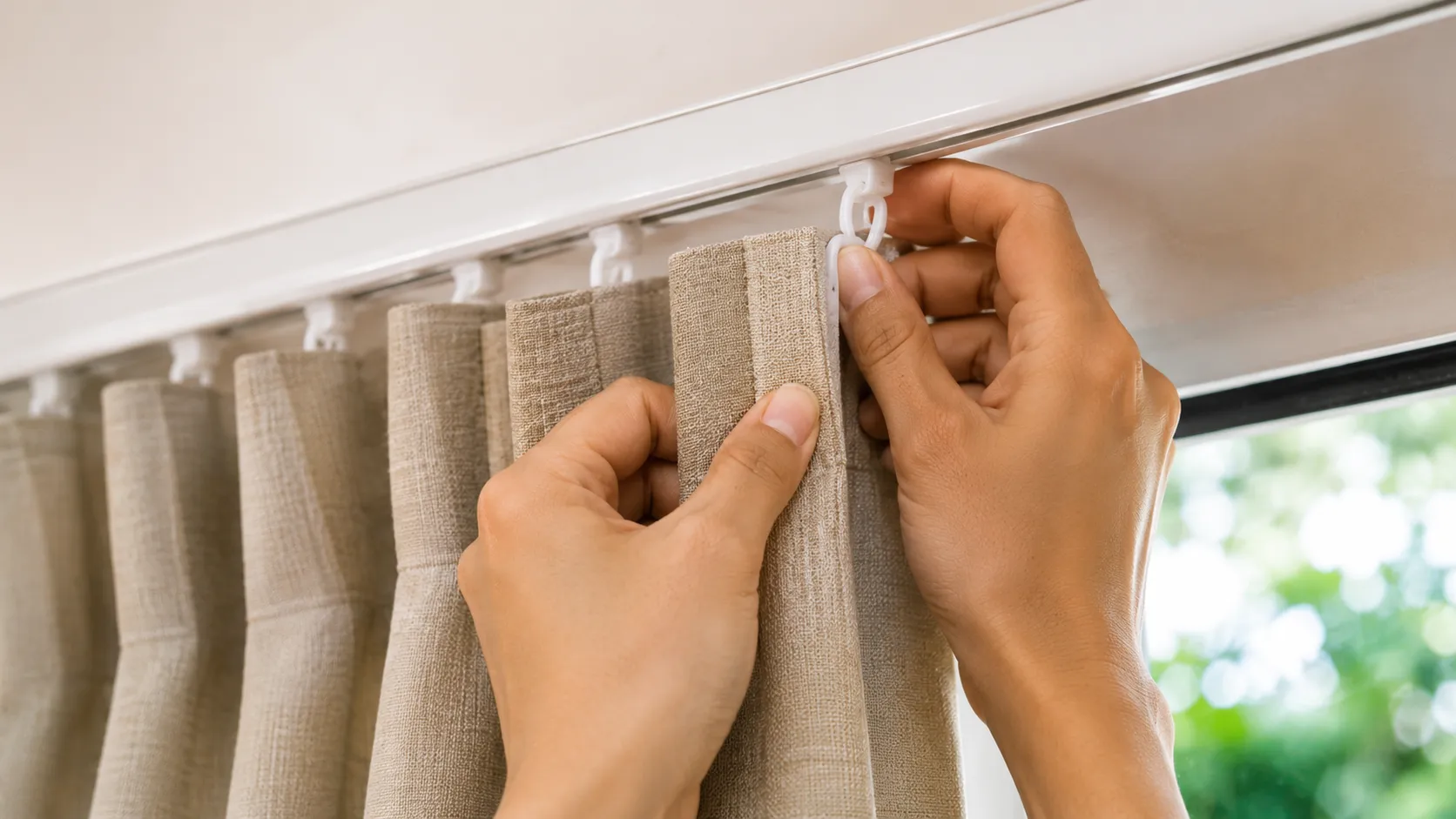
Tracks, brackets and headrails must be fixed to a suitable substrate using hardware appropriate to the installation. Do not rely on improvised fasteners for heavy curtains. Confirm ceiling construction for ceiling-mounted tracks and wall material for wall-mounted brackets. If the substrate or load is uncertain, have a qualified installer assess it.
4. Remove climbing aids
Where practical, move cots, beds, chairs and toy boxes away from window coverings. Children may climb furniture to reach a cord, sill or window. Window-treatment safety is only one part of window safety: use suitable window locks or restrictors where required and never rely on curtains to stop a child reaching an open window.
5. Include safety in routine checks
- Inspect for broken parts, exposed cords and loose fittings after cleaning.
- Stop using a damaged product until it is repaired or replaced safely.
- Do not tie cords together or create improvised knots, which can form a dangerous loop.
- Keep small detachable parts and remotes out of reach.
- Make it easy for caregivers or housekeeping staff to report damage.
Questions to ask before ordering
Ask whether the model is cordless or motorized, what operating components remain accessible, what product safety guidance applies in your market and how the system must be installed. Request documentation instead of relying on a general claim that a range is “safe”. Standards vary by country and product type.
FAQs
Are pull wands safer than cords?
A wand may avoid some cord hazards, but suitability depends on the product and how it is stored and used. Follow the product instructions.
Can I tie up an existing corded blind?
Do not rely on tying or knotting cords as a fix. Use a manufacturer-approved safety retrofit or replace the treatment with a suitable safer design.
Are motorized curtains right for every family?
Not always. Consider controls, power, maintenance, cost and installation alongside safety.
Review our guide to blind types, explore the smart-home motorization guide, and use the window treatment buying guide to compare operating styles.