How to Measure Curtains: An Expert Guide for Bali Villas & Homes
Accurate curtain measurements are the foundation of a clean, high-end window treatment. For Bali villas, residences, apartments, and hospitality spaces, the finished result depends on more than the size of the glass. Curtain width, track position, finished drop, stack-back, fullness, and the way the fabric will be used all affect the final appearance.
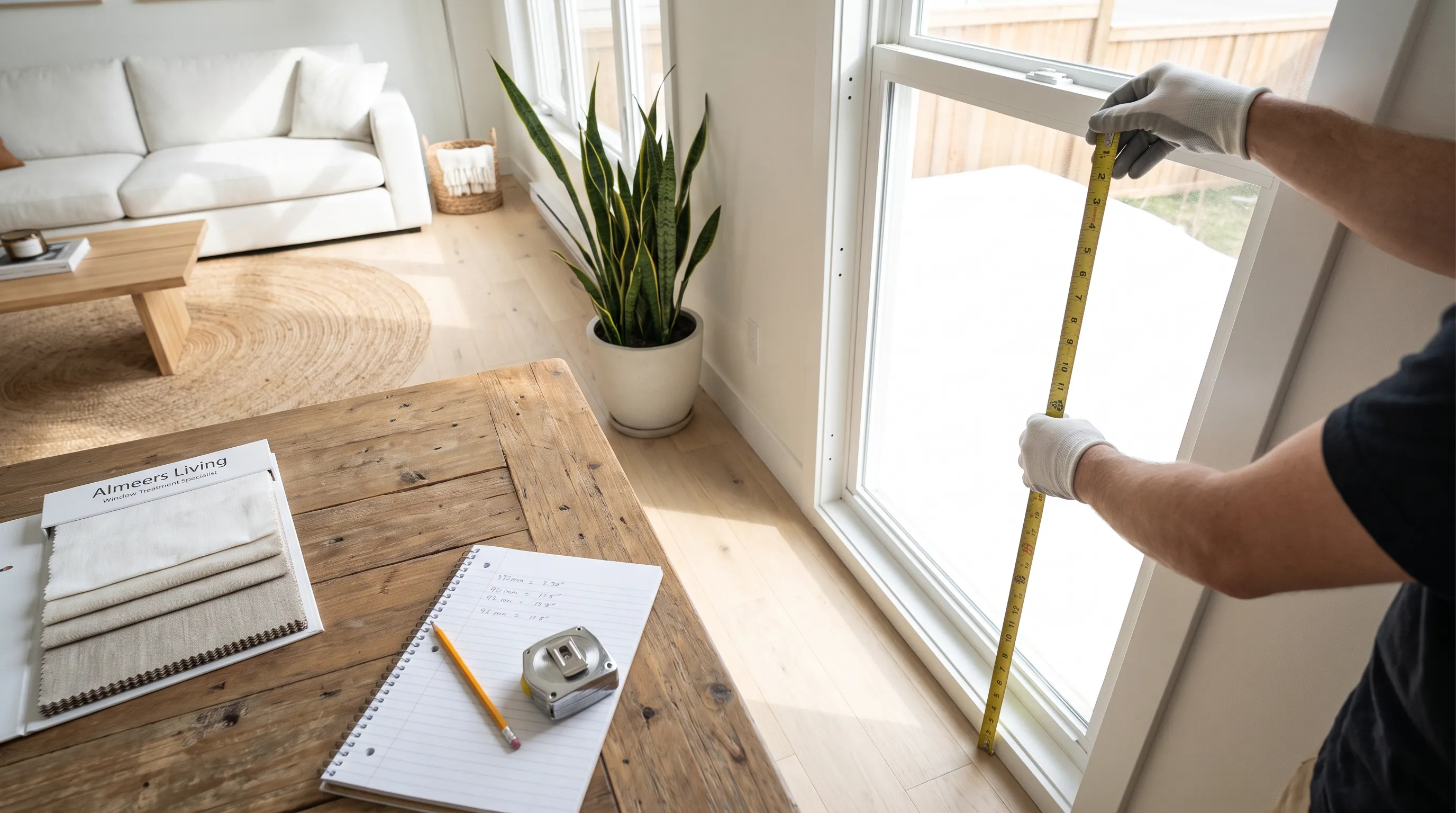
This expert guide explains how to measure curtains correctly, whether you already have a curtain track or pole installed or are planning a new custom window treatment. If you are starting from the window itself rather than an existing curtain track, also see our guide to measuring windows for custom curtains.
1. Decide What Curtain Treatment You Are Measuring
Before taking measurements, decide what you are planning to install. A single sheer curtain, a blackout curtain, a linen curtain, or a layered sheer-and-blackout system can require different hardware and fabric calculations.
- Sheer curtains: designed primarily for filtered daylight, privacy, and a soft decorative layer.
- Blackout curtains: designed for stronger light control, privacy, and bedroom or media-room applications.
- Linen curtains: often selected for a relaxed natural look and soft daylight.
- Layered curtains: combine two curtain layers, commonly sheer plus blackout, and require sufficient track space and stack-back.
For a broader overview of custom window treatments in Bali, see our complete guide to custom curtains in Bali.
2. Choose the Curtain Mounting Position
Decide where the curtain track or pole will be installed before measuring the finished curtain size.
Outside Mount
With an outside mount, the curtain hardware sits outside or above the window opening. This is common for floor-to-ceiling installations and can create a taller, more spacious appearance.
Ceiling Mount
A ceiling-mounted track can be useful for modern villas, large glazed openings, and floor-to-ceiling curtains. The finished drop is normally measured from the actual track position to the desired floor clearance.
Inside Mount
An inside mount places the treatment within the window recess. This approach is more common for blinds and shades, although some curtain applications can use a recessed track when the space allows.
3. How to Measure Curtain Width
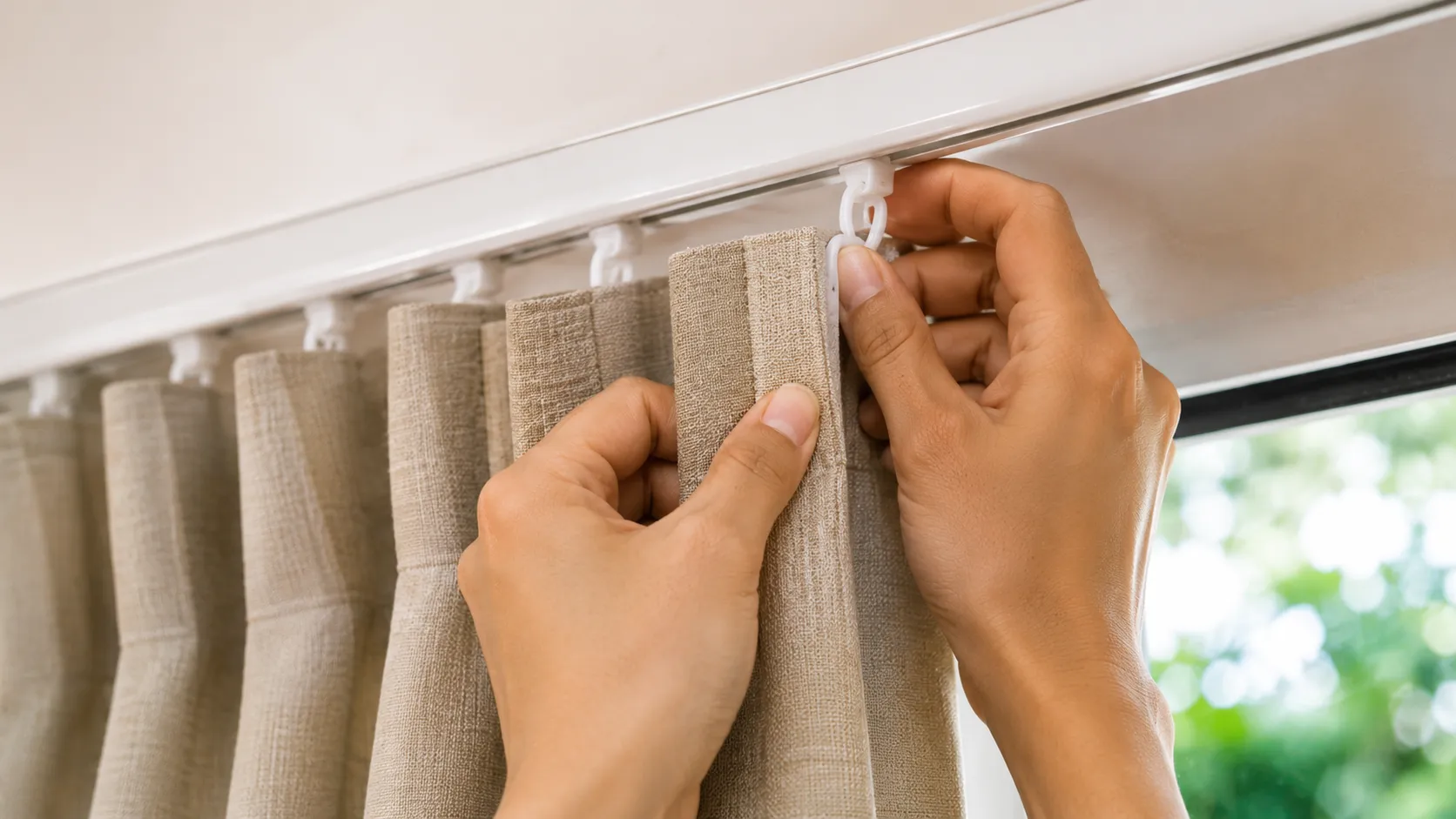
The most important rule is simple: if the curtain hardware already exists, measure the curtain track or pole, not only the glass area.
If the track or pole is already installed
Measure the usable track or pole width from the correct end points. If the system has a center opening, confirm whether the measurement represents the total track width or only one side.
If the hardware has not been installed
Measure the window or opening first, then determine how far the new track should extend beyond the opening. Extending the track beyond the window can improve stack-back and reduce the amount of glass covered when the curtains are open.
4. Allow Space for Stack-Back
Stack-back is the area occupied by the curtains when they are fully open. If the track is too narrow, the opened curtains can cover part of the glass and reduce the view and daylight.
For a preliminary estimate, many curtain projects allow approximately 15–20 cm beyond each side of the opening, but the correct amount depends on the curtain fabric, fullness, number of panels, heading style, and available wall space.
For large villa openings, sliding doors, and layered curtains, the stack-back requirement should be checked as part of the complete design rather than treated as a fixed number.
5. How to Measure Curtain Length or Drop
Measure the finished drop from the actual curtain hardware position to the intended bottom point.
Floor-length curtains
For a clean contemporary finish, the curtain can finish slightly above the floor. A small clearance helps reduce contact with dust and moisture while maintaining a tailored appearance.
Ceiling-to-floor curtains
For a floor-to-ceiling look, measure from the final ceiling or track position to the finished floor level. Do not assume the floor is perfectly level across the entire opening.
Pooling
Some interiors intentionally allow additional fabric to rest on the floor for a softer decorative effect. Pooling should be specified before production because it changes the finished drop.
6. Measure Large Windows and Sliding Doors
Large glazed openings require more attention than a standard window. Measure the complete opening, identify the desired curtain stacking areas, and check whether doors, handles, walls, columns, or furniture will interfere with the curtain movement.
For wide sliding doors, also confirm where the curtain should open and whether the track will be ceiling-mounted or wall-mounted. These details affect the number of panels and the hardware configuration.
7. Calculate Curtain Fullness
Fullness is the amount of fabric used compared with the finished track width. It determines how rich and dimensional the curtain looks when closed.
A simple preliminary calculation is:
Required fabric width = finished curtain track width × fullness factor
For example, if a finished track width is 300 cm and a project uses a 2.0× fullness factor:
300 cm × 2.0 = 600 cm of fabric width
A 2.5× fullness factor would produce:
300 cm × 2.5 = 750 cm of fabric width
These are planning calculations, not final fabric consumption. The actual amount of fabric also depends on the fabric width, pattern repeat, panel construction, heading style, seam allowances, and production method.
8. Fullness for Sheer and Blackout Curtains
Sheer and blackout curtains can use different fullness depending on the desired appearance, fabric characteristics, and hardware. A lighter sheer can require more visual fullness to create soft folds, while a heavier blackout fabric may need a different treatment.
For that reason, do not select a fullness factor only from a generic online formula. The fabric and heading style should be considered together before production.
9. Measuring Layered Curtains
For a layered installation such as sheer plus blackout, measure the complete opening and plan both curtain layers together.
- Confirm whether a double track or another layered hardware system is required.
- Allow enough space for both layers to move independently.
- Check the stack-back of both fabrics.
- Confirm the opening direction and center split.
- Check wall and ceiling clearance before installation.
This is particularly important for large villa doors where two layers of fabric can occupy substantial space when opened.
10. Common Curtain Measurement Mistakes
- Measuring only the glass instead of the planned hardware width.
- Forgetting stack-back space.
- Taking the finished drop from the wrong starting point.
- Assuming the floor and ceiling are perfectly level.
- Using the same fullness factor for every fabric.
- Ignoring handles, air-conditioning units, furniture, columns, or other obstructions.
- Ordering fabric before confirming the final hardware and heading style.
11. When Professional Curtain Measurement Makes Sense
DIY measurements can be useful for an initial budget estimate, but final measurements for custom curtains are more complicated when the property has large openings, multiple windows, floor-to-ceiling glass, layered treatments, unusual wall conditions, or premium fabrics.
A professional measurement should consider the complete installation rather than only the window dimensions. This helps connect the measurement with the hardware, curtain construction, fullness, finished drop, and installation conditions.
12. Professional Curtain Measurement in Bali
Almeers Living provides custom window treatment solutions for villas, residences, apartments, and hospitality properties across Bali. Our team can assess the opening, discuss the desired curtain style, check installation conditions, and help determine the appropriate measurement before production.
If you are unsure about your curtain width, drop, fullness, or hardware position, you can contact Almeers Living through our website for a professional consultation.
Frequently Asked Questions
Should I measure the window or the curtain track?
If an existing curtain track or pole is already installed and will be reused, measure the hardware. If new hardware is required, measure the window opening and surrounding wall space first so the correct hardware width can be planned.
How much extra width should I allow for curtains?
A preliminary allowance of around 15–20 cm beyond each side of the opening can be useful, but the final requirement depends on the fabric, fullness, panel arrangement, and available stacking space.
How do I calculate curtain fullness?
Multiply the finished track width by the selected fullness factor. For example, 300 cm of track width at 2.0× fullness gives a preliminary fabric width of 600 cm. Final fabric consumption requires additional production details.
Should I measure every window separately?
Yes. Even windows that look identical can have small differences in width, height, level, recess depth, or surrounding obstructions. Record each opening separately for custom production.
Final Checklist Before Ordering Custom Curtains
- Hardware position confirmed
- Finished track or pole width confirmed
- Stack-back space checked
- Finished drop confirmed
- Fullness and heading style discussed
- Fabric width and pattern repeat checked
- Doors, handles, AC units, furniture, and other obstructions checked
- Installation conditions reviewed
For a luxury villa or residence where precision matters, professional measurement can remove uncertainty before fabrication begins.