Modern Japanese Window Design: Minimalist Aesthetics, Shoji Integration, and Japandi Styling Guide
Modern Japanese interior design celebrates the profound philosophical principle of Ma—the intentional appreciation of open space, pause, and atmospheric balance. Within this architectural framework, windows serve not merely as openings to the exterior world, but as soft light filters that cultivate internal calm, privacy, and biophilic connection.
By blending traditional craftsmanship with contemporary textile engineering, modern Japanese window treatments have become a global benchmark for serene residential design.
1. The Evolution of Shoji Screens into Panel Track Systems
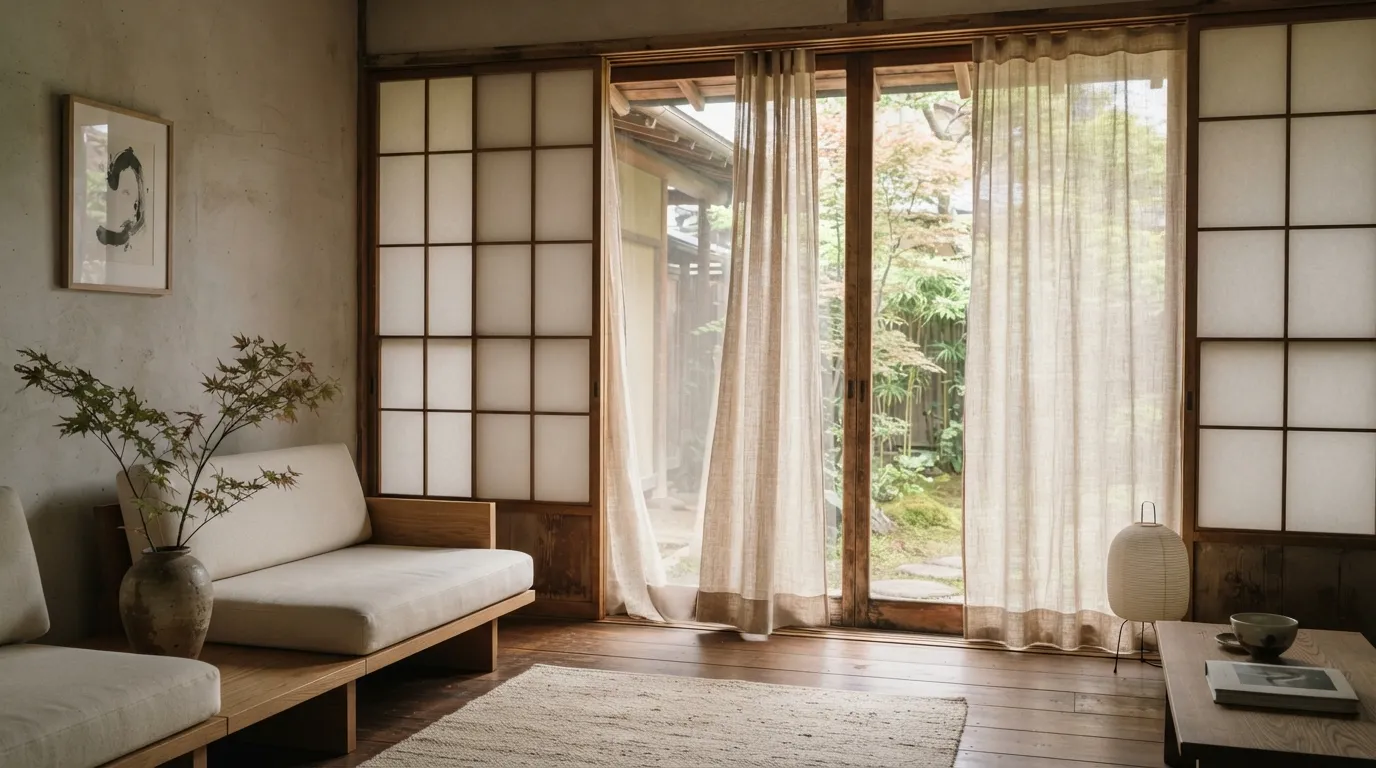
Traditional Shoji screens—constructed from delicate rice paper and translucent wooden latticework—have evolved to meet the demands of modern architecture. Contemporary interiors re-interpret Shoji functionality using sleek, multi-channel sliding panel tracks fitted with durable, translucent woven textiles.
These sliding fabric panels glide smoothly across large glass facades, delivering geometric symmetry and uncluttered visual lines while eliminating the maintenance fragility of traditional paper screens.
2. Diffused Lighting and the Art of Shadows
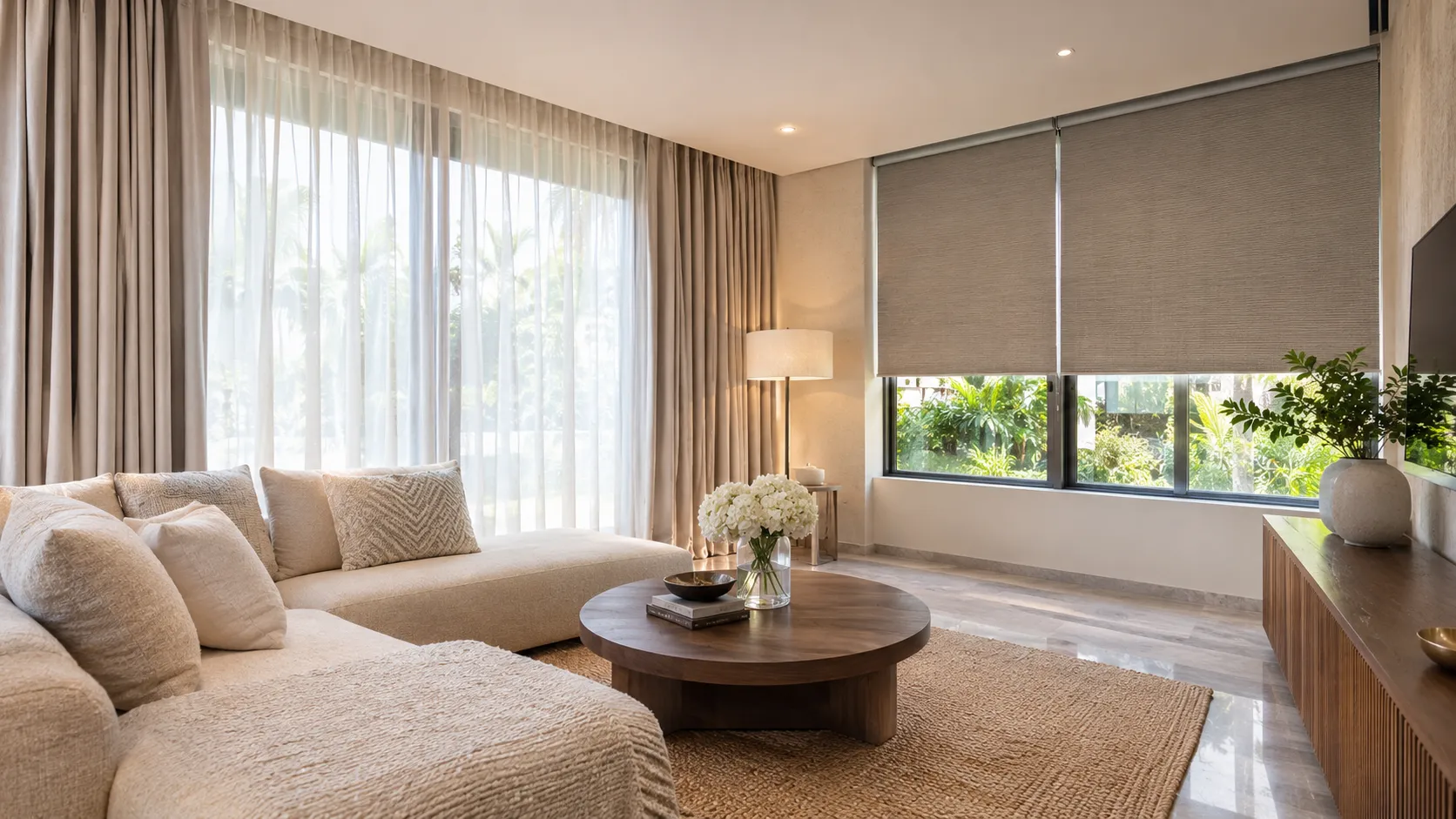
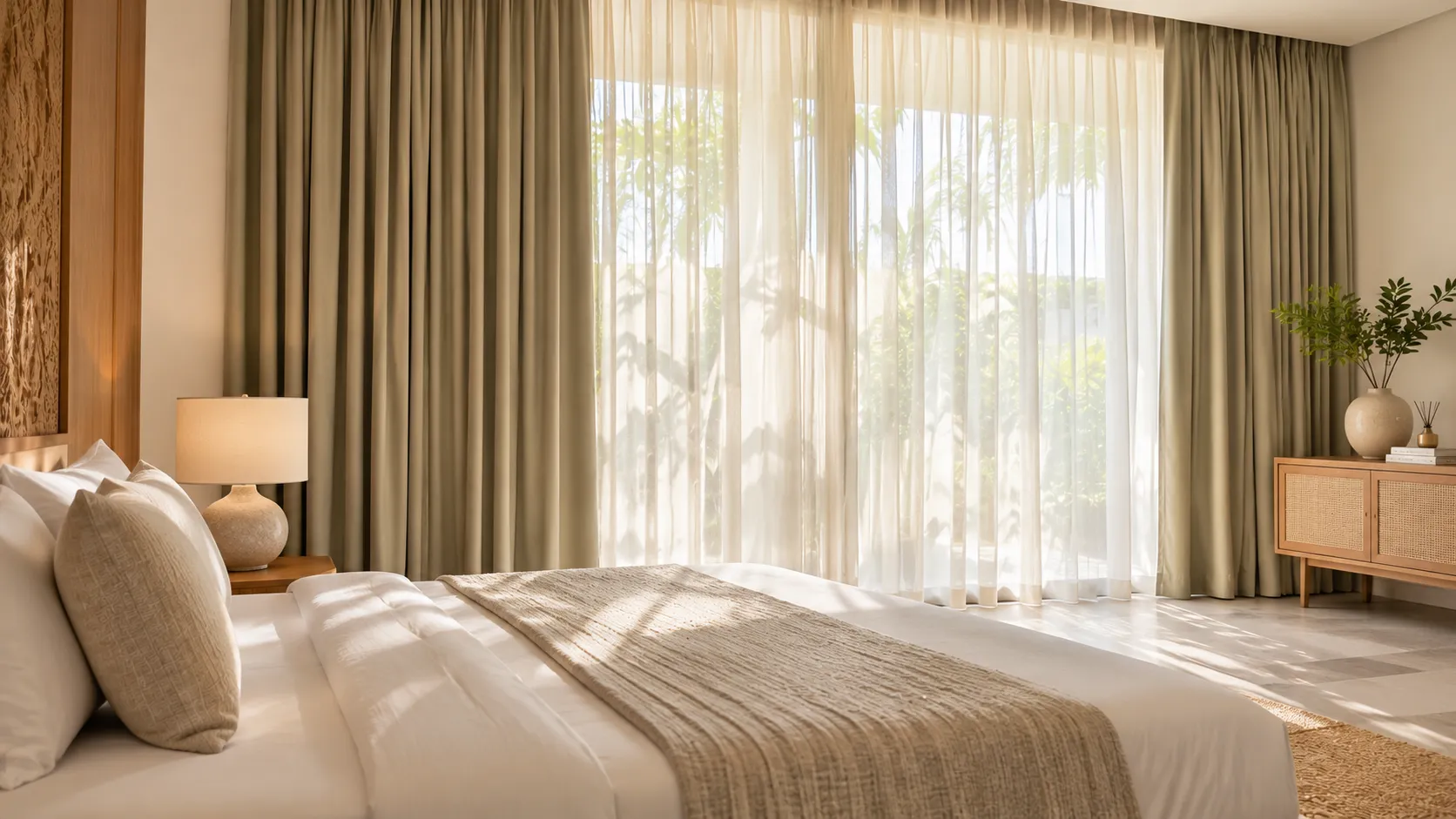
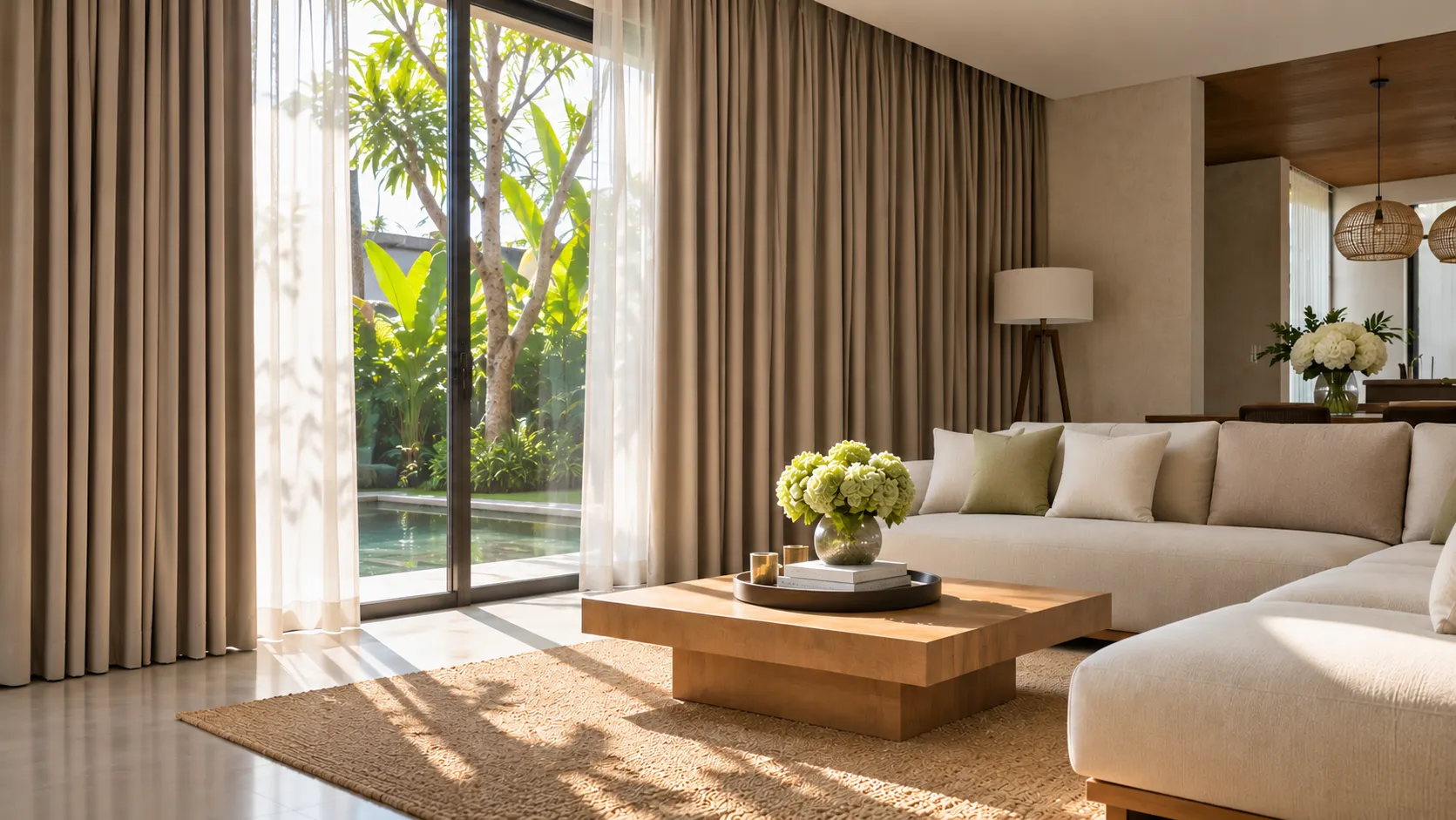
Japanese aesthetics prioritize filtered, ambient daylight over direct, blinding sunlight. Utilizing semi-translucent sheers, slubbed linen-look drapes, or woven panel shades diffuses harsh solar rays into a soft, golden glow.
This gentle light diffusion creates subtle interplays of shadow and warmth across timber floors, plaster walls, and natural stone features, fostering an atmosphere of deep relaxation.
3. Embracing the Japandi Aesthetic
The fusion of Japanese rustic minimalism (Wabi-Sabi) with Scandinavian functional warmth (Hygge) forms the foundation of Japandi design. When selecting window coverings for a Japandi-inspired room, prioritize natural tactile textures:
- Organic Unbleached Linens: Raw slubbed weaves that bring subtle, organic imperfection into clean room spaces.
- Warm Earth-Toned Palettes: Soft oatmeal, sand, muted sage, stone gray, and warm beige shades that reflect nature.
- Concealed Architectural Hardware: Recessing drapery tracks flush inside ceiling pockets ensures that hardware remains invisible, keeping the focus entirely on fabric texture and light.
4. Achieving Functional Serenity in Modern Spaces
To adapt Japanese window concepts to active modern living, integrate performance fabric technology. Pairing light-diffusing sheer panel tracks with hidden 100% blackout roller shades or anti-mold thermal linings ensures complete nighttime light control and climate insulation without disturbing daytime minimalist serenity.