The Rise of Natural Materials in Window Decor: Ideas for Bali Villas & Hotels — Organic Bamboo Weaves, Unbleached Linen Textures, and Sustainable Earth-Tone Interior Styling
Interior Design & Material Guide · Almeers Living
The Rise of Natural Materials in Window Decor: Ideas for Bali Villas & Hotels
Natural materials bring warmth, tactile detail, and a relaxed connection to the surrounding environment. In Bali villas and hotels, window treatments can help connect indoor spaces with timber, stone, woven furniture, gardens, and outdoor views. Bamboo-inspired weaves, unbleached linen textures, and earth-tone palettes offer a way to create that atmosphere while still considering privacy, light, and daily use.
This guide explores how to style natural-looking window treatments, where different materials may work best, and what to consider before specifying them for a hospitality or residential property.
1. Why Natural Materials Are Popular in Window Decor
Natural textures can make a contemporary interior feel warmer and less formal. Their visual character often comes from irregular fibers, woven structures, subtle tonal variation, and surfaces that feel connected to timber, stone, and other organic finishes.
For Bali properties, this approach can complement indoor-outdoor architecture and a landscape-led design. A window treatment may soften strong daylight, frame a garden view, add privacy after dark, or introduce texture to a room with simple architectural finishes.
Natural styling does not mean every component must be made from an untreated natural fiber. A practical design can combine natural materials, responsibly sourced products where verified, and performance-oriented fabrics selected for the conditions of the room.
- Visual warmth: woven surfaces and soft neutral fabrics can balance concrete, stone, glass, and metal.
- Material connection: bamboo, timber, linen, and earth tones can relate to other finishes in the property.
- Softened daylight: suitable sheer and woven treatments can filter light and reduce visual harshness.
- Layered function: decorative natural textures can be paired with a separate privacy or blackout layer where needed.
2. Organic Bamboo Weaves and Woven Textures
Bamboo is often used in window decor as a woven or slatted material, including bamboo blinds and woven shades. Its natural grain and tonal variation can add a handcrafted quality to a room. Depending on the construction, woven bamboo treatments may create a more structured appearance than soft fabric curtains.
Where bamboo-style window treatments work well
- Living areas: woven textures can complement timber furniture, rattan details, and natural stone.
- Dining spaces: a warm woven surface can add detail without introducing a strong color.
- Covered verandas: suitable products may work in sheltered areas when the manufacturer confirms their environmental suitability.
- Guest rooms: bamboo-style shades can provide a distinctive natural look, with a separate layer added if stronger light control is required.
Understand the light and privacy characteristics
Woven bamboo shades are not automatically blackout or fully private. Light can pass through gaps in the weave, and visibility depends on the weave density, lining, lighting conditions, and installation. If a bedroom requires strong room darkening or nighttime privacy, consider a lined option or combine the shade with curtains.
Check suitability for Bali conditions
Natural fibers and woven materials can respond to moisture, direct sun, and changes in indoor conditions. Before specifying bamboo or other natural woven products, check the supplier's recommendations for humidity, ventilation, cleaning, and exposure. Avoid assuming that a natural material is suitable for every bathroom, wet area, or exposed outdoor opening.
For a more flexible window treatment, bamboo-style blinds can be paired with sheer or blockout curtains, provided there is enough space for the systems to operate without interference.
3. Unbleached Linen and Linen-Look Curtain Textures
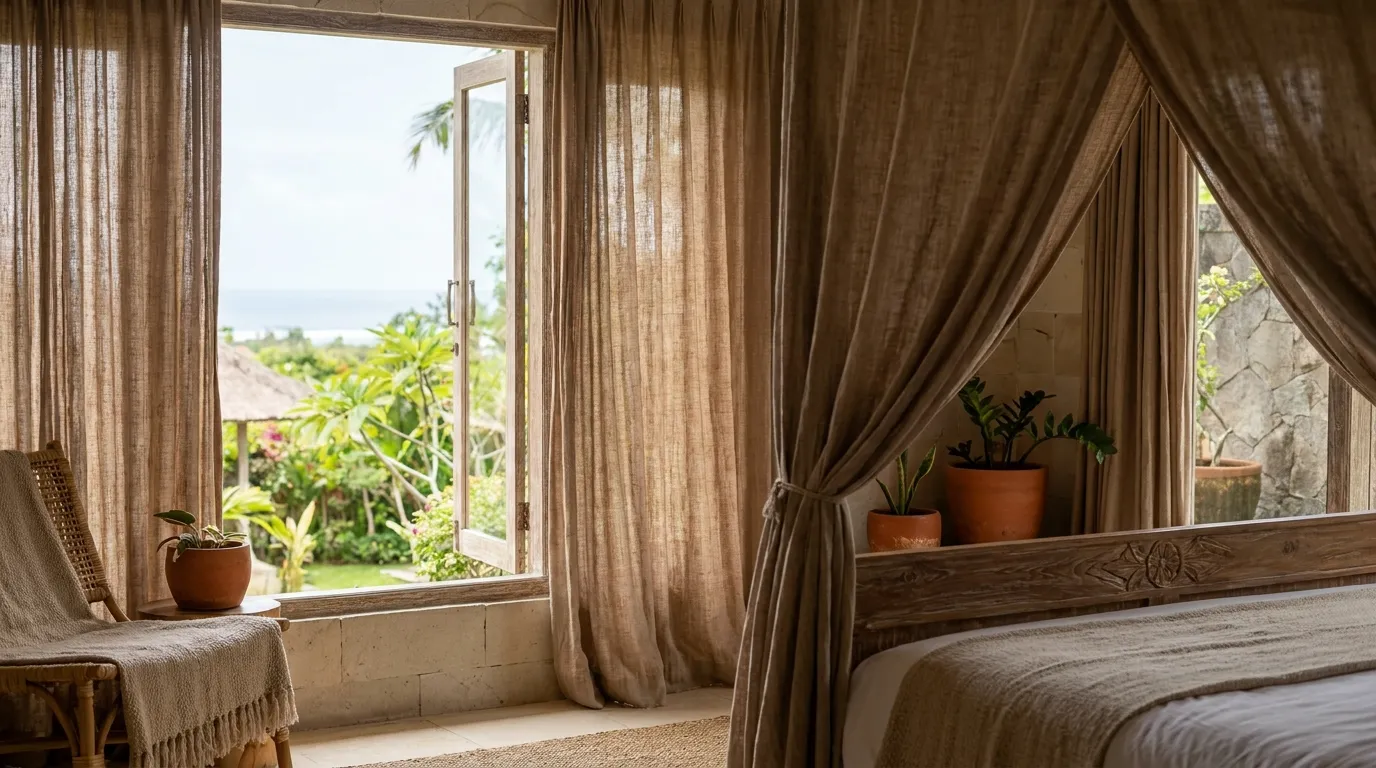
Unbleached linen is valued for its natural fiber character, relaxed texture, and understated appearance. Its shades can range from pale flax and oatmeal to warmer beige, depending on the fiber and finishing process. Small variations in tone and texture are part of the material's visual appeal.
Why linen suits natural interiors
Linen can complement timber, limestone, terrazzo, rattan, and muted wall finishes. Its surface brings softness to large windows and can make a room feel less rigid. Depending on the weave and weight, linen curtains may fall in relaxed folds or create a more structured drape.
Choose between natural linen and linen-look fabric
Natural linen and linen-look fabrics are not the same product. Natural linen is made from flax fibers, while linen-look fabrics use other fibers or blends to create a similar visual texture. Their care requirements, price, crease behavior, durability, and drape can differ.
For a project, compare physical samples and ask for the fiber composition and care instructions. If the visual effect is the priority, a linen-look fabric may provide the desired texture with different practical characteristics. If natural fiber content is important, verify the composition rather than relying on the product name alone.
Use linen textures in layers
Sheer linen or linen-look curtains can soften daylight while maintaining a light visual appearance. A heavier curtain or a suitable lining can be added where more privacy or light reduction is needed. The combination can create depth without making the window treatment feel visually heavy.
4. Build a Sustainable Earth-Tone Interior Palette
Earth-tone styling draws from colors commonly found in natural materials and landscapes. Warm beige, sand, flax, taupe, clay, muted olive, soft brown, and stone grey can work together to create a calm palette.
Start with the permanent finishes
Look at the floor, wall finish, ceiling, timber, stone, and major furniture pieces before choosing curtain colors. These larger surfaces establish the room's undertone. A warm oatmeal curtain may complement honey-toned timber, while a cooler stone or grey-beige fabric may work better with concrete and cooler stone finishes.
Use contrast to create depth
A natural palette does not need to be entirely pale. Deeper olive, tobacco, cocoa, or charcoal accents can add definition. For example, light unbleached curtains can sit beside darker timber, while a muted olive woven shade can introduce a subtle focal point against a warm neutral wall.
Mix texture rather than adding too many colors
Combine smooth stone, visible timber grain, woven accessories, and softly textured curtains. This gives the interior richness without relying on many contrasting colors. Keep the palette controlled and let the differences in surface create interest.
Be precise about sustainability claims
Natural appearance does not automatically mean a product is sustainable. Consider verified fiber content, sourcing information, manufacturing processes, durability, repairability, packaging, and the expected service life. If a supplier provides recognized certifications or documented environmental information, review the scope and validity of those claims before using them in project specifications or marketing.
5. Natural Window Decor Ideas for Bali Villas and Hotels
Villa living room: relaxed layers around the view
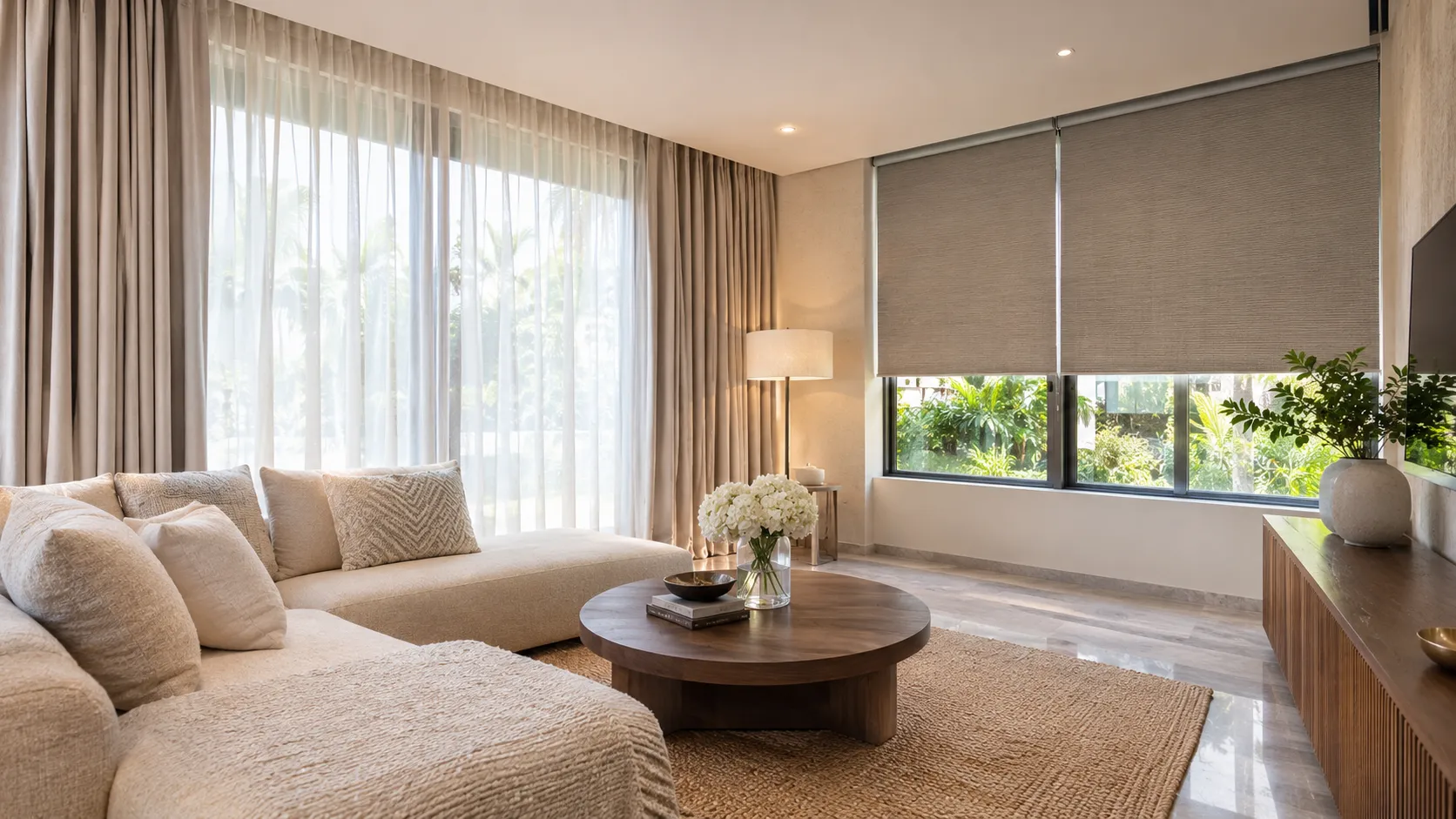
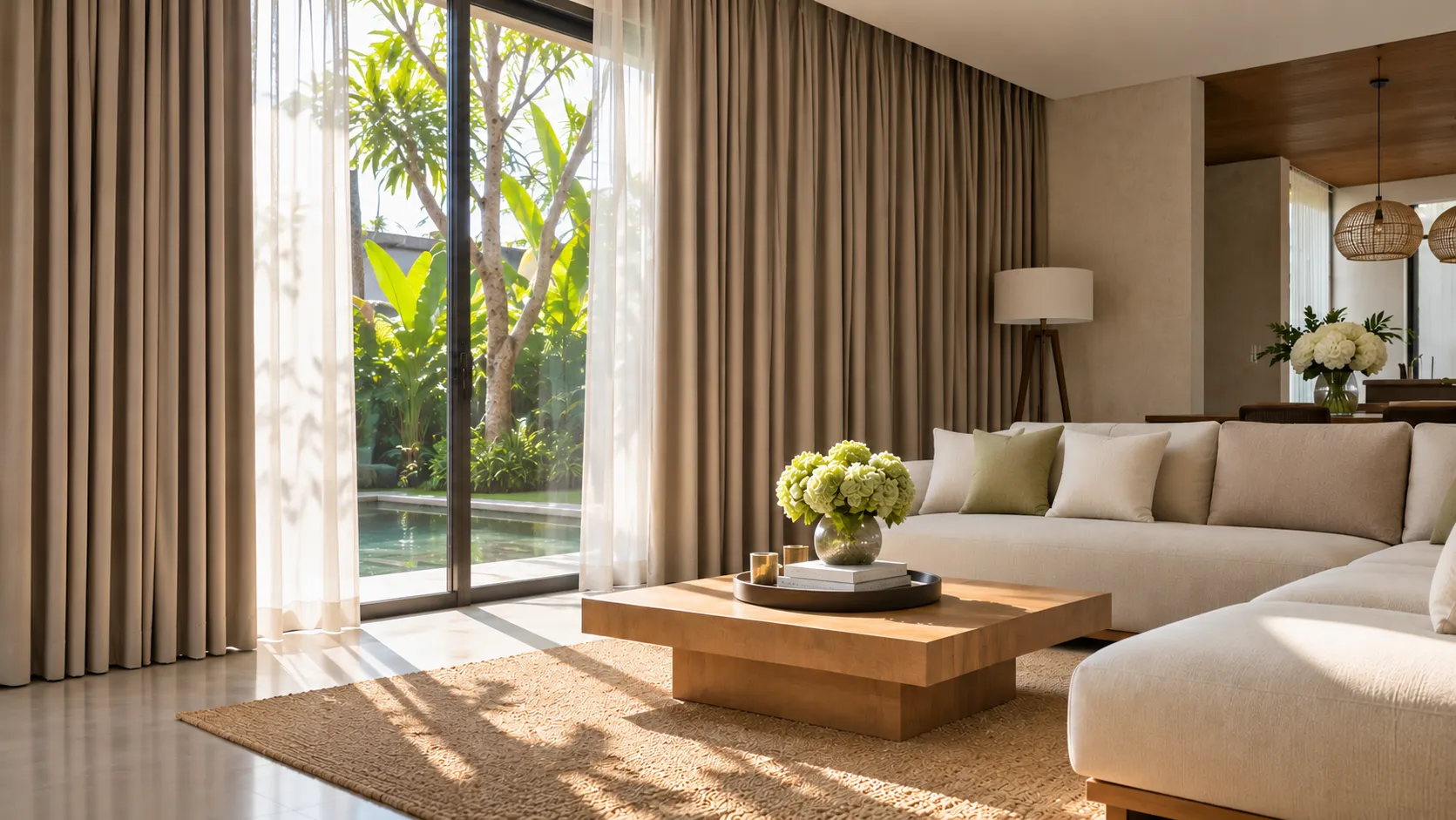
For a living room that opens toward a garden, pool, or terrace, consider a light linen-look sheer to soften daylight. A second curtain layer can provide privacy and stronger light reduction when required. Natural wood or woven details can connect the window treatment with the rest of the interior.
Bedroom: natural texture with practical darkness
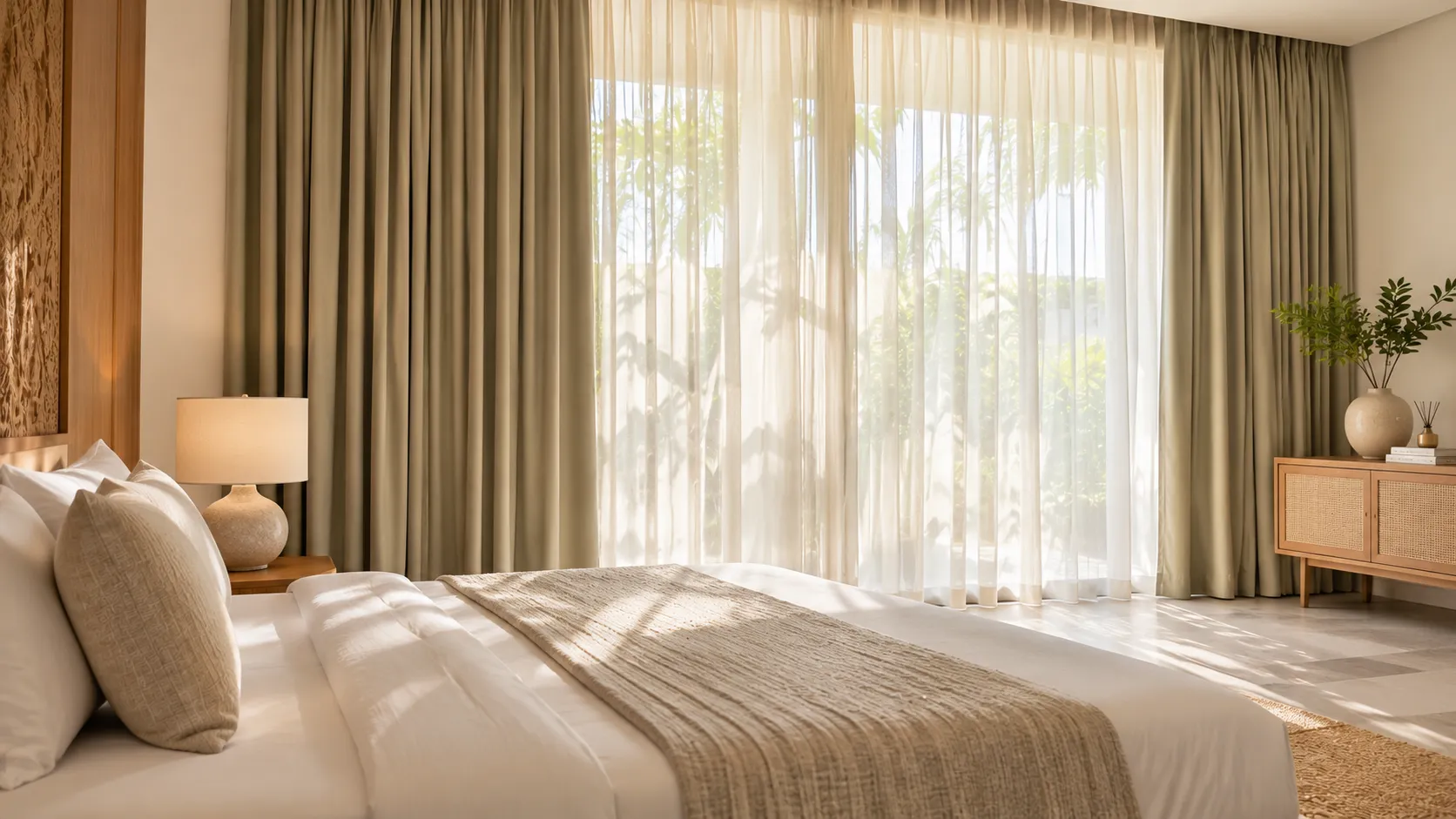
Unbleached or oatmeal-colored curtains can create a calm bedroom palette. If guests need a darker sleeping environment, specify a suitable dimout or blackout lining and plan the installation to reduce light gaps. The natural outer fabric can provide the visual character while the lining supports the room's function.
Bathroom: prioritize moisture suitability
Bathrooms in Bali properties can experience high humidity, condensation, and direct water exposure. Natural woven materials should only be used where the product specification and location are suitable. In many wet areas, a moisture-appropriate blind or another easy-care solution may be more practical than an untreated natural-fiber curtain.
Restaurant and lounge: texture that supports the atmosphere
Woven shades or textured curtains can help create a relaxed hospitality setting. Consider cleaning access, frequent operation, sunlight exposure, and whether the window treatment is near food preparation or service areas. Materials should be selected for the maintenance routine as well as the design concept.
Reception and shared spaces: create a consistent identity
In hotel reception areas and shared lounges, natural textures can reinforce a warm, welcoming design language. Use a consistent family of earth tones across the property, then adjust opacity and construction according to each room's needs.
Covered outdoor areas: verify the product specification
For verandas and semi-outdoor spaces, check whether the selected product is rated for the expected exposure. Covered areas may still experience wind-driven rain, high humidity, intense sunlight, and airborne salt near the coast. Do not assume an indoor bamboo blind or fabric curtain is suitable for outdoor use.
6. Balance Natural Aesthetics with Performance
Window decor in Bali should be considered in relation to sunlight, humidity, ventilation, privacy, and the property's maintenance needs. A beautiful natural texture is only a successful choice when it also suits the opening and how the space is used.
Light control
Sheer and open-weave materials generally allow more light through than dense or lined options. If the room needs stronger light reduction, specify a suitable dimout or blackout layer. Confirm the expected result with a sample and product specification.
Privacy
Woven materials and sheers may provide limited daytime screening, but privacy can change after dark when interior lighting is on. For bedrooms and windows facing neighboring properties, consider a second layer or a more opaque treatment.
Humidity and ventilation
Natural fibers can be sensitive to moisture and may require careful ventilation and cleaning. Ask the supplier about the recommended environment, cleaning method, and any restrictions. Keep fabric away from persistent dampness and allow the room to ventilate appropriately.
Sun exposure and fading
Direct sunlight can affect many textile and natural materials over time. Consider window orientation, exposure duration, lining options, and the supplier's guidance. Rotating or adjusting coverings may help manage exposure, but no fabric should be assumed to be fade-proof without supporting product information.
Hardware and operation
Choose tracks, brackets, chains, and operating systems suitable for the treatment's weight and dimensions. For wide openings or hospitality settings, consider ease of operation and maintenance access. Natural materials can have different weights and operating requirements from lightweight sheers.
7. Care, Maintenance, and Responsible Material Selection
Maintenance requirements vary significantly between bamboo blinds, woven shades, natural linen, and linen-look fabrics. Always follow the care instructions for the exact product rather than applying one cleaning method to all natural materials.
- Check care labels: confirm whether the fabric is suitable for vacuuming, spot cleaning, professional cleaning, or another method.
- Control moisture: keep natural-fiber products in environments recommended by the supplier and address persistent condensation.
- Remove dust regularly: use a suitable gentle method that does not damage the weave or surface.
- Inspect operating components: check cords, chains, brackets, and tracks as part of routine property maintenance.
- Ask about repair: where possible, choose products with replaceable operating components or repair options.
- Request material details: confirm fiber composition, origin information, finishes, and any relevant certifications.
For hospitality properties, document the care instructions for each room or product type. This helps housekeeping and maintenance teams handle window treatments consistently.
8. Common Mistakes When Choosing Natural Window Treatments
- Assuming every natural material is suitable for humid areas: check the product's environmental limitations before installation.
- Confusing linen with linen-look fabric: verify fiber composition and care requirements.
- Expecting woven bamboo to provide blackout: weave gaps can allow light through unless the product includes an appropriate lining or secondary layer.
- Using sheers as guaranteed nighttime privacy: privacy changes with indoor and outdoor lighting conditions.
- Choosing a color only from a screen: compare physical samples with the actual timber, stone, wall, and flooring finishes.
- Making unsupported sustainability claims: request supplier documentation before describing a product as certified, recycled, or sustainably sourced.
- Ignoring maintenance needs: consider cleaning access and replacement options, especially in frequently used hotel spaces.
- Overlooking hardware and installation: a natural-looking treatment still needs suitable support, safe operation, and accurate fitting.
9. Frequently Asked Questions
Are bamboo blinds suitable for Bali villas?
They can be suitable in locations that match the manufacturer's environmental and installation recommendations. Check humidity, direct sunlight, ventilation, and exposure to rain before selecting a product. A lined or layered arrangement may be needed for greater privacy or light control.
Are linen curtains a good choice for tropical interiors?
Linen can complement tropical interiors through its natural texture and relaxed appearance. However, suitability depends on the fabric construction, room ventilation, exposure, care requirements, and whether a lining is needed. Compare samples and confirm the supplier's care guidance.
What is the difference between natural linen and linen-look fabric?
Natural linen is made from flax fibers. Linen-look fabrics use other fibers or blends to create a similar appearance. They can differ in price, crease behavior, drape, durability, and cleaning requirements, so check the composition label.
Can bamboo blinds provide privacy?
Privacy depends on weave density, lighting, and whether the product is lined. Some woven shades allow visibility through the gaps, particularly at night when the room is illuminated. Add a curtain or suitable backing if stronger privacy is required.
Which colors work best for a natural Bali interior?
Warm beige, sand, oatmeal, flax, taupe, clay, muted olive, and soft brown can complement timber, stone, and woven furniture. Choose undertones that coordinate with the property's existing finishes and test physical samples in the room.
Do natural materials always mean sustainable products?
No. Sustainability depends on sourcing, processing, durability, transport, maintenance, and end-of-life considerations. Request reliable product documentation and avoid assuming that a natural appearance proves an environmental benefit.
Can natural curtains be combined with blackout lining?
Some curtain fabrics can be made with a suitable lining, depending on the fabric construction and supplier recommendations. A separate blackout layer is another option. Confirm the final weight, drape, care requirements, and track capacity before production.
How should natural window treatments be cleaned?
Follow the care instructions for the exact fabric or blind. Different fibers and finishes require different cleaning methods. Avoid excessive moisture or aggressive cleaning unless the supplier specifically permits it.
Bring Natural Texture into Your Window Design
Bamboo weaves, unbleached linen textures, and earth-tone palettes can help create warm, relaxed interiors for Bali villas and hotels. The strongest results come from pairing the desired natural aesthetic with realistic expectations about light control, privacy, humidity, cleaning, and product performance.
Almeers Living provides custom curtains and window treatment solutions for homes, villas, apartments, and hospitality properties in Bali. Explore our curtain and blinds collections, or visit Almeers Living to discuss fabric samples, measurements, and installation requirements.