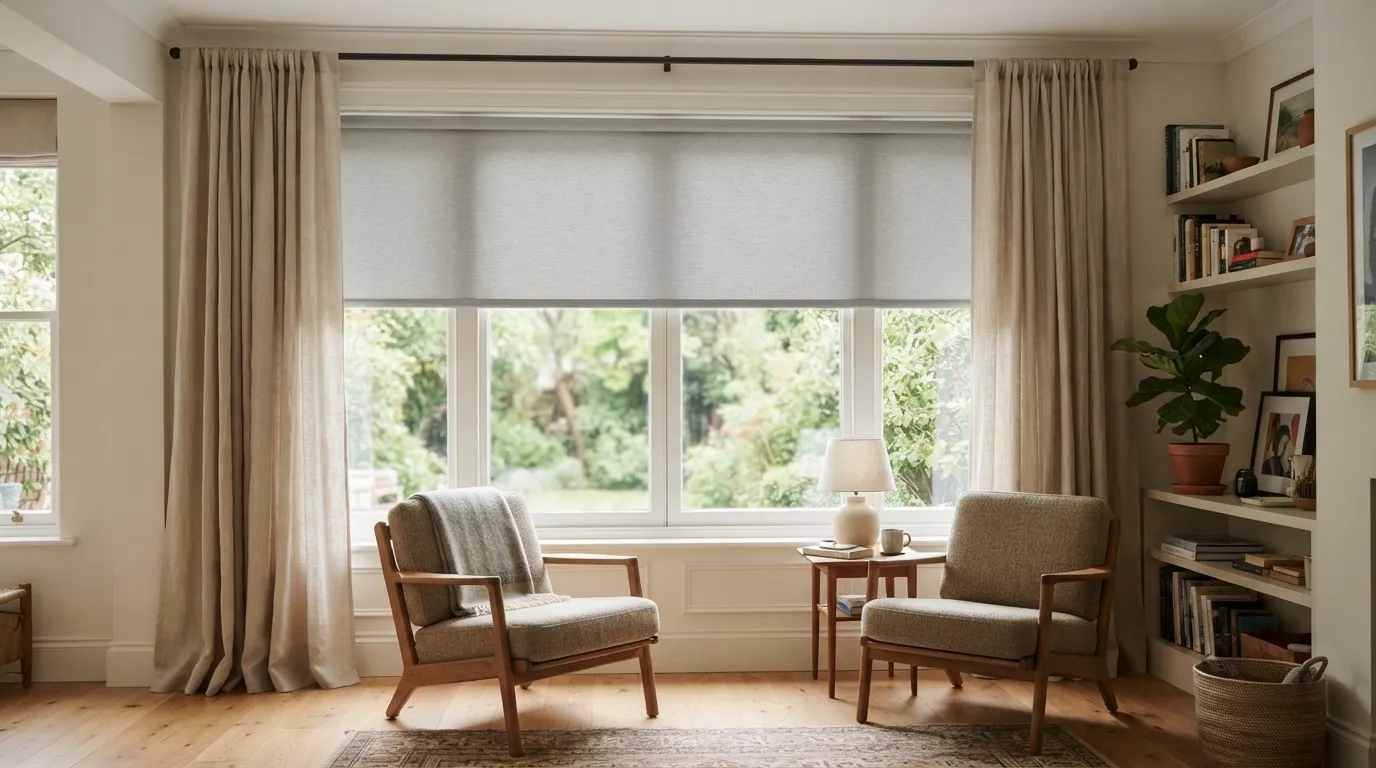
Roller Blinds vs Curtains: Energy Efficiency, Space Saving, and Cost Performance Analysis
Deciding between Roller Blinds and Traditional Fabric Curtains is a foundational choice in residential and commercial interior design. Both window treatment categories manage natural light and privacy effectively, but their structural footprints, thermal behaviors, and cost profiles differ substantially.
Here is an architectural performance analysis comparing roller blinds and curtains across four critical criteria.
1. Spatial Footprint and Visual Footprint
- Roller Blinds (Space Saving Champion): Mount compactly inside or directly above window frame recesses. They occupy zero floor space and leave window sills completely clear, making them ideal for kitchens, bathrooms, and compact rooms.
- Curtains (Volumetric Presence): Require wall or ceiling clearance for track runs and fabric stack-back. However, their sweeping vertical folds draw the eye upward, making ceilings appear higher and rooms feel grander.
2. Energy Efficiency & Thermal Insulation
Floor-to-ceiling lined curtains create an extensive air trap across the entire wall opening, offering superior thermal insulation and acoustic sound absorption. However, high-performance solar sunscreen roller blinds feature reflective coatings that excel at deflecting solar heat directly at the glass surface.
3. Cost Performance and Maintenance
Roller blinds generally carry lower initial fabrication and installation costs due to simpler hardware and reduced fabric yardage. They are easy to wipe clean, whereas custom drapes require greater fabric volume but deliver unmatched luxury, longevity, and long-term aesthetic value.
4. Room-by-Room Decision Matrix
Opt for Roller Blinds in utility spaces, home offices, and compact modern rooms requiring clean lines. Choose Curtains for master bedrooms, formal living spaces, and luxury suites where acoustic comfort, total darkness, and resort elegance are prioritized.