Sheer + Blackout Layering for Villas: Track Layout, Fullness and Light-Gap Planning
A successful sheer + blackout installation is a coordinated two-layer system. The fabrics are only one part of the result. Track spacing, panel movement, fullness, stack-back and coverage determine whether the system feels light and easy to operate.
Start With the Two Functions
| Layer | Main function |
|---|---|
| Sheer | Soft daylight and a lighter daytime privacy layer |
| Blackout | Stronger privacy and room darkening when required |
Track Layout Comes First
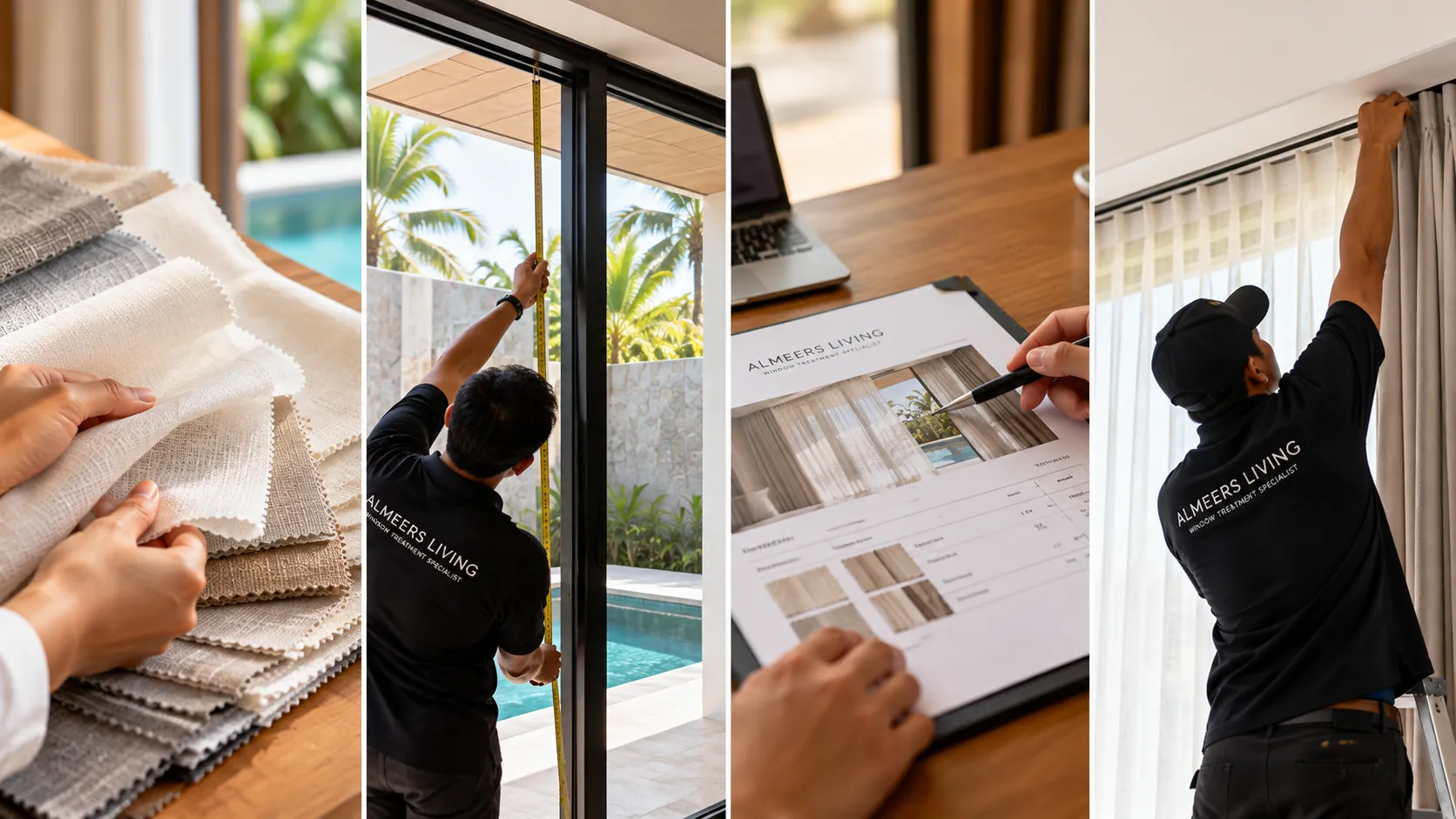
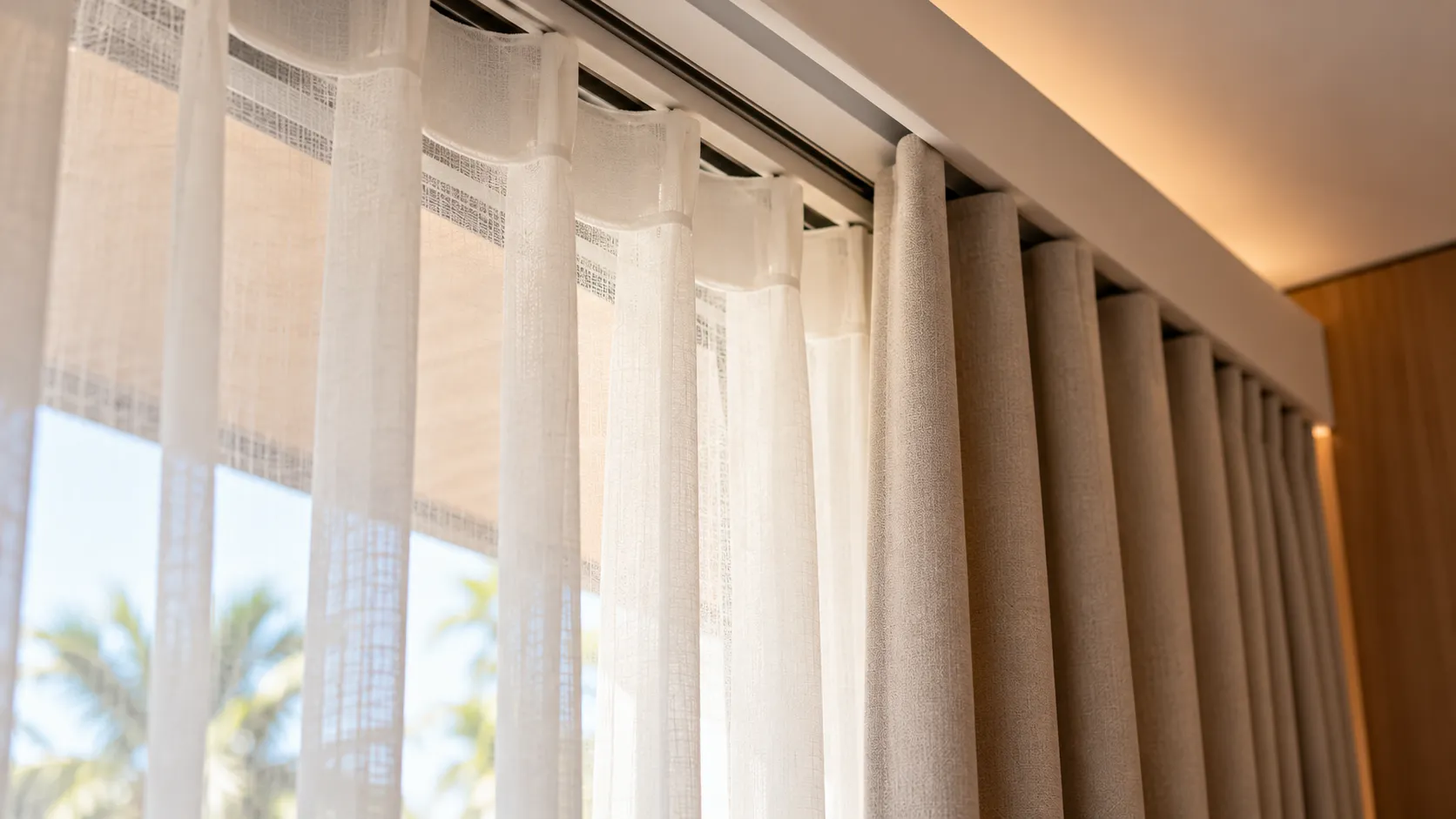
The two layers need enough separation to move independently. Double-track or appropriately spaced hardware should prevent rubbing. Confirm ceiling width, wall projection, handles and doors before finalising the track.
Which Layer Sits Closer to the Glass?
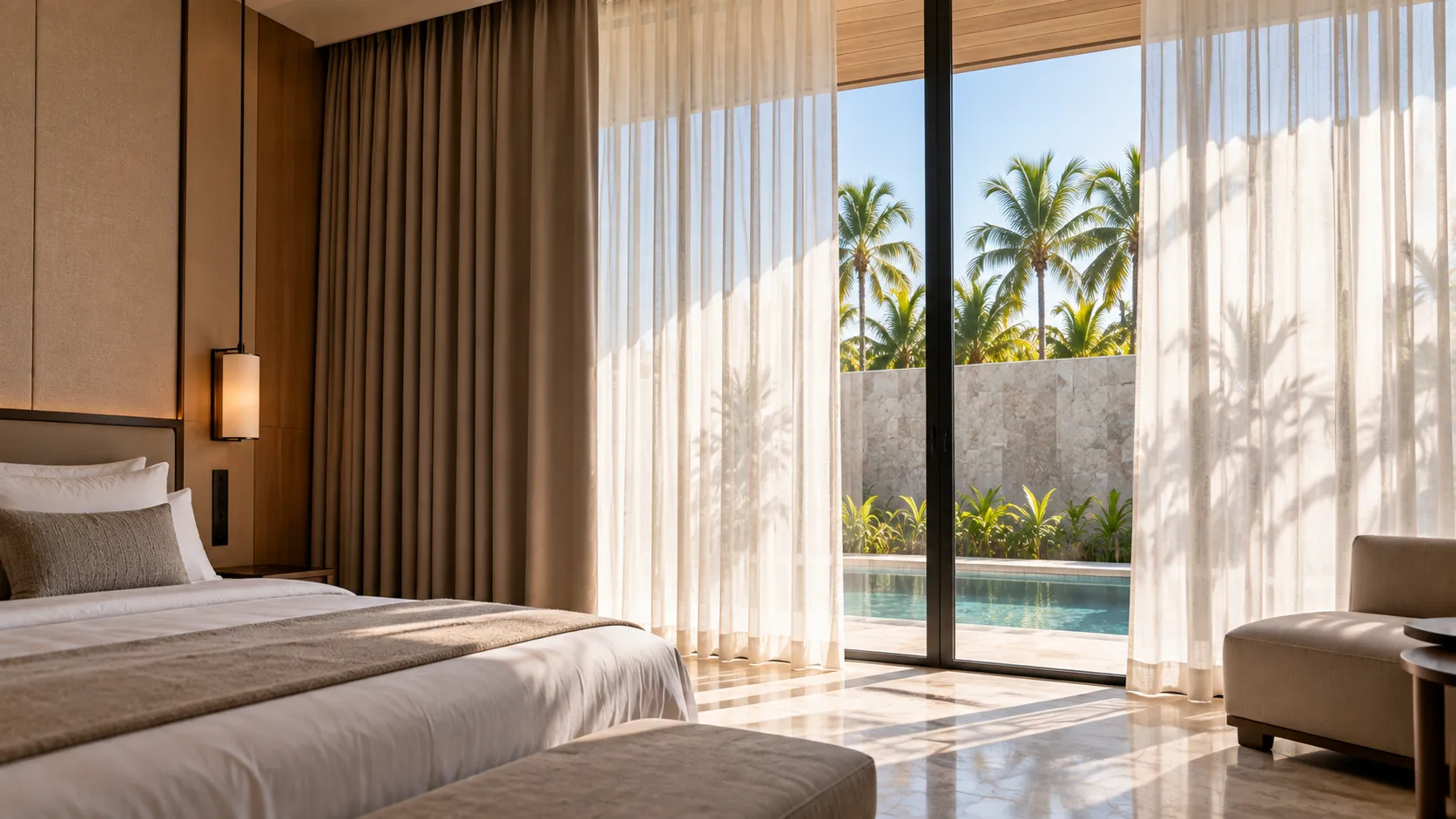
In a common configuration, the sheer sits closer to the glass and the blackout sits closer to the room. This allows the sheer to remain closed for daytime softness while the blackout operates independently.
Fullness Changes the Finished Look
Fullness affects gathered fabric, appearance and fabric consumption. Sheers and blackout fabrics may require different decisions according to construction, width, weight and heading.
Plan Stack-Back
When open, the fabric occupies space beside the glazing. Check whether the stack covers a door, obstructs a view or interferes with furniture. Large openings benefit from stack-back planning before production.
Reduce Light Gaps
Blackout fabric can block light through the material while daylight enters around edges. Check side coverage, top position, panel overlap and finished drop. Strong room darkening is different from absolute photographic darkness.
Hardware Space and Motorization
Layered systems need room for both tracks and operating components. For wide or high openings, motorization may simplify daily use, but motor capacity should follow the curtain load and track configuration.
Layering Checklist
- Two operating layers defined
- Track or rod layout confirmed
- Clearance checked
- Fullness confirmed for each layer
- Stack-back planned
- Blackout side coverage checked
- Panel overlap confirmed
- Finished drop confirmed
- Motorization assessed if required
For broader context, see the layered window-treatment guide and blackout, dimout and sheer comparison.
Final Takeaway
Plan layered curtains from the opening and hardware outward: define both functions, coordinate tracks, select suitable fullness, plan stack-back and control blackout coverage around the complete opening.