Struggling to Choose Curtains in Bali? Almeers Living Expert Material Sizing, Fabric Opacity Advice, and Interior Layout Matching
Designing and outfitting a property in Bali—whether it is a contemporary coastal villa in Canggu and Seminyak, a private hillside retreat in Ubud, or a cliffside luxury estate in Uluwatu—is an exciting architectural journey. However, property owners and interior decorators frequently encounter a common design hurdle: struggling to choose curtains in Bali. The island unique equatorial climate, characterized by intense sunlight, high atmospheric humidity, and sweeping glass architecture, means that standard retail decorating rules often fail. Choosing the wrong fabric weight, incorrect fullness ratio, or unsuited opacity tier can result in rooms that suffer from blinding glare, excessive thermal heat gain, or premature fabric degradation.
Navigating the complex world of custom drapery requires expert guidance on material sizing, fabric opacity selection, and interior layout matching. In this comprehensive masterclass, we explore professional design frameworks to help you evaluate your space, select climate-resilient textiles, and execute flawless window treatments that elevate your property's aesthetic and functional value.
1. The Climate Challenge: Why Standard Curtains Fail in Bali
When decorating a home in temperate regions, curtain selection is primarily driven by color coordination and seasonal warmth. In contrast, window treatments in Bali must perform rigorous environmental duties. Equatorial UV radiation breaks down chemical dyes rapidly, while continuous coastal humidity fosters mold growth on untreated fibers. Furthermore, expansive glass sliding doors absorb substantial solar thermal energy.
- UV Degradation: Unprotected fabrics lose their tensile strength and color vibrancy within months under intense tropical sun exposure.
- Humidity & Fungal Spores: Untreated natural fibers absorb atmospheric moisture, resulting in dark mildew spots and unpleasant damp odors.
- Solar Heat Accumulation: Unshielded glass facades transform living areas into uncomfortable hot zones, forcing air conditioning units to consume excessive energy.
2. Step 1: Establishing Fabric Opacity Tiers Based on Room Function
The first step in resolving curtain selection dilemmas is matching fabric opacity to specific room requirements. Overlooking this step often results in bedrooms that are too bright for sleep or living rooms that lack privacy:
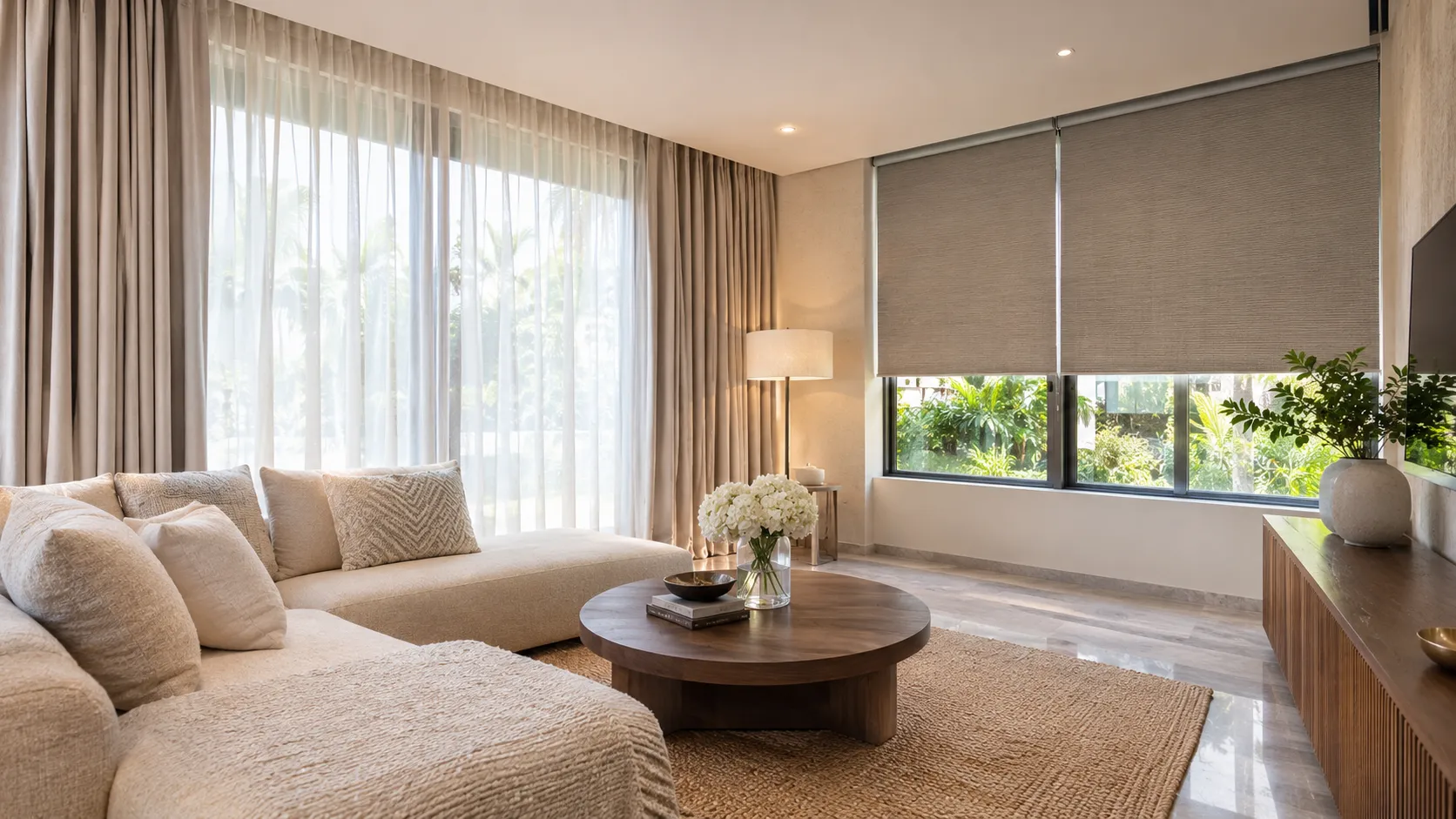
- Translucent Sheers & Voiles: Crafted from lightweight, low-density weaves that diffuse harsh sunlight into a soft, ambient daylight glow while maintaining daytime privacy and airy aesthetic elegance (starting at Rp 60.000/m).
- Dimout Fabrics (80% Light Blockage): High-density woven textiles that absorb solar glare and heat while retaining fabric softness, ideal for open-plan living rooms, dining pavilions, and executive home offices (starting at Rp 60.000/m).
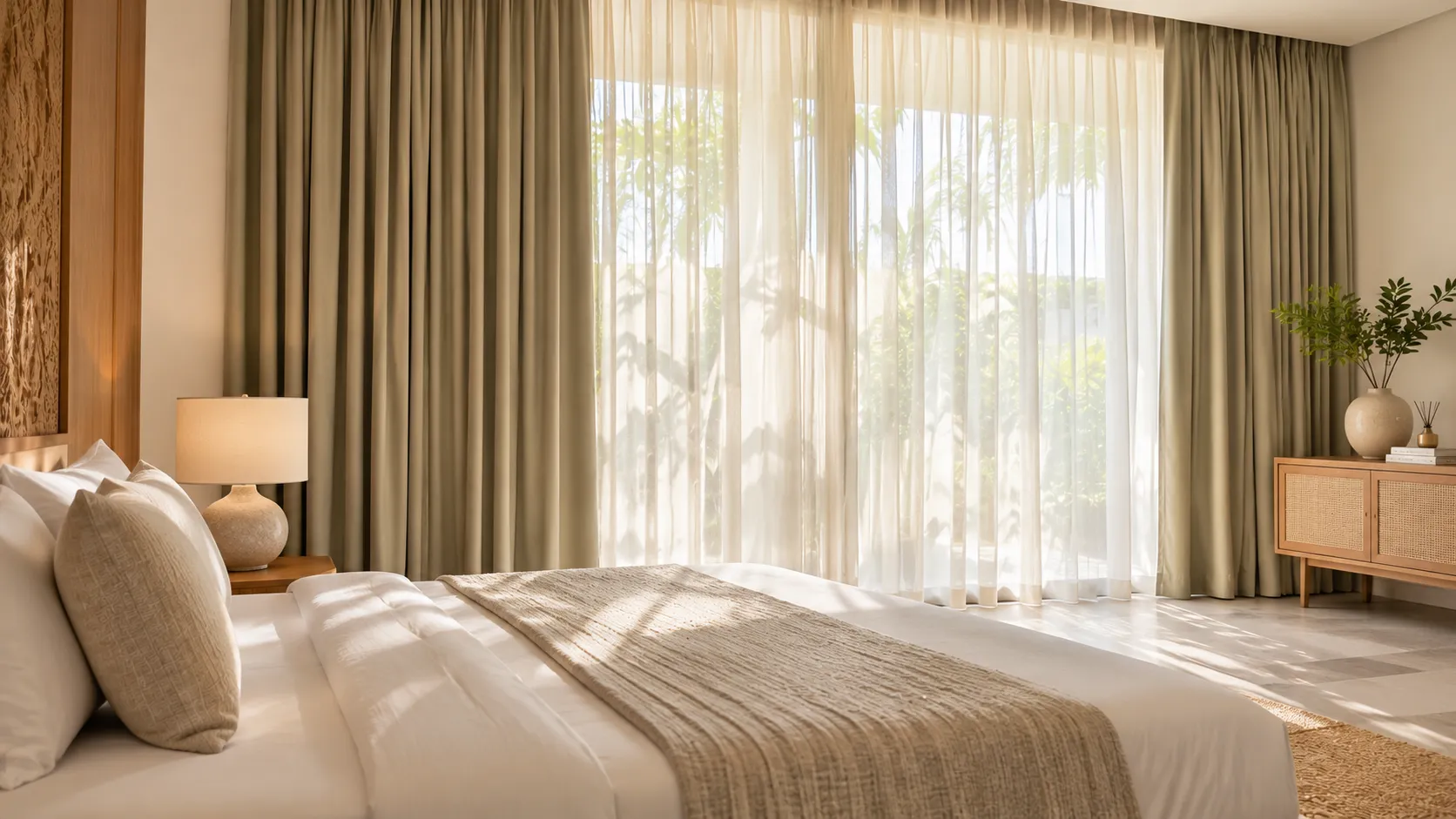
- 100% Thermal Blackout Linings: Engineered with multi-pass acrylic backings or dense multi-layer weaves that block 100% of light transmission, creating impenetrable radiant heat barriers for master bedrooms and infant nurseries (starting at Rp 60.000/m to Rp 110.000/m).
3. Step 2: Sizing Metrics and Fullness Ratio Calculations
One of the most frequent reasons people struggle with curtain styling is incorrect sizing. Skimpy, flat curtains stretched tightly across windows look unfinished and cheap. Achieving a luxurious, high-end resort aesthetic requires adhering to professional measurement and fullness standards:
- Drop First Ordering Rule: Always measure vertical drop from the exact hardware suspension point down to the floor, and apply professional hem clearance rules (such as 1 cm hover clearances for active living spaces or flush floor-touch drops for master suites). Property owners can consult our detailed curtain measuring guide and specialized shade measuring guide.
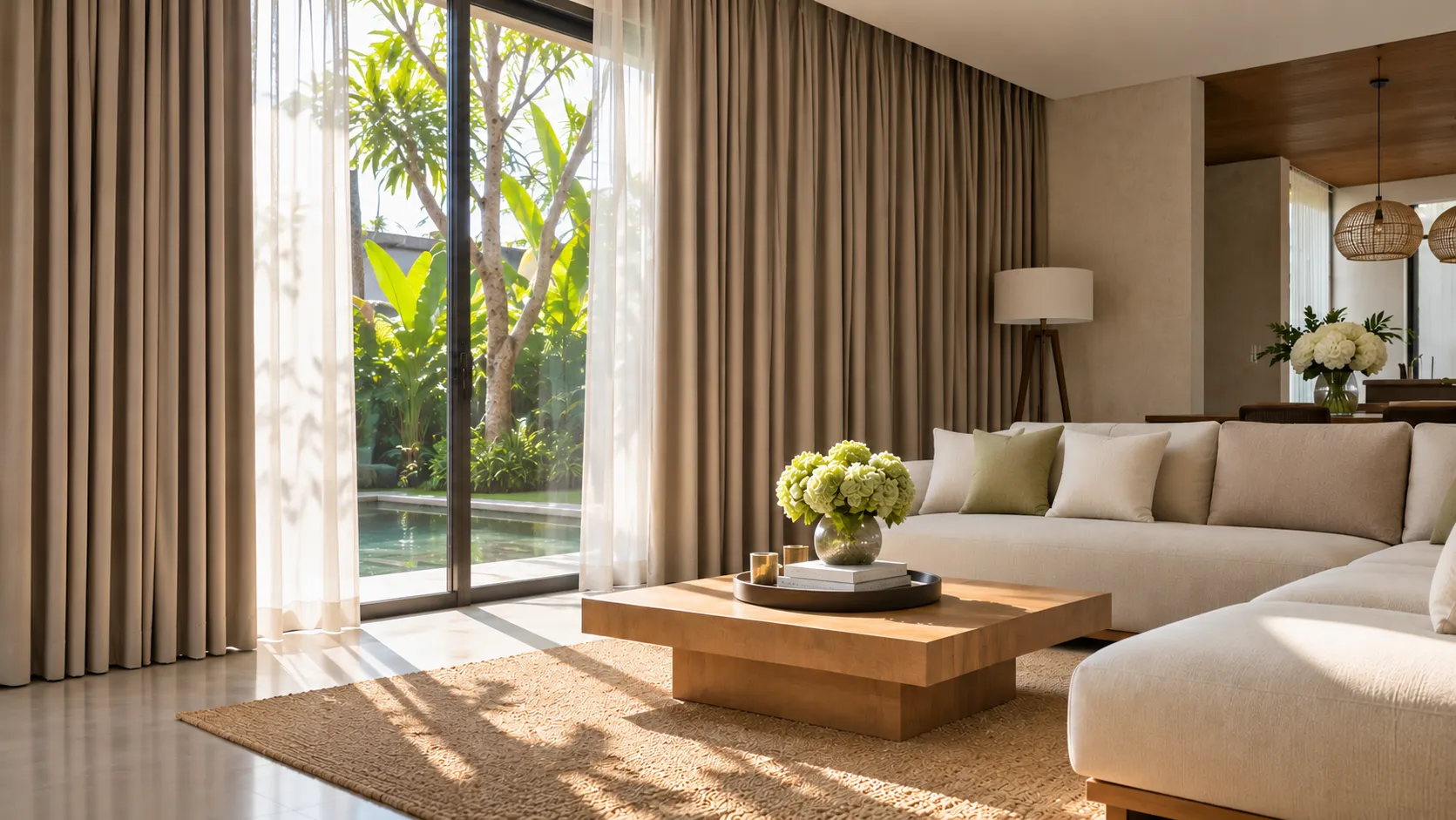
- Fullness Multiplier Ratios: Standard luxury S-fold (ripplefold) drapery requires a 2.0x to 2.2x fullness ratio (using double the track width in flat fabric volume) to guarantee deep, continuous vertical waves. Exact stack-back allowances can be calculated using our professional stacking calculator.
4. Step 3: Interior Layout Matching and Architectural Harmony
Curtains should harmonize seamlessly with your interior architecture rather than competing with it. For minimalist Japandi or modern tropical spaces featuring micro-cement floors and black steel joinery, mount heavy-duty tracks flush inside ceiling recesses (consult our valances and cornices measuring guide) and pair them with slubbed natural linens.
For grand double-height living rooms, continuous floor-to-ceiling drapery draws the eye upward, accentuating vertical proportions and creating a majestic resort atmosphere.
5. Protecting Your Investment with Anti-Mold Technology
To ensure your chosen curtains endure Bali's humid climate without developing mildew stains, always verify that your supplier integrates active Anti-Mold (anti-jamur) treatments and hydrophobic coatings into their textile manufacturing.
6. Expert Guidance with Almeers Living
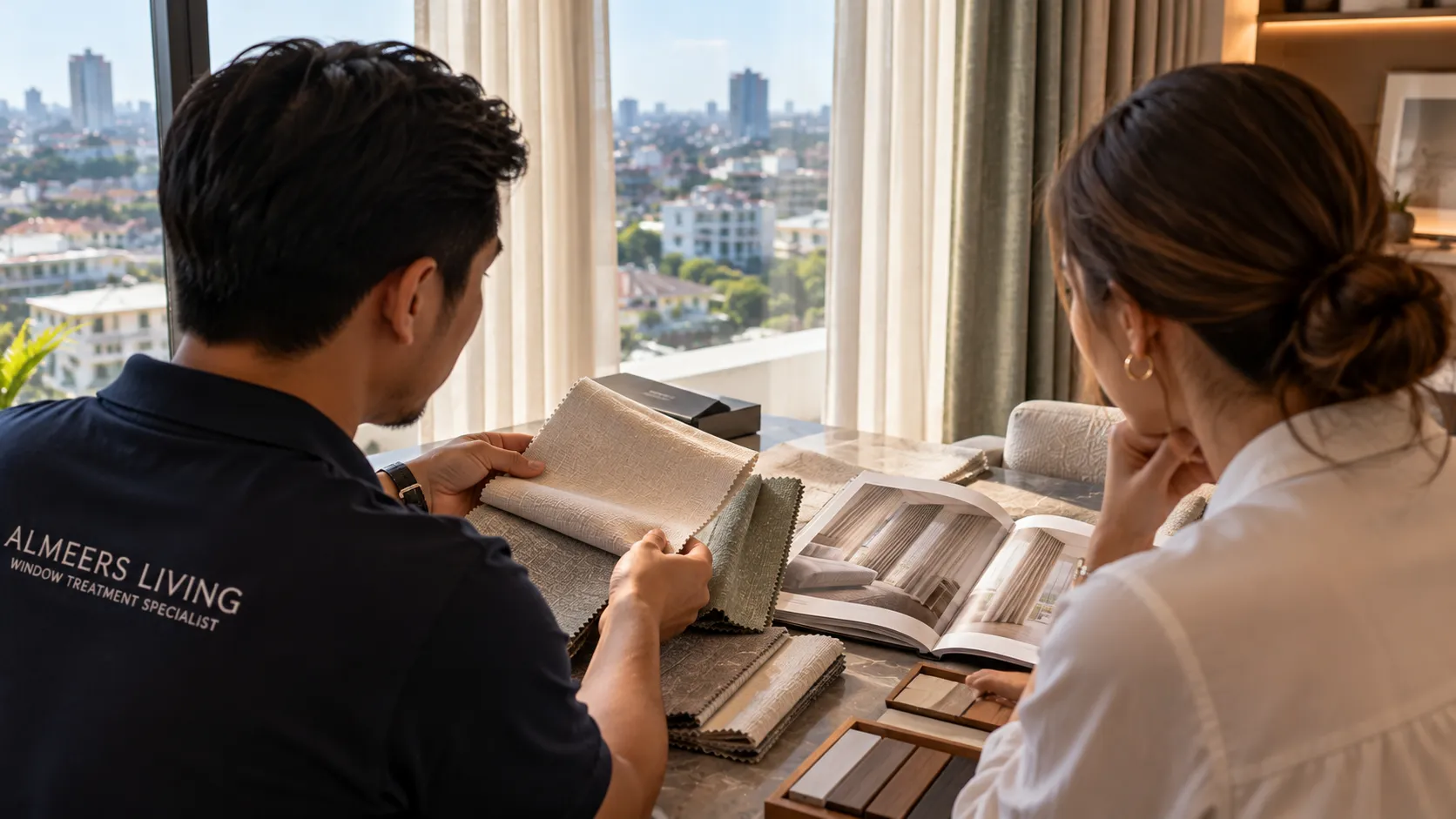
If you are struggling to choose curtains for your Bali property, partnering with an experienced turn-key specialist removes guesswork. As a recognized premier window treatment specialist, Almeers Living offers comprehensive design consultations, precise laser measurements, custom tailoring, and professional installation.
Explore our complete luxury fabric catalog on our products page to schedule your complimentary site survey and design consultation with Bali's trusted window treatment experts today.