Sustainable Style: Eco-Friendly Curtain Choices: The Details That Make the Difference — Recycled Polyester Fibers, Energy-Saving Thermal Barriers, and Non-Toxic Textile Dyes
Designing modern luxury residential estates, eco-conscious boutique retreats, and sustainable private rental villas across Bali—from the vibrant coastal corridors of Canggu, Seminyak, and Umalas to the serene rainforest sanctuaries of Ubud and dramatic clifftop estates in Uluwatu—demands an uncompromising commitment to environmental architectural integrity and responsible material sourcing. In contemporary tropical building design, sustainability is no longer an optional aesthetic preference; it is a fundamental engineering imperative. Modern island architecture celebrates expansive open-plan living pavilions, soaring ceiling voids, and panoramic floor-to-ceiling glass sliding doors that dissolve boundaries between interior living areas and lush outdoor ecosystems. However, glass facades act as major thermal conductors, allowing intense equatorial sunlight to flood interior spaces with radiant heat. Property owners, sustainable architects, and hospitality developers frequently search for authoritative guidance on sustainable style: eco-friendly curtain choices: the details that make the difference (mastering recycled polyester fibers, energy-saving thermal barriers, and non-toxic textile dyes) to minimize carbon footprints, reduce reliance on power-hungry HVAC systems, and elevate indoor residential health.
Executing an effective sustainable window treatment strategy in high-temperature, high-humidity tropical microclimates involves far more than simply selecting organic cloth. It requires an integrated thermodynamic and ecological framework: evaluating recycled polymer yarn lifecycles, specifying energy-saving thermal barrier linings, utilizing non-toxic OEKO-TEX certified textile dyes, applying non-toxic anti-mold protection, and integrating smart automated solar scheduling. In this comprehensive editorial masterclass, we explore the core principles of eco-friendly architectural shading, sustainable textile science, and practical installation standards to help you turn your property into an environmentally responsible sanctuary.
1. The Environmental Impact of Interior Textiles in Tropical Architecture
To design an energy-efficient, sustainable home in Bali, one must first understand how conventional textile manufacturing and unshaded glass facades impact global ecosystems and local indoor air quality:
- The Carbon Footprint of Conventional Yarns: Traditional synthetic textile production relies heavily on virgin petroleum extraction, water-intensive industrial dyeing, and toxic chemical treatments that release substantial greenhouse gas emissions into the atmosphere.
- Thermal Solar Heat Gain through Glass: Unfiltered equatorial sunlight streaming through large glass sliding doors heats interior floors and furnishings directly. These indoor thermal masses re-radiate heat into room air, forcing air conditioning compressors to run continuously.
- Indoor Air Quality and Chemical Off-Gassing: Cheap mass-market curtains often contain residual formaldehyde, heavy metal mordants, and volatile organic compounds (VOCs) that off-gas into confined air-conditioned living spaces, compromising occupant respiratory health.
2. Pillar 1: Recycled Polyester Fibers & Closed-Loop Textile Engineering
The foundation of an authentic eco-friendly window treatment strategy begins with responsible polymer recycling and circular manufacturing:
- Upcycled PET Polymer Extrusion: High-performance sustainable draperies utilize yarns spun from post-consumer recycled polyethylene terephthalate (PET) plastic bottles. This closed-loop recycling process diverts plastic waste from landfills and oceans, reducing energy consumption during polymer production by up to 50% compared to virgin polyester.
- Organic Flax Linen and Recycled Blends: Pure natural linen requires minimal irrigation and zero synthetic pesticides during flax cultivation. Blending organic flax linen with recycled polyester microfibers creates high-tenacity composite textiles that retain natural biophilic textures while offering exceptional tensile strength against tropical UV exposure. Explore sustainable fabric swatches starting at Rp 60.000/m on our products page.
- Global Recycled Standard (GRS) Certification: Specify eco-friendly drapery fabrics certified under international verification standards (such as GRS and OEKO-TEX Standard 100), ensuring transparent supply chain traceability and zero harmful chemical residues.
3. Pillar 2: Energy-Saving Thermal Barriers and Passive Cooling
Achieving true domestic sustainability requires shading systems that intercept solar radiation before it enters living spaces, minimizing active energy consumption:
- Multi-Pass Thermal Blackout Linings: Sustainable window treatments incorporate dense multi-pass acrylic foam backings applied to rear fabric surfaces. These opaque barriers block 100% of solar light and reflect infrared radiation outward, lowering indoor room temperatures by 3°C to 5°C passively. Explore thermal options starting at Rp 60.000/m to Rp 110.000/m on our products page.
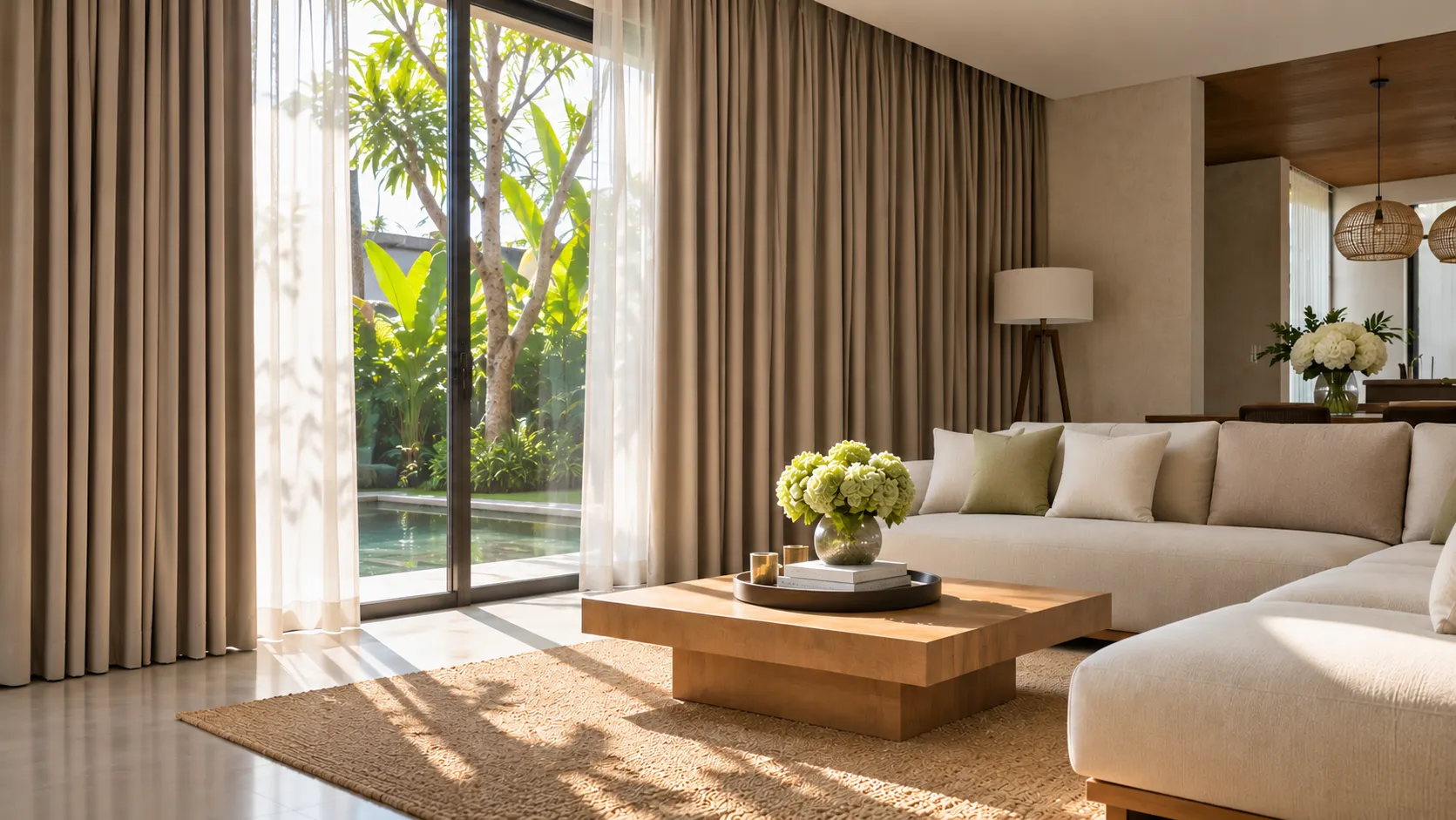
- Dual-Track Day-to-Night Layering: Install double-track systems. Position lightweight slubbed linen sheers on the inner track to filter blinding daytime glare into a soft ambient illumination without artificial lighting, and draw multi-pass thermal drapes during peak afternoon heat hours (11:00 AM – 3:00 PM) to isolate solar heat.
- HVAC Energy Reduction: Passive solar shading reduces split-system air conditioning compressor workloads by up to 30%, lowering monthly electricity bills and household carbon emissions sustainably.
4. Pillar 3: Non-Toxic Textile Dyes and Hypoallergenic Finishing
Protecting interior residential health requires rigorous attention to color dye chemistry and finishing safety standards:
- Water-Based Reactive and Low-Impact Dyes: Specify sustainable fabrics colored using low-impact reactive dyes that bond molecularly with textile fibers, requiring significantly less water during rinsing and eliminating harmful heavy metal run-off into local waterways.
- Azo-Free and Formaldehyde-Free Standards: Ensure all decorative face fabrics and thermal linings are certified Azo-free and formaldehyde-free, preventing skin irritation and respiratory sensitivities for family members, guests, and villa residents.
- Natural Hypoallergenic Breathability: Eco-friendly linen-blend and recycled cotton textiles maintain natural porosity, allowing healthy air exchange when paired with open glass sliding doors.
5. Spatial Details: Ceiling Recessed Pelmets and Precision Tailoring
Even the most advanced sustainable curtain will fail to insulate a room efficiently if thermal convection currents escape around window frames. Professional architectural detailing ensures airtight thermal sealing:
- Ceiling-Recessed Pelmet Pockets (Top Thermal Baffles): Mounting heavy-duty aluminum tracks inside concealed ceiling pelmet pockets (**20 cm to 25 cm wide** and **10 cm to 15 cm deep**) creates a physical top barrier that stops hot air from circulating over the top of curtain tracks. Spatial tolerances can be cross-referenced on our valances and cornices measuring guide.
- The 1 cm Floor Hover Clearance Rule: Tailor sustainable drapery hems to hover precisely **1 cm above finished floor level**. This prevents bottom hems from dragging across floor tracks or absorbing moisture during floor cleaning, while maintaining a continuous vertical seal. Review measurement rules on our curtain measuring guide and dedicated shade measuring guide. Calculate fabric requirements using our digital stacking calculator.
6. Tropical Climate Resilience: Advanced Anti-Mold Protection
In humid coastal environments like Bali, sustainable homes that utilize natural airflow and indoor cooling experience high condensation risks near glass doors. Untreated eco-fabrics absorb trapped moisture, fostering black fungal mold spores (Aspergillus niger) and musty odors that compromise indoor air quality.
To preserve pristine textile hygiene and structural longevity, sustainable draperies supplied by Almeers Living incorporate advanced **Anti-Mold** (anti-jamur) technology. This specialized hydrophobic antimicrobial finish repels moisture droplets and prevents fungal spore germination, keeping your eco-friendly window treatments clean, fresh, and allergen-free season after season.
7. Smart Motorization for Automated Sustainable Living
Integrating smart home automation elevates sustainable property management. Motorized curtain tracks powered by energy-efficient DC actuators allow homeowners to program automated solar schedules via handheld remotes, wall keypads, smartphone apps, or smart home platforms such as Apple HomeKit, Google Assistant, Amazon Alexa, and Control4.
Program automated schedules to close thermal blackout drapes during peak afternoon solar radiation hours (11:00 AM – 3:00 PM), locking in cool indoor temperatures passively before family members or villa guests return home, eliminating wasted electricity.
8. Elevate Your Sustainable Property with Almeers Living
Designing eco-friendly window treatments for a sustainable home in Bali requires an expert synthesis of recycled polyester fibers, energy-saving thermal barriers, non-toxic textile dyes, anti-mold protection, and smart motorization. Partnering with an experienced local specialist guarantees precise laser site surveys, master fabrication, and long-term climate endurance. As a recognized premier window treatment specialist in Bali, Almeers Living offers complete turnkey execution—from complimentary on-site laser surveys and custom fabric sampling to professional motorized installation across the island.
Transform your sustainable residence, eco-villa, or resort project into an energy-efficient, sun-regulated sanctuary today. Browse our full range of sustainable drapery fabrics, sheer voiles, and automated window solutions on our products page to schedule your personalized on-site consultation with Bali’s trusted window experts.