Upgrading Your Villa with Motorized Blinds: Ideas for Bali Villas & Hotels — Smart Automation Integration, Remote Sun Control Systems, and Luxury Hospitality Specifications
Designing modern luxury residential estates, boutique hospitality retreats, and private rental villas across Bali—from the vibrant coastal hubs of Canggu, Seminyak, and Umalas to the tranquil forest sanctuaries of Ubud and dramatic clifftop estates in Uluwatu—demands an intuitive integration of high-performance architectural shading and cutting-edge home automation technology. In contemporary tropical architecture, sweeping open-plan pavilions, double-height ceiling voids, and panoramic floor-to-ceiling glass sliding doors are standard features designed to frame stunning vistas of infinity pools, ocean waves, and lush jungle canopies. However, operating wide-span manual window coverings across extensive glass facades creates daily physical friction for residents, villa managers, and resort guests. Manual pull cords become tangled, heavy draperies require physical effort to traverse, and unshaded glass windows allow intense equatorial heat to flood living spaces throughout the afternoon. Property owners, interior architects, and hospitality developers frequently search for authoritative advice on upgrading your villa with motorized blinds: ideas for Bali villas & hotels (mastering smart automation integration, remote sun control systems, and luxury hospitality specifications) to curate seamless, energy-efficient, and effortless resort sanctuaries that command timeless operational excellence.
Executing a high-performance motorized window treatment scheme in high-temperature, high-humidity island microclimates requires an advanced architectural engineering approach: specifying whisper-quiet tubular DC motors, integrating multi-channel RF remotes and smart home hubs, selecting solar reflection factor (Rs) fabrics, applying non-toxic anti-mold protection, and calibrating ceiling recessed pelmet cavities. In this comprehensive editorial masterclass, we explore the engineering principles, hospitality standards, and practical installation metrics required to upgrade your Bali property with motorized shading systems.
1. The Evolution of Motorized Window Coverings in Tropical Architecture
Before selecting motor specifications or smart home hubs, it is essential to understand why automated shading systems have shifted from a luxury novelty to a core architectural requirement in modern tropical properties:
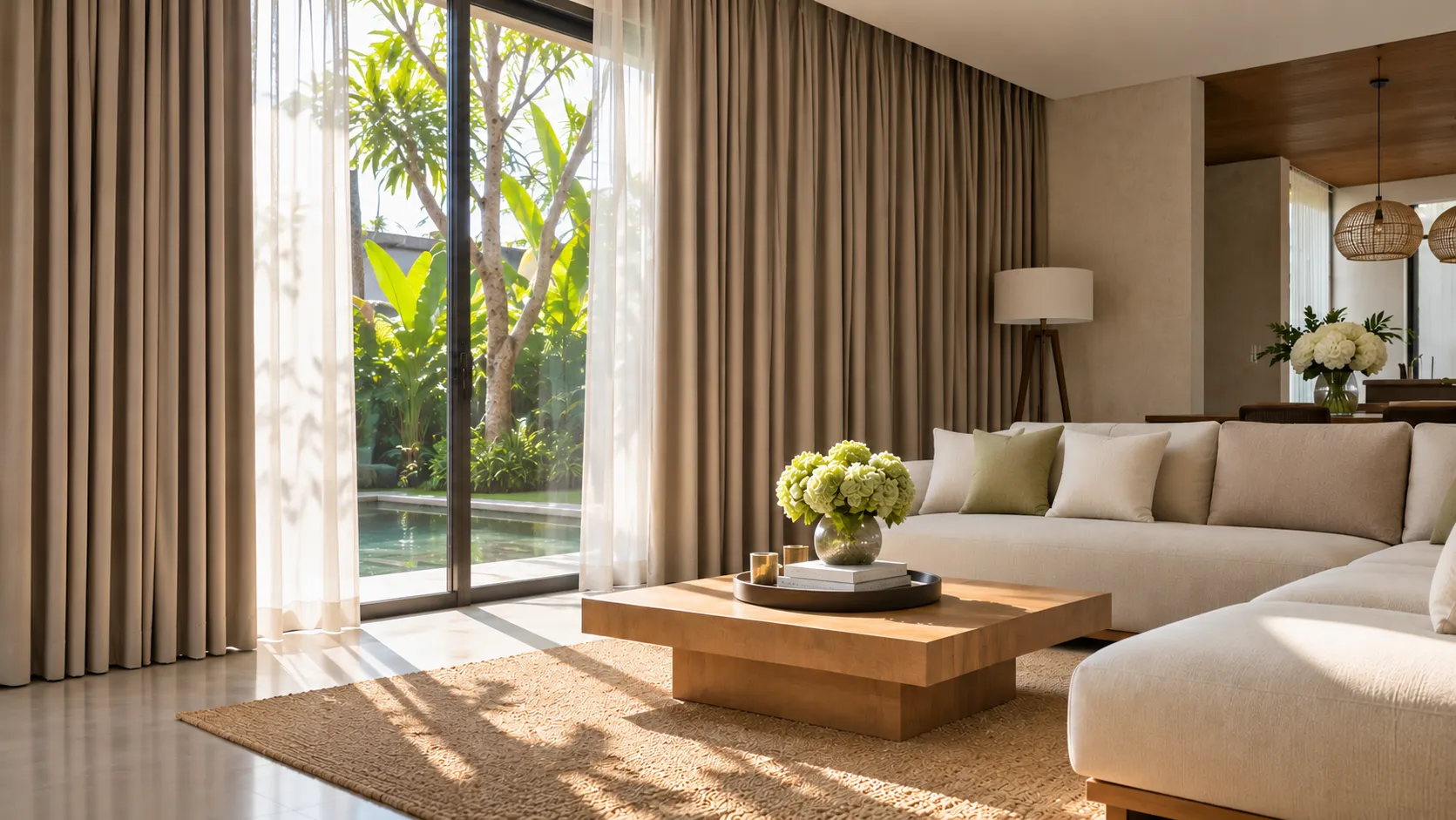
- Overcoming High-Ceiling and Wide-Span Access Challenges: High-ceiling double-height voids (4 to 6 meters high) and wide-span glass sliding doors (6 to 10 meters wide) are physically impractical to operate using manual chain pulls or draw wands. Automated tubular motors raise and lower heavy roller shades effortlessly across extreme architectural heights.
- Preventing Fabric Wear and Human Handling Damage: Manual operation often results in users tugging edge seams unevenly or operating chains at harsh angles, causing fabric edges to fray or derail inside track channels. Motorized actuators apply smooth, consistent torque along top aluminum barrels, extending textile lifespan dramatically.
- Passive Solar Microclimate Regulation: Unshaded glass facades allow intense infrared rays to penetrate indoor lounges, creating a severe thermal greenhouse effect. Motorized systems can automatically lower solar shades during peak heat hours (11:00 AM – 3:00 PM), reducing interior radiant heat accumulation passively.
2. Idea #1: Smart Automation Integration (Zigbee, Z-Wave & Smart Home Ecosystems)
Achieving total operational synergy in modern smart villas relies on connecting motorized shade actuators to centralized home automation platforms:
- Seamless Smart Platform Connectivity: Modern motorized blinds operate on open wireless communication protocols (such as Zigbee 3.0, Z-Wave, or Wi-Fi Matter). They integrate directly with premier smart home ecosystems like Apple HomeKit, Google Assistant, Amazon Alexa, and Control4, allowing guests and owners to control shading via intuitive touchscreen keypads, voice commands, or smartphone apps.
- Automated Astronomical Solar Tracking: Program smart hubs to track real-time solar positions automatically. Blinds can be scheduled to lower gradually as afternoon sun angles strike west-facing glass facades, keeping living spaces cool without requiring human intervention.
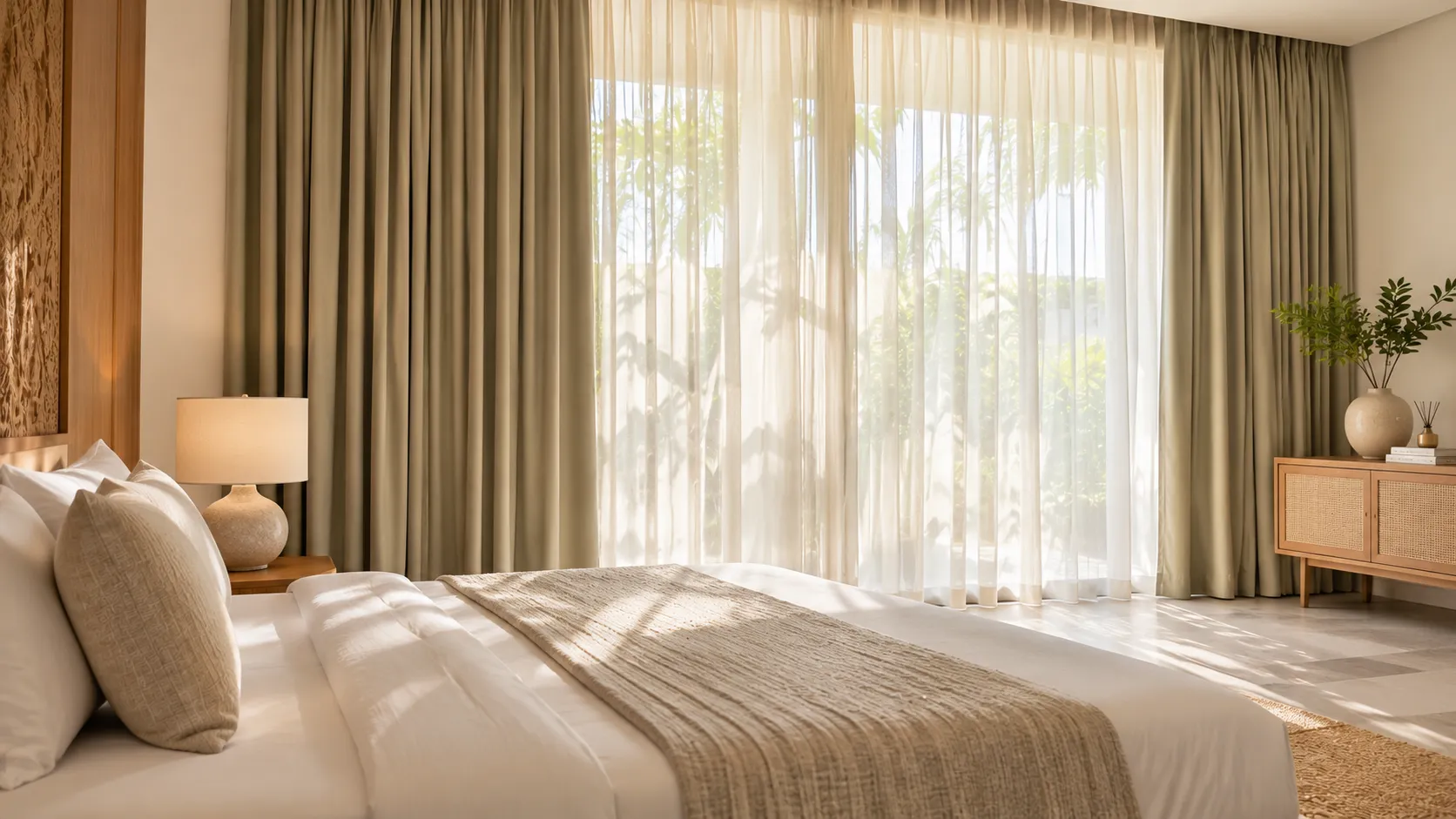
- Integrated Guest Scene Controls: In luxury hospitality suites and private rental villas, guest keypads near beds or entryways can offer pre-programmed mood scenes (e.g., "Good Morning", "Relax", "Movie Night", "Sleep"), adjusting dual-layer sheer and blackout blinds simultaneously at a single touch.
3. Idea #2: Remote Sun Control Systems & High-Performance Solar Fabrics
Pairing motorized actuators with engineered technical fabrics ensures optimal glare reduction while maintaining panoramic outdoor views:
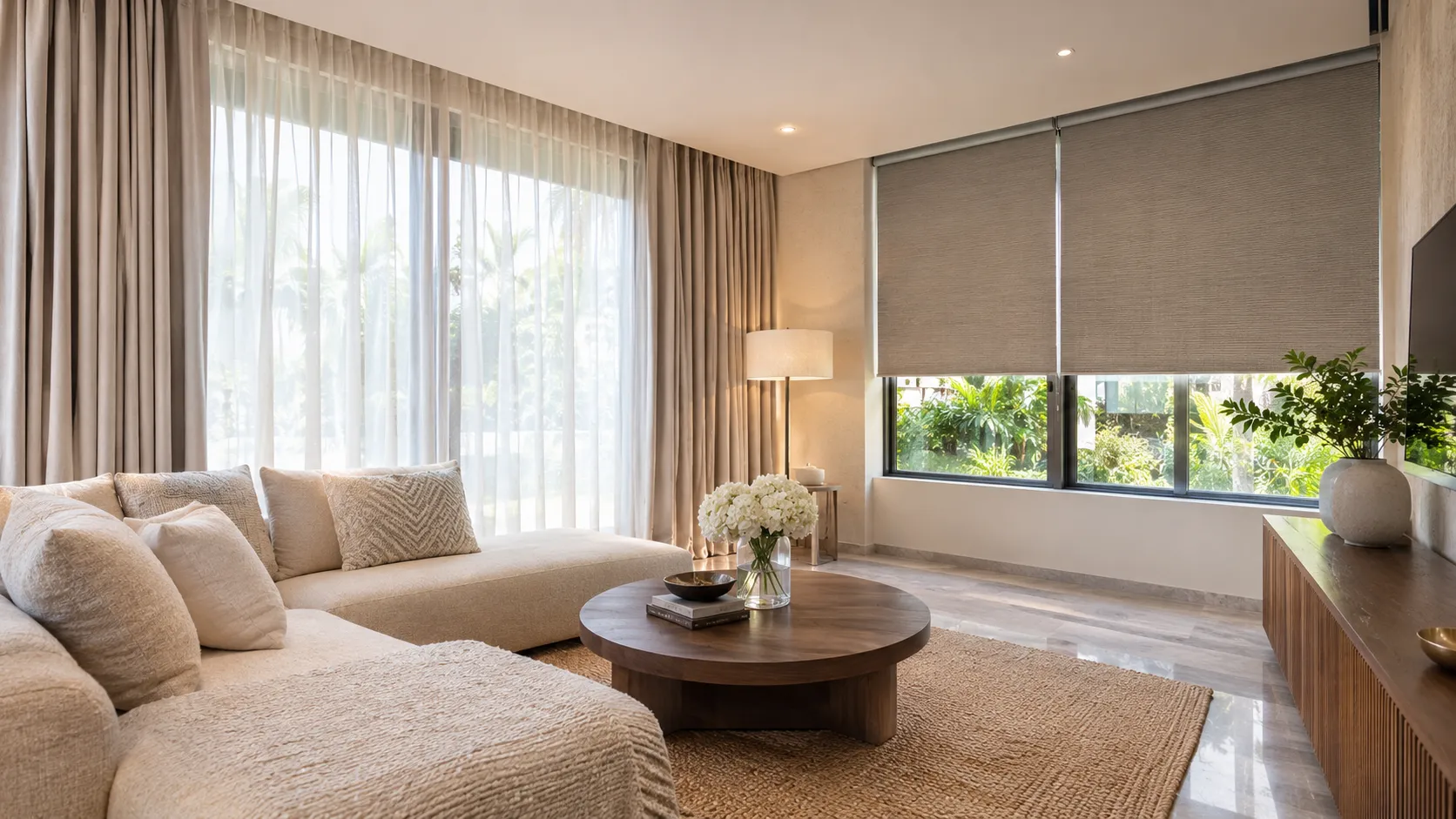
- Screen Fabrics with Openness Factors (1% to 5%): Solar screen fabrics woven from PVC-coated fiberglass or high-density polyester microfibers filter 95% to 99% of damaging UV rays and glare while maintaining clear outward visibility toward tropical gardens and ocean horizons. Explore technical solar fabric options starting at Rp 60.000/m on our products page.
- Solar Reflection Factor (Rs) & Infrared Shielding: Specify technical fabrics featuring high Solar Reflection (Rs > 60%) to reflect solar energy back through window glass before it converts into heat inside living rooms.
- Multi-Pass Coated 100% Thermal Blackout Shades: For master bedroom suites, motorized blackout roller shades featuring multi-pass acrylic backings seal out early morning sunrise completely, ensuring restorative sleep for villa guests (starting at Rp 60.000/m to Rp 110.000/m).
4. Idea #3: Luxury Hospitality Specifications (Whisper-Quiet Motors & Safety Standards)
Specifying motorized window treatments for commercial hospitality projects and high-end residential estates requires strict adherence to international engineering standards:
- Whisper-Quiet Operation (< 38 dB Noise Threshold): Premium hospitality installations require low-decibel DC tubular motors engineered with sound-dampening planetary gearboxes. Motorized shades should glide silently at noise levels below 38 decibels, ensuring guest rest is never disturbed during automated adjustments.
- Obstruction Detection & Safety Cut-Offs: Smart motors feature intelligent electronic limit sensors that stop shade movement instantly if an obstruction (such as furniture, a plant pot, or a hand) is detected during operation, protecting both the mechanism and surrounding decor.
- Dual-Power Engineering (Low-Voltage Hardwired AC vs. Rechargeable Lithium DC): For new villa builds, specify hardwired 220V AC or low-voltage 24V DC power runs hidden inside ceiling cavities. For retrofits where electrical wiring is inaccessible, specify long-life internal lithium-ion battery motors capable of up to 500 operation cycles on a single charge.
5. Spatial Calibration: Concealed Ceiling Recessed Pelmet Pockets
The ultimate hallmark of luxury architectural minimalism is hiding functional roller shade barrels and track hardware so fabric screens appear to drop seamlessly out of the ceiling line:
- Dual-Shade Ceiling Recessed Pelmet Pocket Dimensions: Mount motorized dual roller systems (combining daytime solar screens with nighttime blackout shades) flush inside built-in ceiling pelmet pockets measuring **20 cm to 25 cm wide** and **12 cm to 15 cm deep**. Spatial tolerances can be cross-referenced on our valances and cornices measuring guide.
- The 1 cm Floor Hover Clearance Rule: Verify vertical drop distances accurately from top ceiling barrels down to finished floor surfaces. Calibrate electronic motor limits so bottom hem bars hover precisely **1 cm above finished floor level**. This prevents bottom weight bars from striking floor tiles or absorbing mop water. Review drop measurement rules on our curtain measuring guide and dedicated shade measuring guide. Calculate stack allowances using our digital stacking calculator.
6. Tropical Climate Resilience: Advanced Anti-Mold Protection
In humid coastal environments like Bali, relative atmospheric humidity routinely exceeds 85%. Motorized roller shades positioned directly against glass sliding doors experience continuous temperature contrasts between indoor split-system air conditioning and outdoor humidity, creating condensation microclimates near glass panes where fungal mold spores thrive.
To preserve pristine textile hygiene and indoor air quality, motorized solar and blackout fabrics supplied by Almeers Living incorporate advanced **Anti-Mold** (anti-jamur) technology. This specialized hydrophobic antimicrobial finish repels moisture droplets and prevents fungal spore germination, keeping your automated blinds clean, fresh, and allergen-free season after season.
7. Energy Efficiency and HVAC Air-Conditioning Optimization
Integrating motorized blinds into a sustainable villa design yields measurable thermodynamic and financial benefits for property owners:
- Reducing Solar Heat Gain (SHGC): Automated solar screening lowers Solar Heat Gain Coefficients significantly, preventing radiant heat from warming indoor thermal masses like concrete floors and stone walls.
- Lowering HVAC Power Loads by up to 30%: By maintaining cooler indoor baseline temperatures passively, motorized blinds reduce split-system air conditioning compressor workloads, cutting monthly electricity bills and carbon footprints substantially.
8. Elevate Your Property Architecture with Almeers Living
Upgrading your villa or hotel with motorized blinds requires an expert synthesis of smart home automation protocols, solar heat reflection physics, quiet motor engineering, anti-mold protection, and precision spatial calibration. Partnering with an experienced local specialist guarantees precise laser site surveys, master fabrication, and long-term climate endurance. As a recognized premier window treatment specialist in Bali, Almeers Living offers complete turnkey execution—from complimentary on-site laser surveys and technical fabric sampling to professional motorized installation across the island.
Transform your villa, resort hotel, or residential property into an automated, sun-regulated sanctuary today. Browse our full range of motorized blinds, automated track hardware, and technical solar solutions on our products page to schedule your personalized on-site consultation with Bali’s trusted window experts.